
Industrial yards can look deceptively simple from the outside. Materials arrive, vehicles move through the site, stock is stored in designated areas, and eventually inventory leaves the yard for another location or for use. Behind these physical movements, however, there are several different processes taking place, and confusing them can lead to gaps in operational visibility. One of the most common areas of confusion is the difference between yard management and yard inventory management, particularly when organisations are evaluating software to improve control across complex industrial environments.
The two concepts are closely connected, but they are not interchangeable. A yard management system is generally concerned with coordinating the movement and flow of activities within a yard, while yard inventory management focuses specifically on the materials and stock stored there. Understanding this distinction matters because an organisation may have excellent visibility into vehicles, gates and yard movements while still struggling to answer a basic inventory question: what materials are actually available, where are they located, and can they be found when needed?
For industrial organisations, the distinction becomes even more important when yards contain critical spare parts, maintenance materials, consumables or other inventory that may remain outside the warehouse for extended periods. The right approach is therefore not necessarily to choose one over the other. Instead, organisations need to understand where yard management ends and inventory management begins, and how the two can work together to create a more complete view of what is happening across the physical operation.
Yard management is the process of coordinating and controlling activities within a yard or facility where vehicles, materials, containers and other items move, arrive, wait and depart. Depending on the type of operation, yard management can involve vehicle check-in and check-out, gate activity, dock scheduling, trailer or container movements, storage locations and the coordination of traffic within the yard. A yard management system, commonly referred to as a YMS, brings many of these activities into a central digital environment.
The primary purpose of a YMS is to improve the flow of activity through the yard. It helps organisations understand what is arriving, what is currently in the yard, where particular movements are taking place and what needs to happen next. This is particularly relevant in logistics and distribution environments where the efficient movement of trucks, trailers, containers and shipments is a major operational priority.
However, yard management is broader than simply tracking inventory. A yard can be operating efficiently from a movement perspective while its inventory records remain inaccurate. A vehicle may arrive at the correct gate, a container may be placed in the correct location and a shipment may be dispatched on schedule, but the organisation may still have limited visibility into the individual materials stored inside or around those physical locations.
Yard inventory management is the process of tracking, controlling and maintaining visibility of inventory stored within a yard. Rather than focusing primarily on the movement of vehicles and yard activities, it focuses on the materials themselves, including their quantity, physical location, status, movement and eventual issue or consumption.
A yard inventory management process may involve receiving materials, identifying inventory, assigning storage locations, recording movements between locations, updating stock status and maintaining accurate records as materials are issued. In a large industrial yard, this could include spare parts, maintenance materials, raw materials, components, consumables or other stock waiting to be used.
The central question is different from that of a traditional YMS. Instead of asking, “Where is the truck?” or “Which container needs to move next?”, yard inventory management asks, “What inventory do we have, where is it, what is its status, and can we access it when operations need it?” This makes inventory tracking a critical part of maintaining operational visibility in environments where materials are stored outside conventional warehouses.
The simplest way to understand the difference is to look at what each discipline is primarily trying to control.
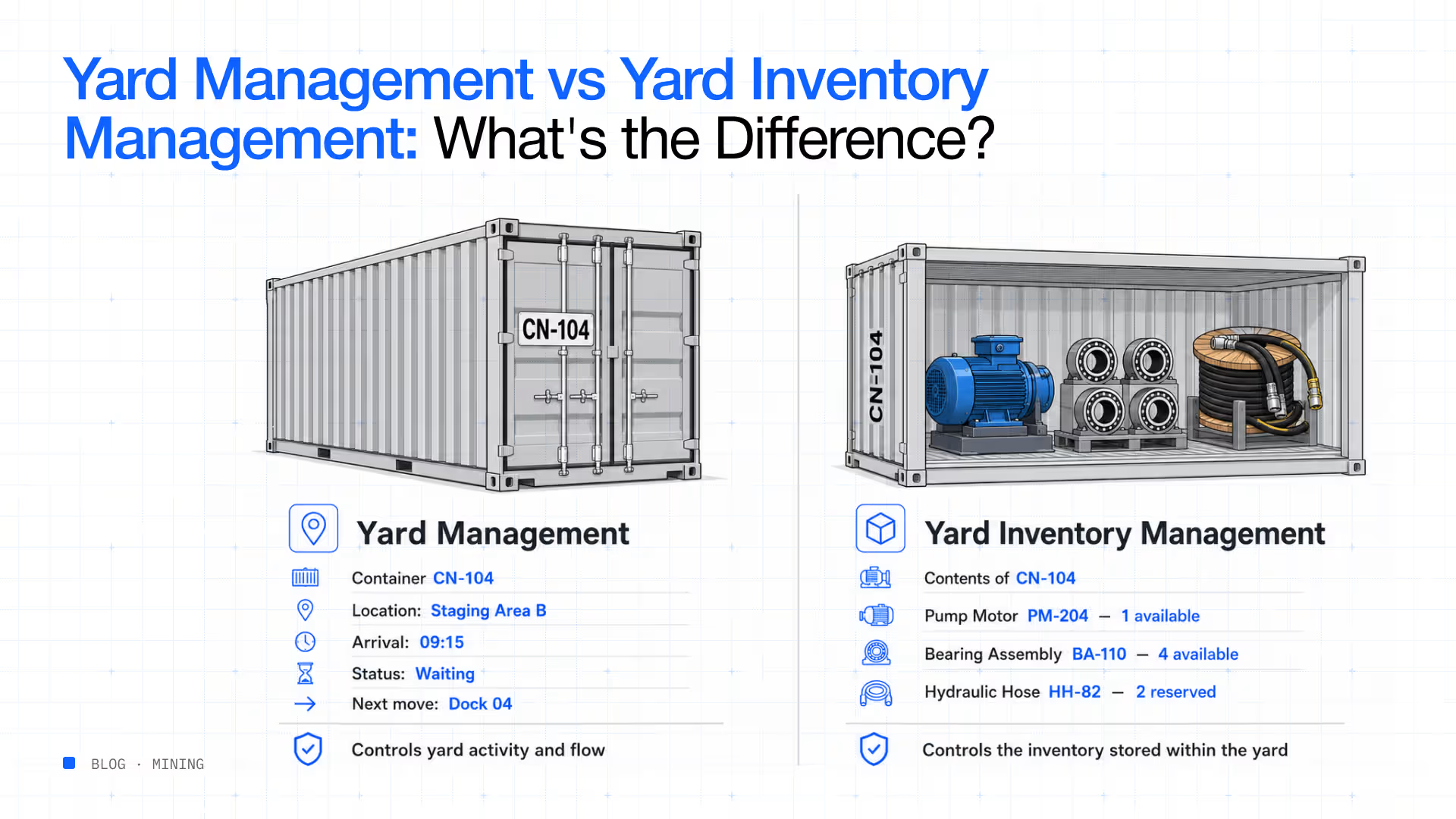
Yard management controls the flow of activities within the yard. Yard inventory management controls the inventory stored within that yard.
A YMS may tell a team that a particular trailer has arrived, where it is positioned and when it is scheduled to move. A yard inventory system may tell that same team what materials are associated with the storage location, which items are available, how much stock exists and where a specific part is physically located.
This difference becomes particularly important when a yard contains inventory that is not directly tied to a single inbound or outbound shipment. Industrial yards often operate as long-term storage environments rather than simple transit points. Materials may remain there for weeks or months, move between locations, or be issued gradually to maintenance and production teams, making inventory visibility just as important as movement visibility.
A yard management system is generally designed to provide visibility and control over the activities taking place within a yard. The exact capabilities vary by system and industry, but YMS software commonly addresses areas such as vehicle movements, gate activity, dock coordination, trailer or container locations, yard capacity and scheduling.
In a logistics environment, for example, a YMS can help coordinate when vehicles arrive, where they should be positioned and when they need to move. This can reduce congestion and improve the overall flow of goods through the facility. The emphasis is on making the physical movement of resources through the yard more organised and predictable.
For industrial operations, the same principles can be useful, but they may not address the complete inventory problem. Knowing where a container or vehicle is located does not necessarily tell a maintenance team what parts are stored inside it, whether those parts are still available or whether the inventory record accurately reflects what is physically present.
The features of yard management software depend on the organisation and industry, but a typical system may provide visibility into:
These capabilities can be valuable for managing the physical flow of a yard. However, they should not automatically be considered a substitute for inventory management functionality.
Yard inventory management focuses on the stock and materials physically located within the yard. It provides information about what inventory exists, where it is stored, how much is available and what has happened to it over time.
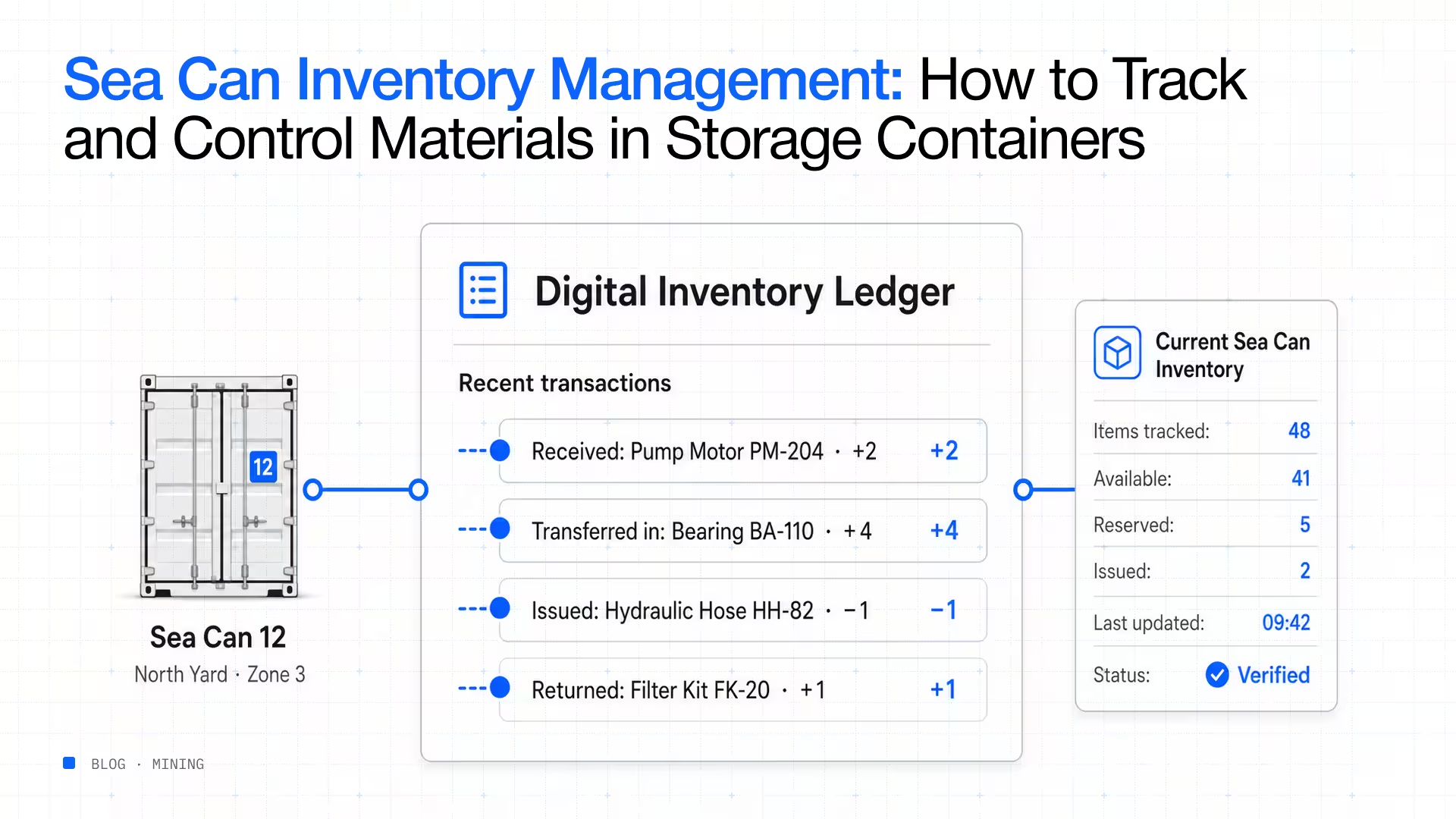
The process begins when inventory enters the yard and continues through storage, movement, issuing and consumption. A strong inventory tracking process should maintain a connection between the physical material and its digital record, even when that material moves between different yard locations.
This is particularly important in industrial environments where a yard may contain thousands of individual parts or materials. Employees need more than a general understanding that inventory is “somewhere in the yard.” They need reliable information that allows them to locate a specific item without depending on individual employee knowledge, spreadsheets or time-consuming physical searches.
Depending on the solution, yard inventory management may include:
These capabilities are centred around the inventory itself rather than the broader movement of vehicles and yard activities.
It is easy to assume that a YMS and an inventory management system provide the same type of visibility because both can involve physical locations and movement tracking. The difference becomes clearer when you consider the level at which each system operates.
A YMS typically provides visibility into what is happening in the yard. Inventory management provides visibility into what inventory exists within the yard and what is happening to that inventory. Both are useful, but they answer different operational questions.
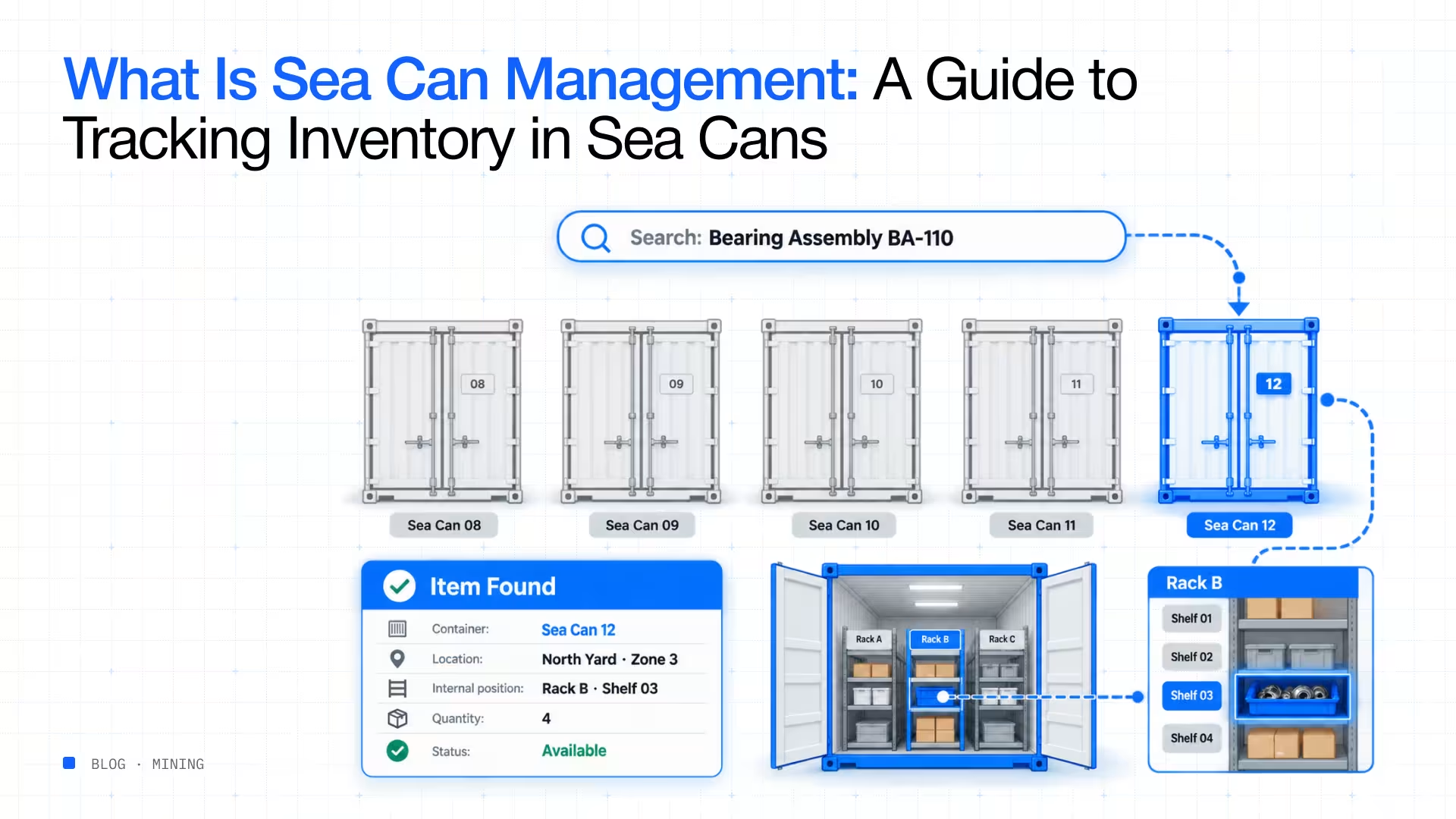
Consider a large industrial storage yard containing several sea cans. A YMS might help the organisation identify where those containers are positioned and manage their movements. But if a technician needs a specific spare part stored inside one of those sea cans, the organisation also needs inventory-level information that identifies the part, its quantity, its location and its availability.
This is why organisations should avoid treating yard tracking and inventory tracking as identical processes. Tracking the movement of a storage container does not necessarily provide visibility into the materials inside it. The two levels of tracking can complement one another, but they solve different problems.
The distinction between the two systems does not mean organisations have to choose between them. In many industrial environments, the strongest approach is to connect yard activity with inventory information so that teams can understand both the physical environment and the materials within it.
For example, when materials arrive at a yard, a YMS may help manage the arrival and placement of the vehicle or container. Inventory management can then capture the individual materials received and associate them with their storage location. If those materials are later moved to another yard zone, the inventory record should reflect that movement.
This creates a more complete picture of the operation. Teams can understand where physical resources are located while also knowing what inventory is available within those locations. For organisations managing large and distributed yards, this combined visibility can reduce the gap between physical operations and digital inventory records.
Yard visibility and inventory visibility sound similar, but they describe different levels of information. Yard visibility tells teams what is happening within the physical environment, while inventory visibility tells them what materials exist, where they are located and what their current status is.
This distinction becomes especially important when inventory moves frequently or is stored across multiple locations. An organisation may have excellent visibility into yard capacity and vehicle movements but still have difficulty answering how many critical spare parts are available across its yards. Without inventory-level information, the organisation may still rely on manual checks to verify stock.
For industrial operations, real-time inventory visibility can therefore provide information that a conventional YMS does not necessarily capture. It allows teams to move beyond knowing where physical storage locations are and towards understanding what inventory is actually available within them.
Extend inventory visibility beyond the warehouse: See how Scatterlink helps industrial organisations connect inventory information across yards, storage areas and operational locations.
Yard inventory management becomes particularly valuable when inventory is stored outside a controlled warehouse and its location or status is difficult to determine. Large industrial yards, remote storage areas, mining operations and distributed maintenance environments can all create this type of challenge.
It is especially relevant when materials remain in yards for extended periods rather than simply passing through them. If inventory is frequently moved, stored across multiple zones or accessed by different teams, relying on manual records can make it difficult to maintain accurate information.
Another indicator is when employees regularly spend time searching for materials that the system already says are available. If teams have to call colleagues, inspect storage areas or physically count stock before confirming whether a part exists, the organisation may have a gap between inventory data and physical inventory.
In these situations, yard inventory management can provide a more structured approach to tracking materials and maintaining inventory visibility.
A YMS becomes particularly valuable when the primary operational challenge involves the movement and coordination of resources through the yard. Organisations dealing with high volumes of vehicle arrivals, trailers, containers, loading activities or yard congestion may benefit from software designed specifically around these processes.
For example, a logistics facility may need to coordinate dozens or hundreds of vehicle movements each day. In this environment, managing gates, parking positions, loading areas and scheduling can have a significant effect on operational efficiency.
However, even in these environments, inventory information may still be required. If materials are stored within containers or yard locations for extended periods, a YMS alone may not provide the level of inventory visibility required by warehouse, maintenance or procurement teams.
RFID can play an important role when organisations need to identify physical inventory more efficiently across large or distributed environments. Unlike traditional manual inventory processes that may require employees to scan items individually, RFID can support automated identification of tagged materials through appropriate readers and workflows.
For RFID inventory tracking, the key advantage is that the technology can help connect a physical item with its digital identity. When that information is integrated with inventory transactions and location data, organisations can gain a more current understanding of where materials are located and how they move.
The technology is particularly relevant when inventory volumes are high or when manually scanning every item would be difficult to sustain. However, RFID is most valuable when it forms part of a broader inventory management process rather than being implemented as a standalone tracking technology.
Connect physical inventory with accurate digital records: Explore Scatterlink’s RFID inventory management approach.
The right technology depends on the operational problem an organisation is trying to solve. If the primary challenge is coordinating vehicles, trailers, containers, gates and yard movements, a yard management system may be the appropriate starting point. If the core problem is knowing what materials are stored in the yard, where they are located and whether they are available, the organisation needs inventory management capabilities.
In some operations, the answer may be both. A large industrial site can benefit from coordinated yard movements while also requiring detailed inventory tracking for the materials stored within those locations. The key is to understand that these systems operate at different levels and should provide complementary information rather than being treated as interchangeable.
When evaluating technology, organisations should therefore ask practical questions about their current visibility. Can teams locate a specific part without physically searching the yard? Can they see inventory across multiple storage locations? Are inventory movements recorded when they happen? Can the system distinguish available stock from reserved or unavailable stock? Can it integrate with existing ERP processes?
These questions help determine whether the organisation’s primary requirement is yard activity management, inventory control or a connected approach that addresses both.
For industrial organisations, inventory rarely stays in one controlled location. Materials can move between warehouses, yards, sea cans, remote storage areas and operational sites before they are ultimately consumed. Scatterlink is designed around this broader inventory challenge, helping organisations maintain visibility across the inventory lifecycle rather than limiting visibility to a single storage environment.
By combining inventory intelligence, RFID and mobile workflows, Scatterlink helps connect physical inventory with the information teams need to make operational decisions. This approach supports visibility from receipt through to consumption and can extend across surface and underground operations where inventory may otherwise be difficult to track.
Build connected inventory visibility: Learn more about Scatterlink and its inventory intelligence approach for industrial operations.
Yard management and yard inventory management are closely related, but they are not the same thing. A yard management system focuses primarily on coordinating activity and movement within the yard, while yard inventory management focuses on the materials stored there and provides visibility into their quantity, location, status and movement.
For industrial organisations, understanding this distinction is important because efficient yard movement does not automatically mean accurate inventory visibility. A yard can be well organised from a logistics perspective while teams still struggle to locate critical parts or determine what stock is genuinely available.
The strongest approach is to connect these capabilities where the operation requires both. When yard activity, inventory data and physical material movements are brought together, organisations can create a more complete view of their operation and make better decisions based on what is actually happening on the ground.
Yard management focuses on coordinating activities and movements within a yard, including vehicles, containers, gates and storage areas. Yard inventory management focuses specifically on the materials and stock stored within the yard, including their quantity, location, status and movement.
No. A yard management system is primarily designed to manage the flow and coordination of activities within a yard, while an inventory management system focuses on controlling stock and materials. Depending on the operation, organisations may need both systems to achieve complete operational and inventory visibility.
A yard management system can track activities such as vehicle arrivals, trailer or container locations, gate movements, loading areas and yard scheduling. The exact capabilities vary by system and industry.
Yard inventory management tracks materials stored within a yard, including quantities, physical locations, inventory status and movements. More advanced systems can use RFID, mobile applications and connected technologies to improve the accuracy and timeliness of this information.
Yes. RFID can help identify and track physical items and can support both broader yard visibility and detailed inventory tracking when integrated with the appropriate software and workflows. Its greatest value comes from connecting physical identification with inventory and location information.
It depends on the operational requirements. Organisations primarily concerned with vehicle and yard activity may benefit from a YMS, while organisations that need detailed visibility into materials stored across yards may require inventory management capabilities. Complex industrial environments may benefit from connecting both.
It connects inventory records with physical locations, quantities, statuses and movements. This allows teams to understand not just whether stock exists, but where it is located and whether it is available for use.
Businesses should first identify whether their primary requirement is yard activity management, inventory control or both. They should then consider location tracking, inventory visibility, mobile workflows, RFID capabilities, integration with ERP systems, multi-location support and the ability to maintain accurate information as materials move through the operation.
%20(1).avif)
.avif)
%20(1).avif)