
Sea cans are widely used across industrial operations because they provide a practical way to store materials where conventional warehouse space may not be available. They can be positioned in industrial yards, project sites, mining operations and remote locations, allowing teams to keep spare parts, maintenance materials, consumables and other inventory closer to where the work happens. However, the convenience of using sea cans can create another inventory challenge: once materials are placed inside a container, they can become difficult to identify, locate and control without a structured tracking process.
This is where sea can inventory management becomes important. Managing inventory inside storage containers is not simply about knowing how many sea cans an organisation has. Teams need to know what is inside each container, where the container is located, how much stock is available, what has been removed or transferred and whether the information in the system still matches the physical inventory. Without this visibility, a sea can can effectively become a blind spot within the broader inventory network.
For industrial organisations, the goal should be to make containerised inventory as visible and controllable as inventory stored in a conventional warehouse. A combination of standardised storage locations, consistent inventory identification, mobile workflows, RFID and real-time inventory tracking can help connect physical materials with accurate digital information. When that connection is maintained from receipt through to consumption, teams can spend less time searching for materials and make more informed decisions about stock.
Sea can inventory management is the process of identifying, organising, tracking and controlling materials stored inside sea cans or storage containers. It includes maintaining information about the inventory contained within each sea can, its physical location, quantity, status and movement history.
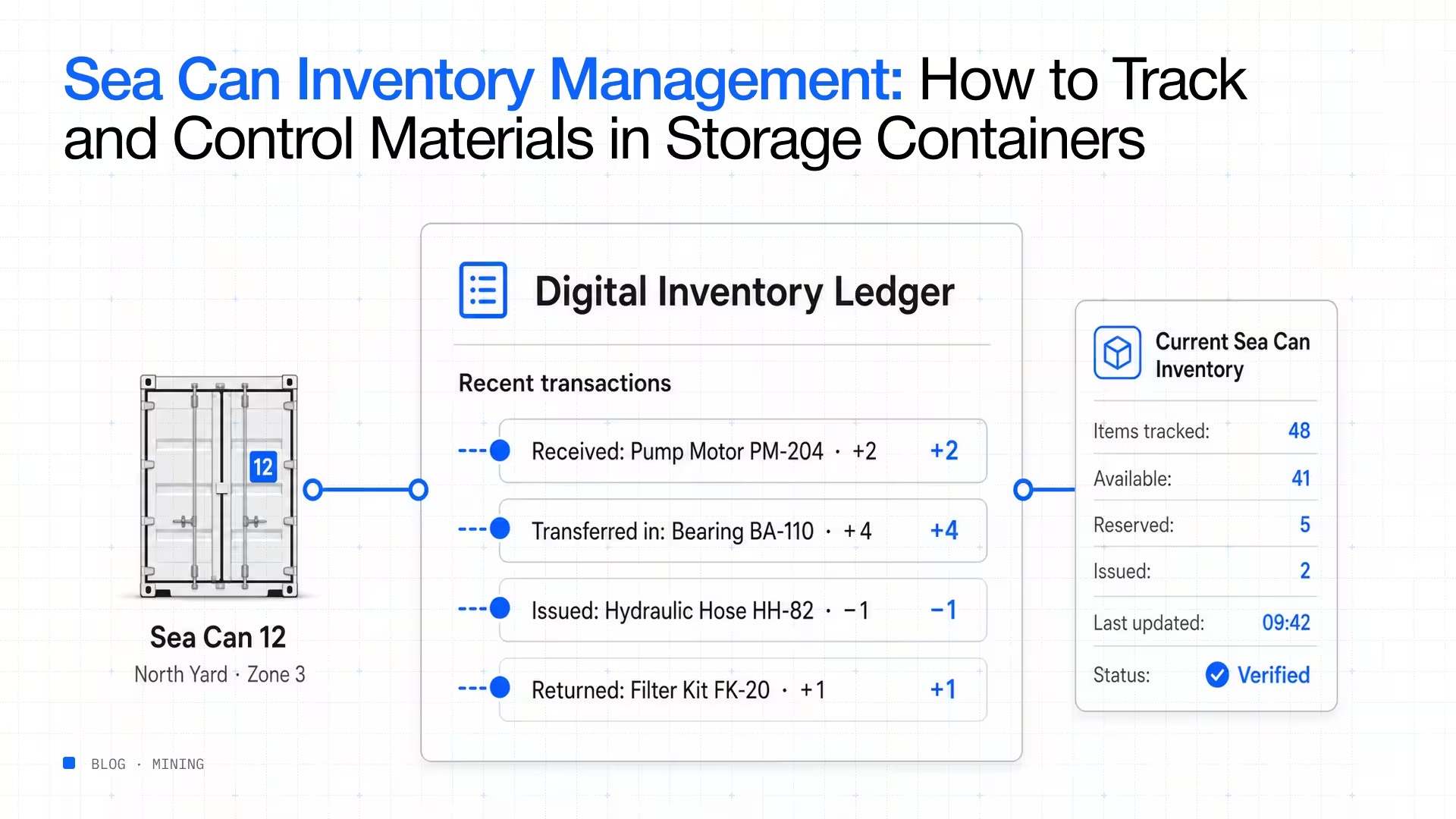
A sea can effectively becomes another inventory location within the organisation. Instead of treating the container as a standalone storage box, it should be represented as a defined location within the inventory system. This allows individual materials to be associated with the container and, where necessary, with a specific area inside it.
This approach creates a stronger connection between physical and digital inventory. If an employee searches for a particular spare part, the system should be able to show whether the part is available and identify the sea can in which it is recorded. The employee can then use the container’s location information to retrieve the material rather than searching through multiple storage areas.
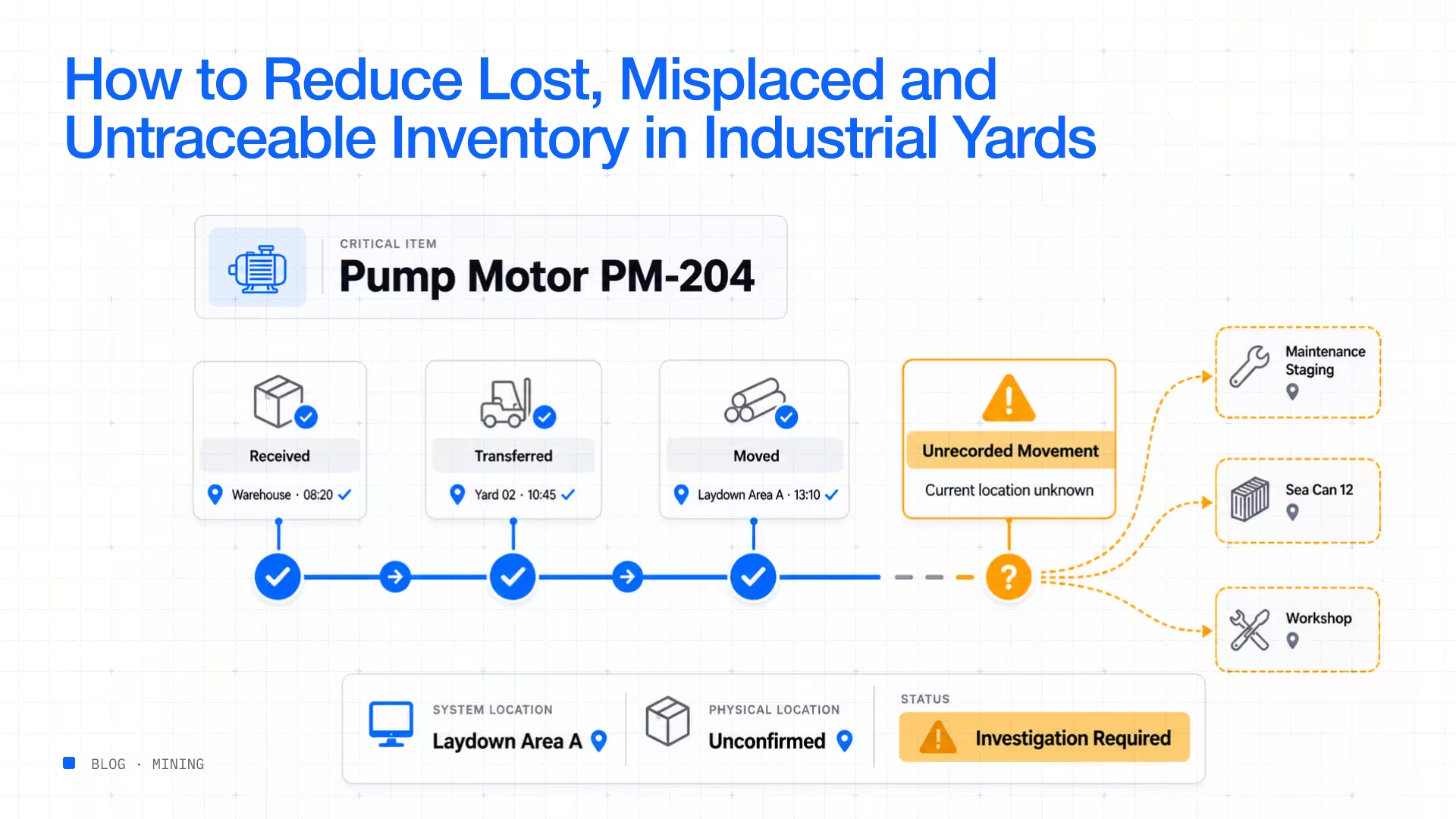
The biggest challenge with sea can storage is that physical access and digital visibility can become disconnected. A material may have been recorded when it was first received, but subsequent transfers, issues or movements may not have been captured consistently. As a result, the system can show inventory as available even when the material has already been moved or used.
This creates problems for employees who depend on accurate inventory information. A maintenance team may be told that a critical part is available, only to discover that it cannot be found in the expected container. Procurement may then order a replacement even though the original part is sitting in another sea can or location.
Sea can tracking helps reduce these problems by treating the container and its contents as part of the inventory lifecycle. Every significant movement should be reflected in the system so that teams have a more current understanding of where materials are located and whether they remain available.
The types of materials stored in sea cans vary between industries and operations. Industrial organisations may use them for spare parts, mechanical components, electrical materials, tools, consumables, maintenance supplies and project inventory.
In mining operations, for example, storage containers may be used across project and operational areas where materials need to be protected and kept relatively close to work areas. In construction and energy environments, sea cans may also support temporary or long-term storage at project and remote sites.
The variety of materials makes container inventory management particularly important. Different items may have different criticality, usage rates, storage requirements and replenishment needs. A sea can containing high-value critical spares should not necessarily be managed in exactly the same way as one containing frequently used consumables.
There is no single tracking method that is ideal for every operation. The appropriate approach depends on the number of containers, inventory volume, movement frequency, environmental conditions and the level of accuracy required.
At a minimum, every sea can should have a unique identity and a defined physical location. Inventory stored inside the container should also have a consistent identifier, such as a part number, barcode, QR code or RFID tag. These identifiers should connect the physical material to its digital record.
The inventory process should then capture key events such as receiving, placement, movement, transfer, issue, return and consumption. This ensures that the inventory record does not remain static while physical materials continue to move.
For organisations managing a large number of containers, real-time inventory tracking can provide additional value by reducing the delay between physical activity and digital updates. Mobile applications and RFID can help make those transactions easier to capture where the work actually occurs.
A structured process is essential if an organisation wants to maintain reliable visibility across multiple storage containers. The system should be simple enough for employees to use consistently while providing sufficient information to support inventory control.
Every container should have a unique identifier that can be easily recognised and captured. This identifier creates the link between the physical sea can and its digital inventory record.
The identity should remain associated with the container even when the container moves between locations. This allows the system to update the container’s physical location without losing the history of the inventory associated with it.
The inventory system should identify where each sea can is physically located. Depending on the operation, this could include the site, yard, zone, row, bay or other location information.
This is especially important when many containers are positioned within the same yard. Simply recording that inventory is “at the yard” does not provide enough information for someone trying to retrieve a specific material.
When materials are placed inside a sea can, the relevant transaction should be recorded. The system can associate the material with the container and its defined location.
This creates the initial inventory record and establishes where the material should be found. If the inventory is later moved, the system can update the record accordingly.
Materials should not be considered permanently associated with a container simply because they were originally stored there. They may be moved to another container, transferred to a warehouse, issued to a maintenance team or relocated to another site.
Recording these movements is critical to maintaining sea can inventory management accuracy. Without movement tracking, the system gradually becomes a historical record rather than a representation of the current physical inventory.
Inventory visibility should continue until the material is actually consumed. A part leaving a sea can does not necessarily mean it has been consumed, because it could be temporarily issued, transferred or returned.
Capturing the relevant transaction helps organisations distinguish between inventory that has moved and inventory that has genuinely left the available stock position.
RFID can provide an efficient way to identify inventory and storage containers, particularly in environments where large numbers of materials need to be tracked. Instead of requiring employees to manually identify every item using a conventional scanning process, RFID technology can capture tagged inventory through connected readers and workflows.
RFID inventory tracking can be applied at different levels. Organisations may tag individual materials, storage containers or both, depending on their operational requirements. Tagging the sea can creates a direct identity for the container, while tagging inventory inside it can provide more granular visibility into the materials being stored.
The value of RFID increases when the captured information is connected to inventory transactions and location data. The technology should not simply identify that a tag exists. It should help the organisation understand what that item is, where it belongs, what has happened to it and whether it is available.
RFID implementation also requires consideration of the physical environment. Sea cans often contain metal surfaces and may store metal components, which can affect RFID performance depending on the tag and reader configuration. Appropriate tag selection, positioning and testing are therefore important parts of the implementation process.
Improve visibility across industrial storage environments: Explore Scatterlink’s RFID inventory management solution to see how RFID can support inventory tracking.
Mobile technology allows employees to manage inventory at the point where physical activity takes place. Instead of recording a transaction on paper and entering it into the system later, a worker can use a mobile application to identify the item, confirm the container and record the movement immediately.
This can make a significant difference in large industrial operations. Employees may be working across yards, storage areas and remote locations where returning to a desktop workstation is impractical. A mobile inventory workflow allows the system to move with the employee rather than requiring the employee to move back to the system.
Mobile applications can also make inventory search easier. If a worker needs a particular component, they can search for it digitally and determine its recorded location before physically travelling to the storage container.
For remote operations, offline functionality can provide another important capability. If connectivity is unavailable, employees may still need to receive, issue or move inventory. An offline-capable workflow can allow transactions to be captured and synchronised when connectivity becomes available.
Real-time inventory visibility helps organisations maintain a current view of what is stored inside their containers. Rather than relying on a list created during the last physical count, teams can access information based on more recent inventory transactions.
This can reduce the time spent searching for materials. If the system identifies the item, container and location, employees can go directly to the relevant storage area rather than opening multiple containers to find the required component.
Real-time information can also support procurement decisions. Before ordering a replacement part, teams can check whether the item is already available in another sea can, warehouse or yard. This can help organisations use existing inventory more effectively and reduce unnecessary purchases.
Connect inventory across every storage location: See how Scatterlink helps industrial organisations improve real-time inventory visibility across warehouses, yards, sea cans and remote locations.
Technology can improve inventory tracking, but physical organisation remains important. A system may accurately tell an employee which sea can contains a part, but the employee can still spend significant time searching if the internal storage arrangement is inconsistent.
Materials should therefore be organised according to logical categories. Organisations may separate inventory by item type, usage frequency, criticality or operational function. Frequently used items should generally be easier to access, while rarely used materials can be stored in less accessible areas.
Internal racks, shelves, bins or zones can provide additional location detail where necessary. For example, the system could identify not only the sea can but also the internal rack or shelf where a particular item is located.
This creates a combination of physical and digital control. The inventory system provides the location information, while the physical organisation ensures that employees can find the material once they reach the container.
The first major benefit is improved inventory visibility. Organisations gain a clearer understanding of what materials are stored in each container and where those containers are located.
The second is faster inventory retrieval. Employees no longer have to rely entirely on personal knowledge or search multiple storage containers to locate a required item. When inventory records are accurate, the system can direct them towards the relevant location.
Better control can also reduce unnecessary purchasing. If inventory is visible across sea cans and other locations, procurement teams can identify existing stock before placing new orders. This can reduce duplicate inventory and improve the use of working capital.
Another benefit is stronger inventory accuracy. Recording receiving, movement, issue and consumption transactions creates a more complete inventory history and helps reduce the gap between physical stock and system records.
Finally, better sea can tracking can improve operational continuity. When critical materials can be located quickly, maintenance teams are less likely to experience delays caused by uncertainty about where required parts are stored.
Poorly managed sea cans can gradually become difficult-to-search storage areas. Materials may be placed wherever space is available, old stock can remain alongside active inventory and employees may rely on informal knowledge to locate items.
This creates a growing risk of inventory becoming effectively untraceable. The organisation may technically own the material, but the time and effort required to find it can make the inventory less useful operationally.
Poor tracking can also result in duplicate purchasing. When employees cannot determine whether a required component exists elsewhere, ordering another item may appear safer than spending time searching. Over time, this can increase inventory levels while existing materials remain unused.
The problem becomes particularly serious for critical spare parts. If a component is required urgently and the system cannot provide a reliable location, the resulting search can create avoidable delays in maintenance and production activities.
Industrial organisations often use sea cans across multiple sites rather than keeping them in one central yard. A container may be moved between a warehouse, project site, remote yard or operational location depending on requirements.
This means the inventory system needs to track both the material and the physical container as they move. A sea can that is transferred to another site should have its location updated, while the inventory associated with it should remain connected to the container.
This is an important part of remote inventory tracking. Employees at a central office should be able to understand where inventory is located even when that inventory is physically stored hundreds of kilometres away.
For organisations operating across distributed locations, a connected inventory system can also provide a broader view of available stock. Instead of treating each remote site as a separate inventory island, teams can understand what is available across the network.
Sea cans are often only one part of a larger distributed inventory environment. Materials may move from a central warehouse to a yard, into a sea can, to a remote site and eventually to a work area. Each transition creates an opportunity for inventory visibility to break down.
Multi-location inventory management helps maintain continuity across those transitions. The inventory record remains connected to the material while its physical location changes, allowing teams to understand where stock is currently stored.
This can also improve stock allocation. If one site has excess inventory while another site is preparing to purchase the same item, a connected system can make the existing stock visible and potentially support an internal transfer.
The result is a more efficient use of inventory across the organisation. Instead of managing every location independently, teams can make decisions based on the broader inventory position.
A suitable system should provide more than basic stock counts. At a minimum, organisations should consider whether the system can identify individual materials, connect them to storage containers, track container locations and record inventory movements.
Mobile accessibility is another important consideration because employees need to be able to interact with inventory information where the physical work occurs. Offline capability can also be valuable for remote sites where connectivity is inconsistent.
RFID support may be appropriate for operations that need faster or more automated identification. Integration with existing ERP or inventory systems can help ensure that operational transactions are connected with broader business processes.
Finally, the system should provide information that employees can actually use. Inventory visibility is valuable only when teams can quickly determine what is available, where it is located and what action needs to be taken.
Sea cans are part of a much broader inventory environment for industrial organisations. Materials can move between warehouses, yards, storage containers, surface operations, underground locations and remote sites before they are ultimately consumed. Scatterlink is designed to provide visibility across these environments rather than treating each storage location as a separate inventory system.
Scatterlink combines RFID, mobile workflows, offline capabilities and inventory intelligence to connect physical inventory with digital information. This allows teams to capture and access inventory information closer to where the work takes place, while maintaining visibility across distributed locations.
The focus is on providing accurate, actionable information about inventory from receipt through to consumption. For organisations managing critical materials across large physical environments, this can help reduce search time, improve inventory control and support faster operational decisions.
Build visibility across distributed inventory environments: Learn more about Scatterlink and its inventory intelligence platform.
Sea can inventory management is ultimately about making containerised inventory visible, traceable and usable. A sea can may provide secure and practical storage, but without a reliable system for tracking its contents, the inventory inside can become increasingly difficult to locate and control.
A strong approach connects each sea can to a defined location and links the materials stored inside it to accurate inventory records. Mobile workflows can make transactions easier to capture, while RFID can provide additional identification and automation where appropriate. Together, these capabilities can help organisations maintain a more reliable view of inventory across warehouses, yards, sea cans and remote sites.
The objective is not simply to know what is inside a storage container. The objective is to know what is available, where it is, how it got there and whether it can be used when required. When organisations achieve that level of visibility, sea cans stop being inventory blind spots and become controlled, traceable parts of the broader inventory network.
Sea can inventory management is the process of tracking and controlling materials stored inside sea cans or storage containers. It includes monitoring inventory quantity, location, movement and status so teams can locate and manage materials efficiently.
Inventory can be tracked by assigning unique identifiers to materials and linking them to the specific sea can where they are stored. Barcodes, QR codes, RFID tags and mobile inventory applications can be used to record and update inventory information.
Inventory should be organised using logical categories based on factors such as item type, frequency of use and criticality. Shelves, racks, bins and defined internal zones can make materials easier to locate, while the inventory system should reflect the physical organisation.
Yes. RFID can be used to identify sea cans and individual materials stored inside them. When RFID is connected to inventory and location information, it can help improve identification, tracking and inventory visibility.
Sea can tracking helps organisations know where containers are located and what inventory they contain. Without accurate tracking, employees may spend significant time searching for materials or purchasing replacements for inventory that already exists elsewhere.
Mobile inventory management allows employees to search inventory and record receiving, transfers, issues and other transactions directly from the storage location. This can reduce paper-based processes and improve the timeliness of inventory updates.
Yes. Sea can inventory can be tracked at remote sites using mobile inventory systems, RFID and other identification technologies. Offline capabilities can be particularly useful where network connectivity is unreliable.
It connects individual materials to their physical storage containers and locations. This allows teams to determine not only whether an item exists, but also which sea can contains it and where that container is located.
Yes. Sea can inventory workflows can be integrated with ERP and other business systems so that relevant inventory transactions are shared with the broader enterprise environment. This can help connect detailed physical inventory activity with enterprise-level inventory records.
When inventory stored in sea cans is visible across the organisation, procurement teams can check existing stock before ordering new materials. This can help identify available inventory at other containers, yards or remote locations and reduce duplicate purchasing.
%20(1).avif)
.avif)
%20(1).avif)