
Sea cans are a practical part of many industrial operations, particularly where materials need to be stored outside a conventional warehouse. They can provide secure, weather-resistant storage for spare parts, maintenance materials, tools, consumables and other inventory across yards, project sites and remote locations. The challenge begins when an organisation has multiple sea cans containing hundreds or thousands of individual items, because knowing where the container is does not necessarily mean knowing what inventory is inside it.
This is where sea can management becomes important. Sea can management is the process of organising, identifying, tracking and controlling the inventory stored in sea cans so teams can understand what is available, where it is located and how materials move in and out of each container. Without a structured process, sea cans can gradually become difficult-to-manage storage locations where inventory exists physically but becomes increasingly difficult to find digitally.
For mining, oil and gas, construction and other industrial operations, this can create a significant inventory visibility problem. A critical part may be recorded as available in the system, but the employee who needs it may not know which sea can contains it, where that sea can is located or whether the item is still physically present. Effective sea can inventory management connects the container, its location and the individual materials inside it so teams can access reliable information when they need it.
Sea can management is the process of managing storage containers and the inventory stored inside them throughout their operational lifecycle. It can include tracking where sea cans are located, identifying their contents, recording inventory movements, managing access, monitoring stock levels and maintaining an accurate record of materials stored within each container.
The term “sea can” is commonly used in industrial environments to refer to shipping or storage containers that are repurposed for on-site storage. These containers can be used in industrial yards, mine sites, construction projects, remote facilities and other locations where conventional warehouse space is limited or impractical. Because the container itself becomes a storage location, effective management requires visibility at both the container level and the individual inventory level.
This distinction is important because simply maintaining a list of sea cans does not provide complete inventory visibility. An organisation might know that Sea Can 12 is located at a particular yard, but that information does not answer whether the required bearing, valve, electrical component or maintenance supply is inside it. Sea can management therefore needs to connect the physical container with the materials stored inside it.
Sea cans can make industrial storage more flexible, but they can also create an additional layer of complexity in inventory management. Materials stored inside containers are often physically separated from the main warehouse, and access may depend on employees knowing which container to open. When multiple containers are used across a large yard, the time required to locate a particular item can increase significantly.
The problem becomes more serious when inventory is moved without being recorded. A part may be transferred from one sea can to another, issued to a maintenance team or relocated to a different site while the inventory system continues to show its original location. Over time, these small discrepancies can create a significant gap between physical inventory and inventory records.
Strong sea can inventory management helps prevent this by treating the sea can as an identifiable inventory location rather than simply a physical box. Each container can have a defined identity and location, while the materials stored inside can be linked to that container. This creates a clearer relationship between where the container is and what inventory is actually stored within it.
The contents of a sea can depend heavily on the industry and the purpose of the storage location. In industrial operations, sea cans may be used to store maintenance parts, tools, consumables, electrical components, mechanical parts, project materials and other stock required at or near the point of work.
In mining environments, for example, sea cans can be used as part of inventory laydown and storage arrangements. Mining project documentation shows sea cans being used to store and transport a range of materials, including industrial supplies and maintenance-related inventory. This makes the ability to identify and control the contents particularly important where materials may remain on site for extended periods.
The challenge is not simply the volume of material. Different items may have different criticality, storage requirements, issue patterns and replenishment needs. A sea can containing low-value consumables may require a different management process from one containing critical spare parts that could affect production if unavailable.
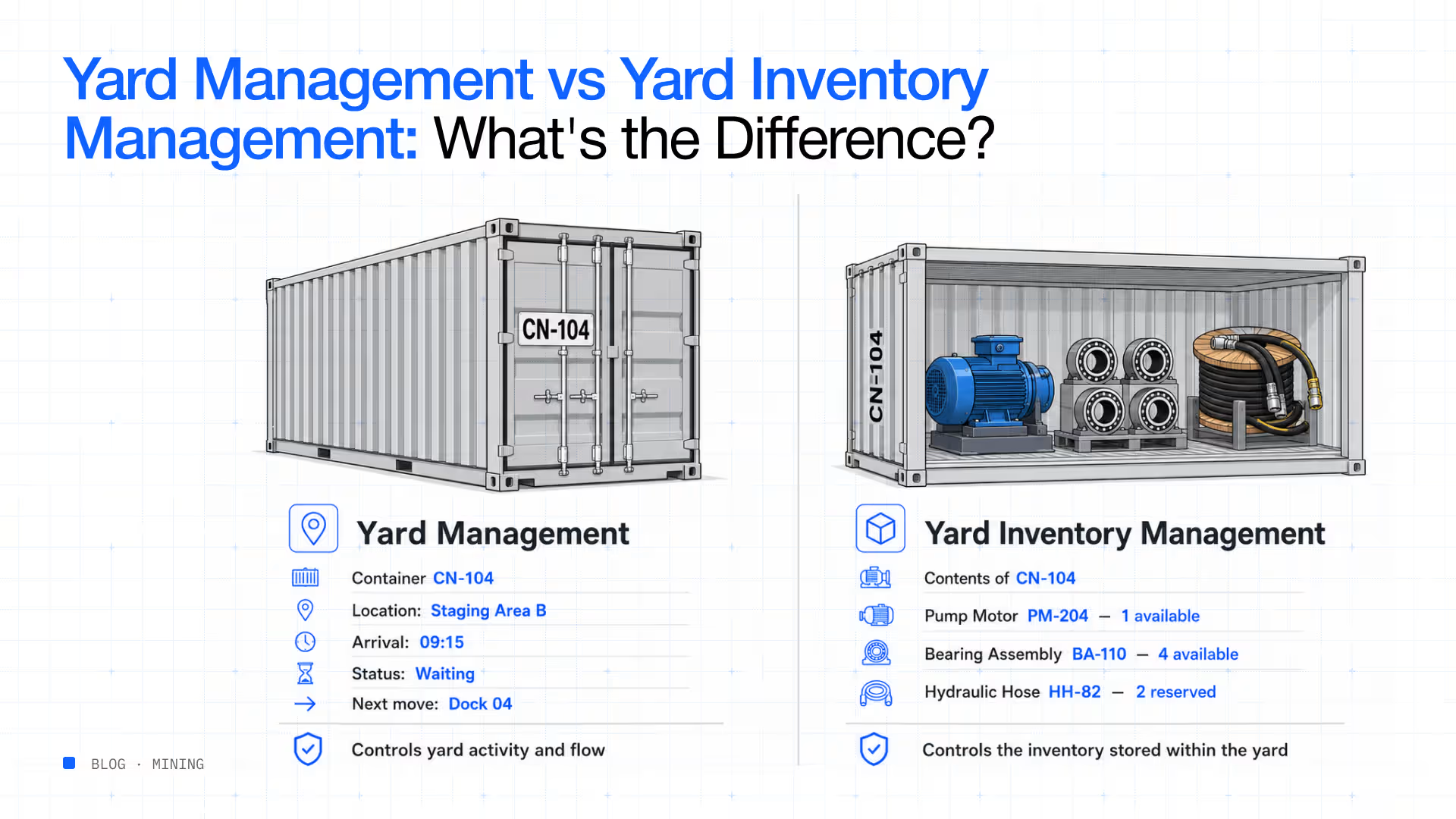
The two terms are closely related, but there is a useful distinction between them. Sea can management can refer to the broader management of the containers themselves, including their locations, status, movement and use as storage units. Sea can inventory management focuses more specifically on the materials stored inside those containers and maintaining visibility of their quantity, location and status.
For example, an organisation may need to know that a particular sea can has been moved from one yard to another. That is a container management activity. It may also need to know that 20 units of a specific component are stored inside that sea can. That is an inventory management activity.
In a complex industrial environment, both levels of information can be important. The container provides the physical location framework, while the inventory record provides the detail needed to locate and manage individual materials. Connecting the two creates much stronger sea can inventory tracking than maintaining separate lists for containers and stock.
Effective sea can inventory tracking starts by giving every container a unique identity. This could be a container number, barcode, QR code, RFID tag or another identifier that employees can use to associate the physical container with its digital record.
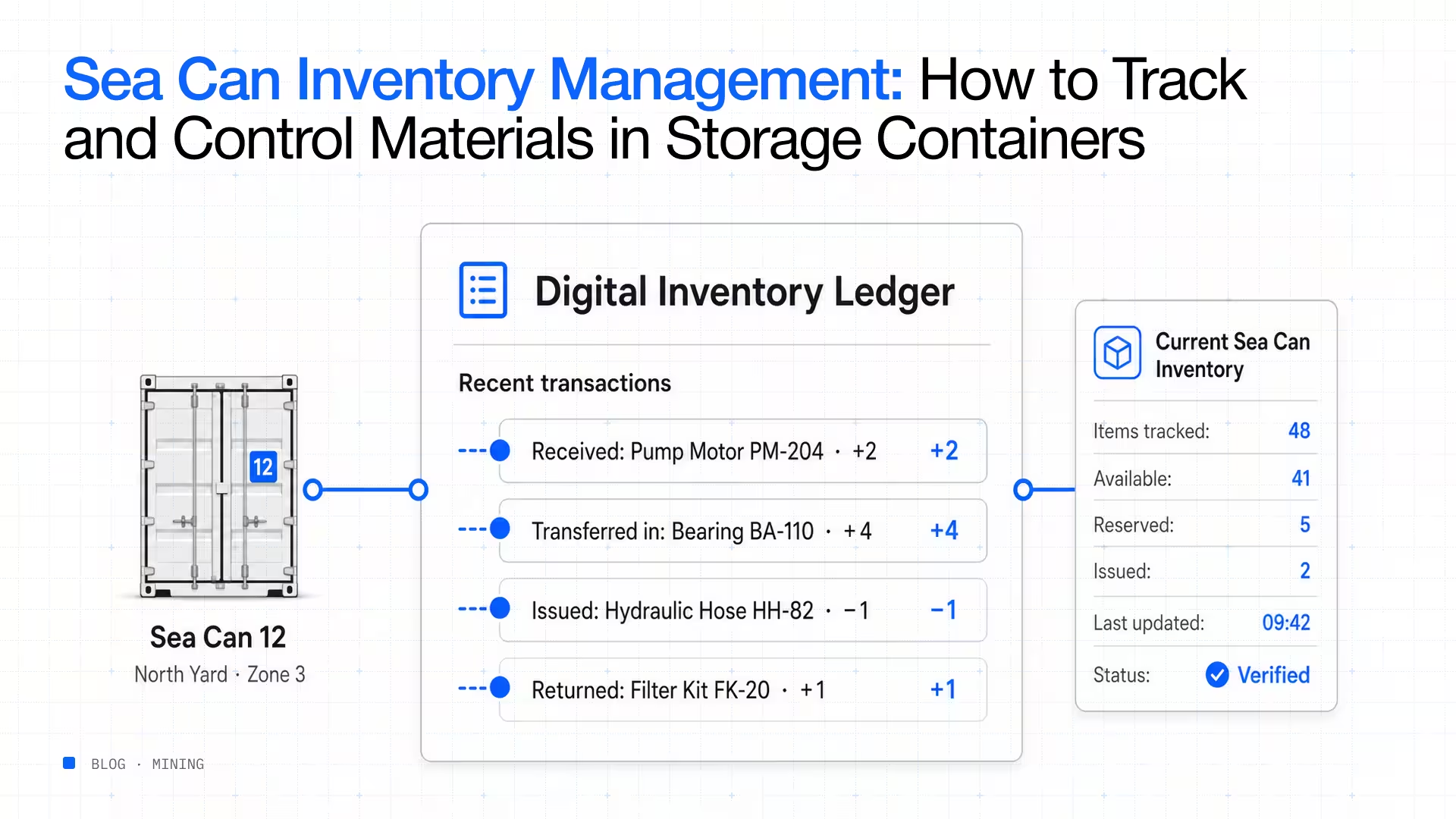
The next step is to record the inventory stored within the container. Each item should have its own inventory identity and should be associated with the relevant sea can and, where necessary, a more specific internal location. This creates a digital relationship between the individual material and the container in which it is physically stored.
When inventory enters, leaves or moves within the container, the relevant transaction should be recorded. The same applies when the sea can itself moves to another location. If the container changes location but the inventory records inside it do not reflect the change, the organisation can still lose visibility even though the container itself is being tracked.
A structured process makes sea can management much easier to maintain as the number of containers and materials increases. The objective should be to create a consistent process that employees can follow regardless of which yard or remote site they are working in.
Every sea can should have a unique identifier that can be easily recognised by employees and linked to the inventory system. This prevents confusion when multiple containers are positioned close to each other or when containers are moved between locations.
The identifier should be visible on the physical container and easy to capture digitally. This creates the foundation for connecting the physical storage unit with its digital record.
A container’s location should be recorded using a consistent structure. Instead of simply identifying the site, organisations may need to record the yard, zone, row or designated storage position.
This is particularly important when dozens of containers are located within a large industrial yard. Knowing that a sea can is “at Site A” is useful, but knowing that it is in “Site A, North Yard, Zone 3” provides much greater operational value.
Inventory should be associated with the relevant sea can when it is placed inside. Depending on operational requirements, organisations may track item numbers, descriptions, quantities, serial numbers, batches or other attributes.
The level of detail should reflect the criticality of the inventory. Critical spare parts may require individual identification, while certain consumables may be managed by quantity. The important point is that the inventory record should accurately represent what is physically inside the container.
When inventory moves from one sea can to another, the transaction should be captured. The same principle applies when a sea can is relocated to another yard or operational site.
Movement records create a history of where inventory has been and reduce the risk of materials becoming disconnected from their digital location. This is particularly important in project-based and remote operations where storage arrangements can change frequently.
Inventory visibility should continue when materials leave the container. When an employee takes a part for maintenance, transfers stock to another location or returns unused material, the transaction should be recorded.
This helps prevent the common situation where the inventory system shows a material as available simply because the original receiving transaction was recorded, even though the material has subsequently been issued or moved.
RFID can provide another layer of identification and automation for sea can inventory management. RFID tags can be assigned to containers or individual inventory items, allowing connected readers and workflows to identify physical materials without requiring every item to be manually scanned.
For large industrial operations, this can be useful when many containers and materials are distributed across a yard. RFID can help connect the physical identity of a sea can or its contents with the digital inventory record, supporting faster identification and more efficient inventory processes.
The technology can be particularly useful where inventory needs to be identified frequently or where manual scanning is difficult to maintain. However, RFID implementation needs to consider the physical environment, including metal containers, tag placement, reader positioning and the characteristics of the materials being tracked.
The most important consideration is that RFID should operate as part of a wider inventory workflow. Identification alone does not create inventory visibility. The information captured needs to be connected to location, quantity, movement and status data so teams can use it to make decisions.
Improve tracking across sea cans and industrial storage: Explore Scatterlink’s RFID inventory management solution.
Sea cans are often located away from fixed workstations, which makes mobile technology particularly useful. Employees can use mobile inventory applications to identify containers, check contents, record transfers and update inventory directly from the storage location.
This reduces the dependency on paper lists or notes that need to be entered into a system later. When a worker removes a component from a sea can, for example, the transaction can be captured at the point where it happens rather than relying on someone to remember to update the inventory record at the end of a shift.
Mobile workflows can also make inventory information more accessible. Instead of physically opening several containers to determine whether a part exists, employees can search the inventory system and identify the recorded location before travelling to the storage area.
For remote operations, offline functionality can be equally important. If the sea can is located in an area with limited connectivity, the inventory application should be able to support appropriate transactions without requiring continuous network access.
The primary benefit of sea can management is that it makes container-based inventory easier to identify and control. Rather than treating each sea can as an unstructured storage area, organisations can create a digital record of the container and the inventory associated with it.
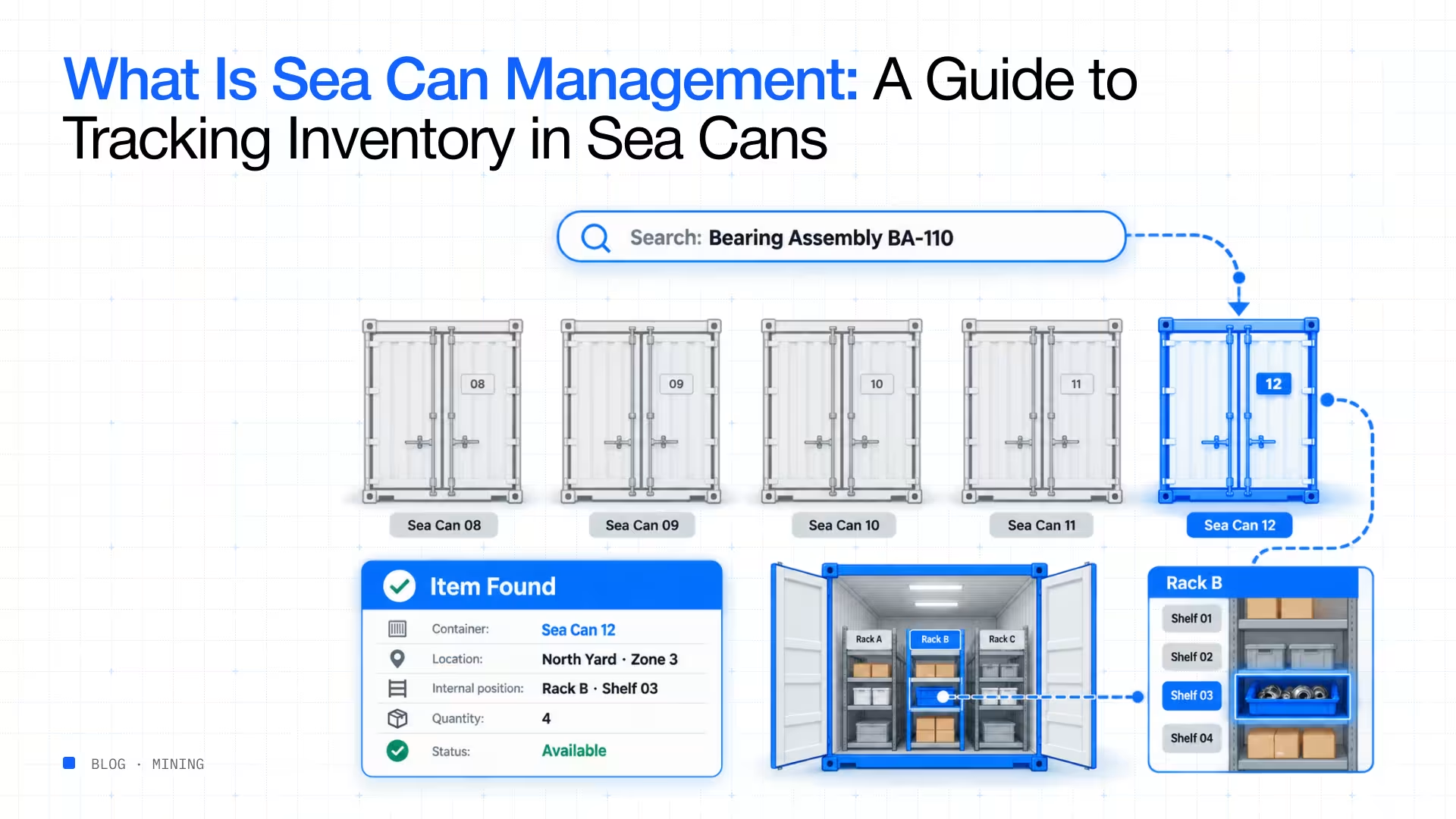
This improves inventory visibility because employees can search for a specific item and identify the sea can in which it is recorded. The system can then provide the container’s location, allowing the employee to go directly to the relevant storage area instead of searching through multiple containers.
Better visibility can also help procurement teams. Before purchasing another item, they can check whether the required stock already exists in a sea can at another location. This can reduce unnecessary purchasing and help organisations make better use of inventory already on hand.
Create real-time visibility across every storage location: See how Scatterlink helps industrial organisations connect inventory across warehouses, yards, sea cans and remote sites.
A well-managed sea can inventory process can reduce the amount of time employees spend searching for materials. When inventory records identify both the item and its container location, employees can move directly towards the relevant storage area rather than relying on trial and error.
It can also improve inventory accuracy by making physical movements part of the normal inventory workflow. If materials are transferred, issued or returned, those activities can be captured rather than leaving the original inventory record unchanged.
Another benefit is better utilisation of existing stock. Organisations may discover that inventory they were planning to purchase already exists in a sea can at another location. A connected inventory view makes it easier to identify this stock before placing another order.
Sea can inventory management can also support stronger operational accountability. When the system maintains a record of inventory movements and container locations, teams have a clearer history of what happened to materials and when.
The physical organisation of inventory inside a sea can has a direct impact on how easily materials can be located. Simply placing items wherever there is available space may maximise short-term storage capacity, but it can make retrieval significantly more difficult.
Inventory should ideally be organised according to factors such as frequency of use, item type, criticality, size and storage requirements. Frequently accessed materials should be easier to reach, while less frequently used inventory can be positioned in less accessible areas.
Where appropriate, internal zones, racks, shelves or bins can provide additional location detail. The digital system should reflect this structure so that employees can move from the sea can identity to the specific area where the material is stored.
This combination of physical organisation and digital location data creates much stronger sea can tracking. The system tells the employee which container to visit, while the internal location structure helps them find the material once they arrive.
One of the biggest challenges is that sea cans can become storage locations for materials that no longer have a clear owner or purpose. Over time, obsolete, surplus and active inventory can become mixed together, making it difficult to determine what is genuinely available.
Another challenge is infrequent access. Because some sea cans are used for long-term storage, employees may not inspect them regularly. Inventory discrepancies can therefore remain unnoticed for long periods.
Poor location information is another common issue. If the system identifies only the general site and not the specific sea can, employees may still have to search multiple containers. The same problem occurs when a sea can moves but its digital location is not updated.
Finally, manual processes can create inconsistencies between shifts and teams. If one employee records inventory carefully while another relies on paper notes or verbal communication, the quality of inventory information can vary significantly.
Sea cans should not be treated as isolated storage units when organisations operate across multiple locations. A container may be located at a central warehouse today and moved to a remote project site tomorrow. The inventory inside it needs to remain visible throughout that journey.
This is where multi-location inventory management becomes important. The inventory system should preserve the identity of the material while updating its physical location as it moves between warehouses, yards, sea cans and operational sites.
A connected approach also allows teams to see inventory across the broader network. Instead of searching each location independently, they can identify where a required item exists and determine whether it can be transferred from another site.
For organisations managing distributed industrial inventory, this creates a more complete picture of stock availability and can support better decisions around procurement, transfers and replenishment.
Sea cans are only one part of the inventory environment in complex industrial operations. Materials may move between warehouses, yards, sea cans, surface locations, underground operations and remote sites before they are ultimately consumed. Scatterlink is designed to provide inventory visibility across these environments rather than treating each storage location as an isolated system.
By combining RFID, mobile workflows and inventory intelligence, Scatterlink helps connect physical inventory with digital information about its location, movement and status. This can give teams a clearer understanding of where materials are stored and help reduce the time spent searching for inventory.
The approach is particularly relevant for industrial organisations where inventory needs to remain visible even when it moves outside a conventional warehouse. The goal is to maintain accurate, actionable information throughout the inventory lifecycle, from receipt to consumption.
Turn distributed inventory into actionable information: Learn more about Scatterlink and its inventory intelligence approach for complex industrial operations.
Sea cans can provide valuable storage capacity for industrial operations, but they also introduce another layer of complexity into inventory management. When materials are distributed across multiple containers, yards and remote locations, simply knowing that inventory exists is not enough. Teams need to know which sea can contains it, where that container is located, how much stock is available and whether the inventory is still physically present.
Effective sea can management connects the container, its location and its contents through a consistent inventory process. Unique container identification, standardised locations, mobile transactions and RFID can help organisations maintain a stronger connection between physical materials and digital inventory records.
The ultimate objective is not to manage containers for their own sake. It is to make the inventory stored inside them visible, traceable and accessible. When teams can confidently locate materials across sea cans and other distributed storage areas, they can reduce search time, improve inventory control and make better operational decisions.
Sea can management is the process of managing storage containers and the inventory stored inside them. It can include tracking container locations, identifying contents, recording inventory movements, monitoring stock and maintaining accurate digital records.
Sea can inventory management focuses specifically on controlling and tracking materials stored inside sea cans. It provides visibility into inventory quantities, locations, movements and statuses so employees can locate and use materials when required.
Inventory can be tracked by assigning unique identifiers to materials and linking them to the sea can in which they are stored. Barcodes, QR codes, RFID and mobile inventory applications can be used to record receiving, storage, transfers, issues and other inventory transactions.
Yes. RFID can be used to identify sea cans, individual inventory items or both, depending on the requirements of the operation. When integrated with inventory and location data, RFID can support faster identification and improved inventory visibility.
Tracking the location of a sea can helps employees identify where the inventory is physically stored. This becomes particularly important when multiple containers are distributed across large industrial yards, remote sites or different operational locations.
Sea cans can be used to store many types of industrial inventory, including spare parts, maintenance materials, tools, consumables, project materials and other supplies. The appropriate storage and tracking process depends on the characteristics and criticality of the inventory.
Sea can management connects individual materials with their physical storage containers and locations. This allows employees to search for inventory digitally and identify which container and location they need to access rather than physically searching through multiple storage areas.
Yes. A multi-location inventory management system can track materials as they move between warehouses, yards, sea cans and remote sites. This provides a broader view of inventory while retaining information about the specific physical location of each item.
Mobile applications allow employees to search inventory, identify sea cans and record transactions directly at the storage location. This can reduce paper-based processes and help ensure that inventory information is updated closer to the time when physical activity occurs.
Businesses can reduce misplaced inventory by assigning unique identities to containers and materials, using standardised storage locations, recording movements and maintaining current inventory records. RFID and mobile inventory workflows can further improve the accuracy and timeliness of tracking.
%20(1).avif)
.avif)
%20(1).avif)