

Managing inventory across a large industrial yard is very different from managing stock in a controlled warehouse. Materials may be spread across open storage areas, sea cans, racks, workshops and temporary locations, while employees and equipment continuously move through the site. When inventory movements are not captured accurately, teams can lose visibility over where materials are stored, what is available and what has already been moved or issued.
This is where yard inventory management software can make a practical difference. Instead of relying on spreadsheets, paper records or disconnected systems, the right software can create a structured way to track inventory across the yard and connect physical movements with digital records. For industrial operations, this can mean faster searches, better stock control and greater confidence in inventory information.
However, not every yard inventory management system is designed for the realities of large industrial environments. When evaluating software, organisations need to look beyond basic stock counts and consider how well the platform handles location tracking, mobile transactions, RFID, offline operations, multi-location visibility and integration with existing systems.
Yard inventory management software is a digital platform designed to track, control and manage inventory stored across industrial yards and associated storage locations. It can help organisations record inventory receipts, transfers, movements, issues, counts and consumption while maintaining visibility over where materials are located.
Unlike a basic inventory database, a dedicated yard inventory management system needs to account for the physical environment in which inventory is stored. Materials may be spread across multiple storage zones and may move frequently between locations.
The software should therefore connect inventory information with location and movement data. This allows employees to determine not only how much stock exists, but where it is expected to be and what transactions have affected it.
For industrial operations, the objective is to create a reliable digital record that follows inventory through its journey from receipt to consumption.
Industrial yards can contain thousands of individual materials across large and constantly changing storage environments. A material received today may be moved to another area tomorrow and issued to a maintenance team several days later.
When these movements are tracked manually, the inventory record can quickly become outdated. Employees may know where materials were placed, but that knowledge may not be available to everyone who needs it.
This creates unnecessary search time and can lead to duplicate purchasing. If a required component cannot be found, teams may assume it is unavailable even when it is physically sitting somewhere else in the yard.
A dedicated yard inventory management system provides a more structured way to maintain inventory location and movement information. It gives teams a common source of information instead of relying on individual knowledge.
The right yard inventory management software should support the way inventory actually moves through an industrial environment. It should make it easier for employees to record transactions, locate materials and maintain accurate inventory records.
While specific requirements will vary between organisations, there are several core capabilities worth evaluating. These include inventory location tracking, mobile functionality, RFID support, offline workflows, real-time visibility, multi-location management, transaction controls, reporting and ERP integration.
The most important consideration is how these features work together. A system may offer RFID, for example, but if RFID data does not connect to inventory records and movement workflows, its operational value may be limited.
The software should ultimately reduce complexity rather than introduce another disconnected layer into the inventory process.
Real-time inventory visibility should be one of the first features to evaluate. Teams need to know what inventory exists, where it is recorded and whether its status has changed.
Without timely information, employees may search for stock that has already been transferred or issue materials based on outdated quantities. This creates discrepancies between physical inventory and the system.
A strong yard inventory management system should provide a current view of inventory across relevant storage locations. This allows warehouse, yard and maintenance teams to make decisions using more reliable information.
Real-time visibility can also help management identify stock imbalances. If one location is holding excess inventory while another has a shortage, teams can assess whether stock should be redistributed.
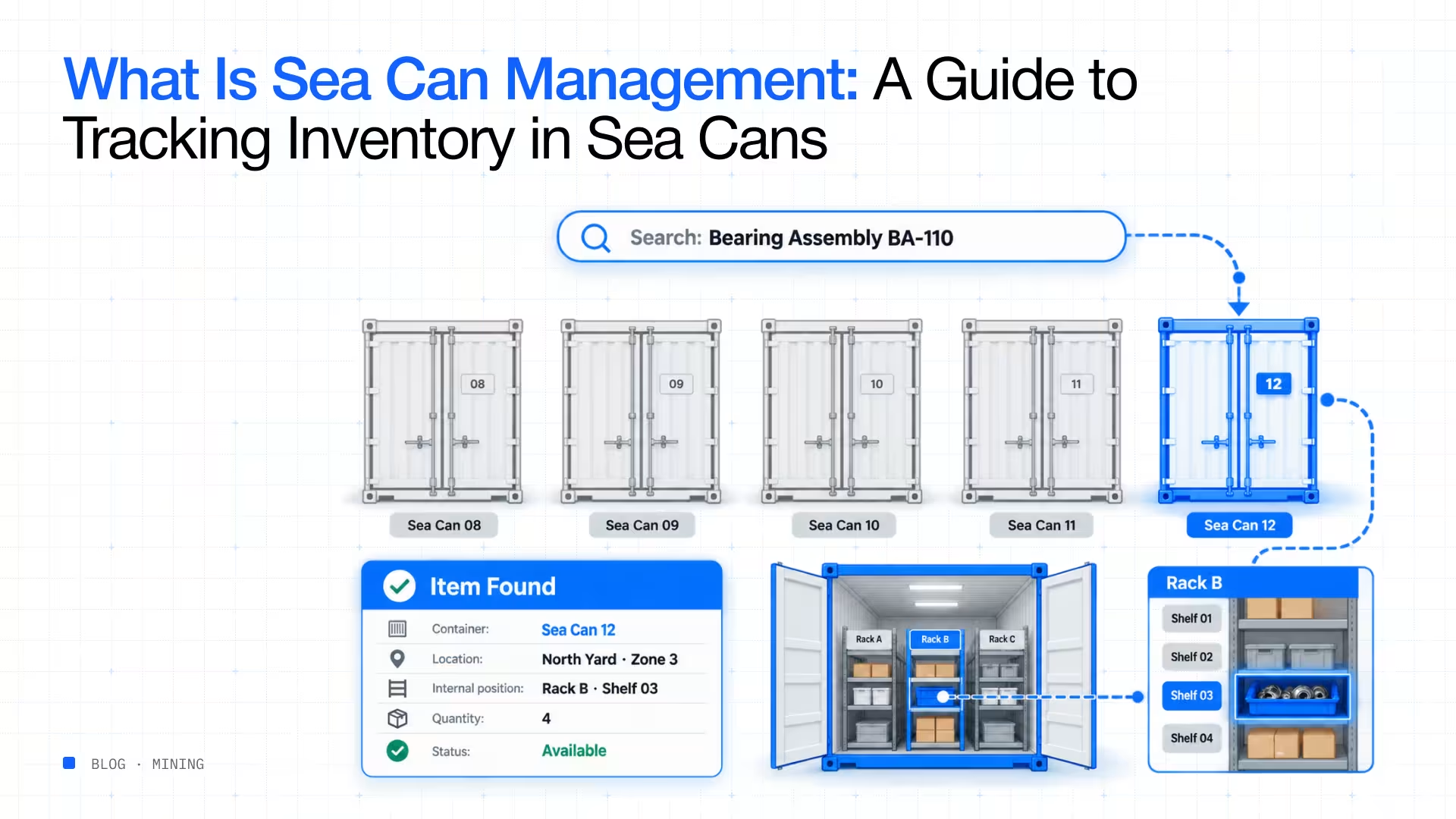
Inventory location tracking is essential in large yards because simply knowing that an item exists is not enough. Employees need to know where they should start looking for it.
The software should allow inventory to be associated with defined storage locations, zones or other relevant identifiers. When materials move, the location information should be updated as part of the transaction.
This creates a more detailed record of inventory movement. If an item cannot be found, employees can review its last recorded location rather than searching the entire yard.
Effective yard tracking also helps establish more consistent storage processes. Materials can be assigned to identifiable areas, making it easier to maintain order as inventory moves through the site.
Inventory transactions do not always happen inside a warehouse office. Employees may receive materials at a yard, move stock between storage areas or issue parts directly from a field location.
Mobile inventory management allows employees to complete these transactions where they happen. Instead of writing information down and entering it into the system later, employees can capture the transaction using a mobile device.
This can reduce delays between physical activity and digital recording. It can also improve adoption because employees do not need to return to a fixed workstation for every inventory transaction.
For large industrial yards, mobile functionality is particularly valuable because it brings the inventory workflow into the operating environment.
RFID inventory management can provide a faster method of identifying and tracking suitable inventory. RFID tags can be associated with inventory records, while compatible readers can capture information from tagged materials.
This can support inventory counts, receiving and movement tracking depending on the operational environment. It can also reduce the amount of manual identification required for certain inventory processes.
When evaluating RFID functionality, organisations should consider how deeply it is integrated into the inventory platform. RFID should not operate as a separate technology layer that produces data without connecting it to actual inventory transactions.
A strong solution connects RFID identification with inventory records, locations and workflows so that the information contributes to better inventory visibility.
Improve inventory identification and visibility: Explore Scatterlink’s RFID inventory management solution to see how RFID can support tracking across industrial yards.
Industrial yards can cover large areas, and network connectivity may not be consistent across every part of the site. If inventory software requires continuous connectivity, employees may be unable to record transactions when working in disconnected areas.
Offline inventory management allows employees to continue completing supported inventory transactions without an active network connection. The information can then synchronise with the central system when connectivity becomes available.
This is particularly useful for remote yards, underground operations and other locations where network availability cannot always be guaranteed.
When evaluating yard inventory management software, organisations should determine exactly which workflows are available offline. The ability to view information offline is useful, but the ability to record critical transactions offline is often more important.
Industrial inventory is rarely limited to a single yard. Materials may be distributed across warehouses, yards, workshops, remote sites and underground storage areas.
Multi-location inventory management allows organisations to maintain visibility across these locations within a connected inventory environment. Employees can determine whether stock is available locally or at another location.
This can help reduce unnecessary purchasing. If a required item is available elsewhere, the organisation can assess whether it should be transferred rather than ordering another unit.
Multi-location visibility also supports better stock allocation. Managers can identify locations holding excess inventory and consider whether it should be repositioned to meet demand elsewhere.
Materials can move frequently within an industrial yard. A component may be received into one location, transferred to another storage area and eventually issued to a maintenance team.
Every movement creates a potential point where inventory information can become inaccurate. If the transfer is not captured, the system may continue showing the material at its previous location.
A good yard inventory management system should therefore make transfers easy to record. The transaction should update the inventory location and contribute to the item’s movement history.
This creates traceability across the inventory lifecycle. Employees can see where materials were recorded previously and where they are expected to be now.
Inventory management software should provide appropriate controls around transactions. Not every user needs unrestricted access to adjust quantities, move stock or change inventory information.
Controlled transactions help organisations establish accountability around inventory activity. The system can record who performed a transaction and what action was taken.
This is particularly important for industrial environments where inventory may include high-value or operationally critical materials. A controlled process creates a clearer record of how inventory changes occur.
The objective is not to make inventory management unnecessarily complicated. Controls should support accurate transactions while keeping routine workflows simple enough for employees to use consistently.
Even with strong digital tracking, physical inventory counts remain an important part of inventory control. The software should support structured inventory counts and provide a way to identify discrepancies.
For large yards, counting inventory manually can be time-consuming. RFID or barcode functionality can potentially make certain counting processes more efficient, depending on the environment.
The system should also make it easier to investigate discrepancies. If the physical quantity does not match the recorded quantity, teams should be able to review relevant transactions and movement history.
This turns inventory counting from a simple quantity check into an opportunity to identify weaknesses in the inventory process.
Many industrial organisations already use an ERP system to manage procurement, finance and core inventory records. Replacing the ERP is not necessarily the objective when implementing yard inventory management software.
Instead, the yard inventory platform should complement the existing enterprise system. It should provide the field-level inventory workflows and visibility required to capture physical activity while maintaining appropriate integration with the ERP.
This is particularly important when inventory transactions need to flow between operational and enterprise systems. Poor integration can create duplicate records and additional administrative work.
Before selecting software, organisations should understand what information can be exchanged, how synchronisation works and which system remains the source of truth for different types of data.
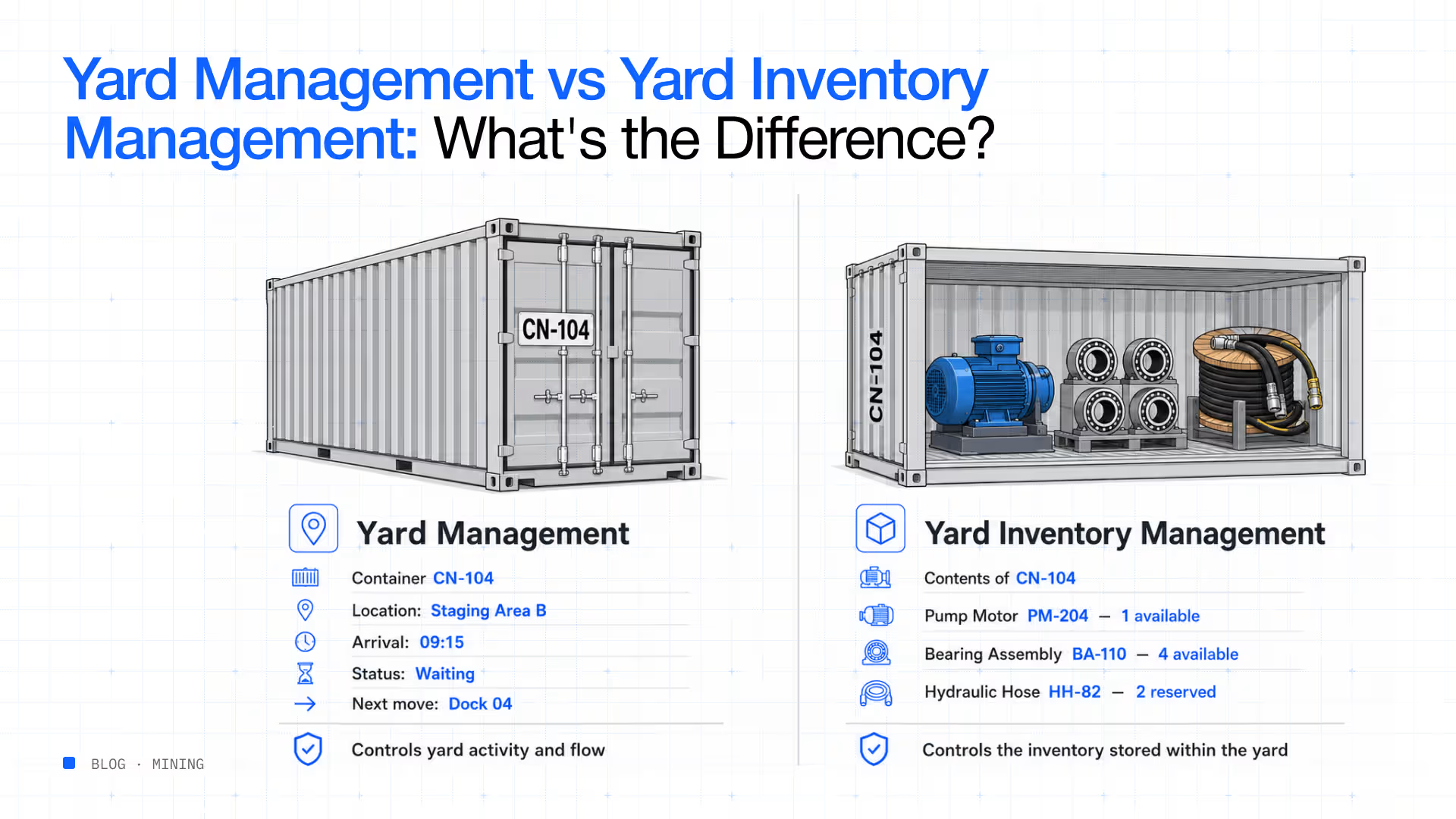
Yard management software generally focuses on managing activities within the yard, such as vehicles, trailers, appointments, movements and yard operations. Yard inventory management software, on the other hand, focuses specifically on the materials and inventory stored and moved within that environment.
There can be overlap between the two. A yard management system may provide some visibility into inventory, while an inventory management platform may support location tracking within a yard.
The distinction becomes important when selecting software. Organisations should first identify whether their primary problem is managing the movement of vehicles and yard activities or controlling the materials stored within the yard.
For companies focused on inventory visibility, stock control and material movement, a dedicated yard inventory management system may provide more relevant capabilities.
The primary benefit of yard inventory management software is the ability to create a more reliable view of inventory across the yard. Instead of asking employees where a material might be located, teams can use the system to identify its recorded location.
Mobile workflows can help ensure that movements are captured when they happen. RFID can provide additional identification capabilities, while offline functionality can maintain transaction continuity in areas without reliable connectivity.
Together, these capabilities reduce the gap between physical inventory and digital inventory information. The system becomes more useful because the information reflects what is actually happening within the yard.
Better visibility can also support faster decision-making. Teams can determine whether materials are available, whether stock needs to be transferred and whether additional purchasing is genuinely required.
Searching for inventory is often a hidden operational cost. Employees may spend considerable time walking through storage areas, checking containers or contacting other teams to find a required item.
With accurate location information, the search can begin with a defined storage area. Movement history can provide additional information if the material is not found where expected.
Yard inventory tracking can therefore reduce the time required to locate materials. It gives employees a digital starting point instead of relying entirely on physical searches.
This can be especially valuable for critical spare parts. When maintenance teams need a component quickly, knowing where to find it can be just as important as knowing that the component exists.
Poor inventory visibility can lead employees to purchase materials that the organisation already owns. This often happens when stock is distributed across multiple locations and employees cannot easily search beyond their immediate area.
A connected inventory management software platform can provide visibility across relevant locations. Before purchasing an item, teams can determine whether existing stock is available elsewhere.
If it is, the organisation can evaluate whether transferring the material makes more sense than placing a new order. This can improve stock utilisation and reduce unnecessary inventory accumulation.
Over time, better visibility can also help identify purchasing patterns. Organisations may discover that certain materials are being purchased repeatedly because existing inventory is difficult to locate or poorly distributed.
The first consideration should be the physical environment. Organisations should evaluate whether the software can support large yards, multiple storage areas and frequent inventory movement.
Next, consider how employees will use the system. Mobile workflows, simple interfaces and offline capabilities can determine whether the software is practical in the field.
The identification method is another important consideration. Depending on the operation, barcode, RFID or other identification technologies may be appropriate.
Finally, evaluate integration and scalability. The software should work alongside existing systems and support future expansion across warehouses, remote sites, surface operations and underground locations.
The right platform should fit the inventory process rather than forcing the organisation to redesign every workflow around the technology.
Managing inventory across industrial yards requires visibility that extends beyond basic stock quantities. Teams need to know where materials are located, how they have moved and whether the inventory record reflects what is physically available.
Scatterlink combines inventory intelligence with RFID, mobile and offline capabilities to support inventory visibility across complex industrial environments. This allows employees to capture inventory transactions closer to where physical activity occurs, including locations where connectivity may be limited.
The platform supports visibility from receipt to consumption, helping organisations maintain a connected view as inventory moves through warehouses, yards and operational locations. RFID can also be used to improve identification and tracking where the technology is appropriate for the environment.
For organisations evaluating yard inventory management software, the focus should ultimately be on whether the platform can make inventory more visible, more actionable and easier to control.
Turn inventory data into actionable information: Learn more about Scatterlink and its inventory intelligence approach for industrial inventory management.
Even technically advanced software will have limited value if employees find it difficult to use. Yard inventory transactions often need to happen quickly and in environments where employees are not sitting at a workstation.
The system should make routine actions straightforward. Employees should be able to identify materials, check relevant information and complete transactions without unnecessary administrative steps.
This is particularly important when implementing mobile and offline inventory workflows. The technology needs to fit naturally into existing work rather than becoming an additional burden for field teams.
Ease of use can ultimately affect data quality. When employees can complete transactions easily, organisations are more likely to capture inventory activity consistently.
Inventory visibility should not stop once a material enters the yard. The strongest yard inventory management software follows inventory through the relevant stages of its lifecycle.
At receipt, the material should be identified and assigned to the correct location. When it moves within the yard or to another facility, the transfer should be captured.
When the material is issued to a maintenance or operational team, that transaction should also be recorded. Finally, when the material is consumed, the inventory record should reflect that it is no longer available stock.
This creates a connected inventory trail rather than isolated transactions. It allows teams to understand not only what they have, but how inventory has moved through the operation.
Connect inventory from receipt to consumption: See how Scatterlink provides inventory visibility across warehouses, yards, surface and underground operations.
Choosing the right yard inventory management software is ultimately about solving a visibility and control problem. Industrial yards need more than a digital stock count. They need reliable location information, traceable movements and practical workflows that employees can use where inventory activity actually happens.
Features such as real-time inventory visibility, mobile inventory management, RFID, offline functionality and multi-location tracking can help close the gap between physical inventory and digital records. Integration with existing ERP systems can then connect field-level inventory activity with broader business processes.
The right system should make it easier to find materials, control stock and understand inventory movements across the yard. It should also be simple enough for employees to use consistently without creating additional administrative work.
For industrial organisations, the strongest yard inventory management system is not necessarily the one with the longest feature list. It is the one that provides accurate, actionable inventory information where and when teams need it.
Yard inventory management software is used to track, control and manage materials stored across industrial yards. It can provide visibility into inventory quantities, locations, movements and transactions.
Important features include real-time inventory visibility, location tracking, mobile inventory management, RFID, offline functionality, multi-location inventory management, inventory transfers, stock counts and ERP integration.
RFID can help identify tagged inventory and support processes such as inventory counts and movement tracking. It can reduce manual identification in suitable industrial environments.
Yard management software generally focuses on broader yard activities such as vehicle and movement management. Yard inventory management software focuses specifically on controlling and tracking materials and inventory within the yard.
Yes, some platforms support offline inventory management. This allows employees to record supported inventory transactions without an active network connection and synchronise the information later.
Mobile inventory management allows employees to capture inventory transactions at the point where physical activity occurs. This can reduce delayed data entry and improve the accuracy of inventory records.
It can provide information about inventory quantities, locations and movements across the yard. This helps employees determine where materials are expected to be and whether stock is available.
Yes. Many inventory platforms can integrate with ERP systems to exchange relevant inventory and transaction information. The exact integration capabilities depend on the software and system architecture.
It can provide visibility into stock held across multiple locations. Before purchasing new materials, teams can check whether the required inventory already exists elsewhere and consider transferring it.
A yard inventory tracking system is a software solution used to monitor inventory locations and movements within an industrial yard. It helps maintain a digital record of where materials are stored and how they move.
Real-time inventory tracking updates inventory information as transactions and movements are recorded. This gives teams more current information about stock availability and location.
Industrial yards can contain materials across large and complex storage environments. Accurate location tracking helps employees find inventory without relying entirely on physical searches or individual knowledge.
Yes. Multi-location inventory management allows organisations to track inventory across warehouses, yards, workshops, remote sites and other storage areas within a connected system.
Scatterlink combines inventory intelligence with RFID, mobile and offline capabilities to support inventory visibility across complex industrial environments. It helps organisations track inventory from receipt to consumption across warehouses, yards, surface and underground operations.
%20(1).avif)
.avif)
%20(1).avif)