
Supply chain disruptions have become a regular part of doing business. From raw material shortages and transportation delays to changing customer demand and geopolitical uncertainty, organizations are operating in an environment where disruptions can occur with little warning.
While many businesses have invested in forecasting tools, supplier diversification, and contingency planning, one critical capability often determines how effectively they respond when disruptions occur: supply chain visibility.
Organizations that can see what is happening across their operations make faster decisions, recover more quickly, and minimize operational impact. Those operating with incomplete or delayed information often spend valuable time verifying inventory, coordinating across departments, and responding to issues that could have been prevented.
In today's business environment, supply chain visibility is no longer a competitive advantage. It has become an operational necessity.
Supply chain visibility is the ability to monitor and understand the movement, location, and status of materials, inventory, and resources throughout the supply chain.
For many organizations, visibility ends once inventory is received into a warehouse and recorded in the ERP system. However, inventory continues moving long after that point. It is transferred between locations, issued for maintenance, relocated to field operations, consumed during production, or returned to storage.
Without visibility into these operational movements, businesses risk making decisions based on incomplete or outdated information.
True supply chain visibility extends beyond procurement and warehousing. It provides confidence that inventory information reflects operational reality at every stage.
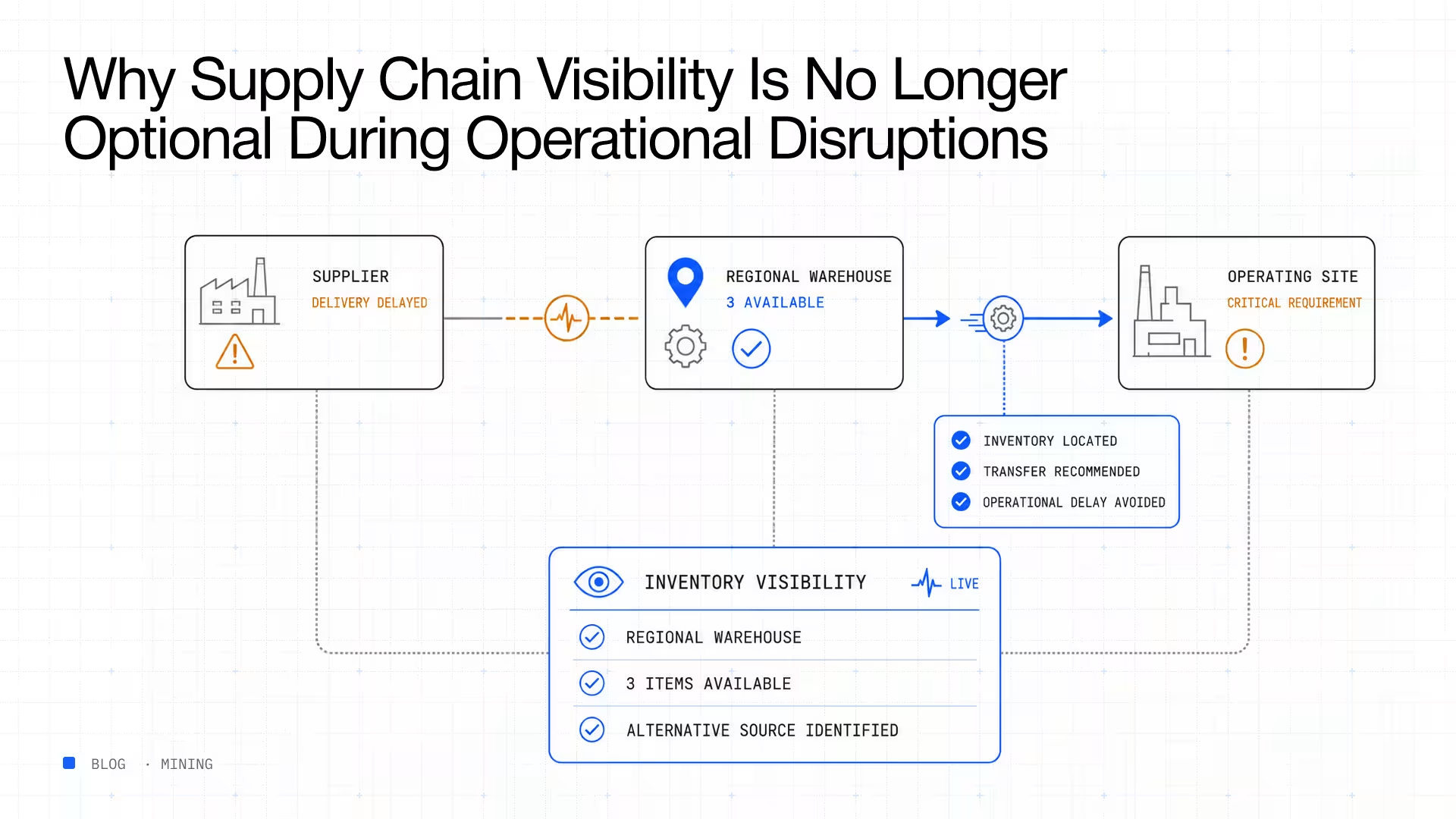
Disruptions place pressure on every part of the supply chain.
When demand changes unexpectedly or supplier lead times increase, organizations need immediate answers to critical questions.
Organizations that cannot answer these questions quickly often experience delayed maintenance, duplicate purchasing, unnecessary inventory transfers, and slower operational decision-making.
Visibility allows businesses to respond proactively instead of reacting after problems have already impacted operations.
Operational disruptions are easier to manage when inventory is visible in real time. Discover how Scatterlink helps organizations gain complete visibility across warehouses, stockyards, and field operations.
Many organizations assume they have complete visibility because inventory exists within an ERP system.
In reality, visibility gaps often develop during everyday operational activities.
Common examples include:
Each of these situations reduces confidence in inventory information. Individually they appear manageable, but together they create uncertainty that becomes increasingly difficult to resolve during periods of disruption.
The challenge is rarely the lack of data. It is the lack of timely, accurate operational visibility.
Supply chain disruptions require organizations to make decisions quickly.
Whether reallocating inventory, prioritizing maintenance activities, or responding to changing customer demand, every decision depends on reliable operational information.
When inventory visibility improves, organizations gain several advantages:
Rather than spending time validating inventory information, teams can focus on executing work and maintaining operational continuity.
ERP systems remain essential for procurement, financial reporting, and inventory transactions.
However, they are not always designed to provide continuous visibility into inventory movement after materials leave storage.
As inventory moves between warehouses, maintenance facilities, laydown yards, and remote operational sites, organizations need operational visibility that reflects these changes in real time.
Closing this visibility gap allows inventory records to remain aligned with physical operations, improving both operational performance and decision-making.
Visibility shouldn't stop when inventory enters your ERP. Learn how Scatterlink extends visibility from receipt to consumption through real-time inventory intelligence.
Visibility alone is valuable, but its greatest impact comes when organizations use it to improve operational resilience.
Reliable information allows leaders to identify emerging shortages, prioritize critical inventory, support maintenance planning, and respond more effectively to unexpected disruptions.
Instead of reacting to operational issues after they occur, organizations can identify potential risks earlier and take corrective action before production is affected.
This shift from reactive decision-making to proactive operational management is one of the defining characteristics of resilient organizations.
At Scatterlink, we believe visibility should extend far beyond inventory receipts and warehouse transactions.
Our Inventory Intelligence Platform combines RFID, barcode scanning, IoT devices, mobile workflows, and seamless ERP integration to provide real-time visibility into inventory movement, location, and usage across industrial operations.
Designed for rapid adoption and minimal training, Scatterlink fits naturally into existing workflows, allowing frontline teams to capture transactions as work happens. The result is accurate, intelligent, and actionable operational information that helps warehouse personnel, maintenance teams, procurement professionals, supervisors, and executives make faster, more confident decisions.
When disruptions occur, organizations don't simply need more data.
They need information they can trust.
Supply chain resilience starts with operational visibility. Explore how Scatterlink helps organizations make faster decisions through accurate, intelligent, and actionable inventory intelligence.
Supply chain disruptions are unlikely to disappear.
Organizations cannot control every external event, but they can control how prepared they are to respond.
Real-time supply chain visibility provides the foundation for faster decisions, stronger collaboration, improved inventory utilization, and greater operational resilience. By extending visibility beyond traditional inventory records and into everyday operational workflows, businesses can reduce uncertainty and respond confidently when disruptions arise.
In an environment where every decision matters, visibility is no longer optional. It is one of the most valuable capabilities an organization can build.
Supply chain visibility is the ability to monitor inventory, materials, and operational activities across the supply chain using accurate, real-time information.
Greater visibility helps organizations respond faster to disruptions, improve inventory accuracy, reduce delays, and make more informed operational decisions.
Real-time visibility allows organizations to identify risks earlier, locate inventory quickly, coordinate across departments, and maintain continuity during disruptions.
ERP systems manage transactions and inventory records, but many organizations require additional operational visibility to track inventory movement after it leaves storage and moves through daily operations.
Scatterlink combines RFID, barcode scanning, IoT devices, mobile workflows, and ERP integration to provide real-time visibility into inventory movement, location, and usage, helping organizations make faster, more informed operational decisions.
%20(1).avif)
.avif)
%20(1).avif)