
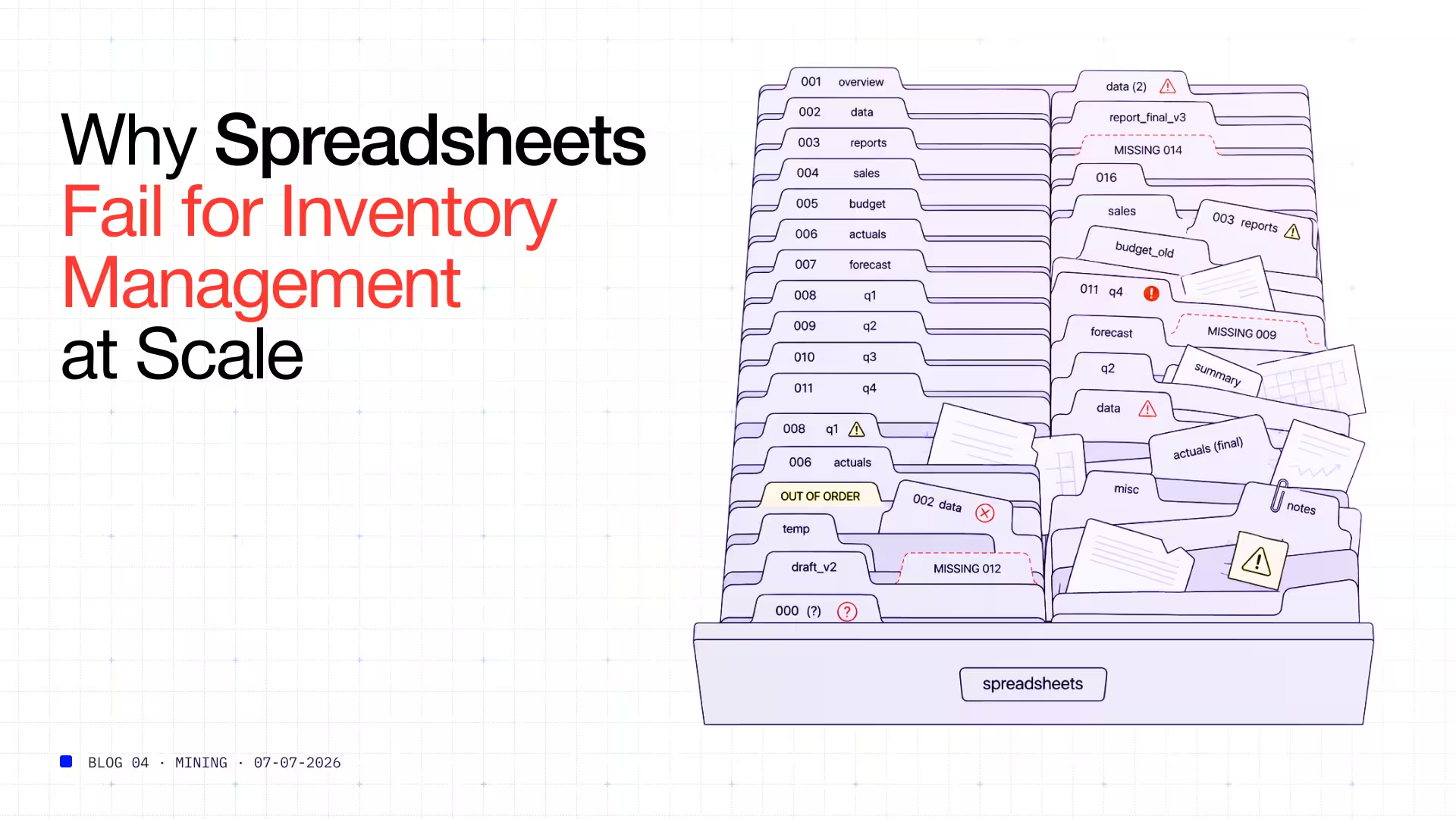
Spreadsheets remain a common tool for inventory management across many organizations. They are familiar, inexpensive, and easy to implement.
However, as inventory volumes grow and operations become more complex, spreadsheets often struggle to keep up.
Organizations managing inventory across warehouses, stockyards, maintenance facilities, or remote sites frequently encounter limitations that affect inventory accuracy, visibility, and operational efficiency.
Yes. Many organizations successfully use spreadsheets for basic inventory tracking.
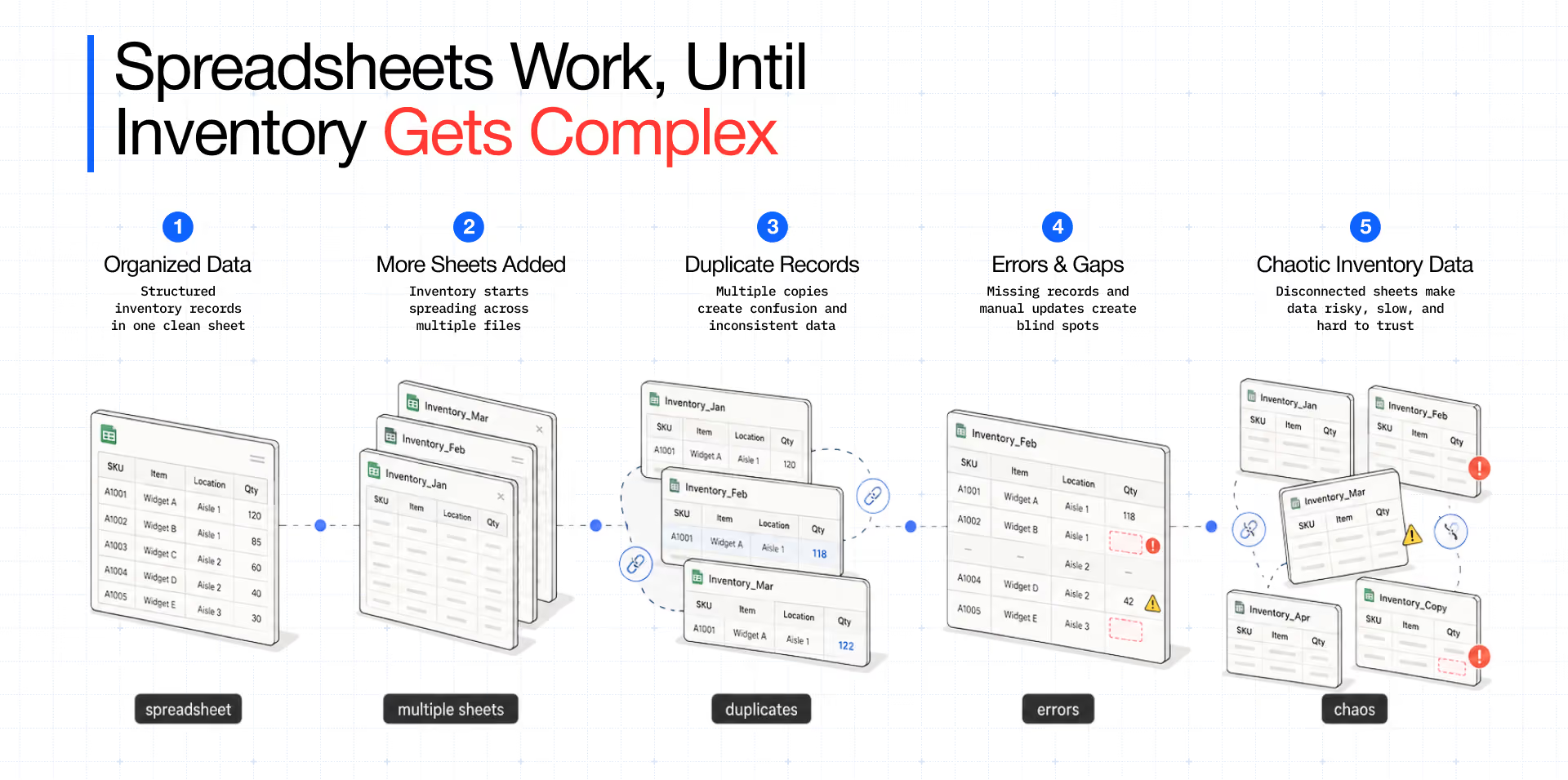
However, as operations expand, manual spreadsheet management breaks down due to lack of real-time visibility, high error rates, static data entry, and zero automated ERP integration; making spreadsheets a major liability for scaling enterprises.
Spreadsheets (Excel, Google Sheets) offer low entry barriers for early-stage operations. They are functional when:
As transaction volumes increase and operations span large yards or job sites, spreadsheets introduce severe risks:
Switch to Scatterlink’s automated tracking platform to replace static spreadsheets with real-time, error-free RFID and barcode data.
Spreadsheets only provide information that has been manually entered.
Inventory data can quickly become outdated if updates are delayed.
Manual data entry can lead to:
These issues reduce inventory accuracy.
When multiple employees access inventory information, version control becomes a challenge. Different teams may rely on different versions of the same spreadsheet.
Spreadsheets often provide limited information about inventory locations. As organizations add storage areas and facilities, locating inventory becomes increasingly difficult.
Generating inventory reports from spreadsheets often requires manual effort. This limits visibility into inventory performance and trends.
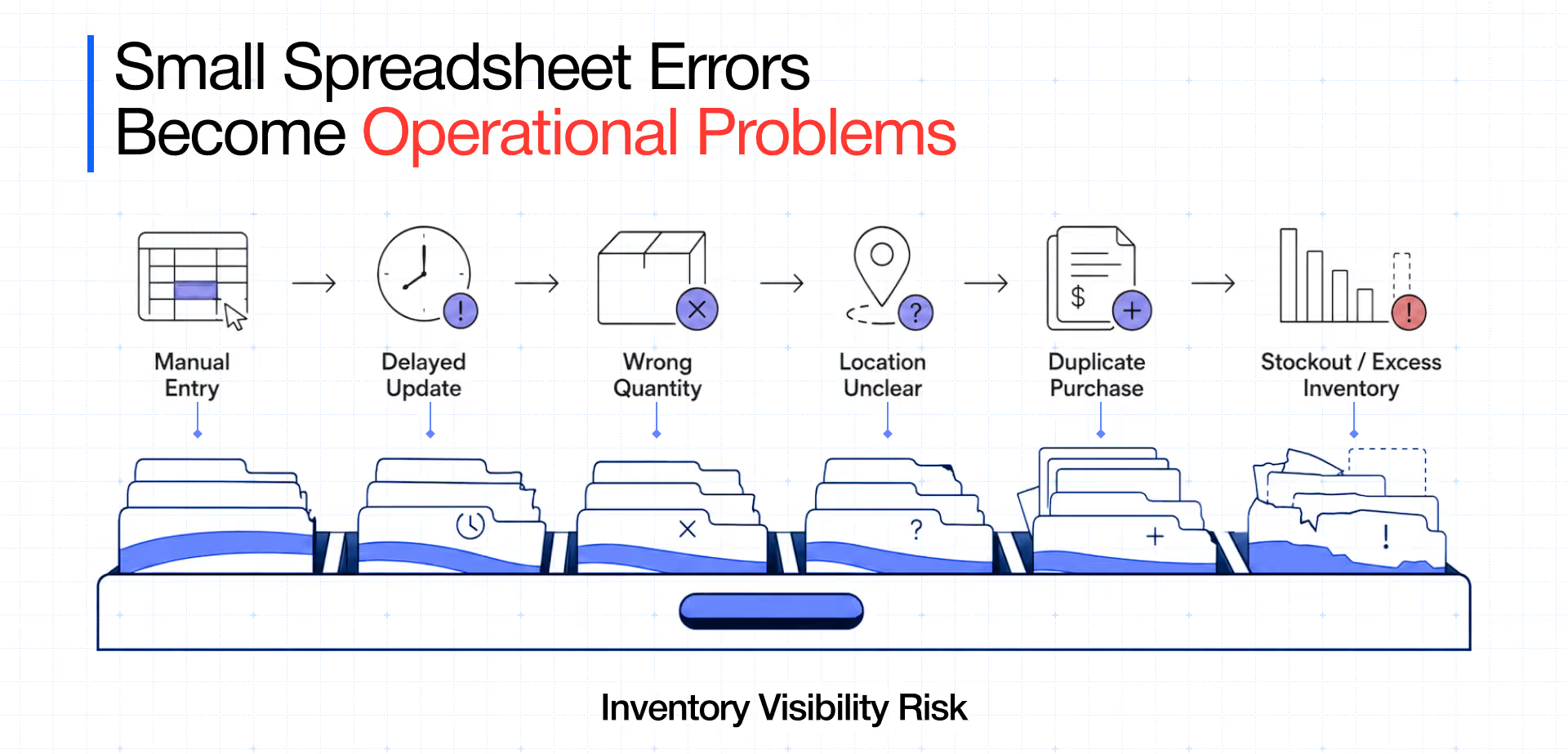
Spreadsheet limitations directly impact operations by causing stockouts, costly equipment downtime, inaccurate stock counts, and duplicate emergency purchases.
In complex industrial, mining, and stockyard environments, relying on static manual spreadsheets creates data silos and operational delays. As transaction volumes grow, these spreadsheet limitations prevent real-time asset visibility, leading to unrecorded inventory movements and inflated carrying costs.
When industrial facilities, mining sites, and outdoor stockyards rely on manual tracking, spreadsheet limitations quickly ripple across the entire supply chain. Below are the four major operational bottlenecks created by static spreadsheets:
When maintenance teams rely on manual logs to track critical replacement parts, inaccurate stock levels are inevitable. Severe spreadsheet limitations prevent real-time updates when parts are pulled from laydown yards, leading to unexpected missing spares when equipment fails and causing costly, unscheduled operational shutdowns.
One of the most expensive spreadsheet limitations is the creation of "phantom stockouts." When field technicians cannot locate materials listed in a static file, they assume stock is unavailable. This triggers emergency purchase orders for materials that are already on-site: wasting capital and inflating yard inventory levels once items are rediscovered.
Manual data entry inherently introduces human error. As inventory moves across large yards or remote job sites, delayed updates exacerbate existing spreadsheet limitations. Missing serial numbers, broken formulas, and version control conflicts lead to severe discrepancies between recorded stock and physical audits.
Static spreadsheets only record that an item exists; not its exact, dynamic location in a heavy laydown yard. Operations teams face significant labor inefficiencies due to spreadsheet limitations, spending hours physically hunting for snow-covered, buried, or misplaced assets that lack GPS or RFID tracking.
To maintain operational continuity, growing enterprise sites must transition away from static tracking. Evaluating how spreadsheet limitations hold back performance makes the need for automated inventory platforms clear:
By addressing these structural spreadsheet limitations, operations directors can protect equipment uptime, reduce emergency procurement costs, and achieve complete inventory visibility.
Your organization may have outgrown spreadsheet-based inventory management if:
These challenges often indicate the need for more advanced inventory management processes.
Modern inventory management systems provide real-time asset visibility, automated RFID and barcode tracking, mobile offline sync, and predictive analytics. Unlike static spreadsheets, modern inventory management systems integrate field-level mobility with central ERP platforms to eliminate phantom stockouts, shorten search times in outdoor yards, and maintain precise audit trails across complex industrial and remote operations.
Enterprise operations in mining, industrial manufacturing, and outdoor logistics require digital tracking built for harsh environments. Modern inventory management systems bridge the gap between field operations and enterprise resource planning by delivering six core capabilities:
Instead of relying on end-of-day data entry, modern inventory management systems give operations teams live visibility into stock levels, material transfers, and storage locations across wide laydown yards and multi-site facilities.
By replacing manual paper logs with RFID tags and barcode scanners, modern inventory management systems allow workers to instantly identify materials—even when asset tags are obscured by snow, frost, or mud in outdoor stockyards.
Connectivity outages in remote field environments often stall digital record-keeping. Modern inventory management systems feature native offline functionality, allowing field crews to record stock movements on ruggedized devices and automatically sync data once connectivity is restored.
To prevent costly equipment downtime, modern inventory management systems automatically trigger low-stock alerts when high-wear replacement parts drop below minimum inventory thresholds.
Finding materials in massive outdoor yards can waste hours of labor. Modern inventory management systems utilize GPS mapping and digital yard zoning to guide workers directly to asset locations, drastically reducing search times.
Rather than creating isolated data silos, modern inventory management systems sync bi-directionally with platforms like SAP, Oracle, and NetSuite, ensuring accurate inventory valuation and streamlined procurement workflows.
Ready to bridge the gap between your field operations and your ERP? Explore how Scatterlink delivers live inventory visibility even in remote locations with zero cellular connection.
The primary benefits of automated inventory management over spreadsheets include real-time asset tracking, up to 90% faster inventory search times, reduced emergency procurement costs, and automated data accuracy. By adopting automated inventory management, industrial and mining operations eliminate human data entry errors, prevent costly equipment downtime caused by missing spare parts, and streamline field audits across complex outdoor laydown yards.
Relying on manual spreadsheets in large-scale yards and remote job sites exposes businesses to significant operational risks. Transitioning to automated inventory management delivers transformative advantages across five critical operational areas:
The immediate advantage of automated inventory management is gaining live, unified tracking across all outdoor yards, warehouses, and remote facilities. Instead of waiting for manual end-of-day updates, operations teams can monitor material locations, stock movements, and asset status instantaneously from any device.
By implementing automated inventory management with digital yard mapping, RFID tags, and GPS tracking, field workers eliminate the hours spent hunting for misplaced, snow-covered, or obscured assets. Pinpoint location data guides crews directly to items, cutting yard search times by up to 90%.
Static manual logs often create "phantom stockouts" when technicians cannot find items listed in an Excel file. Automated inventory management ensures stock records reflect actual physical yard inventory in real time, preventing panic buying and duplicate emergency orders for parts already on-site.
Manual data entry inherently introduces typos, unrecorded transfers, and version-control conflicts. With automated inventory management, barcode and RFID scanning deliver near-100% data accuracy and maintain complete, unalterable audit trails for every stock transaction.
Sub-zero weather and heavy usage place immense stress on industrial machinery. Automated inventory management allows maintenance managers to set low-stock alerts and minimum thresholds for critical spare parts, ensuring replacement components are always available before a mechanical failure stalls production.
Spreadsheets can be useful for basic inventory tracking, but they often struggle to support growing inventory operations. As inventory complexity increases, organizations require greater visibility, accuracy, and control.
By moving beyond spreadsheets and adopting modern inventory management practices, organizations can improve inventory accuracy, reduce operational inefficiencies, and make better-informed decisions across their inventory operations.
Stop letting spreadsheet limitations create stockouts and emergency purchase orders. Book a personalized Scatterlink demo today to see how modern inventory intelligence protects your operational uptime.
Spreadsheets can work for small operations but often become difficult to manage as inventory complexity increases.
Common risks include human error, outdated information, poor visibility, and limited scalability.
Organizations should consider alternatives when inventory volumes, locations, or operational complexity begin affecting inventory accuracy and efficiency.
Inventory management systems provide real-time information about inventory quantities, locations, and movements across the organization.
%20(1).avif)
.avif)
%20(1).avif)