
Inventory does not always sit neatly inside a warehouse. In industrial operations, materials can be distributed across open yards, laydown areas, stockyards, storage zones, sea cans and remote locations, often moving between them before they are ultimately used. The challenge is that once inventory moves beyond a controlled warehouse environment, maintaining an accurate record of what is available and where it is located becomes considerably harder. This is why yard inventory management has become an important part of maintaining inventory visibility across complex industrial operations.
At its core, yard inventory management is about knowing what inventory is physically present in a yard, where it is stored, what its current status is and how it has moved through the operation. A yard inventory system connects these physical movements with digital inventory records so that teams are not relying on spreadsheets, memory or periodic manual checks to determine what is available. For organisations managing large volumes of materials across multiple locations, this visibility can directly influence maintenance response times, procurement decisions, stock accuracy and operational continuity.
Yard inventory management is the process of tracking, organising, controlling and maintaining visibility of inventory stored within an industrial yard or other external storage location. It covers the inventory lifecycle from receiving and identification through storage, movement, issuing and eventual consumption or dispatch. Unlike conventional inventory management, which often operates within structured warehouse environments, inventory management in yards must account for larger physical areas, changing storage locations and frequent material movement.
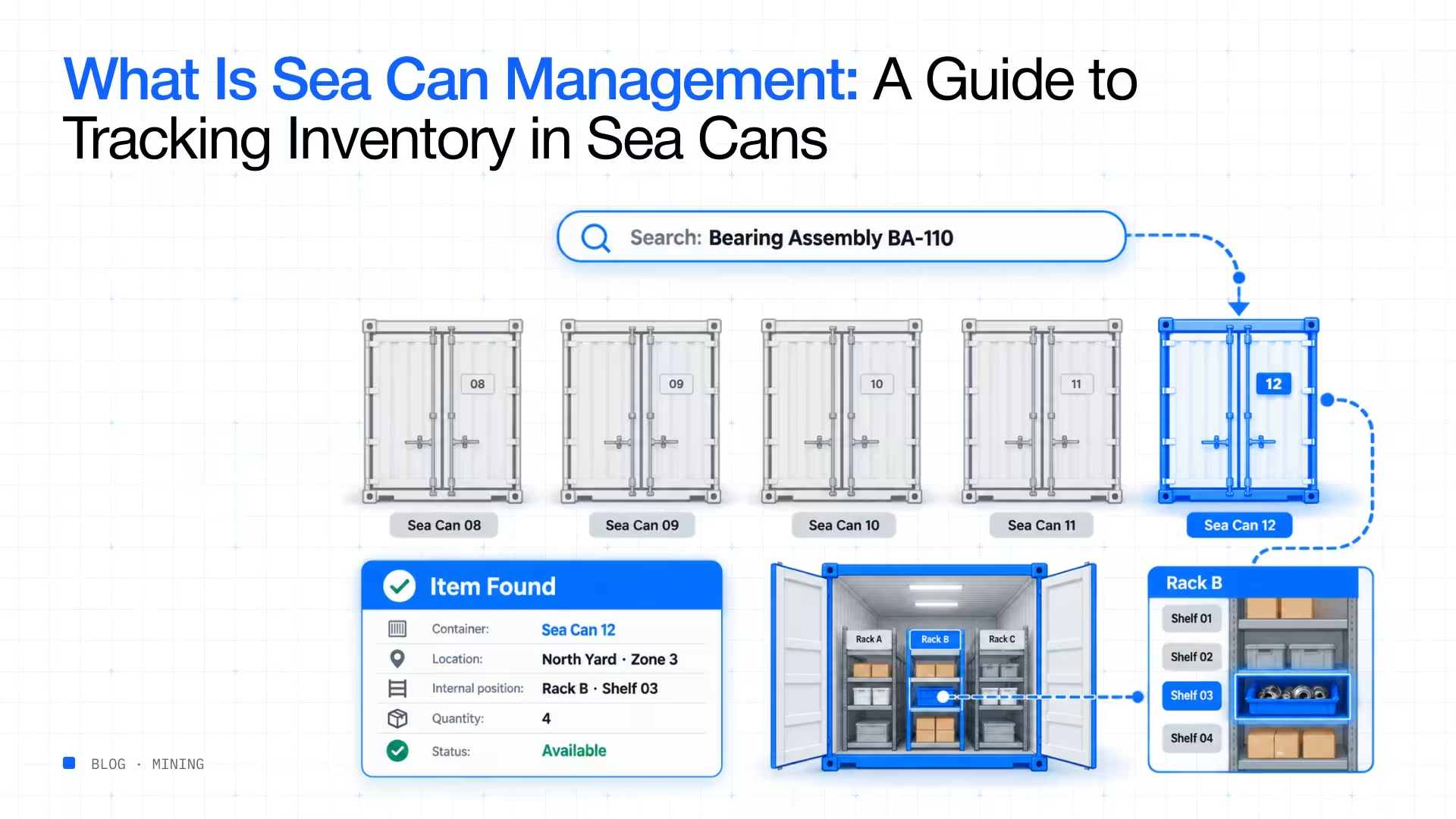
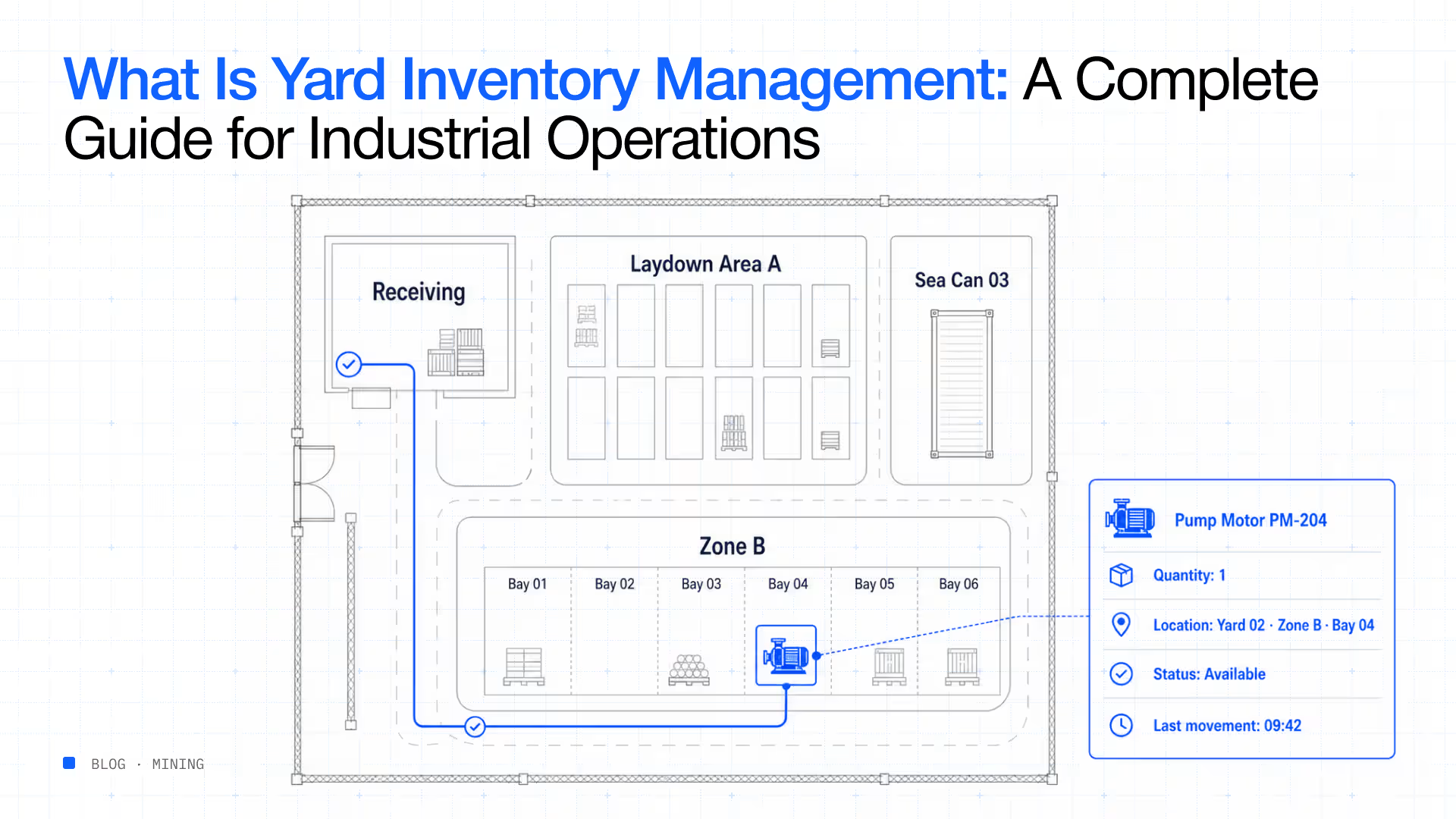
A yard inventory system provides a digital way to associate materials with their physical locations and status. Depending on the operation, that may mean tracking a part to a specific zone, rack, bay, container, laydown area or other storage location. The objective is not simply to know how much stock exists, but to create a reliable connection between the inventory record and the physical inventory on the ground.
This distinction is important for industrial organisations because inventory that cannot be located quickly is not necessarily operationally useful. A system may show that a critical spare part is available, but if employees have to search several yard locations to find it, the organisation still has an inventory visibility problem. Effective yard inventory tracking closes that gap by giving teams a clearer understanding of what they have, where it is and whether it can actually be used.
Industrial yards often function as an extension of the warehouse, but they do not always have the same level of structure, control or visibility. Materials may arrive, remain in storage for weeks or months, move between locations and eventually be issued to maintenance, production or field teams. When these movements are not captured consistently, the digital inventory record can gradually diverge from the physical reality of the yard. Modern yard management technologies therefore place significant emphasis on real-time transactions, location visibility and tracking inventory movements within the yard. (Oracle Documentation)
The consequences of poor yard stock control can extend far beyond a misplaced item. Employees may spend valuable time searching for materials, procurement teams may purchase stock that already exists elsewhere, and maintenance teams may face delays because the location of a required component cannot be confirmed. Over time, these individual problems can contribute to excess inventory, inefficient use of storage space and reduced confidence in inventory data.
For this reason, industrial yard management should not be treated simply as a storage exercise. It is an inventory control discipline that connects the physical environment with the information employees need to make decisions. The stronger that connection becomes, the easier it is to maintain accurate, actionable inventory information across the operation.
A successful yard inventory management process follows inventory through the physical stages it passes through rather than treating the yard as a static storage area. The process normally begins when materials arrive at the yard and continues through identification, location assignment, movement, status changes, issuing and consumption. Every transaction provides another opportunity to maintain the accuracy of the inventory record.
The first step is recording inventory when it enters the yard. Depending on the operation, this may involve capturing the item number, description, quantity, serial number, batch information, supplier information or other identifiers required for traceability. The information collected at receiving establishes the initial digital record against which future movements can be measured.
This stage is particularly important because inaccurate receiving data can create problems throughout the inventory lifecycle. If an item is received under the wrong identifier or quantity, later inventory searches and reconciliation activities will also be affected. A well-designed yard inventory tracking process therefore captures information as close to the point of receiving as possible.
Once inventory has been received, it needs to be associated with a physical location. That location might be a designated yard zone, rack, bay, container, laydown area or another defined storage point. The more clearly the physical yard is mapped to digital locations, the easier it becomes for employees to find materials when they need them.
Location information is particularly valuable in large industrial yards because knowing that an item exists somewhere within the facility does not necessarily provide useful operational visibility. A yard inventory system should help answer the more practical question: Where exactly is the inventory located? This is one of the fundamental differences between simply maintaining a stock balance and maintaining true yard inventory visibility.
Inventory rarely stays in one location throughout its lifecycle. Materials can move from receiving to storage, between yard zones, into a warehouse, to a remote work area or eventually to the point of consumption. Every movement can create a discrepancy if the physical transaction occurs but the inventory record is not updated.
Yard inventory tracking therefore needs to capture movement rather than relying only on periodic counts. When inventory information is updated close to the point of movement, teams have a more current picture of where materials are located and can spend less time manually verifying their whereabouts.
Location is only one part of inventory visibility. Industrial operations may also need to know whether inventory is available, reserved, issued, damaged, quarantined, under inspection or otherwise unavailable for use. Two identical items may physically exist in the same yard while having completely different operational statuses.
This is why effective yard stock control combines quantity, location and status. Without all three, employees may see inventory in the system and assume it is immediately available when it may already be committed to another job or awaiting inspection.
The inventory lifecycle does not end when a material leaves the yard. It is important to connect the movement of inventory with the transaction that ultimately uses or consumes it. This helps organisations maintain visibility from receipt through to actual consumption instead of losing control of materials once they leave a defined storage location.
For industrial organisations, this can be particularly important for spare parts and maintenance materials. The objective is to know not just that an item was issued, but where it went and whether it was ultimately consumed as part of the operational process.
The physical environment of a yard creates several challenges that can make conventional inventory processes difficult to maintain. Unlike a warehouse with clearly defined aisles, shelves and bin locations, an industrial yard may cover a much larger area and contain materials in different types of storage. Materials may also be exposed to weather, moved by different teams and stored temporarily before being required.
The size of an industrial yard can make manual inventory searches extremely inefficient. When materials are spread across multiple zones, employees may know that an item exists but have little confidence about its exact location. This becomes even more difficult when inventory is distributed across multiple yards or remote sites.
A structured yard inventory system can address this by associating inventory with defined locations and maintaining a record of movements between them. Instead of asking employees to rely on local knowledge, the organisation creates a shared source of inventory location information.
Manual processes are another common source of inventory discrepancies. Paper records, spreadsheets and delayed system updates can create a time gap between what happens physically and what appears digitally. Research and commercial yard systems consistently highlight real-time tracking and automated data capture as ways to reduce the limitations of manual yard processes. (Usit)
The problem is not necessarily that manual processes are always inaccurate. The problem is that they become increasingly difficult to control as transaction volumes, locations and users increase. A material can be moved several times before someone updates the record, leaving the next person with outdated information.
Search time is one of the less visible costs of poor yard inventory management. Employees may need to walk through several areas, contact other teams or physically inspect storage locations before confirming whether a material exists. For critical inventory, those delays can become operationally significant.
The issue becomes more pronounced when the inventory record provides only a general location rather than a precise one. A system that says a component is “in the yard” provides very different value from a system that identifies its current yard, zone and storage location.
Industrial operations frequently manage inventory across more than one physical site. A material might be stored in a central warehouse, an external yard, a remote storage area or a sea can before eventually reaching the point of use. When each location operates independently, teams can struggle to determine the total inventory available across the organisation.
This is where yard inventory management becomes part of a broader inventory visibility strategy. The goal is to provide a connected view of inventory across locations rather than creating another isolated record for every yard.
RFID is increasingly used to improve the identification and tracking of inventory in environments where manual scanning can be time-consuming. RFID tags can be associated with inventory, while RFID readers capture information from tagged items without requiring the same type of direct scanning process used by traditional barcodes. This can make RFID particularly useful for large or complex environments where inventory needs to be identified efficiently.
For yard inventory tracking, RFID can help reduce the manual effort involved in identifying materials and recording their movements. Instead of depending entirely on employees to remember every transaction, RFID-based processes can provide another layer of automated data capture. The technology can therefore support more timely inventory information while reducing opportunities for manual entry errors.
However, RFID should not be treated as the solution by itself. The value comes from connecting RFID data to an inventory management process that understands the item's identity, location, status and transaction history. When RFID is combined with mobile workflows, inventory intelligence and connected systems, it can become part of a broader approach to real-time inventory visibility.
Improve visibility from receipt to consumption: See how Scatterlink uses RFID inventory management to help industrial organisations improve inventory visibility and control.
A well-designed yard inventory system can improve visibility without requiring teams to rely on physical searches or disconnected records. The most important benefit is the ability to create a more accurate picture of inventory as it moves through the yard. This can support faster operational decisions and reduce the uncertainty that comes with outdated inventory information.
One of the biggest benefits is better inventory visibility. Teams can see what materials are available and associate those materials with their physical locations, making it easier to identify stock before placing new purchase requests. This can also help reduce unnecessary inventory accumulation by giving procurement and operations teams greater confidence in existing stock.
Another benefit is faster inventory retrieval. When location information is reliable, employees spend less time searching for parts and materials across large yards. For operations where maintenance activities depend on timely access to critical inventory, reducing search time can have a direct operational benefit.
Yard inventory management can also improve inventory accuracy and accountability. When receiving, movement, issuing and consumption transactions are captured consistently, there is a clearer history of what happened to an item. This can make reconciliation easier and provide stronger evidence when teams need to investigate discrepancies.
Finally, a connected approach can support multi-location inventory visibility. Instead of viewing a yard as a standalone storage area, organisations can connect yard inventory with warehouses, remote sites and other storage locations. This gives decision-makers a broader view of inventory availability across the operation.
Traditional inventory management is primarily concerned with controlling stock levels, replenishment, receiving, issuing and consumption. Yard inventory management includes these principles but places greater emphasis on the physical location and movement of inventory outside a conventional warehouse. The difference becomes particularly important when materials are distributed across large yards or multiple external storage areas.
In a structured warehouse, an item may have a clearly defined bin or shelf location that rarely changes. In a large industrial yard, materials can move between zones, laydown areas, containers and temporary storage locations. As a result, inventory management in yards requires greater attention to location accuracy and movement tracking.
This does not mean yard inventory management should replace traditional inventory management. The two should work together so that inventory records remain connected across the complete operational environment. A strong inventory strategy should provide visibility whether material is inside the warehouse, outside in a yard or located at a remote operational site.
Improving yard inventory management starts with understanding where inventory visibility currently breaks down. Organisations should map the journey of materials from receiving through storage, movement, issuing and consumption, then identify where manual processes or disconnected systems create gaps. This provides a practical foundation for determining where technology and process improvements can deliver the greatest value.
The next step is to establish consistent physical and digital locations. Every major yard area should have a clear location structure that employees can understand and the inventory system can represent accurately. Once locations are standardised, organisations can introduce better movement tracking, mobile transactions, barcode scanning or RFID depending on their operational requirements.
It is also important to capture transactions as close to the physical activity as possible. Delayed updates create uncertainty, particularly in high-movement environments where inventory may change locations several times during a shift. Mobile inventory applications can allow employees to record transactions at the point where work occurs, while offline capabilities can help maintain workflows in locations where network connectivity is unreliable.
Finally, yard inventory should not exist as an isolated information source. Connecting yard data with the wider inventory environment allows organisations to understand what stock is available across warehouses, yards and remote locations. This broader approach turns inventory data into something teams can use to make faster and more informed operational decisions.
For industrial organisations, the challenge is rarely limited to one yard. Inventory may move between warehouses, yards, remote sites and operational areas before it is ultimately consumed, making a connected approach to inventory visibility increasingly important. Scatterlink is designed around this broader requirement, helping organisations maintain visibility across the inventory lifecycle rather than treating individual storage locations as isolated systems.
With RFID, mobile workflows and inventory intelligence, Scatterlink helps connect physical inventory with the information teams need to manage it. This supports visibility from receipt to consumption, including inventory across surface and underground operations and other distributed industrial environments.
Extend inventory visibility beyond the warehouse: Explore Scatterlink’s RFID inventory management solution.
Yard inventory management is not simply about knowing how much stock is sitting outside a warehouse. It is about knowing what inventory exists, where it is located, what condition or status it is in and how it moves through the operation. For industrial organisations managing large yards, remote locations and distributed materials, that level of visibility can make the difference between inventory that is technically recorded and inventory that is genuinely usable.
The most effective approach combines clear location structures, disciplined inventory transactions, mobile workflows and technologies such as RFID with the organisation's wider inventory systems. When physical inventory and digital records remain connected, teams can spend less time searching for materials and more time acting on accurate, actionable information.
Yard inventory management is the process of tracking and controlling materials stored in industrial yards, stockyards, laydown areas and other external storage locations. It includes receiving, location assignment, movement tracking, status management, issuing and consumption so organisations can maintain visibility into inventory outside the traditional warehouse.
A yard inventory system is software used to record, track and manage inventory stored in a yard. It can provide information about inventory quantity, location, movement and status, and may integrate with ERP, warehouse or other inventory systems to provide a broader view of stock.
Yard inventory tracking is the process of monitoring inventory as it enters, moves through and leaves a yard. Depending on the environment, organisations can use barcodes, mobile applications, RFID or other technologies to capture inventory movements and maintain more accurate location information.
Yard inventory management helps industrial organisations maintain visibility over materials that are stored outside traditional warehouses. Better visibility can reduce search time, improve inventory accuracy, support better purchasing decisions and help teams locate critical materials when they are required.
Yes. RFID can be used to identify and track tagged inventory in industrial yard environments. When RFID data is connected to an inventory management platform, it can help reduce manual identification and provide more timely information about inventory movements and locations.
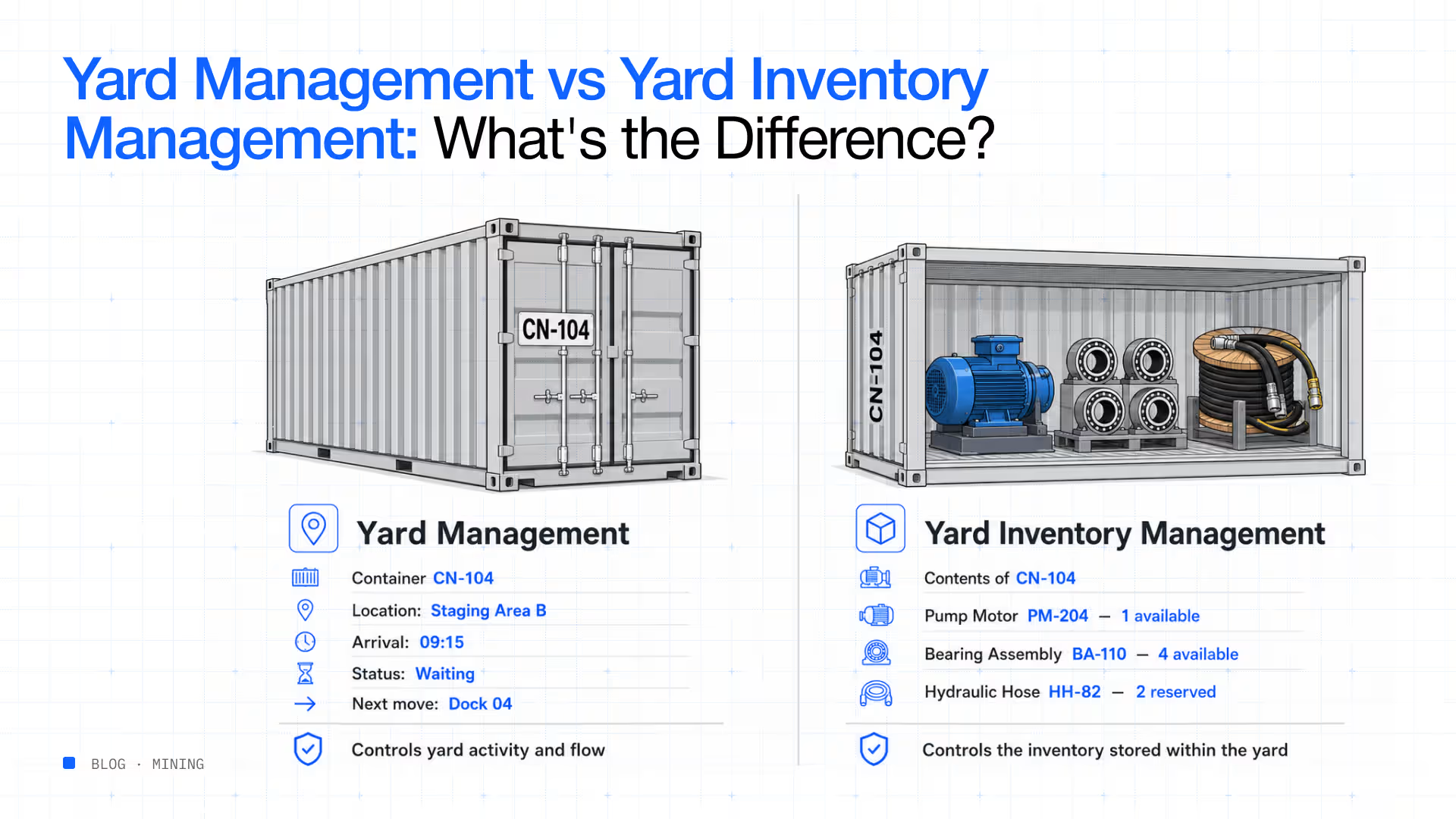
Yard management generally covers the broader coordination of activities within a yard, which can include vehicle movements, gates, docks, storage and scheduling. Yard inventory management has a more specific focus on the materials and stock physically stored in the yard, including their quantity, location, status and movement.
It connects inventory records with physical locations and movements. Instead of simply knowing that stock exists, teams can gain a clearer understanding of where it is stored, whether it is available and how it has moved through the operation.
Yes. A connected yard inventory approach can provide visibility across multiple yards as well as warehouses, remote sites and other storage areas. This is particularly valuable for industrial organisations where inventory is distributed across a large geographic or operational footprint.
%20(1).avif)
.avif)
%20(1).avif)