
Modern supply chains generate an enormous amount of data every day. Purchase orders are created, shipments leave suppliers, inventory arrives at warehouses, materials move between facilities and finished products are delivered to customers. Every one of these activities creates valuable operational information. Yet for many organisations, this information remains scattered across different systems, spreadsheets and departments.
The result is limited visibility.
A procurement team may know when materials were ordered but not where they are currently located. Warehouse managers understand inventory levels inside their facility but have limited visibility into incoming shipments. Operations teams know production schedules but cannot accurately predict whether required inventory will arrive on time.
This lack of visibility creates a chain reaction.
Small delays become production disruptions. Missing inventory leads to emergency purchases. Inaccurate inventory records reduce confidence in planning. Customer commitments become harder to fulfil because organisations cannot confidently answer one simple question:
Where is everything right now?
This is exactly what supply chain visibility aims to solve.
By providing accurate, real-time insight into inventory, materials and shipments as they move through the supply chain, organisations gain the information needed to make faster decisions, reduce operational risk and respond proactively to changing conditions.
While complete end-to-end visibility remains the ultimate objective, many organisations discover that improving inventory visibility is the first and most valuable step towards achieving it.
Supply chain visibility refers to the ability to monitor, track and understand the movement of materials, inventory, products and information throughout the entire supply chain.
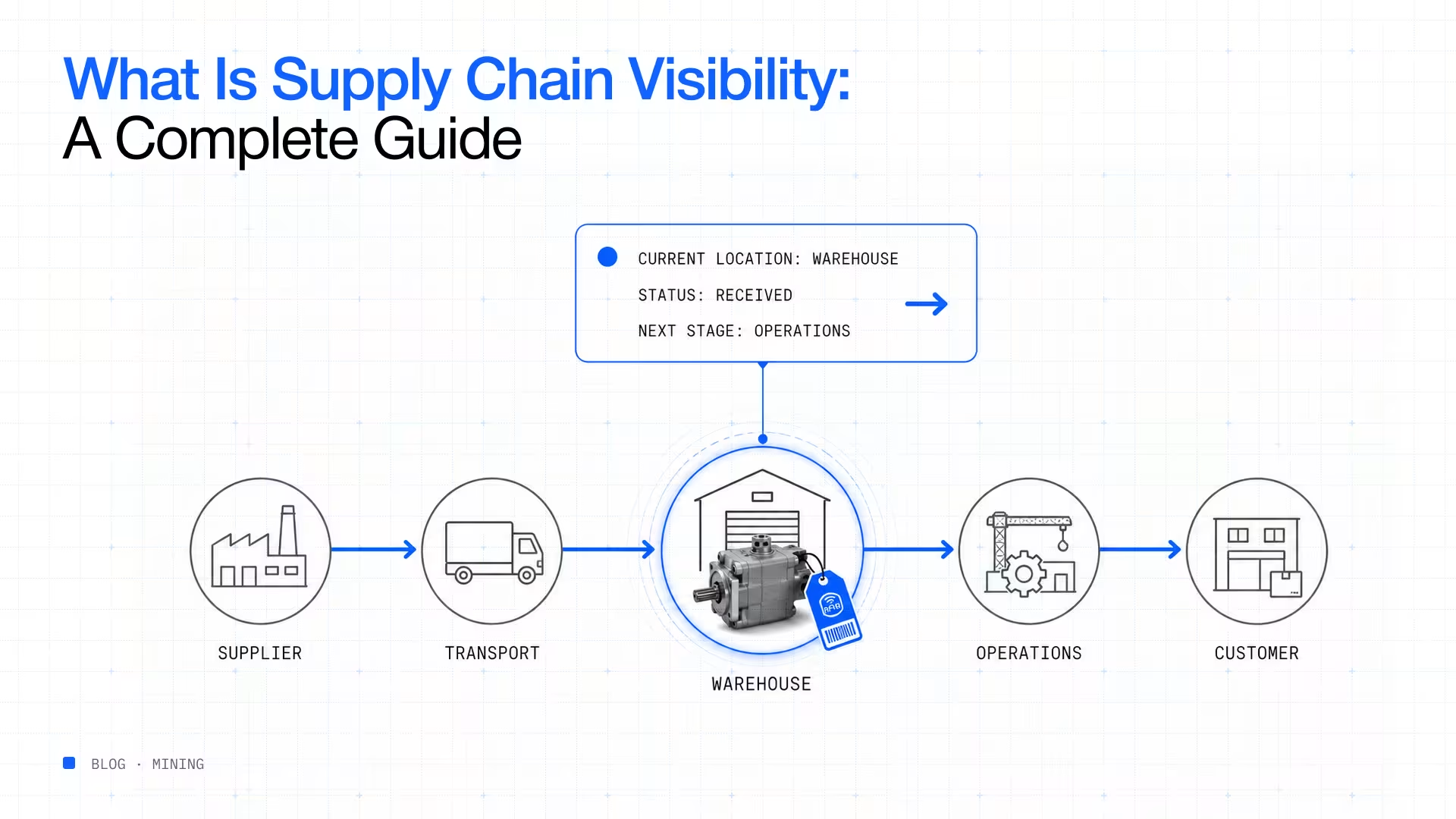
Rather than relying on isolated updates from different departments, organisations gain a connected view of inventory as it moves from suppliers through warehouses, production facilities, distribution centres and ultimately to customers.
This visibility enables businesses to answer critical operational questions such as:
Supply chain visibility is not simply about collecting more data.
It is about transforming operational data into meaningful insights that allow organisations to anticipate problems instead of reacting to them after they occur.
Companies with stronger visibility generally make faster purchasing decisions, improve inventory planning, reduce stockouts and respond more effectively to unexpected disruptions.
Supply chains today are significantly more dynamic than they were even a decade ago.
Businesses source materials globally, manage multiple suppliers, operate across numerous warehouses and increasingly rely on outsourced logistics providers. Every additional participant introduces another opportunity for delays, communication gaps or inaccurate information.
Without visibility, organisations often operate reactively.
Inventory shortages are discovered only after production is affected. Delayed shipments become apparent after customer delivery dates are missed. Duplicate purchases occur because existing inventory cannot be confidently located.
These issues increase operating costs while reducing customer confidence.
Greater visibility changes the way organisations operate.
Instead of waiting for problems to appear, businesses identify risks earlier, respond faster and make decisions using current operational information rather than assumptions.
This proactive approach improves not only operational efficiency but also resilience during periods of supply chain disruption.
Although the terms are frequently used together, supply chain visibility and inventory visibility are not identical.
Supply chain visibility is broader.
It includes supplier performance, transportation status, production progress, warehouse operations, inventory movement and final delivery.
Inventory visibility focuses specifically on understanding where inventory is, how it is moving and whether accurate inventory information is available across the organisation.
Think of inventory visibility as one of the most important building blocks of supply chain visibility.
Without knowing exactly where inventory exists, organisations struggle to optimise purchasing, production planning, warehouse operations and customer fulfilment.
This explains why many supply chain improvement initiatives begin by strengthening inventory visibility first.
Reliable inventory information creates a stronger foundation for improving broader supply chain performance.
End-to-end visibility requires information from multiple stages of the supply chain rather than a single operational system.
Supplier visibility focuses on incoming materials before they arrive at the organisation.
Businesses need accurate information regarding purchase order status, production schedules, expected delivery dates and supplier performance.
Greater supplier visibility allows procurement teams to anticipate shortages before they affect operations.
Once inventory leaves suppliers, transportation visibility becomes critical.
Knowing where shipments are during transit allows organisations to plan receiving activities, adjust production schedules and communicate realistic delivery expectations to customers.
Transportation visibility also helps identify delays early enough for contingency planning.
Warehouse visibility provides insight into inventory stored within distribution centres and warehouses.
Warehouse managers require accurate information regarding inventory locations, receiving status, storage capacity and picking activities to maintain efficient warehouse operations.
Warehouse visibility improves internal operational efficiency while supporting faster order fulfilment.
Inventory visibility extends beyond warehouse stock levels.
It provides continuous insight into where inventory exists across warehouses, workshops, production areas, contractor facilities, laydown yards and remote operational locations.
Instead of simply reporting inventory balances, inventory visibility answers whether inventory can actually be located and used when required.
Scatterlink helps organisations strengthen inventory visibility by providing real-time insight into inventory movement from receipt through consumption. Through RFID, barcode technology, offline mobile applications and ERP integration, businesses gain trusted inventory information that supports stronger operational decision-making.
Production visibility focuses on understanding material consumption, work-in-progress inventory and manufacturing progress.
Operations managers use this information to identify production bottlenecks, monitor material availability and maintain production schedules despite changing operational conditions.
Production visibility becomes increasingly valuable when organisations manufacture multiple products simultaneously across different facilities.
Achieving end-to-end supply chain visibility is far more difficult than simply purchasing new software.
Most organisations already have access to large volumes of operational data. The challenge lies in connecting that information into one reliable, real-time view of the supply chain.
One of the biggest obstacles is disconnected technology.
Procurement teams work inside ERP systems. Warehouse personnel rely on Warehouse Management Systems (WMS). Logistics providers use transportation platforms, while maintenance teams often maintain separate spreadsheets or paper records.
Each system performs its own function well, but they rarely communicate seamlessly with one another.
The result is fragmented visibility. Every department sees only a portion of the supply chain rather than the complete operational picture.
Many inventory transactions are still recorded after work has already been completed.
Materials may be received, transferred or issued hours before those activities are reflected in enterprise systems. During that delay, planners, buyers and operational managers continue making decisions using outdated information.
Small delays accumulate quickly, particularly in organisations processing hundreds or thousands of inventory transactions every day.
Paper-based workflows, handwritten notes and spreadsheet updates continue to create visibility gaps across many industries.
Manual data entry not only consumes valuable employee time but also increases the likelihood of errors, duplicate entries and delayed reporting.
Once inaccurate information enters the system, every downstream decision becomes less reliable.
Many businesses have reasonable visibility inside their warehouses but lose sight of inventory once it moves elsewhere.
Inventory transferred to maintenance workshops, contractor facilities, laydown yards, sea cans or remote operational sites often becomes significantly harder to track.
This creates uncertainty around inventory availability, resulting in unnecessary purchases and lengthy inventory searches.
Improving supply chain visibility produces benefits that extend well beyond logistics.
Reliable operational data allows organisations to forecast inventory demand with greater confidence.
Purchasing decisions become more accurate because planners understand actual inventory consumption rather than relying solely on historical averages.
Earlier visibility into inventory shortages enables procurement teams to act before production or maintenance activities are affected.
Rather than reacting to unexpected stockouts, organisations can replenish inventory proactively.
Poor visibility often encourages organisations to hold excess inventory "just in case."
As confidence in inventory information improves, businesses can optimise inventory levels while maintaining operational readiness.
This reduces working capital tied up in inventory without increasing operational risk.
Operational leaders no longer need to spend hours collecting information from multiple departments before making decisions.
Real-time visibility allows managers to respond immediately to changing operational conditions.
Customers increasingly expect accurate delivery commitments.
Supply chain visibility allows organisations to provide realistic delivery timelines based on current inventory availability and shipment status rather than estimates.
Modern supply chain visibility depends on multiple technologies working together rather than a single software platform.
ERP systems remain the operational backbone for many organisations.
They manage purchasing, finance, supplier information and inventory records. However, ERP platforms primarily record transactions rather than providing continuous physical visibility.
Warehouse Management Systems optimise warehouse operations by improving receiving, storage, picking and shipping processes.
They enhance warehouse productivity but generally focus on activities occurring within warehouse facilities.
Barcode scanning continues to provide one of the most reliable methods for recording inventory transactions.
Receiving inventory, issuing materials and completing inventory counts become faster while reducing manual data entry errors.
RFID expands visibility by identifying inventory automatically without requiring direct line-of-sight scanning.
This enables faster inventory movement tracking while improving inventory accuracy across large operational environments.
Mobile inventory applications allow employees to complete inventory transactions wherever work occurs.
Instead of waiting to return to office workstations, inventory updates happen immediately, reducing delays between physical inventory movement and digital inventory records.
Inventory Intelligence
The most mature organisations now combine ERP, WMS, RFID, barcode scanning and mobile applications within an Inventory Intelligence platform.
Rather than simply collecting more inventory data, Inventory Intelligence analyses inventory movement across the business to provide actionable operational insights.
Scatterlink's Inventory Intelligence Platform connects ERP systems, RFID, barcode technology and offline mobile inventory applications to deliver real-time inventory visibility from receipt through consumption. This allows organisations to strengthen inventory accuracy while supporting broader supply chain visibility initiatives.
Many organisations pursue end-to-end supply chain visibility before addressing inventory visibility.
In practice, this often leads to disappointing results.
If inventory records cannot accurately reflect what exists inside warehouses, workshops or operational sites, extending visibility across the broader supply chain becomes considerably more difficult.
Inventory visibility establishes operational confidence.
When businesses know exactly where inventory exists, procurement decisions improve, warehouse operations become more efficient, maintenance planning becomes more reliable and production schedules become easier to maintain.
This explains why inventory visibility frequently delivers the fastest operational return.
Rather than attempting to solve every supply chain challenge simultaneously, organisations strengthen the area that directly supports nearly every operational decision.
Organisations seeking stronger visibility should begin by improving data quality.
Clean inventory records, standardised item descriptions and consistent inventory processes create a stronger foundation for every technology investment.
Integrate business systems wherever possible.
ERP, warehouse management, procurement and inventory technologies should exchange information automatically instead of relying on duplicate manual data entry.
Invest in technologies that support real-time data capture.
Barcode scanning, RFID and mobile inventory applications reduce transaction delays while improving inventory accuracy.
Finally, measure visibility using operational outcomes.
Track inventory accuracy, inventory search time, stockout frequency, inventory turnover, supplier performance and order fulfilment rather than simply counting technology deployments.
Scatterlink enables organisations to strengthen the inventory visibility layer that supports broader supply chain performance. By providing trusted, real-time inventory information across warehouses, workshops, contractor compounds and remote operational sites, businesses can make faster decisions while reducing operational risk.
Supply chain visibility continues evolving as organisations adopt AI, IoT devices and predictive analytics.
Instead of simply monitoring inventory movement, businesses increasingly use operational data to predict disruptions before they occur.
Artificial intelligence will help organisations identify unusual inventory patterns, recommend replenishment decisions and forecast operational risks earlier than traditional reporting methods.
IoT sensors, RFID and connected mobile applications will continue expanding real-time visibility across increasingly complex supply chains.
While technology continues advancing, one principle remains unchanged.
Better decisions depend on better visibility.
Supply chain visibility has become a competitive advantage rather than an operational luxury.
Organisations that understand where inventory, materials and shipments are throughout the supply chain can respond faster to disruption, improve customer service and optimise operational performance.
Although end-to-end visibility remains the long-term objective, inventory visibility often delivers the greatest immediate value.
Reliable inventory information supports procurement, warehouse operations, production planning and maintenance activities while creating the trusted operational data needed to improve broader supply chain performance.
As supply chains continue becoming more connected, organisations that invest in real-time inventory visibility today will be better prepared for tomorrow's increasingly data-driven operations.
Supply chain visibility is the ability to monitor inventory, materials, shipments and operational information across the entire supply chain in real time, allowing organisations to make faster and more informed decisions.
It helps organisations reduce stockouts, improve forecasting, strengthen customer service, optimise inventory investment and respond more effectively to operational disruptions.
Supply chain visibility covers the complete movement of materials from suppliers to customers. Inventory visibility focuses specifically on knowing where inventory is, how it moves and whether inventory information remains accurate throughout operations.
ERP systems, Warehouse Management Systems, barcode scanning, RFID, mobile inventory management, GPS tracking, IoT devices and Inventory Intelligence platforms all contribute to stronger supply chain visibility.
Scatterlink strengthens the inventory visibility layer by combining RFID, barcode scanning, offline mobile inventory management and ERP integration into a single Inventory Intelligence Platform. This enables organisations to maintain accurate, real-time inventory visibility from receipt through consumption while supporting broader supply chain performance.
%20(1).avif)
.avif)
%20(1).avif)