
A yard can be one of the most active areas of an industrial or logistics operation, yet it is often one of the least visible from a systems perspective. Trucks arrive and leave, materials are received and moved, containers are positioned, inventory is stored, and teams continuously coordinate what needs to happen next. When those activities are managed through spreadsheets, radio calls, paper records or disconnected systems, it becomes difficult to maintain a reliable picture of what is happening across the yard. This is where a yard management system can provide a structured digital layer for coordinating yard activity and improving visibility.
A yard management system (YMS) is software designed to monitor, coordinate and optimise activities within a yard. Depending on the industry and operational requirements, YMS software can cover gate activity, vehicle and trailer movements, dock or loading coordination, storage locations, yard tasks, scheduling, alerts and operational reporting. Modern systems increasingly connect with warehouse, transportation and enterprise systems to create a more consistent flow of information between the yard and the rest of the operation.
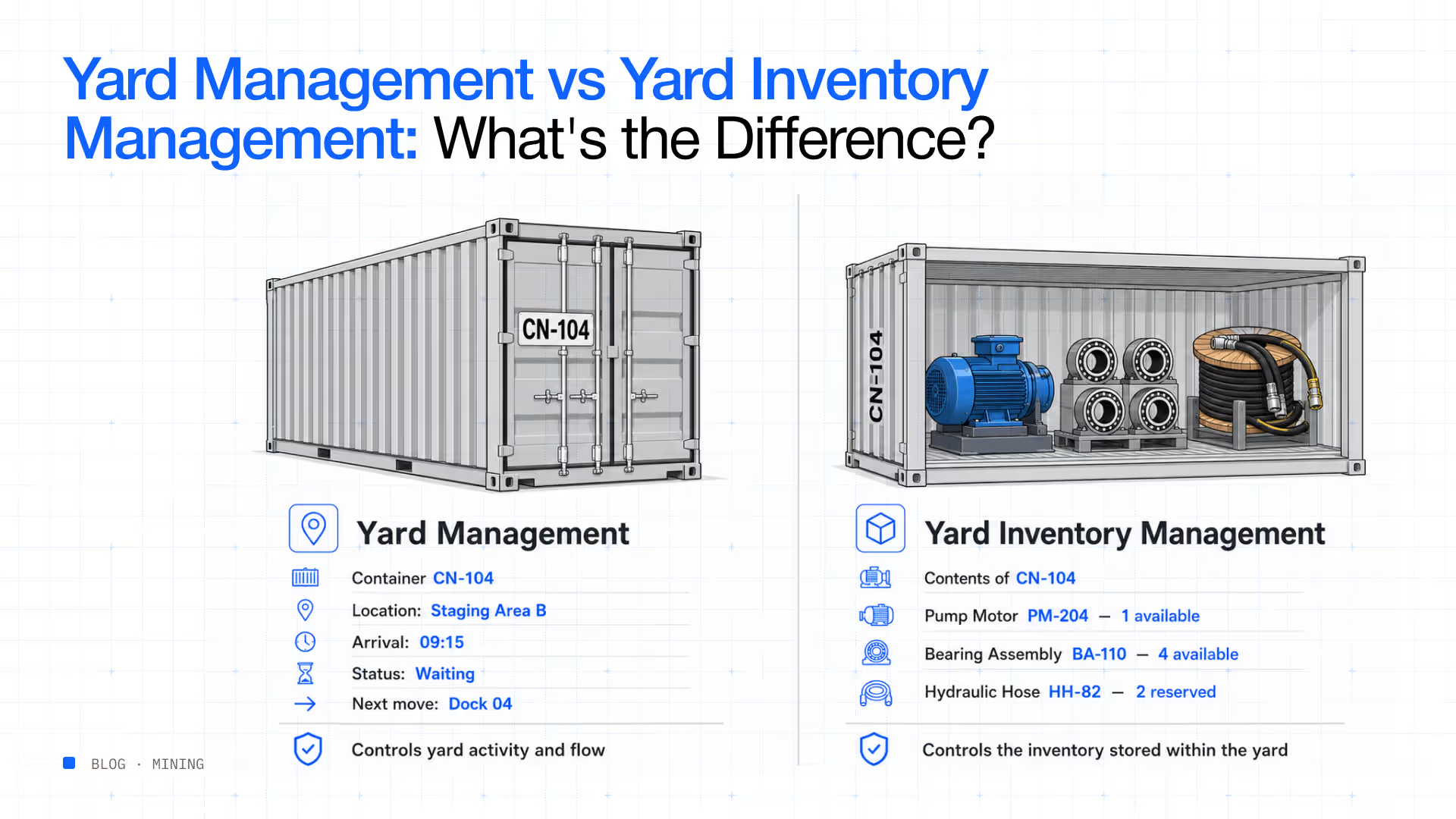
However, a YMS should not automatically be treated as a complete inventory management solution. Yard management focuses on the activity and flow within the physical yard, while inventory management focuses on the materials themselves, including their quantity, location, status and movement. For industrial organisations, understanding this distinction is important because better yard visibility does not necessarily mean better inventory visibility.
A yard management system is a digital platform that helps organisations manage, track and coordinate activities taking place within a physical yard. It creates a central view of yard activity so teams can understand what has arrived, what is currently in the yard, where resources are positioned and what actions need to happen next. Rather than relying on separate spreadsheets, manual updates and verbal communication, a YMS can bring these activities into a connected workflow.
The exact role of a YMS depends on the type of yard being managed. In logistics and distribution environments, the system may focus heavily on trucks, trailers, containers, gates and dock scheduling. In manufacturing and industrial environments, it may also need to support material movements, storage areas, inspections, equipment coordination and inventory-related activities. Current YMS solutions commonly emphasise real-time yard visibility, gate management, trailer tracking, dock coordination, task management and integrations with WMS, TMS and ERP systems.
The fundamental purpose, however, remains the same: give teams a more accurate and timely understanding of what is happening in the yard. When people can see yard activity in one place, they can coordinate movements more effectively, identify delays earlier and reduce the amount of time spent manually searching for information. That visibility becomes particularly valuable when the yard is large, busy or connected to multiple operational locations.
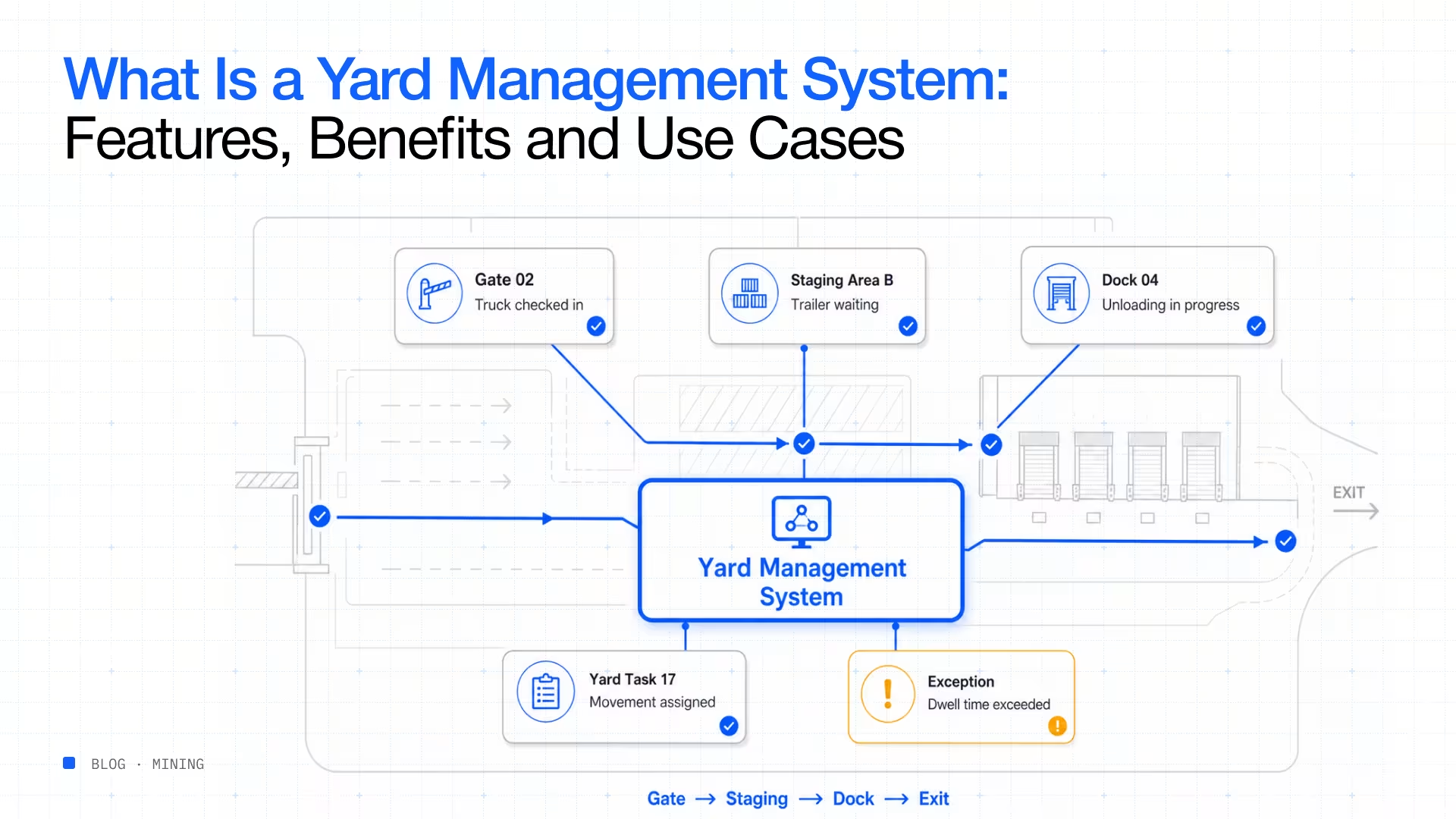
A YMS generally works by collecting information about activities within the yard and turning that information into a central operational view. Data can come from gate transactions, mobile devices, scans, sensors, connected systems or manual updates, depending on the solution and environment. The system then uses that information to show current locations, statuses, scheduled activities and outstanding tasks.
For example, when a vehicle arrives, the system can record its entry and associate it with the relevant appointment, load or activity. Once inside the yard, its location and status can be updated as it moves between staging areas, loading points and other designated locations. When it leaves, the system retains the relevant transaction history, creating a more complete digital record of the yard activity.
Modern YMS software can also use rules, alerts and workflow automation to help teams prioritise activities. Instead of relying entirely on employees to identify what needs attention, the system can surface delayed movements, waiting vehicles, location discrepancies or other exceptions. This moves yard management from a largely reactive process towards a more controlled and visible operating model.
The features included in a yard management system vary considerably between vendors and industries. A logistics facility managing hundreds of trailer movements will have different requirements from a mining operation managing materials across a large industrial yard. However, several capabilities appear consistently across modern YMS platforms.
Real-time visibility is one of the core capabilities associated with modern YMS software. Instead of depending on periodic updates or physical yard checks, teams can access a current view of vehicles, containers, locations, tasks and other relevant activities. This can help supervisors identify what is happening without having to gather information from multiple people or systems.
The value of yard visibility is particularly clear when the physical environment changes throughout the day. A yard may look completely different at the beginning and end of a shift because vehicles, containers and materials are continuously moving. A system that keeps this information current gives teams a much stronger basis for deciding what needs to happen next.
Gate management covers the activities associated with vehicles entering and leaving the yard. Depending on the system, this can include appointment verification, check-in, check-out, documentation, inspections and other entry or exit processes. Digitising these activities can reduce dependence on paper-based processes and provide a consistent record of yard arrivals and departures.
Gate information can also provide valuable context for the rest of the operation. When the system knows when a vehicle arrived, how long it has been inside and when it departed, teams can better understand yard activity and identify delays. Some modern YMS platforms use automated gates, mobile workflows, document capture and other technologies to streamline these processes.
A YMS can track the location and status of trailers, containers and other vehicles or transport resources within the yard. This helps teams understand what is currently on site and where it is positioned, rather than relying on physical searches or radio communication to locate it.
This type of yard tracking system can be particularly useful when the yard contains a large number of movable resources. Knowing whether something is waiting, loaded, empty, staged or ready for the next movement can help teams coordinate activities more effectively.
Many yards sit between transportation and warehouse or production operations, which means delays in the yard can affect downstream activities. A YMS can help coordinate dock assignments, loading and unloading activities, and the movement of vehicles between staging and loading areas.
The objective is to reduce unnecessary waiting and improve the flow between the yard and the facility. When yard and dock information is connected, teams can make decisions based on current conditions rather than relying solely on predetermined schedules.
A digital representation of yard locations can help teams understand where vehicles, containers, materials and other resources are positioned. Depending on the system, locations may be represented as parking spaces, zones, staging areas, docks or other defined areas.
This capability is especially important in large yards because simply knowing that something is “in the yard” provides limited operational value. Location-level information can make it easier to identify where a resource is positioned and what is currently occupying a particular area.
Yard teams are rarely sitting at a desktop throughout their working day. They are moving around the physical environment, checking materials, inspecting vehicles and coordinating tasks. Mobile functionality allows employees to access and update information where the activity is taking place rather than returning to a central workstation.
Mobile workflows can also improve the timeliness of information. When an employee can record a movement or inspection immediately, the digital record is less likely to depend on someone remembering to update it later.
A modern YMS can help teams focus on activities that require attention rather than continuously monitoring every movement manually. Alerts can be used for delays, dwell-time issues, missed appointments, unexpected movements or other operational exceptions.
This is important because visibility alone does not automatically improve operations. The real value comes when teams can use current information to identify an issue, understand its impact and take action before it becomes a larger problem.
YMS platforms can also maintain records of historical yard activity. This can help organisations analyse dwell times, vehicle movements, appointment performance, resource utilisation and other operational metrics. Historical information can reveal recurring bottlenecks that may not be obvious when teams are focused only on today’s activity.
Reporting also creates a more consistent record for operational reviews. Instead of relying on individual recollection or manually compiled spreadsheets, managers can use system-generated information to understand how the yard is performing over time.
The main benefit of a YMS is that it gives organisations greater control over an environment where many activities are happening simultaneously. When information is distributed across paper records, spreadsheets, radio calls and separate systems, teams can spend considerable time coordinating rather than executing. A centralised system can reduce that information gap and provide a more consistent operational picture.
One major benefit is improved yard visibility. Teams can see current activity and identify where vehicles, containers or other resources are located without relying entirely on manual searches. This can make it easier to respond to changing conditions and coordinate work across different teams.
A YMS can also improve operational efficiency by reducing unnecessary movements and waiting time. When teams know where resources are located and what needs to happen next, they can coordinate movements more deliberately rather than sending employees to search for equipment or repeatedly contacting other teams for updates. Current YMS guidance commonly highlights improvements in yard flow, dock utilisation, waiting time and operational coordination as key benefits.
Another benefit is better data consistency and accountability. A digital record of yard activity makes it easier to understand when something arrived, where it moved and what happened during its time in the yard. This can support operational analysis, compliance requirements and investigations when discrepancies occur.
Finally, a YMS can provide a foundation for connecting yard operations with other business systems. Integrations with WMS, TMS and ERP platforms can help reduce information silos and create a more continuous flow of data between transportation, yard and warehouse processes.
YMS software is used across a range of environments where the movement and coordination of resources within a yard are operationally important. The specific use case depends on what the yard handles, how frequently materials or vehicles move, and how closely the yard is connected to warehouses, production facilities or remote operations.
Manufacturing facilities may use a YMS to coordinate inbound raw materials, outbound finished goods, vehicles and staging areas. Better visibility can help connect yard activity with production schedules and warehouse processes.
Distribution centres often manage high volumes of trailers, trucks and containers. A YMS can help coordinate appointments, gate activity, dock assignments and trailer movements while providing a central view of yard activity.
Construction operations can have large laydown areas where materials remain for extended periods before being required on site. A yard tracking system can help identify where materials are stored and reduce the need for physical searches when project teams need them.
Mining and other industrial operations can have a different requirement from conventional logistics yards. Materials may include spare parts, maintenance supplies, components and other critical inventory that needs to be stored across large surface areas or distributed between operational locations.
In these environments, yard visibility needs to extend beyond vehicle movements. Teams also need reliable information about the inventory physically stored within the yard, including its location, status and availability. This is where YMS capabilities and yard inventory management can complement one another.
Organisations operating across multiple facilities may need to understand yard activity across more than one location. A connected approach can provide a broader view of what is happening across the network rather than forcing teams to manage each yard as a separate information environment.
A YMS and an inventory management system can overlap, but their primary purposes are different. A YMS focuses on coordinating the physical flow and activity within the yard, while inventory management focuses on the materials themselves, including stock levels, locations, movements and status.
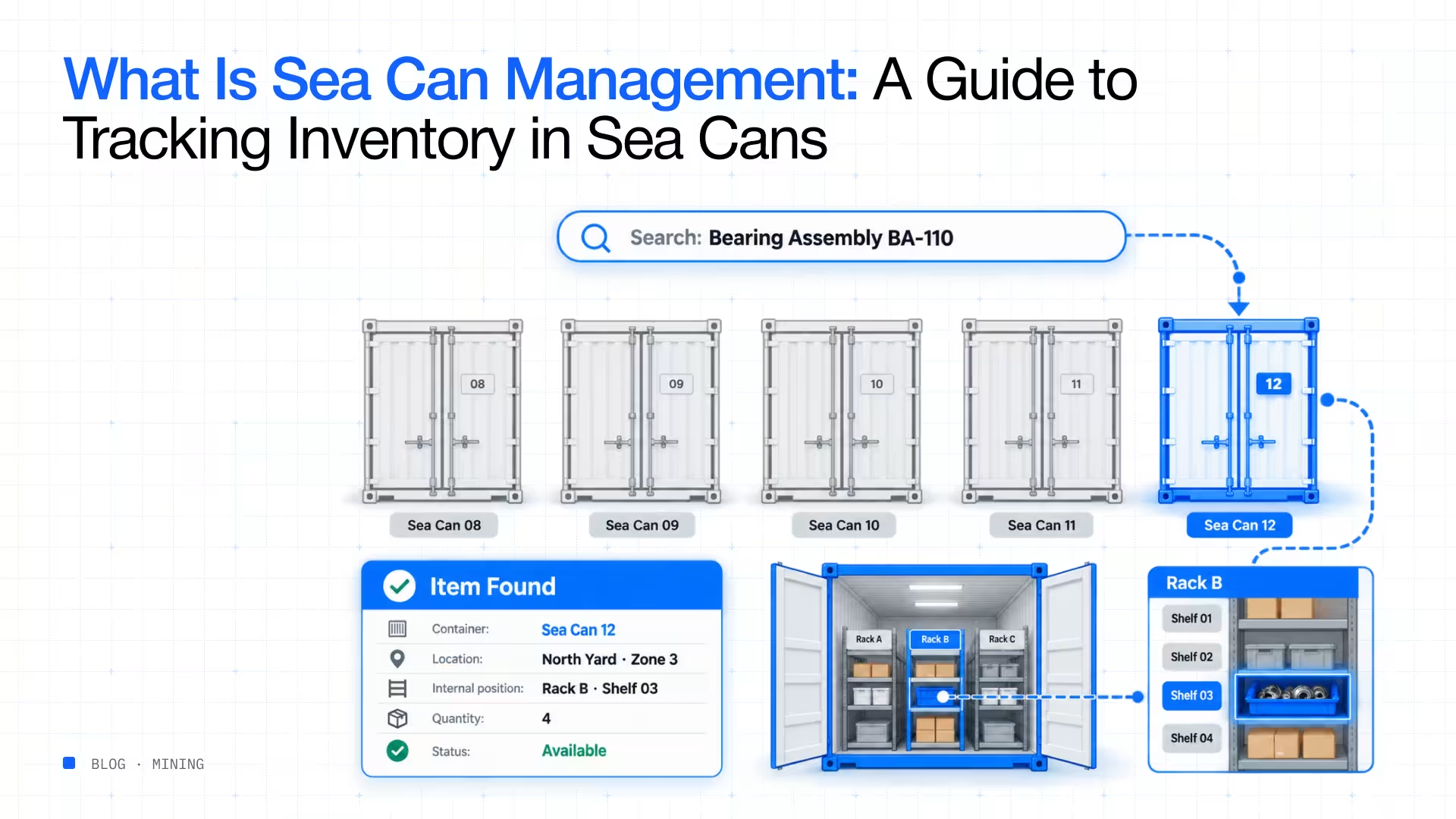
This distinction matters because a yard can have excellent operational visibility without having detailed inventory visibility. For example, a team may know exactly where a container is located but still not know whether the spare part they need is inside it. Similarly, a YMS may track a vehicle’s movement without providing detailed information about every individual item associated with that movement.
For industrial organisations, the strongest approach may involve connecting the two. Yard management provides visibility into the environment, while inventory management provides visibility into the materials within that environment. Together, they can create a more complete understanding of both physical activity and inventory availability.
RFID can add another layer of visibility when organisations need to identify materials and track inventory across large physical environments. RFID tags can associate a physical item with a digital identity, while readers and connected workflows can help capture information about tagged items as they move through the operation.
This can be valuable where manual scanning is difficult to sustain. In a large yard containing thousands of parts or materials, requiring employees to manually identify every item during every movement can consume significant time. RFID-based yard inventory tracking can reduce some of that manual effort while supporting more timely inventory information.
The important consideration is what happens with the RFID data after it is captured. RFID is most useful when it connects with inventory records, location information and operational workflows so that teams can turn identification data into actionable inventory visibility.
Improve visibility across complex industrial environments: Explore Scatterlink’s RFID inventory management approach to see how RFID can support yard inventory tracking.
In most cases, a YMS should not automatically be viewed as a replacement for an inventory management platform. While modern YMS solutions can include inventory-related features, their primary focus remains the coordination and visibility of yard operations. Organisations should therefore evaluate whether the inventory capabilities included in a YMS are sufficient for the level of stock control their operation requires.
This is particularly important for industrial environments where inventory can include critical spare parts, materials and components that remain in yards for long periods. These organisations may need detailed information about individual items, quantities, locations, statuses, movements and consumption that goes beyond basic yard activity tracking.
The better question is not whether one system is universally better than the other. It is whether the technology provides the level of visibility required by the operation and whether it can connect with the systems already used to manage inventory, procurement and enterprise processes.
Choosing yard management software should begin with the organisation’s operational requirements rather than a list of features alone. Businesses should identify where visibility currently breaks down, which activities create the greatest delays and whether the main challenge relates to vehicles, materials, inventory or a combination of these areas.
Real-time visibility should be one of the core considerations because outdated information can limit the value of any yard system. Organisations should also evaluate mobile functionality, location tracking, alerts, reporting, integration capabilities and the system’s ability to scale across multiple yards or facilities.
For industrial operations, inventory capabilities deserve particular attention. If materials are a significant part of the yard environment, the organisation should determine whether the solution can provide detailed inventory visibility or whether it needs to connect with a dedicated inventory management platform.
Connect inventory visibility across industrial locations: See how Scatterlink approaches real-time inventory visibility for materials moving across warehouses, yards and remote sites.
Integration is another important consideration. A YMS should not create another isolated information source if the organisation already relies on ERP, WMS or other enterprise systems. The objective should be to create a connected flow of information so teams can make decisions using consistent data rather than reconciling multiple systems manually.
For industrial organisations, the yard is often only one part of a much larger inventory environment. Materials may move between warehouses, stockyards, sea cans, remote locations and operational areas before they are eventually consumed. This means that improving yard visibility alone may not solve the wider problem if teams still cannot see inventory across the rest of the operation.
Scatterlink focuses on inventory intelligence and visibility from receipt to consumption, helping industrial organisations connect inventory information across complex physical environments. With RFID, mobile workflows and connected inventory processes, the focus is on helping teams understand what inventory they have, where it is and what is happening to it across the operation.
This approach is particularly relevant when inventory exists across surface and underground operations or in remote environments where conventional systems may not provide timely visibility. Rather than treating the yard as an isolated storage location, the objective is to connect it to the broader inventory picture.
Build visibility from receipt to consumption: Learn more about Scatterlink and its inventory intelligence approach for complex industrial operations.
A yard management system provides a digital way to coordinate and control activity within a yard, giving teams greater visibility into movements, locations, schedules and operational tasks. The right YMS can reduce manual coordination, improve yard flow and provide a more consistent record of what is happening across the physical environment. Its value increases when yard activity is complex, fast-moving or spread across multiple teams and locations.
However, yard visibility and inventory visibility are not the same thing. Organisations that store significant quantities of materials in their yards also need to know what inventory exists, where it is located, what its current status is and whether it is available when operations require it. In those environments, YMS software and inventory management capabilities can work together to create a much more complete view of the operation.
The best technology strategy is therefore the one that reflects the actual operational challenge. Whether an organisation needs to coordinate vehicle movements, improve inventory tracking, connect multiple locations or create real-time visibility across industrial yards, the system should ultimately help teams move from fragmented information to accurate, actionable operational intelligence.
A yard management system is software that helps organisations monitor, coordinate and optimise activities within a physical yard. It can track vehicles, trailers, containers, locations, movements, appointments, tasks and other yard activities depending on the system and industry.
YMS stands for Yard Management System. It refers to software designed to provide digital visibility and control over activities taking place within a yard.
Yard management software is a digital solution used to coordinate activities such as gate management, vehicle tracking, yard location management, dock scheduling, task assignment and operational reporting. Some systems also include inventory-related capabilities.
Common YMS features include real-time yard visibility, gate management, trailer and container tracking, dock coordination, yard location management, mobile workflows, alerts, reporting and integration with systems such as WMS, TMS and ERP platforms.
A YMS can improve yard visibility, reduce manual coordination, improve resource utilisation, support faster decision-making and provide better records of yard activity. Depending on the operation, it can also help reduce delays and improve the flow of vehicles and materials.
YMS software is used across logistics, distribution, manufacturing, construction, automotive, industrial and other operations where vehicles, materials or containers move through a yard. The specific features and use cases vary according to the industry’s operational requirements.
Some YMS platforms include inventory tracking or yard inventory features, but the depth of inventory management varies. Organisations with complex material and stock requirements should evaluate whether the YMS provides sufficient inventory-level visibility or needs to integrate with a dedicated inventory management platform.
Yes. RFID can be integrated with yard and inventory workflows to identify and track tagged items. When RFID data is connected to location and inventory information, it can help provide more timely visibility into physical materials and their movements.
A YMS primarily manages activities and movements within the yard, while a WMS primarily manages inventory and processes within a warehouse. The two systems can work together to provide visibility across the transition between the yard and warehouse.
%20(1).avif)
.avif)
%20(1).avif)