
A warehouse may receive thousands of inventory items every day. However, inventory only begins creating value when it leaves storage and reaches the people who need it. Whether materials are being delivered to a production line, issued to a maintenance technician, transferred to another warehouse or shipped to a customer, the picking process determines how quickly and accurately those requests are fulfilled.
Warehouse picking sits at the centre of warehouse performance.
It influences labour productivity, inventory accuracy, warehouse efficiency, customer satisfaction and overall operating costs. Even small inefficiencies in the picking process can create significant downstream consequences, including delayed production, incorrect shipments, inventory discrepancies and increased labour expenses.
For many organisations, warehouse picking also represents the largest single warehouse labour cost.
Employees spend a considerable portion of their working day walking through storage locations, locating inventory, confirming item numbers and transporting materials between warehouse zones. Improving even a small percentage of this activity can produce substantial operational savings.
Yet many warehouse operations continue relying on outdated picking methods.
Paper pick lists, manual inventory verification and disconnected inventory systems slow down warehouse operations while increasing the likelihood of human error. As businesses expand across multiple warehouses and operational sites, these inefficiencies become even more difficult to manage.
Modern warehouse picking combines efficient processes with digital technologies.
Barcode scanning, RFID, mobile inventory applications, Warehouse Management Systems (WMS) and real-time inventory visibility help employees locate inventory faster, reduce picking errors and improve overall warehouse performance.
This guide explores the warehouse picking process, the most common picking methods, emerging technologies and practical strategies for improving warehouse productivity.
Warehouse picking is the process of locating, selecting and retrieving inventory from storage locations to fulfil an internal or external inventory request. Although the activity sounds straightforward, it involves far more than simply removing inventory from a shelf. Warehouse personnel must identify the correct inventory item, verify quantities, confirm storage locations, record inventory movements and ensure materials reach their intended destination accurately and efficiently.
Depending on the organisation, warehouse picking may support:
Every successful picking operation depends on two essential components: Accurate inventory information and efficient warehouse processes. Without either, warehouse productivity declines rapidly.
Warehouse picking influences almost every operational performance metric within a warehouse. If picking takes longer than expected, customer shipments are delayed. If incorrect inventory is picked, returns increase while customer confidence decreases. If employees cannot locate inventory quickly, labour costs rise and warehouse productivity declines. The impact extends beyond warehouse operations. Production schedules may be disrupted because maintenance teams cannot receive required spare parts quickly enough. Procurement departments may reorder inventory unnecessarily because existing inventory cannot be located. Finance teams lose confidence in inventory valuation when picking transactions fail to reflect physical inventory movement accurately. Because warehouse picking directly affects inventory movement, it also plays a critical role in maintaining inventory accuracy. Every successful inventory issue strengthens inventory visibility. Every inaccurate pick gradually reduces confidence in inventory records. Organisations seeking higher warehouse performance therefore focus heavily on improving picking efficiency.
Although warehouse layouts differ across industries, the fundamental warehouse picking process generally follows the same sequence.
The process begins when an inventory request is generated. This may originate from a customer order, production schedule, maintenance work order or internal inventory transfer. The inventory management system identifies required inventory items and creates a picking request for warehouse personnel.
The warehouse management system or inventory management software generates a pick list containing:
Modern systems often optimise pick sequences to minimise employee travel throughout the warehouse.
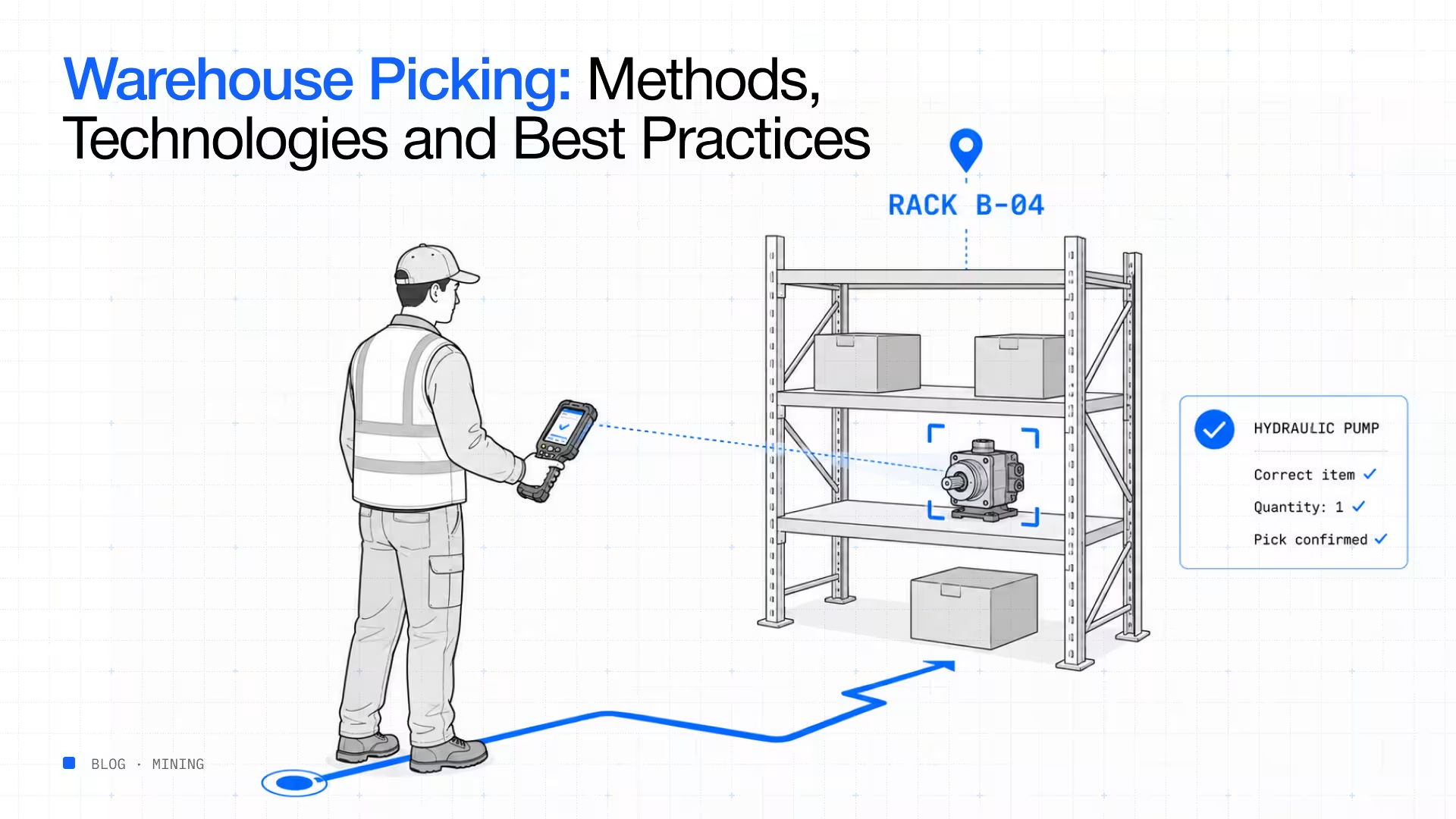
Warehouse personnel travel to the designated storage locations. Accurate location information is essential during this stage. Even minor inventory discrepancies force employees to spend additional time searching for inventory, significantly reducing warehouse productivity. Technologies such as barcode scanning, RFID and mobile inventory applications dramatically improve this step by helping employees verify inventory locations in real time.
Before inventory is removed, employees confirm that the correct item and quantity have been selected. Verification reduces picking errors while improving inventory accuracy. Barcode scanners and RFID readers simplify this process by automatically validating inventory instead of relying solely on visual confirmation.
Once inventory has been picked, the inventory transaction should be recorded immediately. Real-time transaction updates ensure inventory records remain synchronised with physical inventory movement, preventing discrepancies that affect future warehouse activities.
Scatterlink helps warehouse teams capture inventory movements in real time using barcode scanning, RFID and offline mobile inventory applications. By updating inventory records as work occurs, organisations improve warehouse picking accuracy while strengthening overall inventory visibility.
Different warehouse environments require different picking strategies.
Selecting the appropriate method depends on warehouse size, inventory characteristics, order volumes and operational requirements.
Single order picking involves completing one order at a time. Warehouse personnel receive a single pick list, collect all required inventory and complete the order before beginning the next. This method is simple to manage and works well for smaller warehouses or operations processing relatively low order volumes. However, as warehouse activity increases, employees often spend excessive time travelling between storage locations, reducing overall productivity.
Batch picking groups multiple orders containing similar inventory items. Instead of visiting the same storage location repeatedly for individual orders, employees retrieve inventory once and later separate it into individual orders. Batch picking reduces travel time while improving labour efficiency, making it popular in higher-volume warehouse environments.
Large warehouses often divide storage areas into operational zones. Each warehouse employee becomes responsible for picking inventory only within their assigned zone. Orders move from one zone to another until all required inventory has been collected. Zone picking reduces travel distances while allowing employees to develop greater familiarity with specific warehouse areas.
Wave picking combines elements of batch and zone picking. Orders are grouped according to scheduled shipping times, warehouse priorities or operational workflows. Employees pick multiple orders simultaneously during designated picking "waves," helping organisations coordinate picking, packing and shipping activities more efficiently.
Cluster picking allows warehouse personnel to pick multiple orders during a single warehouse trip using a cart or trolley with separate compartments for each order. Instead of completing one order before beginning the next, employees collect inventory for several orders simultaneously while keeping each order separated throughout the picking process. This method significantly reduces walking time and is particularly effective in warehouses processing a high number of small orders.
There is no single warehouse picking method that works for every organisation. The most effective approach depends on several operational factors, including warehouse size, inventory characteristics, order volume, workforce availability and customer expectations. Smaller warehouses with relatively low order volumes often benefit from single order picking because it is simple to manage and requires minimal coordination. High-volume distribution centres typically improve productivity through batch or wave picking because these methods reduce unnecessary travel while increasing labour efficiency. Organisations operating large facilities frequently implement zone picking to shorten travel distances and improve employee familiarity with specific warehouse areas. Businesses should regularly review warehouse performance metrics before selecting or changing picking methods. What works today may no longer be appropriate as order volumes, inventory profiles and customer requirements evolve.
Warehouse picking appears straightforward on paper, yet it presents numerous operational challenges.
Travel time represents one of the largest productivity losses in warehouse operations. Research consistently shows that warehouse personnel spend considerably more time travelling between inventory locations than physically handling inventory. Poor warehouse layouts, inefficient storage strategies and suboptimal picking routes further increase this problem. Optimising warehouse layouts and implementing smarter picking methods can dramatically reduce unnecessary movement.
Few warehouse issues are more frustrating than inventory that appears available in the system but cannot be physically located. Employees often spend valuable time checking multiple storage locations, contacting colleagues or investigating previous transactions before eventually concluding that inventory is missing. These searches reduce productivity while delaying customer orders, maintenance work and production activities. Improving inventory visibility significantly reduces these situations.
Incorrect inventory selection remains one of the most common warehouse challenges. Similar product descriptions, damaged labels, manual verification and poor inventory organisation all increase the likelihood of employees selecting incorrect items. Even small picking errors create additional work through returns, stock adjustments, customer complaints and inventory reconciliation. Barcode scanning and RFID verification help minimise these errors by automatically confirming inventory identity before transactions are completed.
Many warehouses still record inventory movements after the physical picking activity has already occurred. This delay creates discrepancies between physical inventory and system records, reducing confidence in inventory data while increasing the likelihood of duplicate purchasing or unnecessary inventory searches. Capturing inventory transactions immediately at the point of work keeps inventory information accurate and current.
Warehouse technology has transformed picking operations over the past decade. Instead of relying entirely on paper pick lists, organisations increasingly combine digital tools that improve both productivity and inventory accuracy.
Warehouse Management Systems organise warehouse workflows by generating pick lists, optimising picking routes and coordinating receiving, storage and shipping activities. They help warehouse managers improve labour utilisation while supporting more efficient inventory movement.
Barcode scanning remains one of the most widely adopted warehouse technologies. Employees can quickly verify inventory identity, confirm quantities and record inventory movements with minimal manual data entry. Barcode systems reduce picking errors while accelerating warehouse transactions.
RFID extends inventory visibility beyond traditional barcode scanning. Rather than scanning individual inventory items one at a time, RFID readers can automatically identify multiple tagged items simultaneously, reducing transaction times while improving inventory accuracy. RFID is particularly valuable in high-volume or asset-intensive environments where inventory moves frequently.
Mobile inventory applications allow employees to perform inventory transactions directly from handheld devices instead of returning repeatedly to desktop computers. Warehouse personnel can receive inventory, complete picks, issue materials and perform transfers from wherever work occurs. This improves operational efficiency while reducing delays between physical inventory movement and system updates.
Voice-directed picking systems provide spoken picking instructions through headsets, allowing employees to work hands-free. This reduces reliance on printed pick lists while improving productivity in some warehouse environments.
Pick-to-light technology guides warehouse employees using illuminated indicators positioned near storage locations. Employees follow visual signals rather than manually searching storage locations, making this technology particularly effective in high-speed order fulfilment operations.
Scatterlink enhances warehouse picking through barcode scanning, RFID, offline mobile inventory applications and real-time inventory visibility. Warehouse personnel can verify inventory, record transactions immediately and maintain accurate inventory information without interrupting operational workflows.
Improving warehouse picking requires more than implementing new technology. Successful organisations combine efficient warehouse design with consistent operational processes. Maintain organised storage locations where frequently picked inventory remains easily accessible. Regularly review warehouse layouts to minimise unnecessary travel distances. Standardise inventory labelling to reduce employee confusion during picking. Capture inventory transactions immediately instead of relying on delayed manual updates. Use barcode scanning or RFID verification wherever practical to improve inventory accuracy. Continuously monitor operational KPIs such as picking accuracy, travel time, picks per hour and inventory search time to identify improvement opportunities. Most importantly, maintain accurate inventory records. Even the most efficient warehouse picking process cannot overcome unreliable inventory data.
Warehouse operations continue evolving as organisations invest in automation and intelligent inventory technologies. Artificial intelligence is increasingly helping warehouses optimise picking routes, predict labour requirements and recommend inventory placement strategies. Autonomous mobile robots are reducing employee travel by transporting inventory between warehouse zones. Wearable technologies continue improving worker productivity through voice guidance and augmented reality. RFID adoption is expanding as organisations seek greater inventory visibility with reduced manual scanning. At the centre of these developments is one common objective: Providing employees with accurate inventory information exactly when and where they need it. The future of warehouse picking will rely less on searching for inventory and more on accessing trusted, real-time inventory visibility.
Scatterlink's Inventory Intelligence Platform helps organisations modernise warehouse picking by connecting barcode scanning, RFID, ERP systems and mobile inventory management into one real-time inventory visibility solution. This enables faster picking, improved inventory accuracy and better operational decision-making from receipt through consumption.
Warehouse picking is much more than moving inventory from one location to another. It directly influences warehouse productivity, inventory accuracy, customer satisfaction and operational efficiency across the entire business. Organisations that continue relying on manual picking processes often experience unnecessary travel, delayed inventory updates and avoidable picking errors. By combining efficient picking methods with technologies such as barcode scanning, RFID, mobile inventory management and real-time inventory visibility, businesses can significantly improve both warehouse performance and inventory accuracy. Ultimately, successful warehouse picking depends on one critical factor: employees must always know where inventory is, how much is available and whether inventory information can be trusted. Strengthening inventory visibility creates the foundation for faster, more accurate and more productive warehouse operations.
Warehouse picking is the process of locating, selecting and retrieving inventory from storage locations to fulfil customer orders, production requirements, maintenance requests or internal inventory transfers.
The most common methods include single order picking, batch picking, zone picking, wave picking and cluster picking. Each method offers different advantages depending on warehouse size, order volume and operational requirements.
Warehouse picking directly affects order fulfilment speed, inventory accuracy, labour productivity and customer satisfaction. Efficient picking processes also reduce operating costs and improve warehouse performance.
Warehouse Management Systems, barcode scanning, RFID, mobile inventory management and real-time inventory visibility all contribute to faster, more accurate warehouse picking. The most effective solution depends on operational requirements and warehouse complexity.
Scatterlink combines barcode scanning, RFID, offline mobile inventory management and Inventory Intelligence to provide real-time inventory visibility. This enables warehouse teams to locate inventory faster, reduce picking errors and maintain accurate inventory records across warehouses, workshops, yards and remote operational locations.
%20(1).avif)
.avif)
%20(1).avif)