
Inventory data is only as valuable as its consistency. Mining and industrial organizations often invest heavily in inventory systems, warehouse infrastructure, and procurement technology, yet continue struggling with duplicate inventory records, inconsistent item descriptions, and poor inventory visibility. One of the biggest reasons is that inventory has never been classified using a common language. Without standardized classification, identical parts may exist under multiple descriptions, procurement teams struggle to identify interchangeable items, and reporting becomes increasingly unreliable. Implementing a structured UNSPSC classification system helps organizations organize inventory consistently, improve data quality, and create a stronger foundation for inventory intelligence.
The United Nations Standard Products and Services Code (UNSPSC) provides a globally recognized framework for classifying products and services. Instead of allowing every department or site to categorize inventory differently, UNSPSC creates a common structure that can be applied across procurement, warehousing, maintenance, finance, and supply chain operations. For organizations managing hundreds of thousands of inventory records across multiple locations, this standardization significantly improves inventory search, procurement accuracy, and long-term inventory governance.
Understanding how UNSPSC works and why it matters is becoming increasingly important as industrial organizations modernize their inventory management strategies.
UNSPSC stands for United Nations Standard Products and Services Code, an internationally recognized classification system used to categorize products and services using standardized numerical codes. Rather than relying solely on free-text item descriptions, organizations assign each inventory item to a structured hierarchy based on what the item is and how it is used.
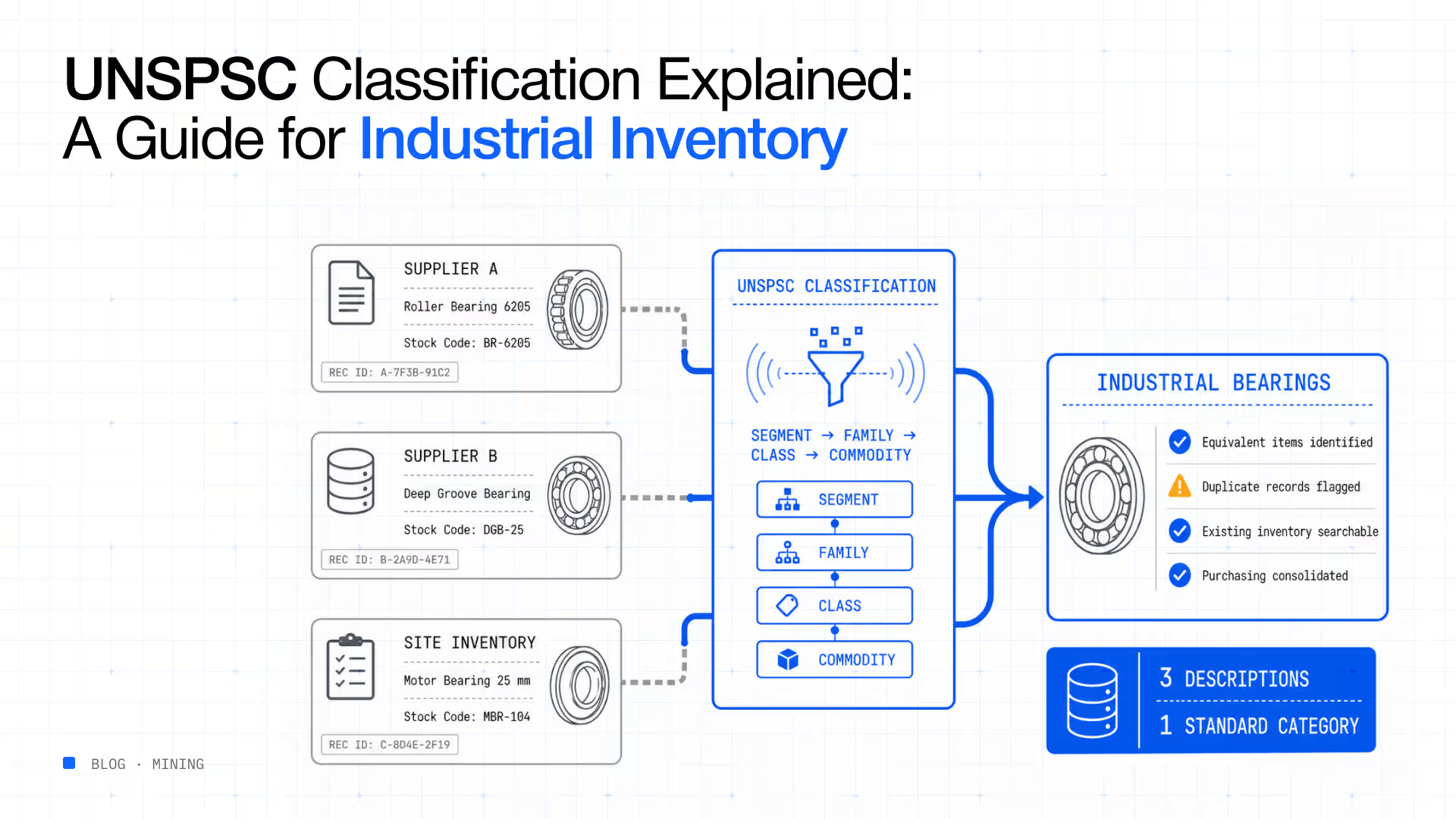
The system is organized into four hierarchical levels that become progressively more specific.
The first level identifies the broad business segment, followed by the family, class, and commodity. This structure allows organizations to classify inventory consistently regardless of supplier naming conventions, local terminology, or individual user preferences.
For example, two suppliers may describe the same industrial bearing differently. One may use the manufacturer's product name while another references technical specifications. Without standardized classification, these items may appear unrelated even though they are functionally identical. Applying the same UNSPSC classification enables procurement teams and warehouse personnel to recognize them as belonging to the same inventory category.
This standardized approach creates consistency across inventory records, making it easier to search, report, analyze, and govern inventory throughout its lifecycle.
For industrial organizations managing large MRO inventories, this consistency becomes essential for maintaining accurate inventory records as the database continues to grow.
Many inventory challenges begin long before inventory reaches the warehouse.
As organizations expand, inventory records are often created by different departments, procurement officers, maintenance planners, contractors, and operational sites. Each person may describe the same item differently depending on supplier documentation, manufacturer terminology, or local naming conventions.
Over several years, these inconsistencies accumulate rapidly.
A hydraulic hose may appear under three different descriptions. An electric motor may be catalogued separately because one record uses the manufacturer's model number while another uses a generic description. Bearings purchased from different suppliers may receive entirely different inventory records despite serving the same operational purpose.
Without standardized classification, organizations struggle to determine whether inventory already exists before creating new inventory records or approving purchase orders.
This leads to several common problems:
These issues affect far more than warehouse operations.
Procurement teams lose confidence in inventory searches. Maintenance planners cannot easily identify substitute components. Finance receives inconsistent inventory reporting. Warehouse personnel spend additional time locating inventory because similar items appear under different descriptions.
Standardized inventory classification significantly reduces these challenges by providing one consistent framework for organizing every inventory item.
How UNSPSC Classification Improves Procurement and Inventory Visibility
Standardizing inventory classification does much more than improve the item master. It transforms how procurement, maintenance, warehouse, and finance teams work together by ensuring everyone is using the same inventory language.
Without a common classification framework, procurement often relies on supplier descriptions when sourcing materials. Two suppliers may describe the same component differently, leading buyers to believe they are purchasing unique items. Warehouse personnel may store identical inventory under different stock codes, while maintenance teams unknowingly request duplicate parts because they cannot find existing inventory records.
UNSPSC classification eliminates much of this confusion by grouping inventory according to standardized commodity definitions rather than supplier-specific naming conventions.
For procurement teams, this delivers immediate benefits. Buyers can identify approved alternatives more quickly, consolidate purchasing across suppliers, negotiate better contracts based on total category spend, and reduce duplicate inventory purchases. Instead of reviewing thousands of individual stock codes, procurement can analyse purchasing patterns across standardized commodity groups and identify opportunities for supplier consolidation and inventory optimization.
Inventory visibility also improves significantly.
When inventory follows a consistent classification structure, warehouse searches become faster, reporting becomes more meaningful, and leadership gains greater confidence in inventory data. Instead of analysing fragmented inventory records, organizations can accurately understand inventory utilization across warehouses, maintenance workshops, laydown yards, sea cans, contractor facilities, and multiple operational sites.
The result is better purchasing decisions supported by cleaner, more reliable inventory information.
While UNSPSC provides an excellent framework for organizing inventory, classification alone does not solve every inventory management challenge.
An inventory item can be perfectly classified and still remain difficult to locate if organizations lack visibility into where it is physically stored. Likewise, duplicate inventory records can continue appearing if organizations do not establish strong governance for creating new inventory items.
This is why successful industrial organizations combine standardized classification with broader inventory management practices.
These typically include:
Together, these practices create an inventory database that remains accurate as the business grows.
Classification provides consistency.
Inventory governance maintains that consistency.
Real-time inventory visibility ensures the information reflects operational reality.
When these three elements work together, organizations move beyond simply managing inventory records. They create an inventory intelligence foundation that supports better procurement, maintenance planning, financial reporting, and operational decision-making.
A standardized inventory classification system is only valuable if inventory remains accurate after it is created. Discover how Scatterlink helps industrial organizations combine clean inventory data with real-time inventory visibility.
Scatterlink's Inventory Intelligence Platform helps organizations strengthen inventory data quality while improving visibility across every operational location. Rather than relying solely on ERP inventory records, Scatterlink supports a more structured approach to inventory management by helping organizations maintain accurate, standardized, and searchable inventory information.
Through intelligent inventory management, organizations can identify duplicate inventory records, improve item descriptions, strengthen inventory classification, and maintain consistent inventory information across warehouses, workshops, laydown yards, sea cans, contractor facilities, and remote operational sites.
Combined with RFID technology, barcode scanning, offline mobile inventory applications, GPS-enabled location tracking, and seamless ERP integration, Scatterlink ensures inventory data remains both standardized and operationally relevant.
Instead of managing disconnected inventory records, organizations gain a single source of truth that supports procurement, warehouse operations, maintenance planning, and finance with accurate, real-time inventory intelligence.
The result is an inventory database that not only looks cleaner but performs better across every operational process.
As industrial inventory databases continue to grow, maintaining consistency becomes increasingly difficult without a standardized classification system. Duplicate records, inconsistent descriptions, fragmented reporting, and inefficient procurement often originate from one underlying issue: inventory has never been organized using a common framework.
Implementing UNSPSC classification provides that foundation by standardizing how inventory is categorized across the business. Procurement gains greater purchasing visibility, warehouse teams improve inventory search efficiency, maintenance identifies interchangeable components more easily, and finance benefits from cleaner reporting.
However, classification alone is only one part of modern inventory management.
Organizations achieve the greatest value when standardized classification is combined with clean item master data, strong inventory governance, and real-time inventory visibility. Together, these capabilities create an inventory intelligence ecosystem that supports faster decisions, lower inventory costs, improved operational efficiency, and greater confidence in every inventory record.
UNSPSC (United Nations Standard Products and Services Code) is an internationally recognized classification system that organizes products and services into standardized categories, helping organizations improve procurement, inventory management, and reporting consistency.
UNSPSC helps organizations standardize inventory records, reduce duplicate items, improve procurement efficiency, strengthen inventory search, and create consistent reporting across multiple departments and operational sites.
Not by itself. UNSPSC provides a standardized classification framework, but organizations also need item master data cleansing, inventory governance, and standardized record creation processes to prevent duplicate inventory from reappearing.
%20(1).avif)
.avif)
%20(1).avif)