
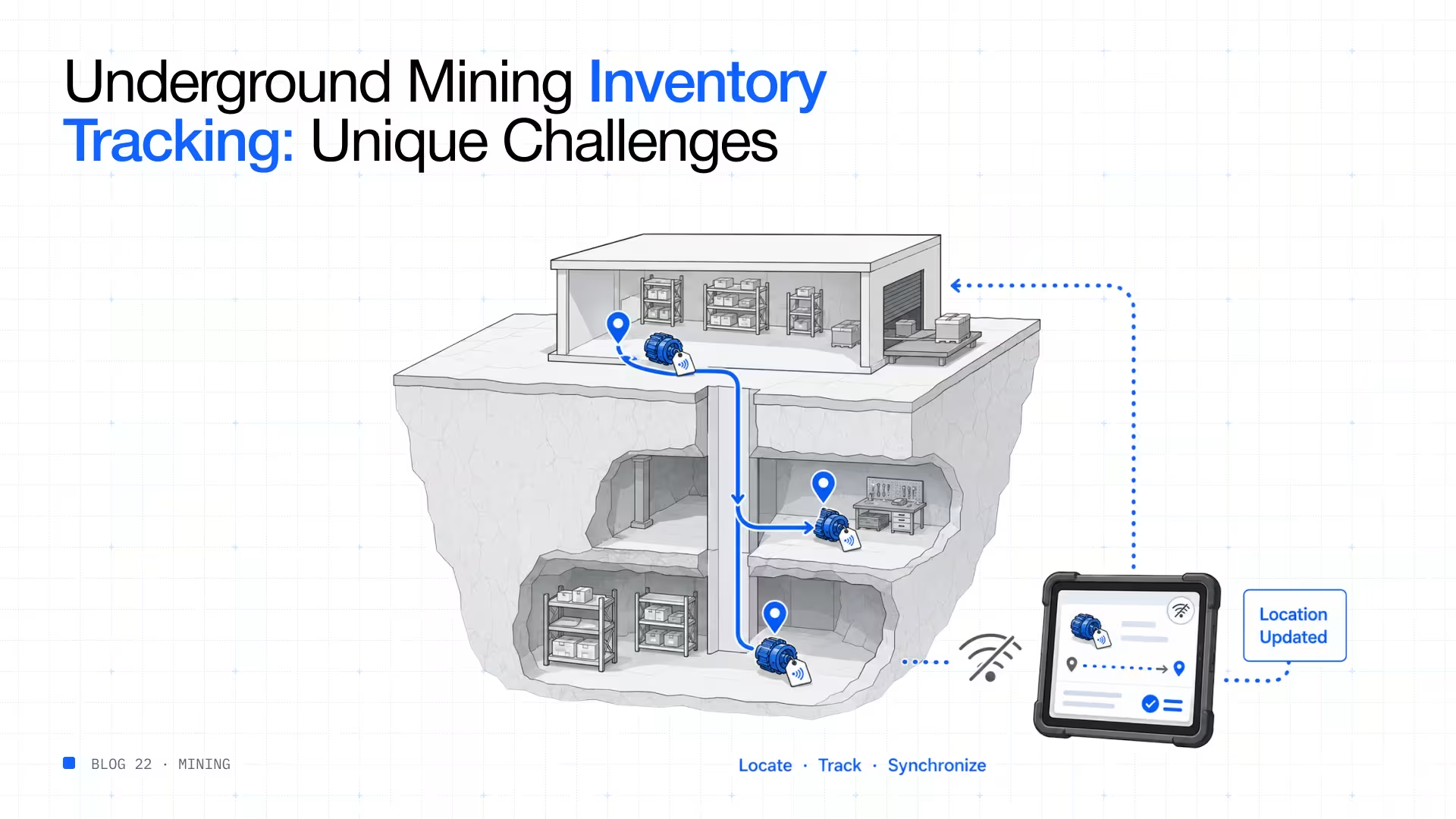
Inventory management becomes significantly more complex once operations move underground. Unlike surface facilities, underground mines present unique environmental and operational challenges that make locating, tracking, and managing inventory considerably more difficult. Limited connectivity, harsh operating conditions, restricted access, and constantly changing work areas all contribute to inventory processes that are far more demanding than those in conventional industrial environments.
This is why underground mining asset tracking has become a growing priority for mining companies seeking greater operational efficiency. Effective underground mining asset tracking provides maintenance teams, warehouse personnel, and operations managers with accurate visibility into where inventory and equipment are located, helping reduce delays and improve maintenance planning.
Without reliable tracking, critical spare parts may be stored in underground workshops but remain difficult to locate. Mobile equipment can be relocated between work areas without updated records, and maintenance teams often spend valuable time searching for inventory instead of performing repairs.
In this guide, we'll examine the unique challenges of underground mining asset tracking, explore why traditional inventory methods struggle below ground, and discuss the technologies helping mining companies improve inventory visibility across underground operations.
Surface warehouses already present inventory management challenges, but underground mining introduces an entirely different level of operational complexity.
Inventory is rarely stored in one centralized location. Spare parts, maintenance tools, consumables, safety equipment, and mobile assets are distributed across underground workshops, refuge chambers, maintenance bays, storage areas, production levels, and temporary work locations.
At the same time, mining operations continue around the clock.
Equipment is repaired underground, inventory is transferred between levels, emergency maintenance takes priority over administrative processes, and working areas change as mining progresses.
These constantly changing conditions make underground mining asset tracking considerably more challenging than traditional warehouse inventory management.
One of the biggest challenges affecting underground mining asset tracking is unreliable network connectivity.
Many underground environments experience limited wireless coverage, making it difficult for employees to update inventory systems while performing maintenance activities. As a result, inventory transactions are often recorded later, increasing the likelihood of delayed updates and inaccurate inventory records.
For example, a maintenance technician may issue a hydraulic component during an emergency repair but only update the ERP after returning to the surface. During that delay, inventory records continue showing the component as available, creating discrepancies that affect maintenance planning and procurement decisions.
Without technology designed to operate in low-connectivity environments, maintaining accurate underground inventory records becomes extremely difficult.
Underground inventory rarely remains stationary.
Critical spare parts move between central warehouses and underground maintenance facilities. Mobile equipment is reassigned between production areas. Tools are transported with maintenance crews, while consumables are distributed throughout underground work locations.
Every movement introduces another opportunity for inventory records to become outdated if transactions are delayed or missed.
As underground operations expand, maintaining accurate underground mining asset tracking becomes increasingly dependent on technologies capable of capturing inventory movement in real time.
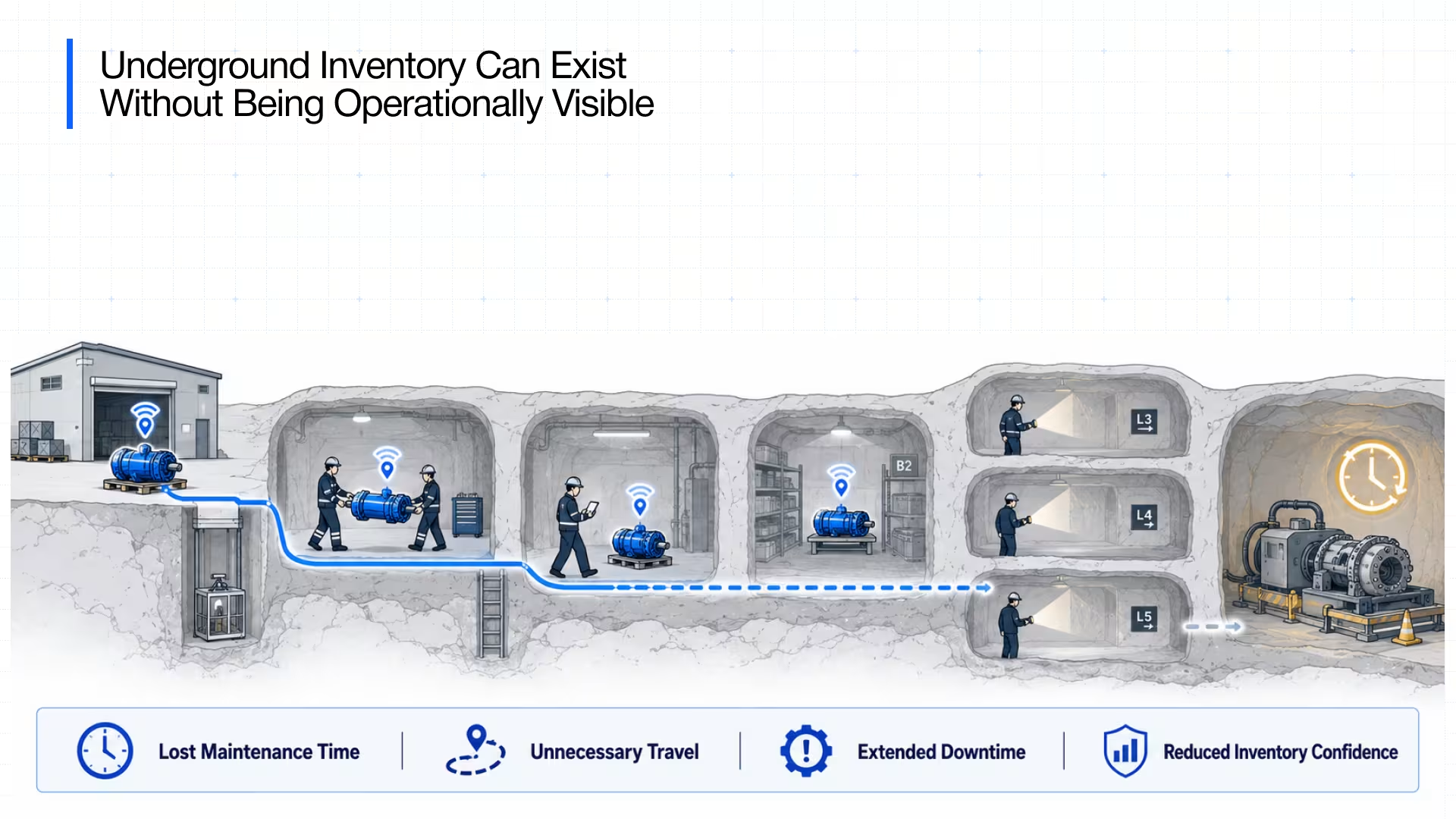
Many maintenance delays are not caused by equipment failures themselves.
Instead, technicians spend valuable time locating the parts needed to complete repairs.
A replacement motor may exist somewhere underground, but employees may not know which storage location contains it. A gearbox could have been transferred between maintenance workshops without updated inventory records. A specialized tool might remain assigned to a previous work area long after operations have moved.
When inventory cannot be located quickly, maintenance activities stop before they begin.
Effective underground mining asset tracking minimizes these delays by providing accurate information about inventory location before technicians begin searching manually.
Maintenance shouldn't begin with a search. Learn how Scatterlink helps mining operations improve underground inventory visibility and locate critical inventory faster.
Many underground operations continue relying on manual inventory processes developed for surface warehouses.
Paper-based inventory logs, spreadsheet tracking, delayed ERP updates, and manual stock verification create increasing challenges as underground operations grow.
These methods often depend on employees remembering to update inventory after completing maintenance work. In busy operational environments where production is the priority, inventory documentation naturally becomes secondary.
The result is declining inventory accuracy, reduced confidence in inventory systems, and increasing reliance on manual searches whenever maintenance requires critical spare parts.
Modern underground mining asset tracking requires inventory systems that support operational workflows instead of interrupting them.
Real-time inventory visibility provides more than inventory accuracy.
It gives maintenance planners confidence that required inventory is available before work begins. It allows warehouse teams to understand inventory movement across underground locations. It helps procurement departments make purchasing decisions based on actual inventory availability instead of assumptions.
Most importantly, it reduces the operational uncertainty that often surrounds underground inventory.
When everyone works from the same accurate inventory information, maintenance activities begin sooner, equipment returns to service faster, and production interruptions become less frequent.
Traditional inventory processes depend heavily on manual data entry, making them difficult to maintain in underground environments where inventory moves continuously throughout the shift. RFID technology addresses this challenge by allowing inventory to be identified quickly without requiring direct line-of-sight scanning.
For underground mining asset tracking, RFID tags can be attached to critical spare parts, maintenance tools, mobile equipment, safety assets, and reusable inventory. As tagged inventory moves through underground workshops, storage areas, maintenance bays, or access points, RFID readers capture inventory information automatically, reducing the number of manual transactions required.
This improves inventory accuracy while significantly reducing the time maintenance personnel spend locating equipment and spare parts.
More importantly, RFID creates a reliable digital record of inventory movement, giving operations teams greater confidence in inventory information across underground locations.
Reliable connectivity cannot always be guaranteed underground.
Maintenance crews often work in areas where wireless coverage is limited or unavailable, making it difficult to update inventory systems in real time. If inventory transactions depend entirely on network access, employees are forced to delay updates until they return to areas with connectivity.
This creates gaps between physical inventory and system records.
Offline-first mobile technology solves this challenge by allowing inventory transactions to be completed regardless of network availability. Warehouse personnel and maintenance teams can receive inventory, issue spare parts, transfer materials, perform cycle counts, and record inventory adjustments directly from their mobile devices while underground.
Once connectivity is restored, the information synchronizes automatically with the central inventory platform.
For underground mining asset tracking, this ensures inventory records remain accurate without interrupting operational workflows.
Unlike surface warehouses, underground mining operations constantly evolve.
Production advances into new headings, maintenance areas are relocated, temporary storage locations are established, and equipment is reassigned to different sections of the mine. Inventory locations that were accurate last month may no longer reflect current operations.
Without continuous tracking, employees quickly lose visibility into where inventory is actually stored.
Effective underground mining asset tracking provides a centralized view of inventory regardless of where operational activities occur. Instead of relying on local knowledge or verbal communication, maintenance teams can identify the current location of critical inventory before travelling underground.
This reduces unnecessary travel, improves maintenance planning, and allows inventory to be utilized more effectively across the entire operation.
Accurate underground inventory starts with visibility, not manual searches. Discover how Scatterlink helps mining companies maintain inventory accuracy even in low-connectivity environments.
Knowing where inventory is located is only one part of the equation.
Mining organizations also need to understand how inventory is being used, which spare parts move most frequently, where shortages are developing, and whether inventory is positioned to support future maintenance activities.
This is where underground mining asset tracking becomes inventory intelligence.
By combining RFID, mobile inventory applications, IoT devices, analytics, and ERP integration, mining companies can identify inventory trends that are difficult to detect through manual reporting alone.
For example, operations may discover that certain underground maintenance locations consistently experience shortages, while identical inventory remains unused elsewhere. Procurement teams can identify changing consumption patterns before shortages occur, and maintenance planners can verify inventory availability before scheduling repairs.
These insights help organizations improve inventory utilization while reducing unnecessary purchasing and operational delays.
Scatterlink's Inventory Intelligence Platform is purpose-built for complex industrial environments where inventory visibility is essential to operational performance.
For underground mining asset tracking, Scatterlink combines RFID technology, barcode scanning, mobile inventory applications, IoT connectivity, GPS-enabled surface location tracking where applicable, and seamless ERP integration to provide continuous visibility into inventory movement from receipt to consumption.
Maintenance teams can quickly locate spare parts, verify inventory availability before repairs begin, and record inventory transactions directly from the field. Warehouse personnel gain a real-time view of inventory across underground workshops, storage areas, and surface facilities, while procurement teams make purchasing decisions based on accurate inventory information rather than assumptions.
Scatterlink's offline-first mobile capability is particularly valuable for underground operations. Employees continue capturing inventory transactions even when network connectivity is unavailable, ensuring inventory records remain accurate once synchronization occurs.
Designed for frontline workers, the platform requires minimal training and integrates naturally into existing maintenance and warehouse workflows. Rather than adding administrative work, it simplifies inventory management while delivering accurate, intelligent, and actionable information for maintenance teams, warehouse personnel, procurement professionals, operations managers, and executive leadership.
Looking to improve underground mining asset tracking? Learn how Scatterlink helps mining organizations gain real-time inventory visibility across both surface and underground operations while reducing maintenance delays and improving inventory accuracy.
Underground mining presents some of the most demanding inventory management conditions in any industry. Constant inventory movement, limited connectivity, harsh operating environments, and changing work areas make accurate inventory tracking difficult using traditional methods alone.
Effective underground mining asset tracking enables mining companies to overcome these challenges by providing continuous visibility into inventory location, movement, and availability. Technologies such as RFID, offline-first mobile applications, IoT connectivity, and ERP integration help eliminate many of the manual processes that contribute to inventory inaccuracies and maintenance delays.
The greatest value, however, comes from transforming inventory tracking into inventory intelligence. When mining organizations have accurate, real-time information about their inventory, they can improve maintenance planning, reduce equipment downtime, optimize procurement decisions, and operate with greater confidence across every level of the mine.
For underground operations where every minute of equipment availability matters, investing in modern underground mining asset tracking is an investment in productivity, reliability, and safer, more efficient operations.
Underground mining asset tracking is the process of monitoring and managing the location, movement, and availability of inventory, spare parts, equipment, and tools throughout underground mining operations using technologies such as RFID, mobile inventory applications, and IoT devices.
Underground mining environments present challenges such as limited network connectivity, constantly changing work areas, distributed inventory locations, harsh operating conditions, and continuous equipment movement, all of which make inventory visibility more difficult.
RFID improves underground mining asset tracking by allowing inventory and equipment to be identified quickly without manual scanning, improving inventory accuracy and reducing the time spent locating critical spare parts and maintenance assets.
Offline mobile applications allow employees to record inventory transactions even when network connectivity is unavailable. Once connectivity returns, the information synchronizes automatically, ensuring inventory records remain accurate.
Modern underground mining asset tracking solutions commonly use RFID, barcode scanning, offline-first mobile applications, IoT devices, ERP integration, analytics, and inventory intelligence platforms to improve visibility and operational performance.
%20(1).avif)
.avif)
%20(1).avif)