
Mining equipment is built to operate continuously under some of the harshest conditions in the world. Every hour a haul truck, excavator, crusher, conveyor, or processing plant sits idle represents more than a maintenance issue—it represents lost production, missed revenue, and mounting operational pressure. While equipment failures are often blamed for these interruptions, many organizations overlook another major contributor: the inability to locate the right spare parts when they are needed. Understanding the mining equipment downtime cost means looking beyond mechanical failures and examining how inventory visibility influences every maintenance decision.
Downtime is rarely caused by a single event. It is the result of several small delays that accumulate over time. Maintenance teams search multiple storage locations for critical parts, procurement raises emergency purchase orders because existing inventory cannot be found, and production schedules are adjusted while everyone waits for confirmation that the required component is available. These delays are preventable, yet they continue to cost mining operations millions every year because inventory information cannot keep pace with operational reality.
Modern mining organizations are discovering that improving equipment availability is not only about maintaining machinery more effectively. It is equally about ensuring that the inventory supporting those assets is visible, accurate, and immediately accessible when maintenance teams need it.
Many organisations associate downtime with the moment a machine breaks down. In reality, the countdown begins much earlier.
A planned shutdown may already be at risk if maintenance planners cannot verify whether all required spare parts are available. Preventive maintenance may be postponed because one component is missing. A technician may arrive at the job only to discover that the ERP shows stock on hand, but the physical inventory cannot be located. What appears to be a maintenance issue is often an inventory visibility problem.
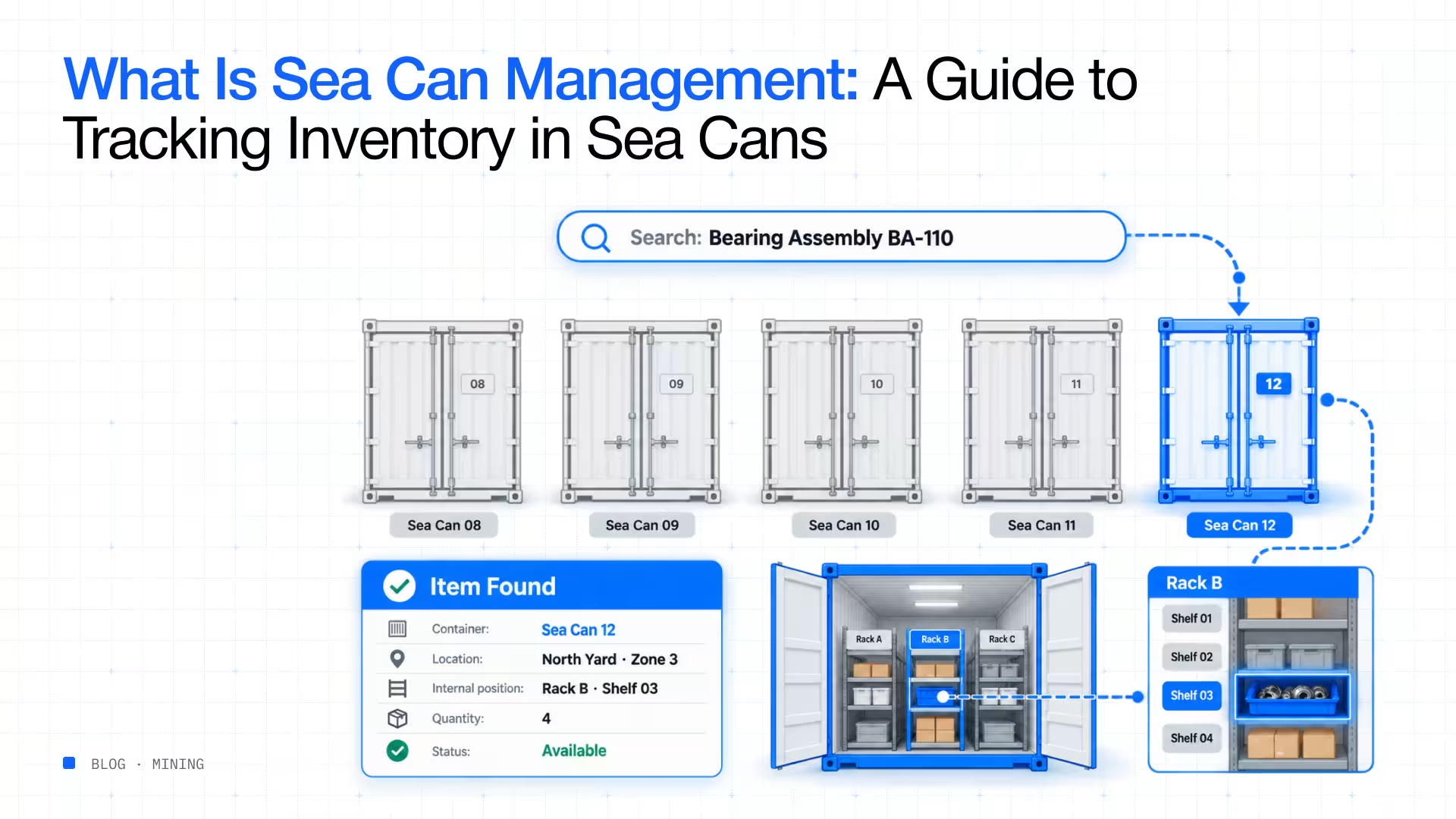
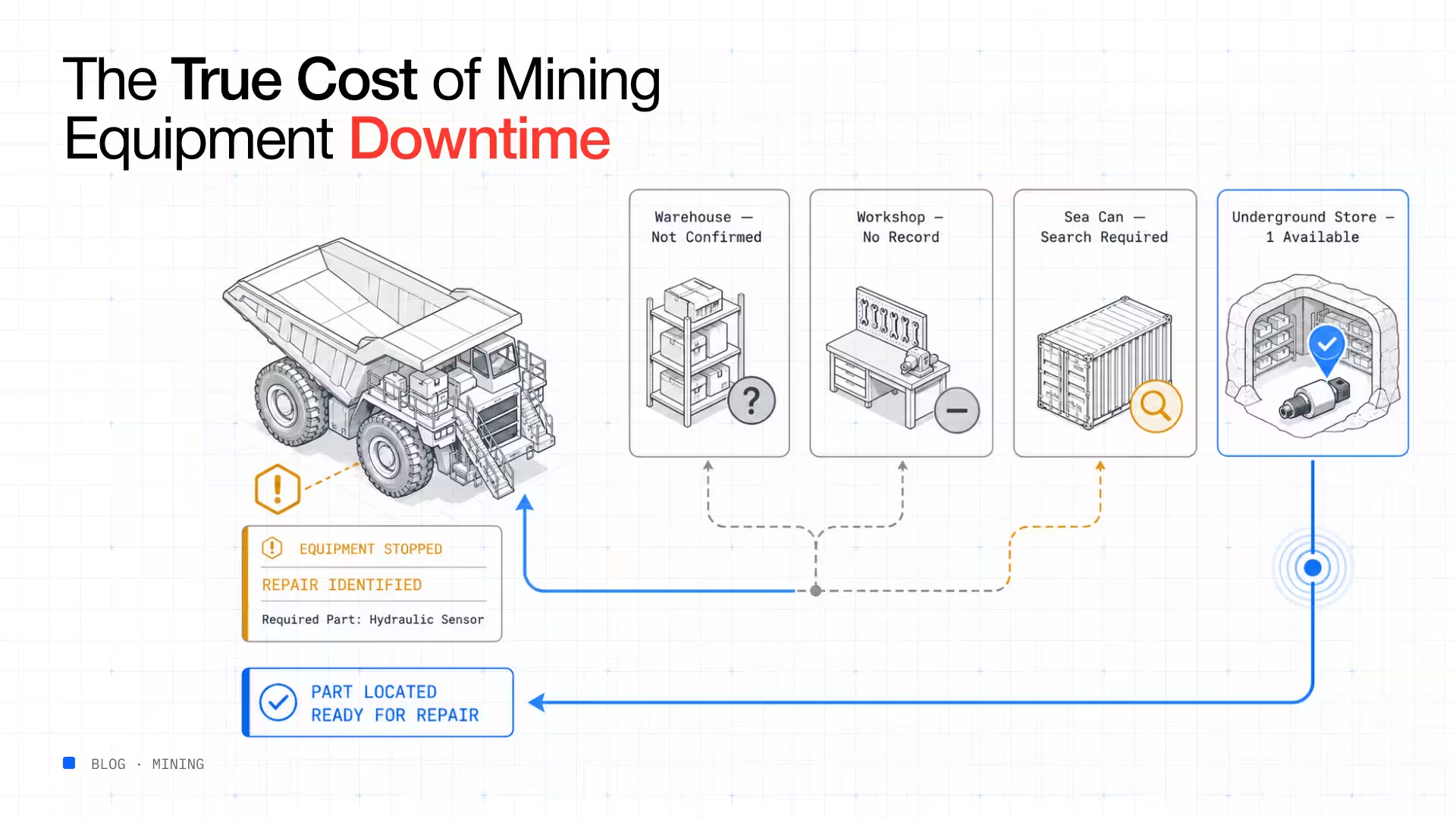
This challenge becomes even greater across large mining operations where inventory is distributed between central warehouses, workshops, laydown yards, sea cans, contractor facilities, and both surface and underground storage locations. Critical parts may exist somewhere on site, but if maintenance teams cannot find them quickly, production experiences the same delay as if the part were completely unavailable.
The result is that equipment remains idle while organisations spend valuable time searching rather than repairing. Every additional hour spent locating inventory extends downtime, increases labour costs, and delays the return of critical assets to service.
Inventory visibility therefore becomes an essential part of maintenance performance. The faster maintenance teams can identify and access the correct spare parts, the faster equipment returns to productive operation.
See how Scatterlink helps mining organizations locate critical spare parts faster and reduce maintenance delays.
Equipment failures are inevitable in mining. What determines the financial impact is how quickly maintenance teams can respond and return equipment to service. Unfortunately, many delays have little to do with the repair itself. They occur because maintenance teams spend valuable time trying to locate parts that should already be available.
Consider a haul truck waiting for a replacement hydraulic hose or an underground loader requiring a specific sensor before it can return to operation. The repair may only take thirty minutes once the component arrives, yet the equipment could remain out of service for several hours while technicians search warehouses, contact procurement, verify inventory records, or wait for inventory to be transferred from another location.
These situations are more common than many organizations realize because inventory records often indicate that stock is available even when it has already been issued, relocated, or temporarily stored elsewhere.
When critical spare parts cannot be located quickly, organizations experience:
The actual repair may represent only a small fraction of the total downtime. The majority of lost time is frequently spent locating inventory rather than fixing equipment.
This is why improving spare parts visibility often delivers faster operational improvements than investing solely in maintenance efficiency.
Learn how Scatterlink helps mining organizations reduce equipment downtime through complete inventory visibility from receipt to consumption.
Maintenance planning depends on certainty. Before scheduling a planned shutdown or preventive maintenance activity, planners need confidence that every required spare part is available, correctly identified, and located where technicians can access it.
Without real-time inventory visibility, that confidence quickly disappears.
Many organizations still rely on ERP inventory records, spreadsheets, or manual stock confirmations before approving maintenance work. While these systems provide inventory information, they rarely confirm the current physical location of inventory across workshops, laydown yards, remote stores, contractor compounds, and underground operations.
As a result, maintenance planners often build schedules around inventory assumptions rather than verified inventory availability.
Real-time inventory visibility changes this process completely.
Instead of checking multiple systems or contacting different departments, planners can immediately verify:
This level of visibility reduces planning uncertainty while allowing maintenance teams to prepare jobs with greater confidence.
It also improves collaboration between warehouse, procurement, and maintenance departments because every team works from the same trusted inventory information rather than separate records that may no longer reflect operational reality.
Reduce maintenance delays caused by missing inventory. Discover how Scatterlink gives mining teams real-time visibility into critical spare parts across warehouses, workshops, sea cans, and both surface and underground operations.
Scatterlink's Inventory Intelligence Platform helps mining organizations reduce equipment downtime by ensuring critical spare parts remain visible throughout their entire lifecycle. Instead of relying solely on warehouse transactions, Scatterlink captures inventory movement from receipt through consumption, providing maintenance teams with accurate, real-time information about inventory availability.
Using RFID technology, barcode scanning, offline mobile inventory applications, IoT devices, GPS-enabled location tracking, and seamless ERP integration, Scatterlink creates a single source of truth for inventory across every operational location. Whether a component is stored in a warehouse, transferred to a shutdown area, located inside a sea can, or issued underground, its status and location remain continuously updated.
This enables maintenance teams to locate parts faster, procurement teams to eliminate unnecessary purchases, and planners to schedule maintenance with confidence that required inventory is available before work begins.
Rather than reacting to inventory uncertainty, organizations gain the visibility needed to keep equipment operating and production moving.
Discover how real-time inventory intelligence improves maintenance planning, inventory accuracy, and operational performance.
Understanding the mining equipment downtime cost requires looking beyond equipment failures themselves. In many cases, the greatest delays occur because organizations cannot quickly locate the spare parts required to complete repairs. Inventory blind spots, fragmented storage locations, and outdated inventory records extend maintenance activities long after the actual repair could have been completed.
By improving inventory visibility from receipt to consumption, mining organizations can significantly reduce maintenance delays, improve equipment availability, and minimize the financial impact of unplanned downtime. Real-time inventory intelligence ensures maintenance teams spend less time searching for inventory and more time returning critical assets to productive operation.
For operations where every hour of production matters, inventory visibility becomes just as important as equipment reliability.
While mechanical failures are unavoidable, many downtime events are extended because maintenance teams cannot quickly locate the required spare parts. Poor inventory visibility is one of the leading causes of avoidable maintenance delays.
Real-time inventory visibility allows maintenance teams to immediately identify where critical spare parts are located, verify availability before maintenance begins, and eliminate delays caused by inventory searches or duplicate purchasing.
Equipment can only return to service when the correct replacement parts are available. Effective spare parts inventory management ensures critical components are accessible when maintenance teams need them, reducing downtime and improving production reliability.
%20(1).avif)
.avif)
%20(1).avif)