
Mining operations rarely manage explosives in one fixed location. Inventory can move from surface storage into underground magazines and then into operational areas, creating a continuous flow between different parts of the mine. When each environment is recorded separately, maintaining an accurate picture of total inventory becomes increasingly difficult.
The challenge is not simply knowing how much explosives inventory exists. Teams need to know where it is, how it moved between locations, what has been issued for use and what has been returned or consumed. Without this visibility, inventory teams may spend significant time comparing separate records before they can establish the actual stock position.
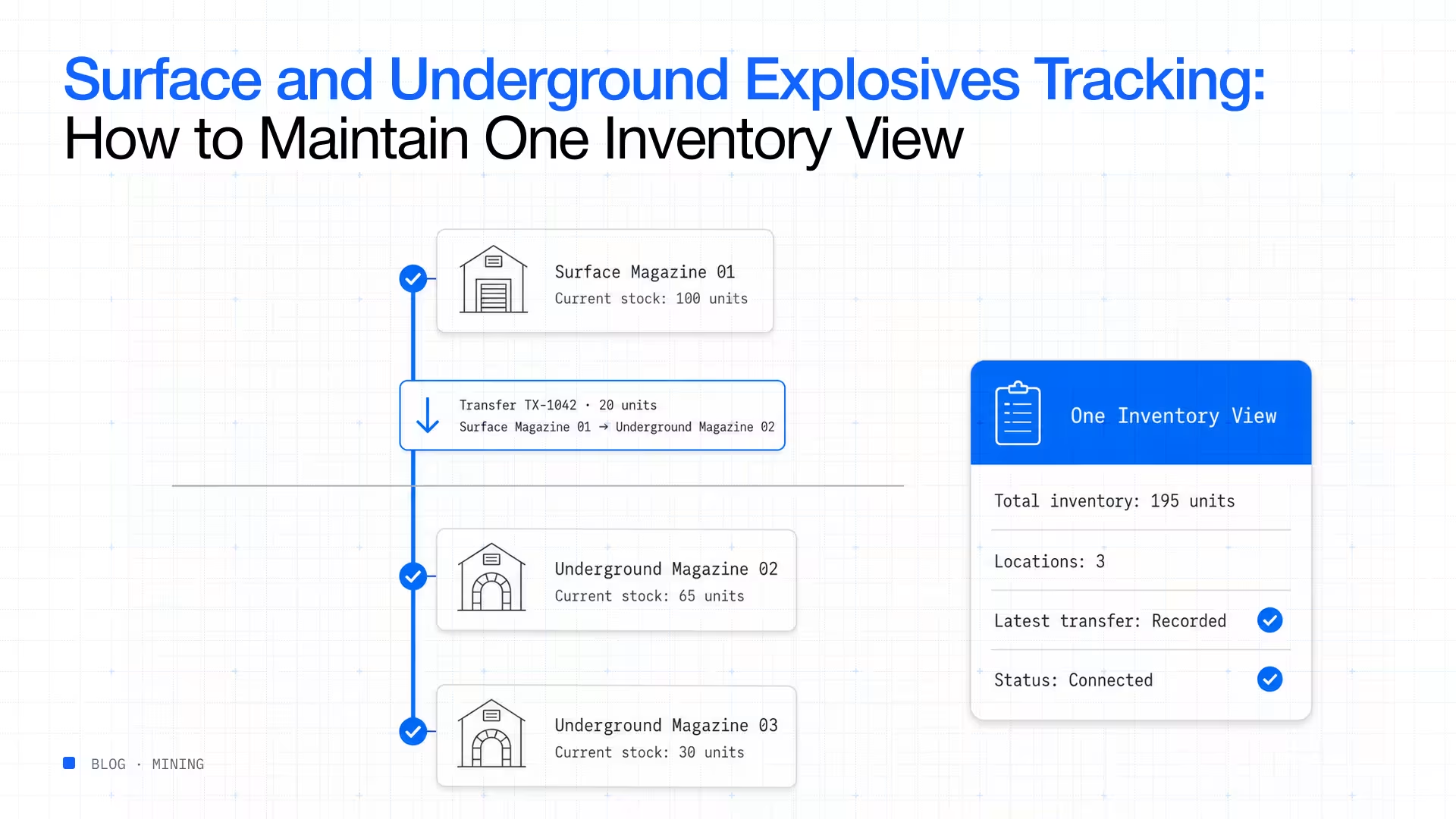
Surface and underground explosives tracking provides a way to connect these movements. Instead of treating surface and underground inventory as completely separate records, a connected approach can give authorised users one inventory view while still maintaining the detail of individual magazines and locations.
Surface and underground explosives tracking is the process of monitoring explosives inventory as it moves across surface storage, underground magazines and relevant operational locations.
The objective is to maintain a clear record of where inventory is held and how it moves between locations. This can include receiving into inventory, transfers between magazines, issues for operational use, returns and relevant consumption records.
A connected tracking process allows these activities to contribute to the same overall inventory picture. Users can still view individual locations, but the inventory does not become fragmented simply because the physical environment changes.
When surface and underground inventory is managed through disconnected records, teams may have to combine information manually to understand the total stock position. This creates additional administrative work and increases the possibility of inconsistencies between records.
One connected inventory view provides a broader picture while retaining location-level detail. Authorised users can understand the inventory held at a particular magazine while also seeing how that inventory contributes to the wider operation.
This is particularly useful when inventory moves regularly between surface and underground locations. Every transfer can affect multiple records, so maintaining a connected transaction history becomes important for keeping the overall inventory position accurate.
Several operational factors can make multi-location explosives tracking challenging.
Explosives may be held across surface magazines, underground magazines and other authorised storage locations. Each location needs an accurate inventory record while still contributing to the overall stock position.
Transfers from surface to underground and between underground locations change the inventory balance at multiple points. If these movements are not recorded consistently, location-level records can quickly become inaccurate.
Underground environments may not always provide reliable connectivity. If inventory transactions depend on a live connection, teams may have to delay recording activity or use temporary manual records.
Stocktaking across different locations requires teams to compare physical quantities against the correct inventory records. The more locations involved, the more difficult manual reconciliation can become.
When surface and underground teams use different registers, spreadsheets or systems, it can become difficult to establish a single reliable inventory position.
The foundation is a common inventory process that recognises each location within the same inventory structure. Surface and underground magazines can remain separate physical locations while their inventory records remain connected.
Transfers should be recorded as movements between those locations rather than as unrelated changes to individual stock balances. This provides a clearer history of where inventory came from and where it moved.
The result is a single inventory view that does not remove location-level detail. Instead, it connects those individual records so authorised users can understand both the local and overall inventory position.
If your surface and underground inventory is managed through separate records, explore MagControl to see how Scatterlink can connect inventory across locations.
Tracking provides context around the current inventory balance. Instead of showing only what is recorded at a particular location, it can provide visibility into the transactions that caused the balance to change.
For example, when explosives move from a surface magazine to an underground magazine, the relevant transfer creates a record of that movement. Authorised users can then understand why the stock position changed at each location.
This becomes especially valuable when investigating discrepancies. Rather than comparing current balances alone, teams can review the movement history associated with the inventory.
A transfer should create a clear connection between the source and destination locations. The source inventory should reflect the movement out, while the destination inventory should reflect the corresponding movement in.
Recording these movements through a structured workflow helps prevent one side of the transaction from being updated without the other. It also provides a clearer audit history for authorised users reviewing inventory activity.
When multiple transfers occur over time, the accumulated transaction history provides a useful record of how inventory has moved throughout the operation.
Underground magazine inventory should remain part of the wider inventory structure rather than becoming an isolated record. Each magazine can maintain its own balance while contributing to the overall inventory position.
This allows users to drill down into a specific underground location when required while still understanding how much inventory is held across the wider operation.
The same principle applies to surface inventory. Keeping both environments within a connected inventory structure helps prevent the fragmentation that can occur when each environment is managed independently.
Inventory activity does not always take place near a desktop or fixed workstation. Teams may need to record transfers, issues or other transactions while physically moving through the operation.
Mobile inventory workflows can allow authorised users to capture relevant activity closer to where it occurs. This can reduce the reliance on handwritten notes and later data entry.
For surface and underground operations, mobile access can also support a more consistent process across different environments. Users can follow the same fundamental inventory workflow even when the physical conditions are different.
Need your teams to track inventory where the physical movement happens? Explore MagControl to see how Scatterlink supports mobile explosives inventory workflows.
Connectivity is one of the biggest differences between surface and underground environments. A tracking system that assumes constant connectivity may not support every operational situation effectively.
Offline functionality can allow authorised users to capture relevant inventory transactions while disconnected and synchronise the information once connectivity is restored, according to the system’s configuration.
This can reduce the need for temporary paper records and help maintain a more consistent inventory process. It also helps keep underground activity connected to the broader inventory record rather than requiring separate manual reconciliation later.
Inventory accuracy depends on knowing both the quantity and location of stock. When inventory moves between surface and underground locations, both sides of the movement need to be reflected correctly in the inventory record.
A connected tracking workflow can help maintain this relationship. Transfers, issues, returns and other relevant transactions can be associated with the appropriate location and included in the wider inventory history.
Physical stocktaking and reconciliation can then be used to verify the recorded position. If a discrepancy occurs, the transaction history provides additional information for investigating where the records may have diverged.
A mining operation may have inventory distributed across several locations at the same time. Without multi-location visibility, teams may know what is recorded at individual magazines but struggle to understand the overall position.
Multi-location tracking brings these records together without losing the detail of individual locations. This allows authorised users to move between a high-level inventory view and the specific magazine or location that requires attention.
This is particularly useful for inventory planning and reconciliation because decisions can be based on the broader inventory position rather than isolated records.
The exact information required will depend on the operation’s processes and applicable requirements. However, a connected inventory tracking process may include:
The objective is to create enough visibility to understand the inventory lifecycle without forcing teams to maintain separate, disconnected records for each stage.
Creating one inventory view does not mean treating every magazine as the same location. Surface magazines, underground magazines and operational areas still need their own inventory records. The difference is that these records should remain connected within the same inventory structure.
This allows authorised users to see the overall inventory position while also drilling down into a particular location. If a discrepancy appears underground, teams can investigate that specific location without losing sight of how it relates to the wider operation.
A connected structure is particularly valuable when inventory moves frequently between locations. Every movement contributes to the overall inventory position, so the system needs to preserve those relationships.
Multi-magazine tracking requires each location to have an accurate and current inventory balance. It also requires transfers between locations to be recorded consistently so that stock is not effectively duplicated or lost between records.
For example, when explosives move from a surface magazine to an underground magazine, the movement should be reflected against both locations. This creates a clear relationship between the reduction at the source and the corresponding increase at the destination.
Over time, these transactions create a history of inventory movement across the operation. This gives authorised users greater visibility into where stock has been and where it is currently recorded.
Disconnected records create opportunities for information to become inconsistent. A surface register may show one position while an underground record shows another, requiring teams to manually determine whether the difference is genuine or simply a recording issue.
Digital tracking can bring these locations into a common inventory workflow. Instead of maintaining separate records that need to be combined later, relevant transactions can contribute to the same inventory history.
This can reduce administrative reconciliation and provide a more consistent source of information for authorised users.
If you’re dealing with separate surface and underground inventory records, explore MagControl to see how Scatterlink can provide a connected view of explosives inventory across locations.
A current stock balance tells users what is recorded now. Transaction history provides the context needed to understand how that balance was created.
When inventory moves between surface and underground locations, the transaction history can show the relevant movements. This becomes particularly useful when an inventory balance appears unusual or does not match the physical stock.
Authorised users can review the relevant activity instead of trying to reconstruct the movement manually. This can make discrepancy investigation more efficient and provide stronger visibility into the inventory lifecycle.
Reconciliation should consider both individual locations and the wider inventory position. A magazine may have a discrepancy even when the overall operation appears balanced, or the total position may reveal a difference that is spread across multiple locations.
Physical stocktaking can provide the verification point for each relevant location. The recorded balance can then be compared with the physical quantity, with discrepancies investigated through the relevant inventory history.
When surface and underground locations are connected, reconciliation can also take account of movements between them. This helps prevent teams from treating each location as an isolated inventory record.
Underground connectivity may vary depending on the area and available infrastructure. This means inventory tracking needs to account for situations where users cannot immediately connect to the central system.
An offline-capable workflow can allow authorised users to capture relevant inventory activity while disconnected and synchronise it once connectivity is restored, according to the system’s configuration.
This helps reduce the need for temporary paper records and later manual data entry. More importantly, it can help maintain the same fundamental inventory process across connected and offline environments.
If underground connectivity is making real-time inventory capture difficult, explore MagControl to see how Scatterlink supports mobile inventory workflows across mining environments.
Inventory movements often happen away from fixed workstations. Requiring users to wait until they return to an office before recording a transfer or issue can create a delay between the physical event and the inventory record.
Mobile tracking allows authorised users to capture relevant transactions closer to the point of activity. This can help reduce temporary notes and duplicate data entry.
For surface and underground operations, a mobile workflow can also provide greater consistency. Teams can use the same basic process for recording inventory activity even when the operating environments are very different.
Tracking the complete inventory journey requires more than recording the initial transfer underground. Relevant movements should remain connected through storage, transfers, issue, consumption and returns where applicable.
This creates a continuous inventory history rather than a series of disconnected events. Authorised users can understand how inventory moved through the operation and how the stock position changed at each stage.
The level of detail captured should reflect the operation’s workflows and applicable requirements. The goal is to maintain a reliable inventory record without creating unnecessary administrative steps.
Inventory accuracy depends on every relevant movement being reflected correctly. If an underground transfer is recorded late or against the wrong location, the inventory position can become inaccurate even if the physical stock has not changed unexpectedly.
A connected tracking process helps associate transactions with the appropriate locations. This provides a stronger foundation for maintaining accurate magazine balances across the operation.
Regular stocktaking and reconciliation can then verify those records. When differences occur, transaction history can provide the context needed to investigate them.
Once surface and underground inventory is connected, mining operations can monitor relevant measures to understand how effectively the process is working.
Useful indicators may include:
Monitoring these measures can help identify whether problems are isolated to particular locations or indicate a wider process issue.
When inventory information is fragmented, teams may need to spend time confirming basic stock positions before making decisions. A connected view can reduce this uncertainty by bringing relevant location and movement information together.
Authorised users can understand what is recorded at individual magazines while also seeing the broader inventory position. This provides greater context when reviewing stock availability or planning inventory movements.
The benefit is not simply convenience. Reliable inventory information gives teams a stronger basis for taking action without relying on disconnected records or manual reconciliation.
If your teams need a clearer, more actionable view of explosives inventory across the operation, visit Scatterlink to see how connected inventory intelligence can support mining operations.
A suitable system should support the full inventory lifecycle rather than focus only on one location or transaction type.
Key capabilities to consider include:
The system should also be simple enough for operational teams to use consistently. A technically capable platform will not improve inventory visibility if users find the workflow difficult or impractical.
The first step is to establish a consistent inventory structure across surface and underground locations. Each magazine should have a defined location record, while all relevant transactions should follow a standard process.
The next step is to connect physical movements with digital transactions. Transfers, issues, returns and consumption should be recorded in a way that maintains the relationship between the physical activity and the inventory record.
Finally, the operation should use stocktaking, reconciliation and transaction history to monitor accuracy. This creates an ongoing process for identifying and addressing inventory discrepancies rather than waiting for major problems to surface.
Surface and underground explosives tracking becomes difficult when inventory is divided between disconnected records. The physical environments may be different, but the inventory should still form one coherent operational picture.
A connected inventory process can maintain magazine-level detail while giving authorised users a broader view across the operation. Transfers, issues, returns, consumption and reconciliation can all contribute to a more complete inventory history.
For mining operations, the goal is simple: one inventory view, without losing visibility into individual locations. When surface and underground inventory remain connected, teams can spend less time reconciling separate records and more time working with accurate, actionable inventory information.
Want one connected view of explosives inventory across surface and underground operations? Explore MagControl to see how Scatterlink can help connect inventory, locations and movements.
It is the process of tracking explosives inventory as it moves between surface storage, underground magazines and relevant operational locations while maintaining connected inventory records.
One inventory view helps authorised users understand inventory across multiple locations without having to manually combine separate surface and underground records.
Inventory transfers can be recorded against the source and destination locations, creating a connected transaction history that shows how inventory moved through the operation.
Underground operations can involve multiple locations, changing inventory positions and inconsistent connectivity, all of which can make it harder to maintain accurate and timely records.
Yes. Where supported, offline workflows can allow authorised users to capture inventory activity without connectivity and synchronise it when a connection becomes available.
Mobile workflows allow authorised users to record inventory activity closer to where physical movements occur, reducing delays and the need for duplicate manual records.
Individual magazines can be physically verified and compared with their digital records, while transaction history can help investigate differences and movements between locations.
Relevant capabilities include multi-location inventory, magazine-level records, movement tracking, transaction history, reconciliation, mobile access, offline functionality where required and visibility across surface and underground operations.
%20(1).avif)
.avif)
%20(1).avif)