

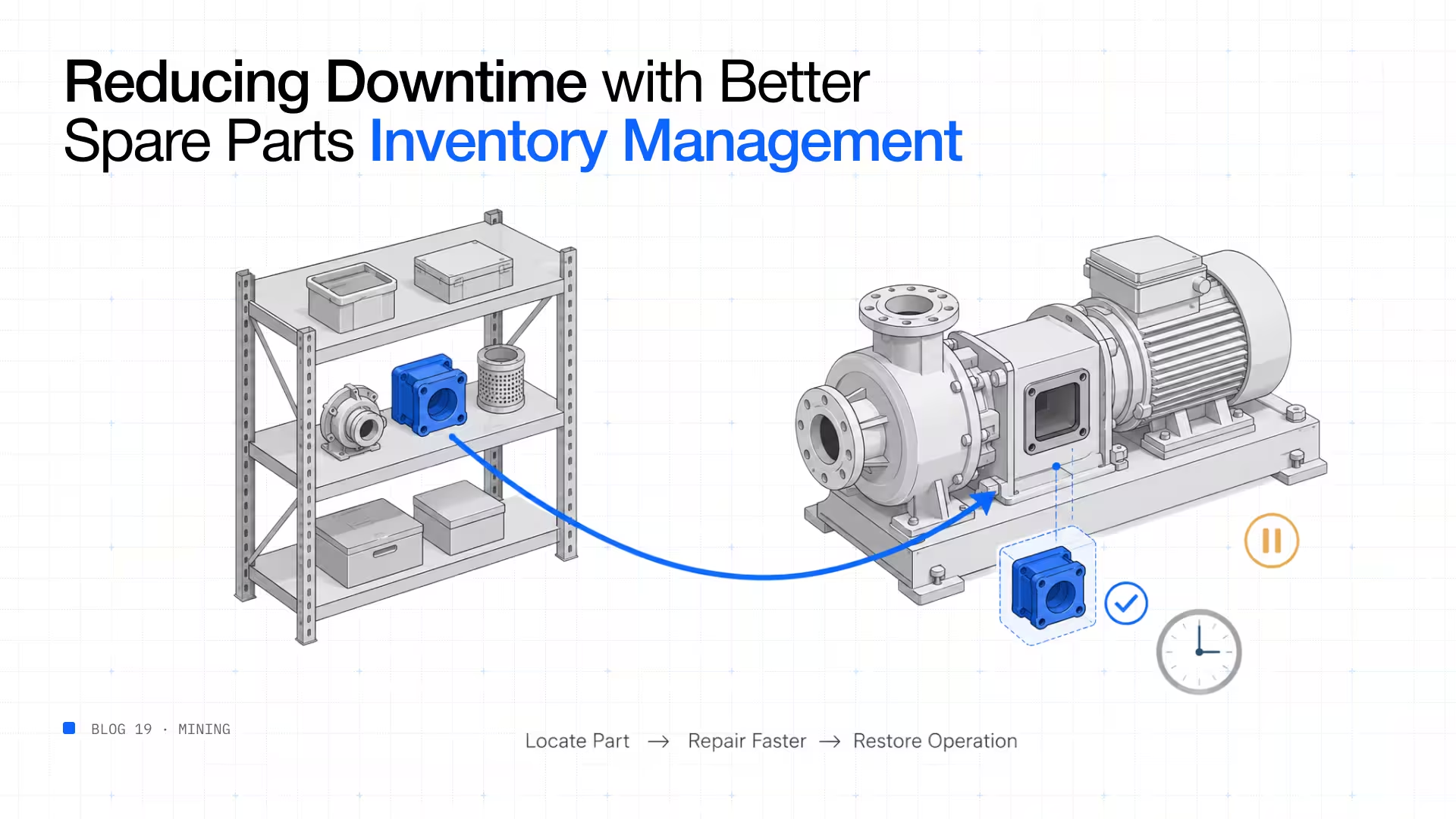
Unplanned downtime remains one of the most expensive challenges facing industrial organizations. Whether it occurs in a mining operation, manufacturing plant, refinery, construction project, or processing facility, every unexpected equipment failure has consequences that extend far beyond maintenance. Production schedules are disrupted, labor costs increase, contractual commitments become harder to meet, and operational efficiency declines.
While equipment failures themselves cannot always be prevented, the length of downtime is often influenced by one critical factor: the availability of spare parts. Maintenance teams frequently know exactly how to repair an asset, but they cannot begin the work because the required component cannot be located or is not available. In many organizations, the issue is not a lack of inventory. It is a lack of visibility into where inventory exists and whether it is immediately accessible.
This is why spare parts inventory management has become a strategic priority for asset-intensive industries. Effective spare parts inventory management ensures that critical components are available when needed, inventory records remain accurate, and maintenance teams spend less time searching for materials and more time restoring equipment to service.
In this guide, we'll explore how spare parts inventory management directly affects equipment uptime, examine the common causes of maintenance delays, and discuss the best practices and technologies that help organizations improve inventory availability while reducing unnecessary inventory costs.
Industrial operations depend on equipment reliability. From haul trucks and conveyors to pumps, compressors, crushers, and processing equipment, every asset contributes to overall operational performance. When one critical asset stops unexpectedly, the impact can spread throughout the entire production process.
Maintenance teams often prepare preventive maintenance schedules, stock critical components, and develop detailed repair procedures. However, these efforts quickly lose effectiveness if technicians cannot locate the required spare parts when maintenance begins.
This is where spare parts inventory management creates measurable business value. By maintaining accurate inventory records and improving inventory visibility, organizations reduce maintenance delays, improve equipment availability, and strengthen operational resilience.
Rather than viewing spare parts as warehouse inventory, leading organizations treat them as essential operational resources that directly support production continuity.
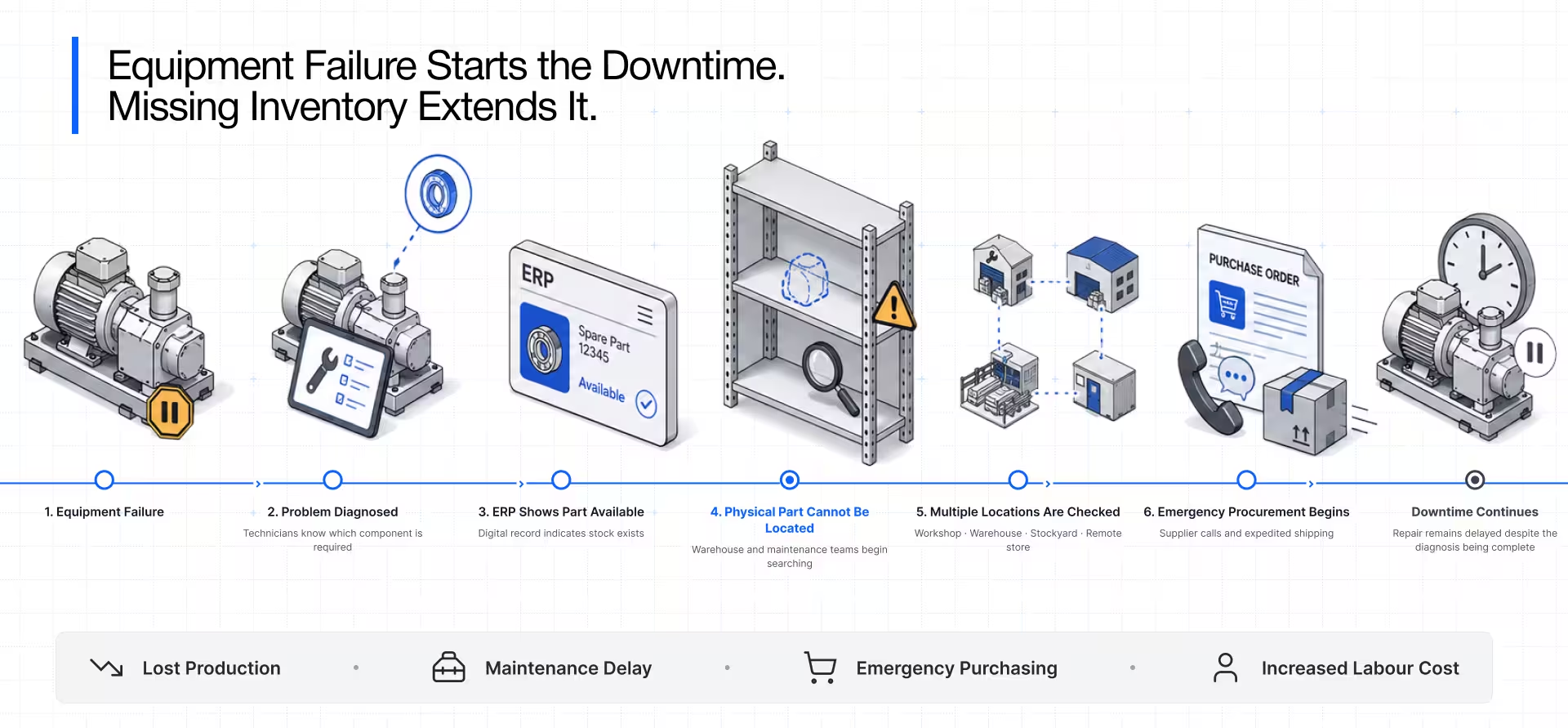
Many organizations assume equipment downtime is primarily caused by mechanical failures. In reality, a significant portion of maintenance delays occurs after the failure has already been diagnosed.
Consider a maintenance team responding to an unexpected equipment breakdown. The faulty component has been identified, technicians are available, and repair procedures are ready. The only remaining requirement is the replacement part.
The ERP indicates the component is in stock.
The warehouse cannot find it.
The maintenance team waits while warehouse personnel search multiple storage locations. Procurement begins contacting suppliers, only to discover the organization already owns the required part. Hours or even days are lost because inventory records did not accurately reflect physical inventory.
This scenario highlights why spare parts inventory management affects operational performance far beyond inventory accuracy alone.
Many industrial organizations experience similar inventory challenges regardless of the industry they operate in. These issues gradually reduce inventory reliability and make maintenance planning increasingly difficult.
Inventory is often distributed across warehouses, maintenance workshops, laydown yards, satellite stores, and remote operational sites. Without real-time inventory visibility, locating critical spare parts becomes a manual and time-consuming process.
Missed inventory transactions, delayed updates, and manual data entry gradually reduce confidence in inventory information. Maintenance planners begin verifying inventory manually before scheduling repairs, adding unnecessary delays to maintenance activities.
Organizations frequently respond to uncertainty by purchasing additional inventory. While this may reduce the risk of immediate shortages, it also increases inventory carrying costs and ties up valuable working capital. At the same time, genuinely critical components may still be unavailable because inventory planning is based on inaccurate information rather than actual demand.
Many industrial spare parts have extended lead times. Components for heavy equipment, specialized machinery, or imported systems may require weeks or even months to replace. Without effective spare parts inventory management, organizations risk prolonged downtime whenever these items are unavailable.
Downtime doesn't always begin with equipment failure. It often begins with missing inventory. Discover how Scatterlink helps organizations improve spare parts inventory management through real-time inventory visibility.
Maintenance departments measure success by how quickly equipment returns to operation. Every minute spent searching for inventory delays repairs, extends downtime, and increases operational costs.
When maintenance planners have confidence in inventory information, work orders can be scheduled more effectively. Technicians know required components are available before work begins, supervisors allocate resources more efficiently, and procurement avoids unnecessary emergency purchases.
This level of confidence depends on spare parts inventory management that provides real-time visibility into inventory location, availability, and movement. Instead of relying on assumptions or outdated records, every department works from the same accurate inventory information.
Inventory visibility therefore becomes just as important as inventory availability.
Preventive maintenance programs are designed to reduce equipment failures before they occur. However, even the most carefully planned maintenance schedule can be disrupted if replacement components are unavailable when maintenance begins.
Effective spare parts inventory management ensures preventive maintenance activities are fully supported by accurate inventory planning. Maintenance teams can verify inventory availability before scheduling work, reducing last-minute delays and improving equipment reliability.
Organizations that align preventive maintenance with inventory visibility often experience lower downtime, improved maintenance productivity, and better utilization of maintenance resources.
Improving spare parts inventory management requires more than increasing inventory levels. Organizations achieve better results by ensuring the right spare parts are available at the right location, in the right quantity, and at the right time. This balance minimizes equipment downtime while preventing unnecessary inventory investment.
The most effective organizations combine structured inventory planning with technology that provides continuous visibility into inventory movement and availability. Rather than reacting to equipment failures, they proactively manage inventory to support maintenance activities before disruptions occur.
Not every spare part should be managed the same way. Some components are inexpensive and readily available, while others are high-value items with procurement lead times of several months. Applying a single inventory strategy to every part often results in unnecessary carrying costs or unexpected stockouts.
A criticality-based approach allows organizations to prioritize spare parts inventory management according to operational risk.
A common classification framework includes:
This structured approach improves inventory optimization while ensuring maintenance teams always have access to the parts that matter most.
One of the most common causes of inventory shortages is relying on manual monitoring to determine when inventory should be replenished.
Modern spare parts inventory management systems allow organizations to establish automated reorder thresholds based on inventory consumption, lead times, equipment criticality, and historical usage patterns. Instead of discovering shortages during maintenance activities, procurement teams receive advance notifications before inventory reaches critical levels.
Automated replenishment also helps reduce emergency purchasing, which is often associated with higher procurement costs, expedited shipping charges, and production delays.
By replacing reactive purchasing with data-driven inventory planning, organizations improve both inventory availability and financial control.
Many organizations operate multiple warehouses, maintenance facilities, satellite stores, and remote operational sites. Although inventory may exist somewhere within the organization, locating it quickly can become a challenge when visibility is limited.
Effective spare parts inventory management requires a centralized view of inventory across every storage location. Maintenance planners should be able to determine immediately where inventory is located, whether it is available, and how quickly it can be transferred if required.
This visibility reduces duplicate purchases, improves inventory utilization, and allows organizations to maximize the value of inventory they already own.
The right spare part is only valuable if your team can find it when it matters. Learn how Scatterlink provides real-time inventory visibility across warehouses, stockyards, maintenance facilities, and remote operational sites.
Manual inventory processes often create unnecessary delays during maintenance activities. Technicians may spend valuable time searching for components, verifying inventory records, or completing paperwork after repairs have already been finished.
RFID, barcode scanning, and mobile inventory applications simplify these workflows by allowing inventory transactions to be completed directly where work takes place. Maintenance teams can issue parts, confirm inventory availability, record consumption, and update inventory records from mobile devices without returning to a warehouse terminal.
For organizations operating across large industrial sites or remote locations, offline mobile capability provides additional value. Employees continue recording inventory transactions even when network connectivity is unavailable, ensuring inventory records remain accurate once synchronization occurs.
By integrating mobile technology into spare parts inventory management, organizations improve inventory accuracy while reducing the administrative burden placed on frontline maintenance teams.
Managing spare parts effectively requires more than knowing what inventory exists. Organizations need continuous visibility into where inventory is located, how it is moving, and whether it is available before maintenance begins.
Scatterlink's Inventory Intelligence Platform helps industrial organizations modernize spare parts inventory management by combining RFID, barcode scanning, IoT devices, mobile applications, GPS-enabled location tracking, and seamless ERP integration into a single platform.
Maintenance teams can search for critical spare parts in seconds, verify inventory availability before scheduling work, record inventory consumption directly from the field, and continue capturing transactions even in low-connectivity environments through Scatterlink's offline-first mobile capability.
Because the platform is designed around existing operational workflows, employees require minimal training. Inventory tracking becomes a natural part of maintenance activities rather than an additional administrative responsibility. The result is accurate, intelligent, and actionable inventory information that supports everyone from maintenance technicians and warehouse personnel to procurement managers and executive leadership.
With improved inventory visibility, organizations reduce search time, avoid duplicate purchases, improve inventory accuracy, and significantly reduce maintenance delays caused by unavailable or unlocatable inventory.
Ready to reduce downtime caused by missing or unlocatable spare parts? Discover how Scatterlink helps industrial organizations improve spare parts inventory management with real-time inventory visibility and intelligent inventory tracking.
Equipment failures are inevitable. Extended downtime caused by poor inventory management is not.
Effective spare parts inventory management enables organizations to move beyond reactive maintenance by ensuring critical components are available, accessible, and accurately tracked across every operational location. When maintenance teams have confidence in inventory information, repairs begin sooner, procurement decisions improve, and operational disruptions become less frequent.
Modern inventory management is no longer just about maintaining stock levels. It is about providing real-time visibility, improving inventory accuracy, and supporting maintenance teams with the information they need to keep operations moving. Technologies such as RFID, mobile inventory applications, offline synchronization, and ERP integration make this possible by connecting inventory processes with day-to-day operational activities.
For asset-intensive industries where every hour of downtime carries significant financial consequences, investing in stronger spare parts inventory management is one of the most effective ways to improve equipment availability, increase operational efficiency, and reduce avoidable maintenance costs.
Spare parts inventory management is the process of tracking, storing, replenishing, and controlling maintenance spare parts to ensure critical components are available when equipment requires repair or scheduled maintenance.
Effective spare parts inventory management reduces equipment downtime, improves maintenance planning, minimizes emergency purchases, and helps organizations maintain optimal inventory levels without excessive carrying costs.
Organizations can improve spare parts inventory management by classifying inventory based on criticality, implementing automated reorder thresholds, improving inventory visibility, adopting RFID and mobile inventory technology, and integrating inventory systems with ERP platforms.
Common causes include inaccurate inventory records, limited inventory visibility, manual inventory processes, delayed transaction updates, poor inventory classification, and inadequate demand forecasting.
Mining, oil and gas, manufacturing, utilities, construction, transportation, and other asset-intensive industries benefit significantly because equipment uptime depends on the timely availability of critical spare parts.
RFID inventory management uses radio frequency identification (RFID) technology to automatically identify, locate, and track inventory throughout its lifecycle. Compared to manual inventory processes and barcode-only systems, RFID provides faster inventory counts, improved inventory accuracy, and real-time visibility across warehouses, stockyards, field locations, and industrial operations.
RFID asset tracking software helps organizations monitor inventory and equipment in real time by combining RFID tags, readers, mobile applications, and centralized inventory intelligence. It reduces manual data entry, shortens inventory search time, improves inventory accuracy, and provides complete visibility across multiple operational locations.
Mining operations manage inventory across warehouses, stockyards, sea cans, laydown yards, workshops, field locations, and underground environments. Purpose-built asset tracking software for mining, mining asset tracking platforms, and mining equipment tracking systems provide real-time visibility, offline mobile capability, and RFID-based tracking that traditional warehouse management systems are not designed to support.
%20(1).avif)
.avif)
%20(1).avif)