
Inventory is one of the most valuable operational resources in mining and industrial environments. Yet many organizations continue to rely on manual processes, barcode scanning, spreadsheets, or periodic stock counts to manage inventory. While these methods may have worked in the past, they often struggle to provide the speed, accuracy, and visibility required in modern operations.
RFID inventory management is changing how organizations track, locate, and manage inventory across warehouses, stockyards, maintenance facilities, and remote sites. By providing real-time visibility into inventory movement, RFID technology helps reduce manual effort, improve inventory accuracy, and support faster operational decisions.
This guide explains how RFID inventory management works, the components of an RFID inventory system, its benefits, and what organizations should consider when selecting RFID inventory management software.
RFID inventory management is the process of using Radio Frequency Identification (RFID) technology to identify, track, and manage inventory throughout its lifecycle. Unlike traditional barcode systems that require a direct line of sight, RFID tags communicate with RFID readers using radio waves, allowing inventory to be identified quickly and automatically.
A typical RFID inventory management system combines RFID tags, fixed or handheld RFID readers, mobile applications, and inventory management software to capture inventory movements in real time.
For industrial organizations, RFID enables teams to know what inventory is available, where it is located, and how it moves across operations without relying on manual data entry.
Whether tracking maintenance spares, consumables, tools, or high-value inventory, RFID provides greater visibility and control than traditional inventory management methods.
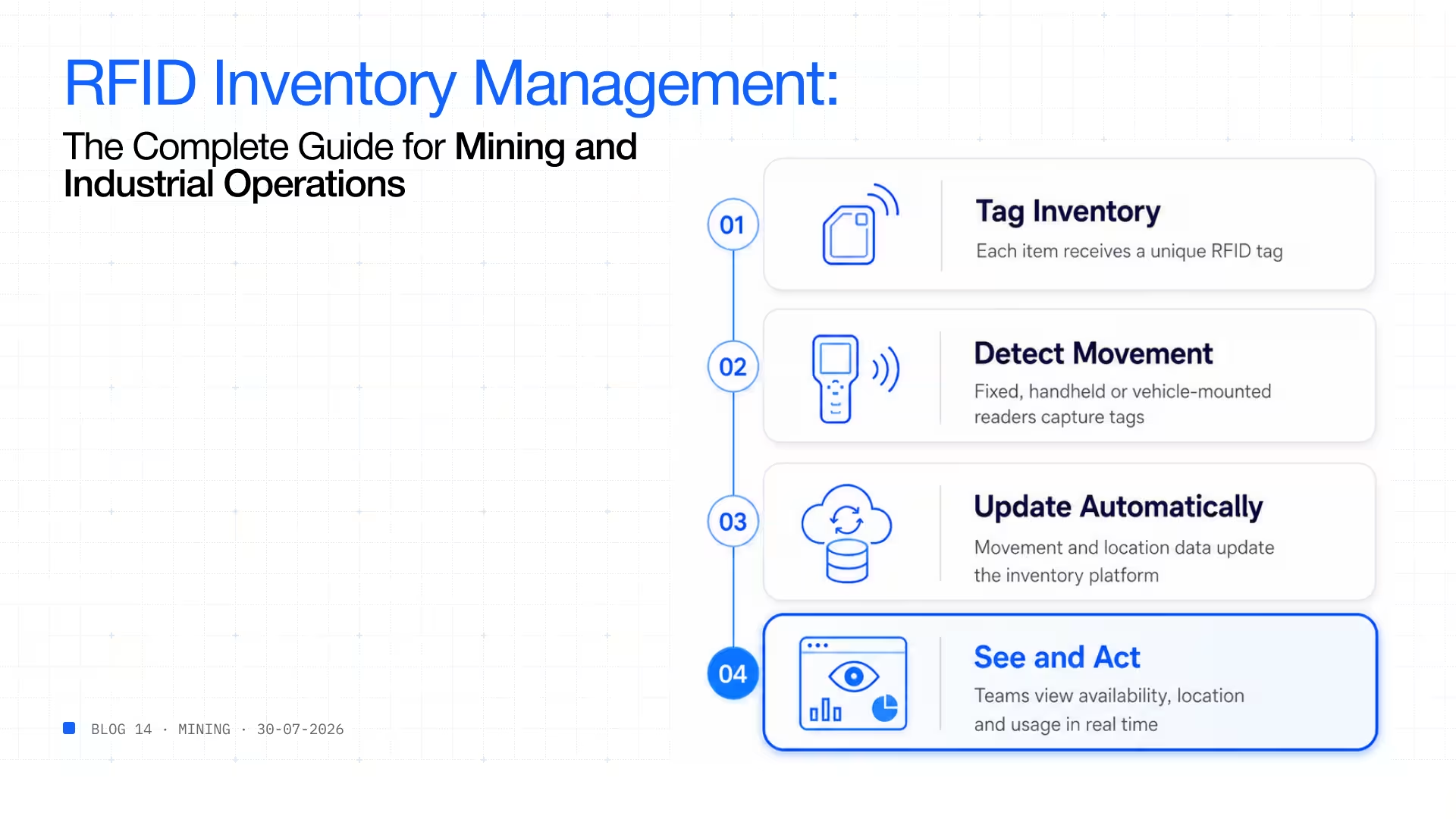
An RFID inventory management system consists of several connected technologies that work together to automate inventory tracking.
The process typically follows these steps:
Because RFID does not require manual scanning of every individual item, organizations can capture inventory movements significantly faster while reducing human error.
This enables inventory records to remain synchronized with physical inventory across the operation.
Automate your field tracking without manual scanning. See how Scatterlink’s RFID inventory software captures stock movements automatically via fixed, handheld, and vehicle-mounted readers.
A successful RFID inventory system combines hardware, software, and operational workflows.
RFID tags are attached to inventory items, containers, pallets, or equipment. Each tag stores a unique identifier that enables inventory to be recognized automatically.
Organizations may use passive or active RFID tags depending on operational requirements, inventory value, and tracking range.
RFID readers detect RFID tags and capture inventory movements automatically.
Readers may be:
RFID inventory management software processes inventory data collected by RFID readers.
The software updates inventory records, tracks inventory movement, supports inventory searches, and provides reporting and operational insights.
A mobile RFID inventory app allows warehouse personnel and field teams to receive inventory, perform cycle counts, locate inventory, issue materials, and update inventory records directly from mobile devices.
This supports operations in warehouses as well as remote industrial sites.
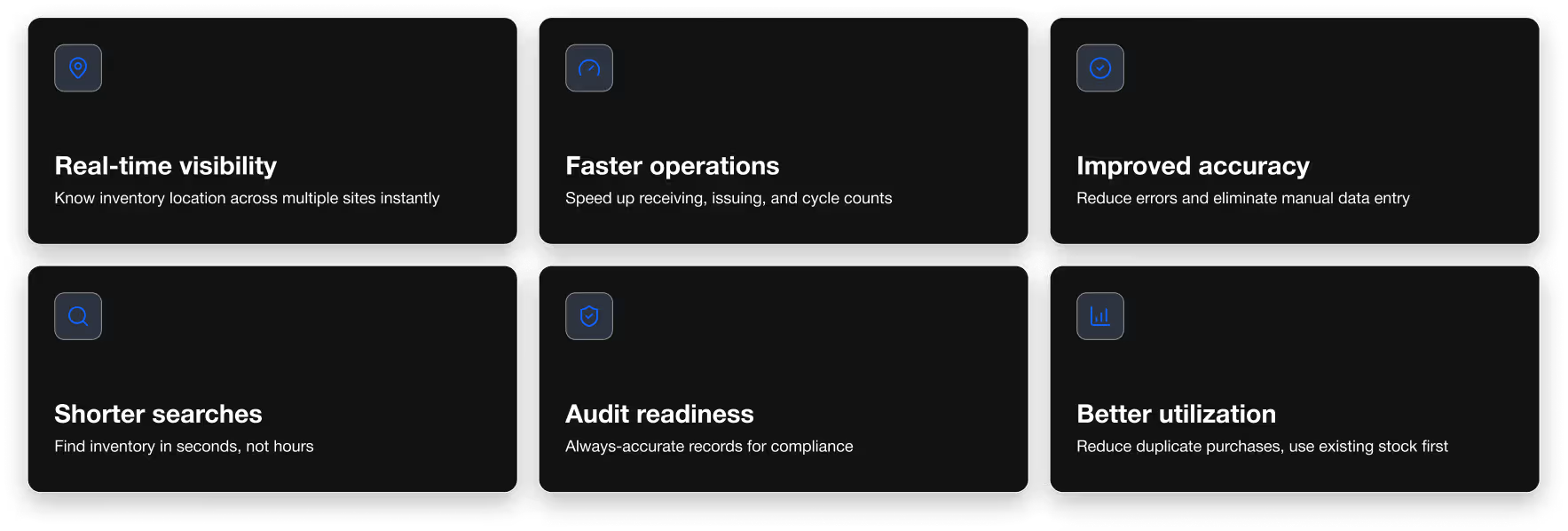
Organizations adopt RFID inventory management because it improves both operational efficiency and inventory accuracy.
Some of the most significant benefits include:
For mining and industrial organizations, these improvements help reduce downtime, improve maintenance planning, and support faster operational decision-making.
Many organizations still rely on manual inventory processes or barcode systems.
While these methods provide basic inventory control, they often introduce operational challenges as inventory volumes increase.
Common challenges include:
These challenges create gaps between inventory records and physical inventory, making it difficult for organizations to trust the information they rely on every day.
RFID helps close these gaps by automating inventory tracking and capturing movements as they occur.
Know where your critical inventory is located across every site. Explore how Scatterlink unifies RFID data across surface operations, stockyards, and underground facilities.
Both RFID and barcode technology play an important role in inventory management, but they serve different operational needs.
Many organizations continue using both technologies together, selecting the approach that best supports different inventory categories.
Mining environments present unique inventory management challenges.
Inventory is often distributed across warehouses, workshops, laydown yards, processing plants, underground operations, and remote sites. Maintenance teams require rapid access to critical spares, while procurement teams need accurate inventory information to support purchasing decisions.
An RFID inventory system helps mining organizations:
By maintaining real-time visibility throughout the inventory lifecycle, mining companies can reduce delays and improve operational performance.
Selecting the right RFID inventory management software requires more than comparing product features.
Organizations should evaluate whether the platform can support long-term operational requirements.
Look for software that provides:
The right platform should simplify inventory management rather than introduce additional operational complexity.
Ready to eliminate duplicate purchasing and automate audit compliance? Schedule a live demo with a Scatterlink specialist to bring continuous RFID intelligence to your operations.
RFID inventory management has become an essential capability for organizations seeking greater inventory visibility, operational efficiency, and inventory accuracy.
By automating inventory tracking, reducing manual processes, and providing real-time inventory information, RFID enables organizations to make faster and more informed operational decisions.
For mining and industrial operations, where inventory directly impacts maintenance, production, and operational continuity, implementing the right RFID inventory management software can deliver measurable improvements across the entire inventory lifecycle.
RFID inventory management uses RFID technology to automatically identify, track, and manage inventory throughout its lifecycle, providing real-time inventory visibility and reducing manual processes.
An RFID inventory management system combines RFID tags, RFID readers, inventory management software, and mobile applications to automatically capture inventory movements and update inventory records.
RFID inventory management improves inventory accuracy, reduces manual work, shortens inventory searches, speeds up cycle counts, supports audit readiness, and provides real-time inventory visibility.
RFID and barcode technologies serve different purposes. RFID enables automated, real-time inventory tracking without requiring line-of-sight scanning, making it well suited for larger industrial and mining operations.
Industries such as mining, manufacturing, oil and gas, utilities, construction, logistics, and heavy industrial operations use RFID inventory management to improve inventory visibility and operational efficiency.
RFID inventory management uses radio frequency identification (RFID) technology to automatically identify, locate, and track inventory throughout its lifecycle. Compared to manual inventory processes and barcode-only systems, RFID provides faster inventory counts, improved inventory accuracy, and real-time visibility across warehouses, stockyards, field locations, and industrial operations.
RFID asset tracking software helps organizations monitor inventory and equipment in real time by combining RFID tags, readers, mobile applications, and centralized inventory intelligence. It reduces manual data entry, shortens inventory search time, improves inventory accuracy, and provides complete visibility across multiple operational locations.
Mining operations manage inventory across warehouses, stockyards, sea cans, laydown yards, workshops, field locations, and underground environments. Purpose-built asset tracking software for mining, mining asset tracking platforms, and mining equipment tracking systems provide real-time visibility, offline mobile capability, and RFID-based tracking that traditional warehouse management systems are not designed to support.
%20(1).avif)
.avif)
%20(1).avif)