
Tracking explosives across a mining operation becomes increasingly difficult when inventory is spread across multiple magazines, locations and operational activities. Teams need to know what has been received, where it is stored, when it moves and what happens when it is issued for use. When much of this information depends on manual recording, maintaining a reliable inventory history can become a significant operational challenge.
RFID can provide another way to capture inventory movements. Instead of relying entirely on users to manually identify and record every item or transaction, RFID technology uses tags and readers to capture identification information electronically. This can help connect physical inventory with digital records and provide greater visibility into inventory movement.
For mining operations, the value of RFID explosives tracking is not simply the technology itself. It is how RFID information becomes part of a broader inventory management process. When connected with inventory records, locations and transactions, RFID can help create a clearer picture of where explosives inventory is and how it moves through the operation.
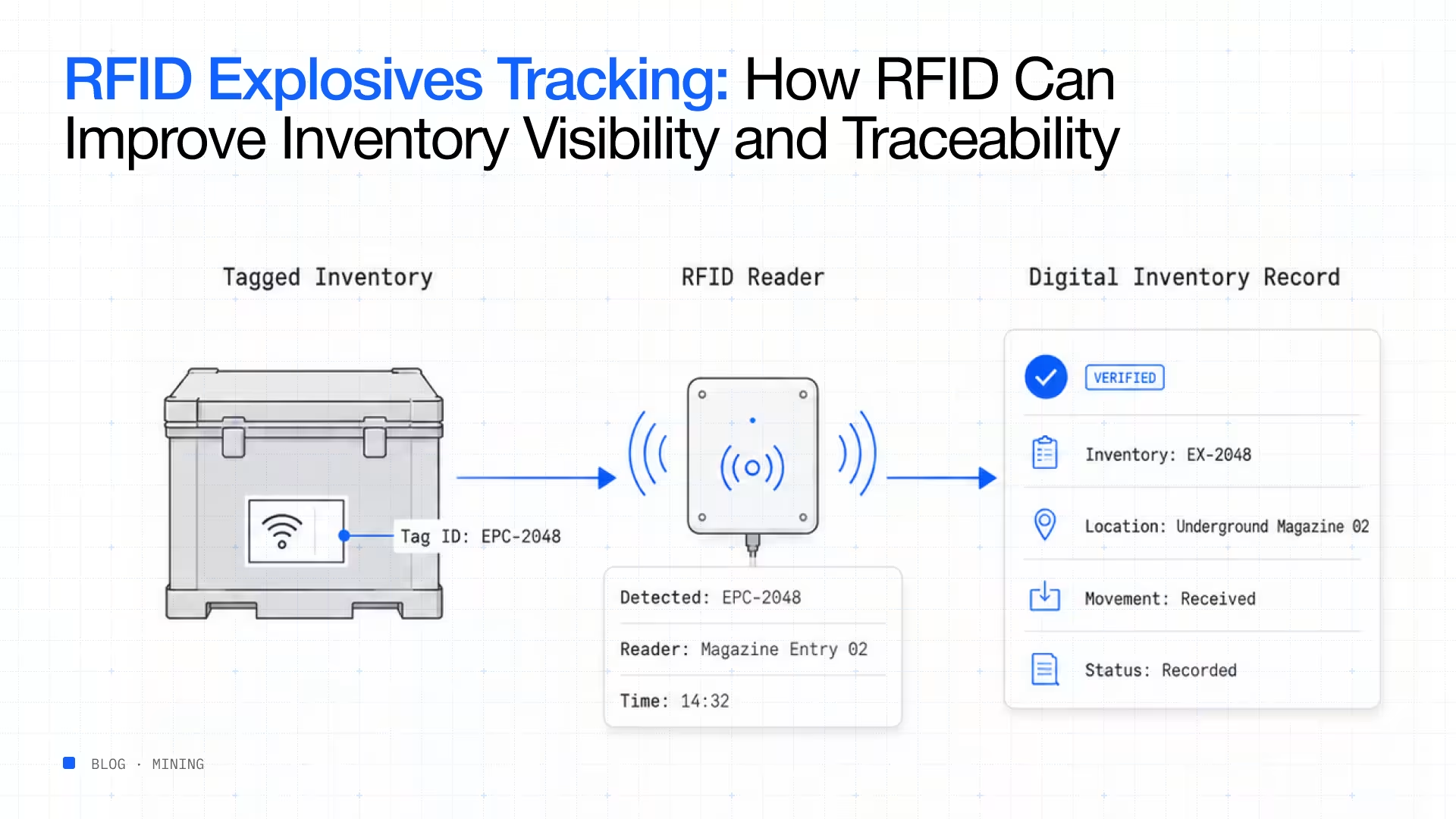
RFID explosives tracking uses radio frequency identification technology to identify and track tagged inventory as it moves through defined locations or workflows. An RFID system typically consists of RFID tags, readers and software that processes the information captured by those devices.
The tag provides an identification reference, while the reader captures that information when the tagged inventory comes within the relevant reading range. The software can then associate the captured information with the appropriate inventory record or transaction, depending on how the system is configured.
In an explosives inventory environment, this can potentially support activities such as receiving, inventory identification, movement tracking and location visibility. The specific application depends on the RFID technology, tag type, operating environment and the workflows established by the mining operation.
Explosives inventory management depends on accurate information about physical stock. Every time inventory is received, moved, issued or otherwise processed, the corresponding inventory record needs to remain accurate.
Manual processes can introduce opportunities for missed or incorrect entries. RFID can help automate parts of the identification process by electronically capturing tagged inventory information.
This can reduce some manual steps within the inventory workflow. More importantly, when RFID data is connected to a structured inventory system, it can help create a closer relationship between the physical movement of inventory and the digital record.
The basic process begins with an RFID tag associated with the relevant inventory. The tag contains an identification reference that can be captured by an RFID reader.
When the tagged inventory passes through or comes within the relevant reading area, the reader captures the tag information. The inventory system can then use that information to identify the associated inventory record and support the relevant workflow.
The result is a digital event associated with the physical inventory. Depending on the system design, this information can contribute to inventory visibility, movement records or other tracking processes.
An RFID tracking environment generally involves three core components.
RFID tags provide the identification reference associated with the inventory. The suitability of a particular tag depends on the item, operating environment, reading requirements and applicable safety considerations.
Readers capture information from RFID tags. Their placement and configuration determine where and how tagged inventory can be detected.
Software turns captured RFID information into usable inventory data. This is where identification information can be associated with inventory records, locations and relevant transactions.
The software layer is particularly important because RFID data on its own does not provide inventory intelligence. The information needs to be connected with the operational context required to make it useful.
Traditional inventory records often depend on users manually identifying inventory and recording the relevant transaction. RFID can automate the identification component of this process where the technology is appropriate.
This can help provide a more timely record of inventory movement. Instead of relying entirely on someone remembering to update a register after a physical movement, the RFID system can capture identification information when the relevant tagged inventory is detected.
When this information feeds into a connected inventory platform, authorised users can gain greater visibility into inventory activity across relevant locations.
If you want to connect automated inventory identification with broader explosives inventory visibility, explore MagControl to see how Scatterlink supports digital explosives inventory management.
Traceability requires a reliable record of inventory movements throughout its lifecycle. RFID can contribute to this by providing an electronic identification reference that can be associated with relevant inventory events.
For example, when tagged inventory is received, moved or processed through a defined RFID-enabled workflow, the captured identification information can become part of the corresponding digital record.
This can make it easier to establish a history of relevant inventory activity. However, RFID should be viewed as one component of traceability rather than the entire traceability process. The inventory system, transaction controls and operational workflows still need to provide the surrounding context.
RFID can potentially support multi-location tracking when readers and tags are configured appropriately for the operating environment. Inventory can be associated with relevant locations as RFID events are captured.
This can be useful for mining operations managing inventory across several magazines. Rather than relying solely on manual location updates, RFID-enabled workflows can provide additional information about the movement or identification of tagged inventory.
The effectiveness of this approach depends heavily on the physical environment, reader placement, tag performance and system configuration. RFID should therefore be implemented based on the specific conditions of the mining operation rather than treated as a universal solution.
Mining operations may need to track inventory across both surface and underground environments. These locations can have very different physical and connectivity conditions, which need to be considered when designing an RFID workflow.
RFID can provide automated identification at appropriately configured locations, while the inventory platform can maintain the broader record across surface and underground operations.
This can help maintain continuity in the inventory history as stock moves between different environments. The RFID component captures identification events, while the inventory system provides the wider context around those movements.
When appropriately designed and implemented, RFID can provide several potential benefits for explosives inventory management:
These benefits depend on the quality of the implementation. RFID does not automatically create accurate inventory records simply because tags and readers have been deployed.
RFID should not be treated as a replacement for inventory management processes. The technology can capture identification information, but the operation still needs appropriate workflows for receiving, transfers, issues, returns, reconciliation and other inventory activities.
The physical environment also matters. Reader range, tag placement, interference, materials, underground conditions and reader configuration can all affect performance.
For explosives applications, safety and regulatory requirements are especially important. Any RFID implementation involving explosives must use equipment, tags and processes that are appropriate for the specific environment and compliant with applicable requirements.
Manual tracking depends heavily on users recording inventory information accurately and at the appropriate time. This can work for controlled processes, but the number of manual steps increases as inventory volumes, locations and transactions increase.
RFID introduces automated identification into suitable parts of the workflow. This can reduce the amount of information users need to enter manually and potentially improve the speed at which inventory events are captured.
However, the strongest approach is not necessarily RFID versus manual tracking. RFID can be used alongside controlled digital workflows, with the technology handling identification while authorised users and inventory software manage the relevant transactions and operational decisions.
RFID becomes significantly more useful when captured information is connected to the inventory system. The system can associate an RFID identification reference with the corresponding inventory record and relevant location or transaction.
This creates a bridge between the physical item and its digital representation. Users can then work with inventory information rather than simply viewing raw RFID readings.
The integration also allows RFID events to become part of a broader inventory history. This is important for operations that need to understand not only that an item was detected, but what that detection means within the inventory lifecycle.
Looking to move beyond RFID identification towards connected explosives inventory management? Explore MagControl to see how Scatterlink connects inventory data, transactions and operational workflows.
Reconciliation involves comparing recorded inventory with physical inventory and investigating differences. RFID can provide additional identification information that may help during this process.
For example, RFID-enabled identification can help teams establish which tagged inventory is present at a configured location. The captured information can then be compared with the relevant inventory records, subject to the system’s configuration and the physical limitations of the RFID implementation.
This can potentially make certain verification activities more efficient. However, physical stocktaking, transaction records and established reconciliation procedures remain important parts of inventory control.
The key is to treat RFID as part of the inventory workflow rather than as a standalone tracking technology. Tags and readers provide identification data, but the inventory platform needs to determine how that data contributes to inventory records and transactions.
The operation should define which events RFID will capture, how those events will update inventory information and where human verification or authorisation remains necessary.
This creates a controlled relationship between automation and inventory management. RFID handles suitable identification tasks while the broader system maintains the inventory structure, transaction history and operational context.
RFID implementation should begin with the inventory process, not with the technology. Before selecting tags or installing readers, mining operations need to identify which inventory movements require tracking and where RFID can genuinely improve the existing workflow.
The objective should be to connect physical inventory with reliable digital records. This means defining how tagged inventory will be received, identified, moved between locations, issued and reconciled, while also determining where authorised users still need to verify or approve transactions.
A well-designed implementation therefore combines RFID with inventory management software rather than treating RFID as a standalone tracking system.
The operating environment should be assessed before determining how RFID will be deployed. Surface and underground locations can present different conditions, and factors such as reader placement, tag performance, connectivity and physical layout can influence the effectiveness of the system.
The type of inventory being tracked also matters. Tags need to be suitable for the items and environment in which they will be used, while readers need to be positioned to capture the required events without creating unnecessary scanning points.
Mining operations should also consider how RFID data will flow into existing inventory processes. Capturing more data is not useful if that information remains disconnected from the inventory records and transactions that teams actually rely on.
Inventory accuracy depends on the relationship between physical stock and recorded stock. RFID can strengthen that relationship by reducing some of the manual identification and data-entry steps involved in inventory tracking.
When a tagged item is detected through an appropriate RFID workflow, the system can associate the identification event with the relevant inventory record. This can help reduce the likelihood of users selecting the wrong item or entering identification information manually.
However, RFID alone cannot guarantee inventory accuracy. Accurate results still depend on appropriate transaction rules, correct location information, reliable system configuration and physical verification where required.
RFID can support near-real-time visibility where readers are configured to capture inventory events as they occur and the underlying system can process those events appropriately.
For example, a tagged inventory item detected at a configured location may generate an event that can be associated with that location in the inventory system. This can provide more timely information than waiting for a user to manually update a record later.
The exact meaning of “real time” depends on the RFID architecture, connectivity and software configuration. Mining operations should therefore define the specific inventory events they need to capture rather than assuming that RFID automatically provides continuous location tracking.
Magazine management requires accurate information about what inventory is recorded at each storage location. RFID can provide an additional identification layer for inventory moving into, out of or through appropriately configured magazine workflows.
When RFID events are linked with magazine records, authorised users can potentially gain greater visibility into inventory entering or leaving a location. This can also contribute to the transaction history associated with the inventory.
The result is not simply a digital list of tagged items. The real value comes from connecting the identification event to the inventory balance, location and relevant transaction.
If you want to strengthen digital magazine visibility with connected inventory records, explore MagControl to see how Scatterlink supports explosives inventory management and tracking.
An audit requires reliable records that can demonstrate what happened to inventory and when. RFID can contribute identification data to this record when it is integrated into the relevant inventory workflows.
For example, RFID events can potentially provide supporting information about inventory detected at configured locations. When combined with transaction history, these records can give authorised users more context when reviewing inventory activity.
The quality of the audit trail still depends on the overall inventory system. RFID should therefore form part of a controlled process that records transactions consistently and preserves the relevant history.
Traceability becomes stronger when inventory can be associated with identifiable records throughout its lifecycle. RFID can provide a consistent identification reference that follows the tagged inventory through appropriate tracking points.
This can support a connected history beginning with receipt and continuing through storage, movement, issue and other relevant inventory events. Each RFID event can contribute to the digital record when properly integrated with the inventory system.
The key is continuity. If RFID captures information at one stage but the subsequent inventory transactions are maintained separately, the traceability chain can still become fragmented.
RFID and mobile workflows can complement each other. RFID can automate identification where readers are available, while mobile devices can allow authorised users to manage transactions and inventory information in the field.
This can be particularly useful across mining environments where inventory activity does not always occur at a fixed workstation. Users can interact with the relevant inventory workflow while RFID provides automated identification at configured points.
The combination can reduce manual data entry without removing the operational controls required for inventory management.
RFID can potentially support underground tracking where the technology is appropriately designed for the environment. However, underground conditions need to be assessed carefully before deployment.
Reader placement, tag performance, physical infrastructure and connectivity can all influence how effectively RFID captures inventory events underground. Offline-capable inventory workflows may also be relevant where continuous connectivity cannot be guaranteed.
For this reason, RFID deployment underground should be based on the specific operational environment rather than simply replicating a surface RFID configuration.
A mismatch between RFID data and the inventory record should trigger investigation rather than an automatic assumption that one source is correct.
The relevant transaction history, location information and physical inventory can be reviewed to determine why the difference occurred. Possible causes may include an incorrectly recorded transaction, a missed RFID read, an incorrect location association or another process issue.
This is where the inventory management layer becomes essential. RFID provides identification data, but the broader system provides the context needed to investigate and resolve discrepancies.
Manual data entry creates opportunities for errors, particularly when users need to record identification information repeatedly. RFID can automate some of this identification by capturing tag information electronically.
This can reduce the number of details that users need to enter manually within suitable workflows. It can also make certain inventory processes faster when multiple tagged items need to be identified.
The objective should not be to eliminate human involvement entirely. Instead, RFID can handle repetitive identification tasks while authorised users remain responsible for the inventory decisions and controls that require human oversight.
When appropriately implemented, RFID can support several areas of explosives inventory management:
The value depends on how effectively these capabilities are connected to the operation’s inventory processes.
One common mistake is treating RFID as the entire inventory solution. Tags and readers can capture information, but they do not automatically create accurate inventory balances or complete transaction histories.
Another mistake is failing to define the specific business processes that RFID is intended to improve. Without clear workflows, operations may collect large volumes of RFID data without knowing how it should influence inventory records.
A third mistake is overlooking the physical environment. RFID performance can vary depending on the deployment conditions, so testing and validation should be part of the implementation process.
RFID provides data about physical inventory. Inventory intelligence adds the context needed to turn that data into something operationally useful.
When RFID events are connected with inventory records, locations, transactions and historical activity, authorised users can move beyond simply knowing that an item was detected. They can understand what the event means within the inventory lifecycle.
This is where technology becomes more than a tracking mechanism. The objective is to create accurate, actionable inventory information that helps teams understand what they have, where it is and what has happened to it.
If you want RFID data to become part of a broader explosives inventory intelligence workflow, explore MagControl and see how Scatterlink connects inventory data, transactions and visibility.
The RFID component is only one part of the evaluation. Mining operations should assess how effectively the software connects RFID information with the inventory processes their teams already need to manage.
Important capabilities may include:
The software should also be practical for operational users. If RFID reduces one manual step but creates a complicated process elsewhere, the overall benefit may be limited.
RFID can play an important role in improving explosives inventory visibility and traceability, particularly where mining operations need to reduce manual identification and capture inventory events more consistently.
But RFID should not be viewed as a standalone answer to explosives inventory management. Tags and readers provide identification data; the inventory platform provides the structure that connects that data to locations, transactions, stock balances and historical records.
For mining operations, the strongest approach is to use RFID where it genuinely improves the physical inventory workflow while maintaining controlled digital processes around it. That combination can help create a more accurate and actionable view of explosives inventory across surface, underground and multi-location operations.
Want to see how a connected digital platform can bring explosives inventory, tracking and operational visibility together? Visit Scatterlink to learn more.
RFID explosives tracking uses radio frequency identification technology to identify tagged inventory and capture relevant inventory events through configured readers and software.
RFID can potentially support explosives tracking in mining when tags, readers and software are appropriately configured for the operating environment and applicable requirements.
RFID can support timely or near-real-time inventory events where readers, connectivity and software are configured to capture and process those events. The exact level of visibility depends on the implementation.
It can potentially be used underground, but the physical environment, reader placement, tag performance, infrastructure and connectivity need to be assessed carefully.
RFID can reduce some manual identification and data-entry steps, which may help improve accuracy. However, inventory accuracy also depends on transaction controls, system configuration and physical verification.
Yes. RFID identification can contribute to traceability by associating tagged inventory with relevant locations and inventory events throughout the lifecycle.
No. RFID provides identification and event data. Inventory management software provides the broader structure needed to manage stock balances, transactions, locations, reconciliation and inventory history.
They should consider the physical environment, tag suitability, reader placement, connectivity, inventory workflows, integration requirements, applicable safety requirements and how RFID data will contribute to the wider inventory management process.
%20(1).avif)
.avif)
%20(1).avif)