
Surplus inventory is often viewed as a sign of preparedness.
For many industrial organizations, keeping extra inventory on hand feels like the safest way to avoid stockouts, maintenance delays, and production interruptions. The logic is simple: if the inventory is already available, operations can continue without waiting for procurement or suppliers.
However, surplus inventory comes at a significant cost.
Every spare part, component, consumable, or piece of equipment sitting unused ties up working capital, occupies valuable storage space, increases insurance and maintenance expenses, and raises the risk of inventory becoming obsolete before it is ever used.
The challenge is not simply having too much inventory. It is having inventory without the visibility to know what is available, where it is located, whether it is still needed, or how frequently it is being used.
This is why organizations are increasingly focusing on strategies to reduce surplus inventory costs without increasing operational risk. By improving inventory visibility, inventory accuracy, and inventory intelligence, businesses can optimize stock levels while ensuring critical inventory remains available when needed.
In this guide, we'll explore what drives surplus inventory, why carrying costs are often underestimated, and how industrial organizations can reduce surplus inventory costs through better inventory management practices.
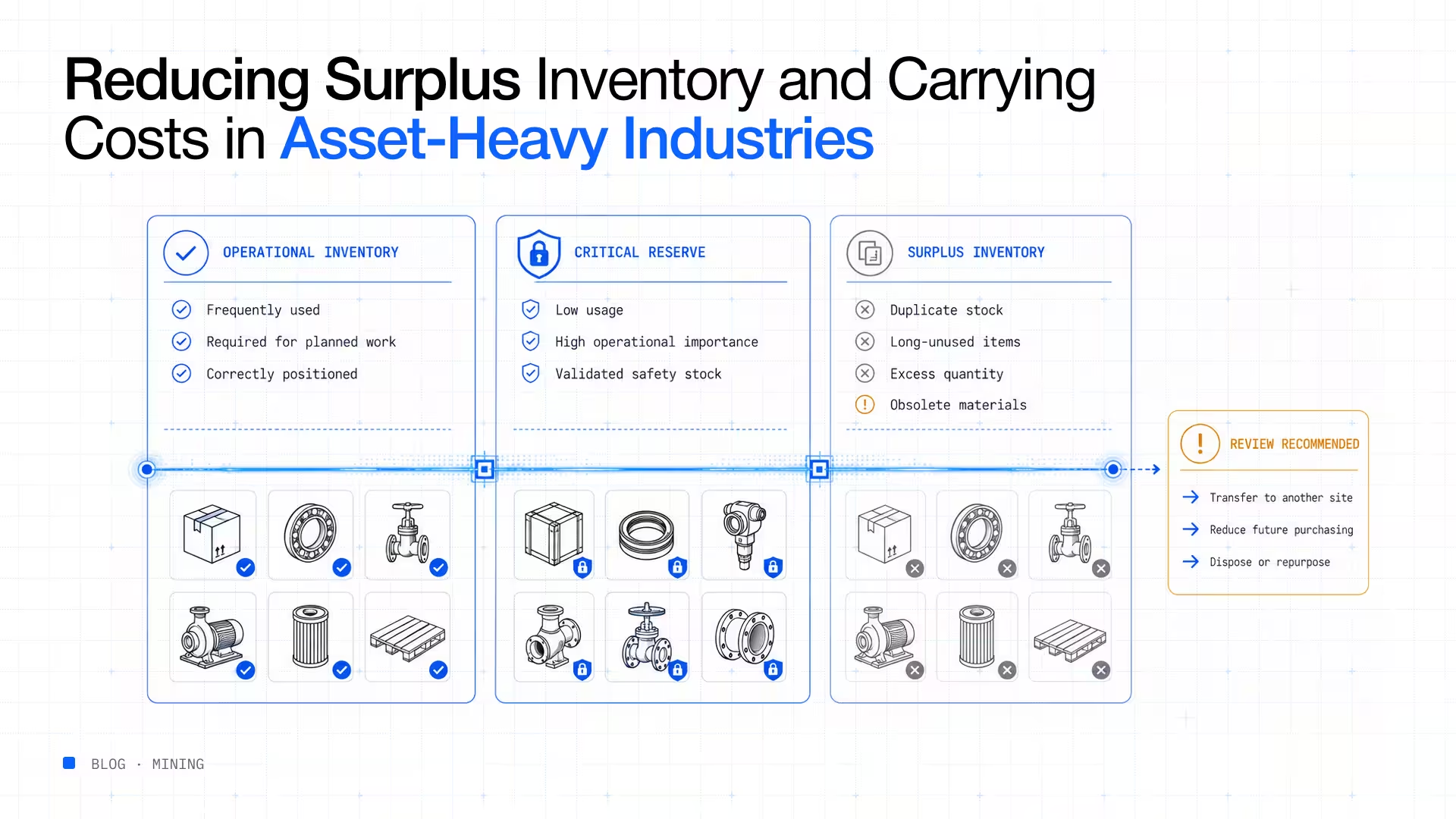
Surplus inventory refers to inventory that exceeds current operational requirements. It includes slow-moving spare parts, duplicate inventory, obsolete materials, excess safety stock, and inventory purchased but rarely used.
While some buffer inventory is necessary for business continuity, surplus inventory generates costs every day it remains in storage.
These costs include warehouse space, insurance, inventory handling, periodic inspections, financing costs, inventory management labor, and depreciation for items that lose value over time.
In asset-heavy industries such as mining, construction, manufacturing, oil and gas, and utilities, surplus inventory often accumulates gradually. Individual purchases may seem justified at the time, but over several years they create large volumes of inventory that deliver little operational value.
Organizations that successfully reduce surplus inventory costs understand that inventory should support operations, not consume resources unnecessarily.
Surplus inventory rarely develops because of a single decision. Instead, it is usually the result of several operational challenges occurring simultaneously.
Organizations often purchase additional inventory because existing inventory cannot be located quickly. Maintenance teams request duplicate spare parts when inventory records cannot be trusted. Procurement departments order extra inventory to avoid future shortages, while obsolete inventory remains stored because no one has reviewed its usage.
Common causes include:
Without addressing these root causes, organizations continue adding inventory while existing stock remains underutilized.
Inventory carrying costs extend far beyond the purchase price.
Every inventory item requires storage, handling, security, insurance, periodic counting, system management, and administrative oversight. As inventory volumes increase, these costs rise proportionally.
Many organizations calculate inventory value without fully accounting for carrying costs.
For example, a spare part purchased several years ago may appear inexpensive on paper, but after years of storage, inspections, warehouse handling, and financing costs, its total cost may be significantly higher than its original purchase price.
In addition, surplus inventory reduces warehouse capacity. Valuable storage locations become occupied by slow-moving inventory, making it more difficult to organize frequently used materials efficiently.
Understanding these hidden costs is the first step toward developing strategies to reduce surplus inventory costs across the organization.
Inventory visibility plays a direct role in inventory optimization.
When warehouse teams, maintenance planners, and procurement departments cannot see accurate inventory information, they naturally make conservative decisions. Instead of assuming inventory is available, they purchase additional stock to avoid operational disruption.
This often results in duplicate purchases, excess safety stock, and inventory that remains unused for extended periods.
Real-time inventory visibility helps organizations avoid these problems by providing immediate access to inventory quantities, locations, movement history, and availability across every warehouse, stockyard, laydown yard, and operational site.
Rather than asking whether additional inventory should be purchased, teams can first determine whether suitable inventory already exists elsewhere within the business.
Improving inventory visibility is one of the most effective ways to reduce surplus inventory costs while maintaining operational readiness.
Surplus inventory isn't always caused by buying too much. Often, it's caused by not being able to see what you already have. Discover how Scatterlink helps organizations improve inventory visibility and reduce surplus inventory costs.
Inventory utilization measures how effectively existing inventory supports operational activities.
High inventory utilization means inventory is actively consumed, transferred, or supporting maintenance and production. Low inventory utilization indicates that inventory remains idle for extended periods with little operational value.
Organizations that monitor inventory utilization are better positioned to identify:
Improving inventory utilization allows businesses to maximize the value of existing inventory before investing additional working capital.
As a result, organizations can reduce surplus inventory costs while maintaining service levels and operational reliability.
Many organizations know they have surplus inventory.
What they don't know is why it continues to accumulate.
This is where inventory intelligence becomes valuable. Rather than simply reporting inventory quantities, inventory intelligence analyzes inventory movement, consumption patterns, replenishment trends, and inventory availability to identify opportunities for improvement.
For example, inventory intelligence can identify spare parts that have not been used for several years, highlight duplicate inventory stored across multiple sites, or reveal purchasing patterns that consistently result in overstocking. It can also identify inventory that is frequently transferred between locations, helping organizations position stock more effectively and reduce unnecessary purchases.
These insights allow operations managers and procurement teams to make proactive decisions instead of reacting to inventory problems after they occur. By understanding how inventory is used across the organization, businesses can confidently reduce surplus inventory costs without increasing the risk of stockouts or operational delays.
Demand forecasting is one of the most effective tools for organizations looking to reduce surplus inventory costs while maintaining operational continuity.
Accurate forecasting uses historical consumption data, maintenance schedules, seasonal demand patterns, procurement lead times, and operational requirements to estimate future inventory needs. Instead of purchasing inventory based on assumptions or worst-case scenarios, organizations can make purchasing decisions using reliable operational data.
Poor forecasting often results in two costly outcomes. Businesses either over-purchase inventory that remains unused for years or under-purchase critical items, leading to emergency procurement and unplanned downtime.
Effective demand forecasting creates the right balance. It ensures critical inventory is available when required while minimizing unnecessary stock that ties up working capital and increases carrying costs.
When forecasting is supported by accurate inventory data and real-time inventory visibility, procurement decisions become significantly more reliable.
One of the primary reasons organizations struggle to reduce surplus inventory costs is that inventory information is often incomplete or outdated.
A procurement team may order replacement parts because inventory records indicate stock is unavailable. In reality, the required inventory may already exist at another warehouse, maintenance facility, or operational site but cannot be located quickly enough to support the immediate requirement.
Real-time inventory visibility eliminates this uncertainty by providing a continuously updated view of inventory quantities, locations, movement history, and availability across the entire organization.
Instead of managing inventory location by location, organizations gain enterprise-wide visibility into their inventory assets. Maintenance planners can verify spare parts before scheduling repairs, warehouse teams can identify excess inventory available for transfer, and procurement professionals can confirm existing stock before placing new purchase orders.
Improving inventory visibility not only helps organizations reduce surplus inventory costs, but also strengthens inventory accuracy, improves inventory utilization, and supports faster operational decision-making.
The fastest way to reduce surplus inventory costs isn't always buying less. It's gaining complete visibility into the inventory you already own. Learn how Scatterlink helps industrial organizations make smarter inventory decisions.
Scatterlink's Inventory Intelligence Platform helps industrial organizations reduce surplus inventory costs by providing complete visibility into inventory across warehouses, stockyards, laydown yards, maintenance facilities, and remote operational sites.
By combining RFID technology, barcode scanning, IoT devices, offline-first mobile applications, GPS-enabled location tracking, and seamless ERP integration, Scatterlink captures inventory movements as they occur and transforms that information into actionable operational insights.
With accurate, real-time inventory visibility, organizations can identify duplicate inventory across multiple locations, locate slow-moving stock before purchasing additional materials, monitor inventory utilization, and improve demand forecasting using reliable operational data.
Because the platform integrates naturally into existing workflows, frontline teams require minimal training to begin using it. Warehouse personnel, maintenance technicians, procurement professionals, and operations managers all work from the same accurate inventory information, reducing manual verification, improving collaboration, and supporting more informed purchasing decisions.
Instead of simply tracking inventory, Scatterlink enables organizations to optimize inventory performance, improve working capital efficiency, and reduce carrying costs without compromising operational readiness.
Looking to reduce surplus inventory costs without increasing operational risk? Discover how Scatterlink helps industrial organizations improve inventory visibility, optimize stock levels, and make better inventory decisions through real-time inventory intelligence.
Reducing surplus inventory is not about carrying the lowest possible inventory levels. It is about carrying the right inventory, in the right quantities, at the right locations, to support operations efficiently.
Organizations that successfully reduce surplus inventory costs focus on improving inventory visibility, strengthening inventory accuracy, monitoring inventory utilization, and using operational data to guide procurement decisions. Rather than relying on excess safety stock to compensate for uncertainty, they build confidence through better inventory management processes and real-time inventory intelligence.
With technologies such as RFID, mobile inventory management, ERP integration, and centralized inventory visibility, industrial organizations can significantly reduce carrying costs while improving maintenance planning, procurement efficiency, and operational performance.
For asset-intensive industries, reducing surplus inventory is no longer just a financial objective. It is a strategic initiative that improves cash flow, increases operational agility, and ensures inventory delivers measurable business value.
Surplus inventory refers to stock that exceeds current operational demand. It includes slow-moving inventory, duplicate inventory, obsolete materials, and excess safety stock that increases storage and carrying costs without supporting day-to-day operations.
Organizations can reduce surplus inventory costs by improving inventory visibility, increasing inventory accuracy, monitoring inventory utilization, implementing better demand forecasting, standardizing procurement processes, and using real-time inventory intelligence to make informed purchasing decisions.
Inventory carrying costs include expenses associated with storing and managing inventory, such as warehouse space, labor, insurance, financing, handling, maintenance, depreciation, and inventory obsolescence.
When inventory visibility is limited, employees cannot confidently determine what inventory already exists or where it is located. This often results in duplicate purchases, excess safety stock, and unnecessary inventory investment, making it more difficult to reduce surplus inventory costs.
Real-time inventory visibility provides accurate, up-to-date information about inventory quantities, locations, and movement across the organization. This helps procurement teams avoid duplicate purchases, improves inventory utilization, supports better demand forecasting, and enables businesses to reduce surplus inventory costs while maintaining operational readiness.
%20(1).avif)
.avif)
%20(1).avif)