
Inventory is one of the most valuable operational assets an organization manages. It keeps production running, supports maintenance activities, enables customer fulfillment, and represents a significant financial investment. Yet for many industrial organizations, knowing exactly what inventory is available, where it is located, and whether it can be used immediately remains a daily challenge.
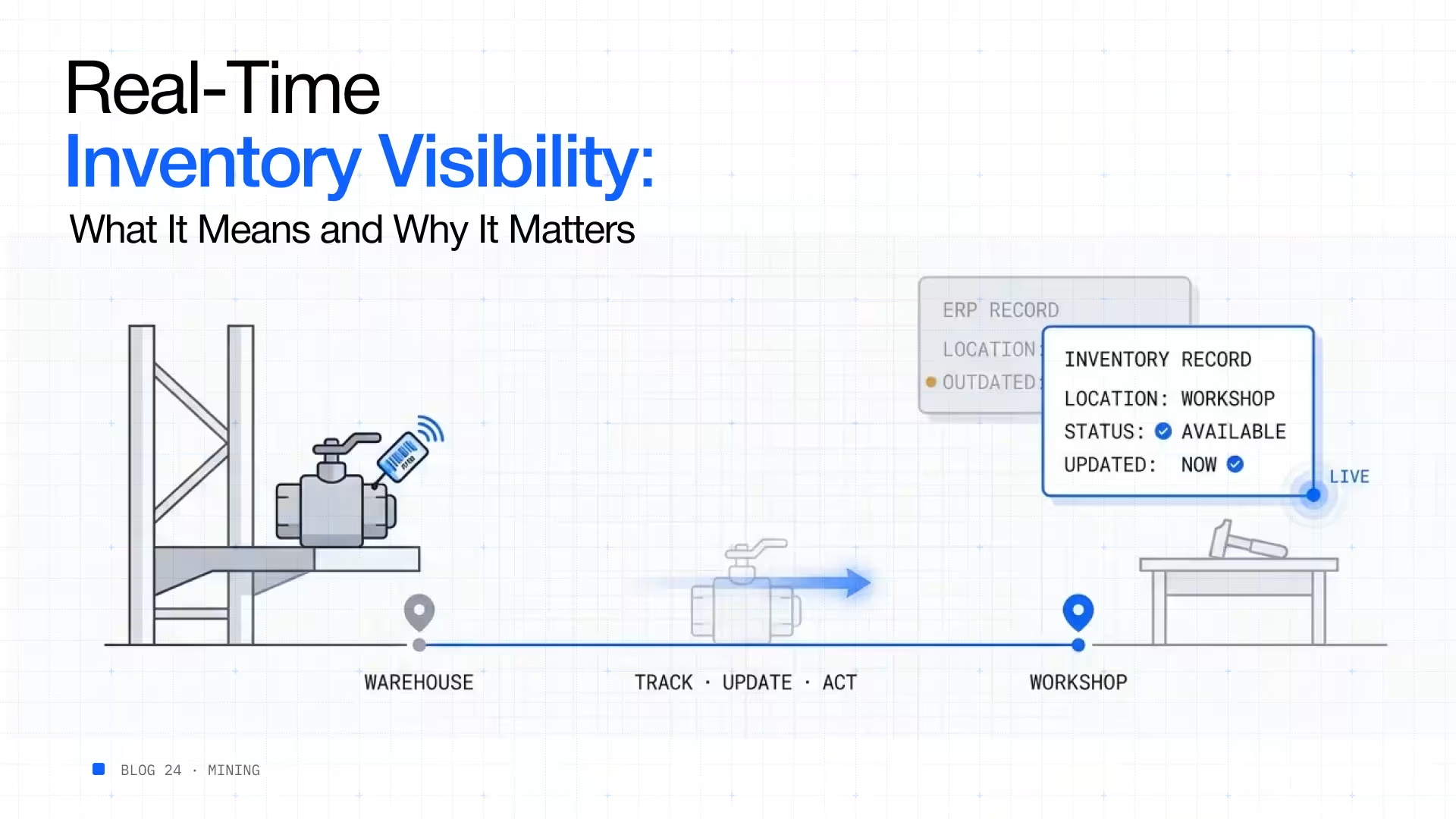
This is where real-time inventory visibility becomes critical. While many organizations believe they have visibility because inventory is recorded in an ERP or warehouse management system, recorded inventory is not always the same as operational visibility. Inventory may have been issued, transferred, relocated, or consumed long before the system reflects those changes. As a result, teams spend valuable time searching for parts, verifying stock levels, and making decisions based on outdated information.
Real-time inventory visibility closes this gap by providing an accurate, up-to-date view of inventory movement, location, and availability across the entire operation. Instead of relying on periodic updates or manual verification, organizations gain continuous insight into what is happening on the ground, enabling faster decisions, better resource utilization, and improved operational performance.
In this article, we'll explore what real-time inventory visibility really means, why it matters for industrial organizations, and how the right technology can help businesses move from reactive inventory management to proactive operational control.
Real-time inventory visibility is the ability to monitor inventory as it moves through every stage of its lifecycle. It goes beyond simply knowing how much inventory exists. It provides immediate insight into where inventory is located, how it is being used, who has access to it, and whether it is available when operations need it.
Unlike traditional inventory systems that depend on scheduled updates or manual data entry, real-time visibility captures inventory movements as they happen. Whether inventory is received, transferred, issued for maintenance, relocated to another site, or consumed during production, those activities are reflected immediately, giving every department access to the same accurate information.
For industrial organizations, this level of visibility reduces uncertainty and allows teams to make operational decisions based on current conditions rather than historical data.
Many organizations still rely on periodic inventory updates. Transactions are entered at the end of a shift, inventory counts are performed weekly, or stock levels are verified only during scheduled audits. While these processes may satisfy reporting requirements, they often fail to support day-to-day operational decisions.
Imagine a maintenance technician searching for a critical spare part that the ERP indicates is available. After spending twenty minutes searching, the technician discovers the part was transferred to another warehouse earlier that morning, but the system has not yet been updated. Maintenance is delayed, production remains idle, and another team begins considering an emergency purchase for a part the organization already owns.
These situations are more common than many organizations realize. The issue is not inaccurate inventory records. It is delayed inventory visibility.
When information lags behind physical operations, every department is forced to spend additional time validating data before taking action.
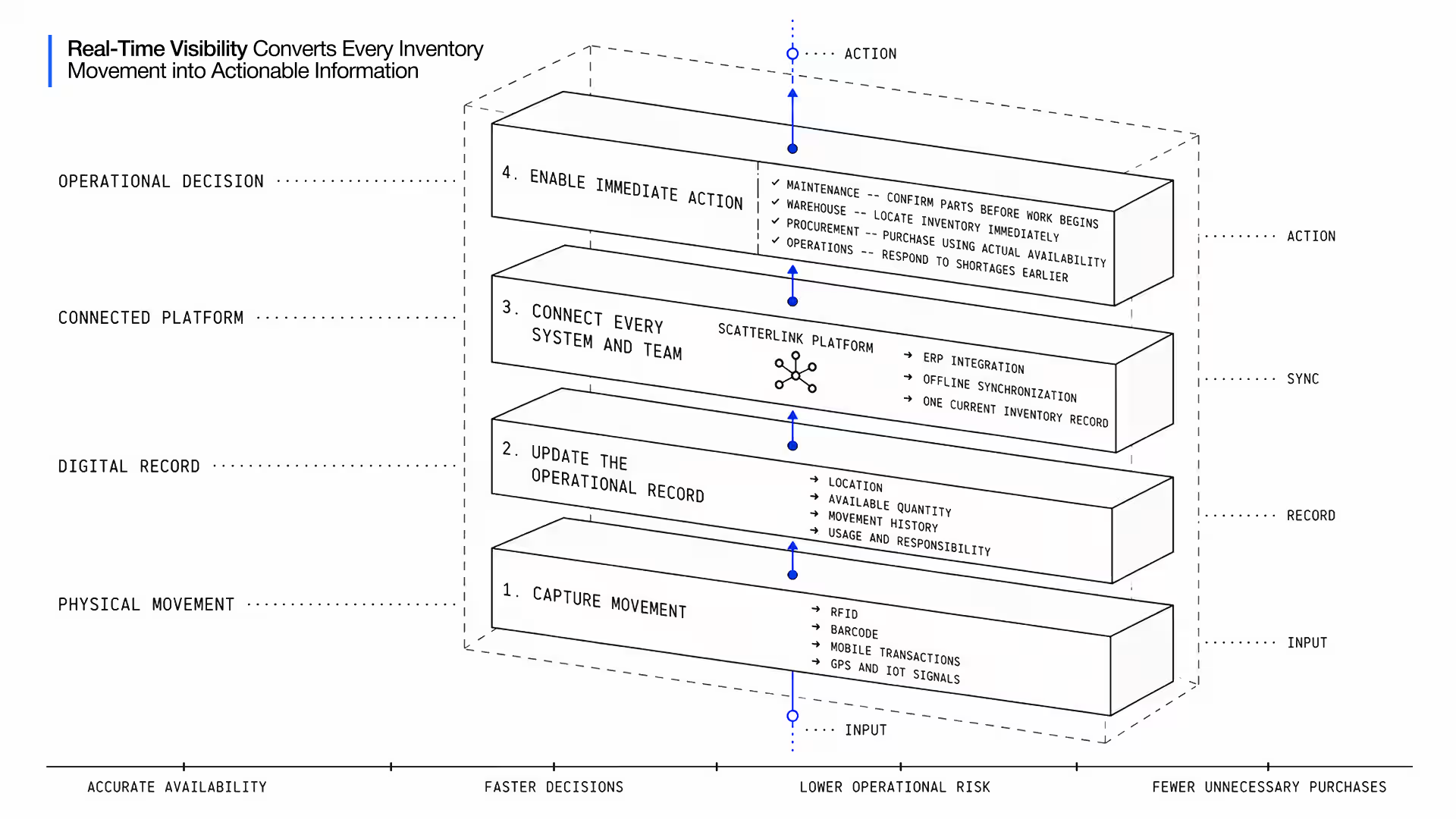
Achieving real-time inventory visibility involves more than installing RFID readers or deploying barcode scanners. It requires an integrated approach that combines technology, standardized processes, and operational discipline.
Organizations that successfully implement real-time visibility typically focus on four key areas:
When these elements work together, inventory records remain aligned with physical operations without increasing administrative effort.
Real-time inventory visibility begins with accurate operational data. Discover how Scatterlink helps industrial organizations capture inventory movements as they happen.
One of the greatest advantages of real-time inventory visibility is its ability to reduce operational risk before it affects productivity.
When inventory information is continuously updated, organizations can identify shortages sooner, prevent duplicate purchases, and avoid unnecessary maintenance delays. Teams no longer rely on assumptions or outdated reports because they have immediate access to current inventory information.
Real-time visibility also improves planning. Maintenance teams can confirm that required materials are available before scheduled work begins. Procurement can make purchasing decisions based on actual inventory availability instead of estimated stock levels. Warehouse teams can locate inventory quickly without interrupting other operations.
The result is a more predictable operation where decisions are based on facts rather than uncertainty.
Every operational decision depends on reliable information.
When inventory data is outdated, decision-makers hesitate. They verify reports, contact multiple departments, or conduct manual inventory searches before approving purchases or scheduling maintenance. While each delay may seem minor, the cumulative impact across an organization can be significant.
Real-time inventory visibility eliminates much of this uncertainty. Leaders gain confidence that inventory information accurately reflects current operations, allowing them to respond more quickly to production demands, maintenance requirements, and supply chain disruptions.
This ability to act with confidence becomes increasingly valuable in industries where downtime, material shortages, and operational delays directly affect profitability.
Many organizations still rely on periodic inventory updates to maintain stock records. Inventory transactions may be entered at the end of a shift, warehouse reconciliations might occur once a week, and physical counts are often scheduled monthly or annually. While these practices help maintain inventory records for reporting purposes, they rarely provide the level of visibility needed to support fast-moving industrial operations.
Real-time inventory visibility works differently. Instead of waiting for scheduled updates, every inventory movement is captured as it occurs. Whether a spare part is received, transferred to another warehouse, issued for maintenance, or returned to stock, the information becomes immediately available to everyone who relies on it. This allows operational decisions to be based on current inventory conditions rather than yesterday's data.
The difference becomes especially important in industries where every minute of downtime has financial consequences. Waiting several hours or even until the end of a shift to update inventory records can create unnecessary delays, duplicate work, and poor purchasing decisions.
Real-time inventory visibility is often viewed as an operational improvement, but its impact extends well beyond the warehouse. When every department works from the same accurate inventory information, organizations become more efficient, more responsive, and better prepared to manage operational risk.
Some of the most significant benefits include:
These improvements create a ripple effect throughout the organization. Less time is spent validating information, allowing more time to focus on productive work that supports operational goals.
Real-time inventory visibility is more than knowing what you have. It's knowing exactly where it is and when it's available. Learn how Scatterlink helps organizations eliminate inventory uncertainty.
Although the benefits are clear, many organizations struggle to achieve real-time visibility because of operational challenges rather than technology limitations.
Manual inventory processes remain common across industrial operations. Employees often update transactions after completing work, resulting in delays between physical inventory movements and system records. In large facilities, inventory may also move through multiple locations before being recorded, creating additional gaps in visibility.
Organizations operating across remote or geographically dispersed sites face another challenge. Limited network connectivity can prevent transactions from being captured immediately, forcing employees to rely on paper-based processes or delayed synchronization. This creates blind spots that reduce confidence in inventory information and slow operational decision-making.
Technology alone cannot solve these issues. Achieving real-time inventory visibility requires systems that fit naturally into existing workflows while enabling employees to capture transactions quickly and accurately, regardless of location or connectivity.
At Scatterlink, we believe real-time inventory visibility should simplify operations rather than create additional work. Frontline teams should be able to capture inventory movements as part of their normal workflow without relying on manual paperwork or delayed system updates.
Our Inventory Intelligence Platform combines RFID technology, barcode scanning, IoT devices, GPS-enabled location tracking, mobile applications, and seamless ERP integration to provide continuous visibility into inventory movement, location, and usage. Whether inventory is stored in a warehouse, laydown yard, maintenance workshop, or remote operational site, teams have access to accurate, intelligent, and actionable information when they need it.
Scatterlink is also designed for industrial environments where connectivity is not always reliable. Mobile applications continue to capture inventory transactions even in offline conditions and automatically synchronize data once connectivity is restored. This ensures inventory visibility remains consistent across surface and underground operations without interrupting day-to-day work.
Rather than asking employees to perform additional administrative tasks, Scatterlink makes accurate inventory tracking part of everyday operations. The result is greater inventory accuracy, faster decision-making, and improved operational performance across the organization.
Ready to move beyond delayed inventory updates? Discover how Scatterlink delivers real-time inventory visibility across warehouses, stockyards, surface operations, and remote industrial sites.
Real-time inventory visibility has become a critical capability for industrial organizations that depend on accurate information to keep operations running efficiently. While traditional inventory systems record transactions, they often fail to provide the continuous visibility needed to support maintenance, procurement, warehouse management, and operational planning.
By capturing inventory movements as they happen, organizations reduce uncertainty, improve inventory accuracy, and enable faster, more confident decision-making. Teams spend less time searching for inventory, duplicate purchases decline, and maintenance activities can begin without unnecessary delays.
As industrial operations continue to become more complex, real-time visibility is no longer simply an operational advantage. It is a competitive necessity. Organizations that invest in technologies and processes that deliver accurate, intelligent, and actionable inventory information will be better equipped to improve productivity, reduce operational risk, and support long-term business growth.
Real-time inventory visibility is the ability to track inventory location, movement, availability, and usage as transactions occur. It provides organizations with up-to-date inventory information that supports faster operational decision-making.
Inventory management focuses on controlling inventory levels and processes. Real-time inventory visibility provides continuous insight into where inventory is, how it is moving, and whether it is available for use.
Technologies such as RFID, barcode scanning, IoT devices, GPS tracking, mobile inventory applications, and ERP integration work together to provide real-time inventory visibility.
Yes. Solutions with offline-first mobile capabilities allow inventory transactions to be captured without network connectivity and synchronized automatically when a connection becomes available.
Mining, oil and gas, construction, utilities, manufacturing, transportation, and other asset-intensive industries benefit significantly because they manage large inventories across multiple locations and often operate in challenging environments.
%20(1).avif)
.avif)
%20(1).avif)