
Mining companies spend millions of dollars every year procuring spare parts, maintenance materials, consumables, tools, and operational supplies. Every purchase order is expected to support production, improve equipment reliability, or maintain operational continuity. Yet despite mature procurement processes and sophisticated ERP systems, organizations continue to lose significant amounts of money long after a purchase order has been approved. This hidden financial drain is known as procurement leakage, and it often occurs between the moment inventory is purchased and the moment it is actually consumed.
Unlike supplier price inflation or contract inefficiencies, procurement leakage is rarely visible in procurement reports. It develops gradually through duplicate purchases, poor inventory visibility, untracked material movements, emergency buying, excess inventory, and inconsistent inventory records. Each individual transaction may appear reasonable, but collectively these inefficiencies quietly increase procurement costs while reducing confidence in inventory data.
Understanding where procurement leakage occurs allows mining organizations to improve inventory utilization, strengthen purchasing decisions, and reduce unnecessary expenditure without compromising operational readiness.
Procurement leakage refers to any unnecessary spending that occurs because procurement decisions are made without complete operational visibility. It is not limited to purchasing inventory at higher prices or selecting the wrong supplier. Instead, it describes situations where organizations spend money they could have avoided if accurate inventory information had been available.
For example, a maintenance planner requests a replacement motor because the ERP indicates that no stock is available. Procurement immediately raises a purchase order to prevent production delays. Two days later, warehouse personnel discover an identical motor sitting inside a sea can that was never recorded after a previous shutdown. The purchase itself followed the correct approval process, but it should never have been necessary.
Similar situations occur every day across mining operations.
Inventory may exist at another warehouse, inside a contractor compound, or within a maintenance workshop without being visible to procurement teams. Materials purchased for one project may remain unused long after work has been completed. Emergency purchases become routine because no one has confidence that inventory can be located quickly enough.
Over time, procurement leakage becomes embedded within normal business operations. Instead of questioning why duplicate purchases occur, organizations begin accepting them as the cost of maintaining production.
The reality is very different.
Most procurement leakage originates from operational blind spots rather than procurement mistakes. When inventory visibility improves, procurement performance improves automatically.
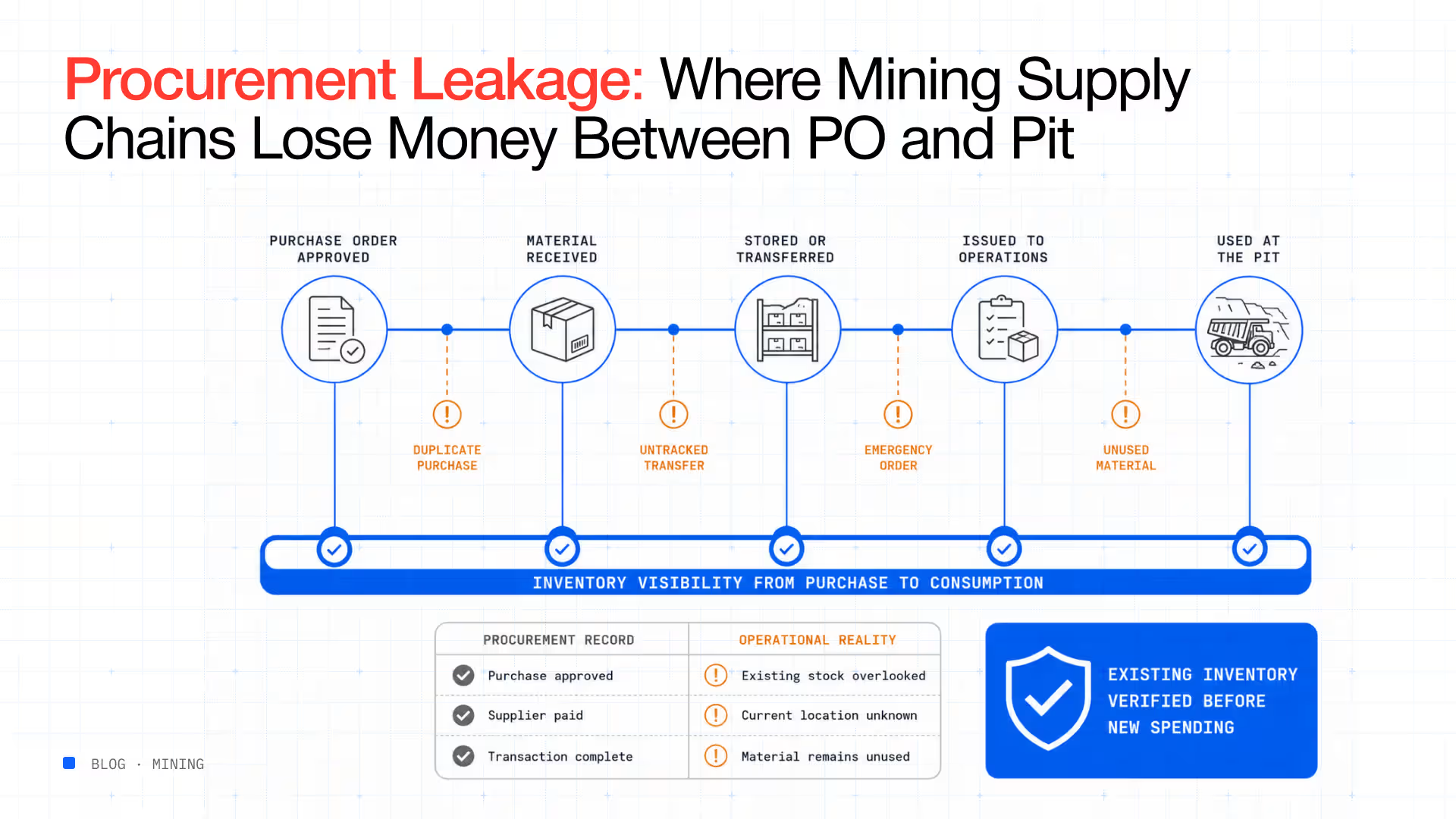
Procurement leakage does not occur at a single point in the supply chain. It develops throughout the entire inventory lifecycle as materials move between suppliers, warehouses, maintenance teams, contractors, and operational sites.
One of the largest sources of leakage is duplicate purchasing. Procurement teams often purchase inventory that already exists somewhere within the organization simply because they cannot locate it quickly enough. Since production cannot wait, buying another item appears less risky than delaying maintenance while multiple locations are checked manually.
Emergency procurement is another major contributor.
When equipment fails unexpectedly, procurement teams are forced to source components immediately, often paying premium prices for expedited manufacturing, express freight, or emergency supplier support. While urgent purchasing is sometimes unavoidable, organizations frequently discover later that the required inventory was already available elsewhere on site.
Leakage also occurs through poor inventory governance.
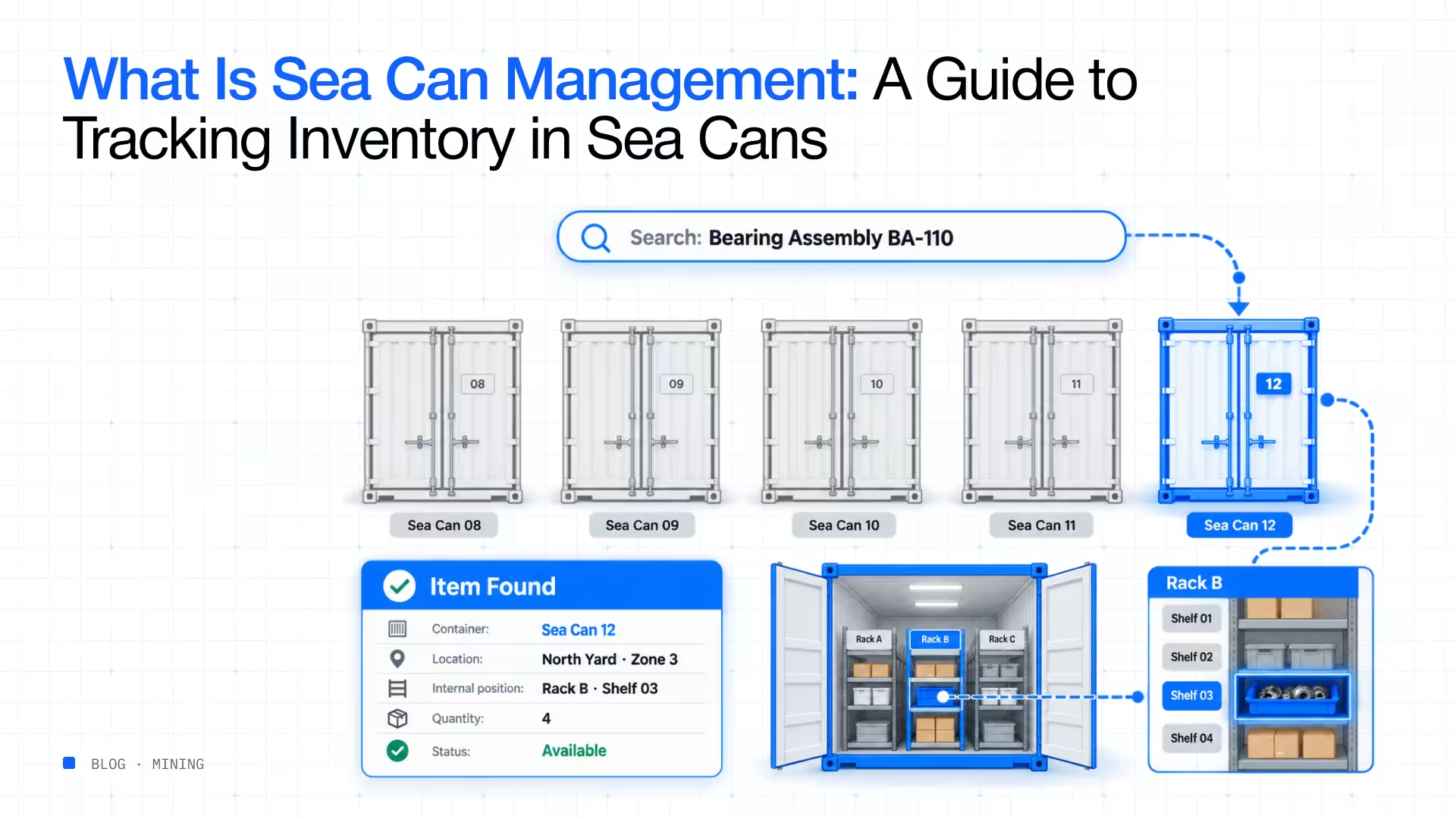
Direct purchase materials may never enter managed inventory systems. Temporary shutdown inventory remains stored in sea cans after projects finish. Contractors hold company-owned materials without centralized tracking. Inventory transferred between operational sites is not updated promptly, creating discrepancies between physical stock and ERP records.
Each of these situations appears relatively minor in isolation. Together, however, they create a continuous flow of unnecessary expenditure that increases procurement costs without improving operational performance.
Procurement teams can only make decisions using the information available to them. When inventory records are incomplete or outdated, even experienced procurement professionals are forced to make decisions based on assumptions rather than facts. In mining operations where production cannot stop, the safest decision often becomes purchasing another part instead of risking equipment downtime.
Unfortunately, this creates a cycle that becomes increasingly expensive over time.
When inventory cannot be located quickly, procurement raises another purchase order. When duplicate inventory enters the warehouse, stock levels increase without improving inventory availability. As inventory investment grows, organizations spend more money storing, handling, counting, and maintaining inventory that may never be used. Meanwhile, maintenance teams continue reporting shortages because the problem was never the quantity of inventory; it was the lack of visibility into where that inventory actually existed.
The financial impact extends beyond inventory purchasing.
Warehouse teams spend more time managing excess stock. Finance carries higher inventory values on the balance sheet. Procurement negotiates contracts for materials that may already exist elsewhere within the organization. Maintenance experiences unnecessary delays while duplicate inventory accumulates unnoticed across multiple operational locations.
Better inventory visibility breaks this cycle before unnecessary spending occurs.
Instead of asking whether new inventory should be purchased, procurement teams can first determine whether the required item already exists within another warehouse, workshop, shutdown storage area, sea can, or contractor facility. A simple inventory transfer often replaces what would otherwise have become another unnecessary purchase.
Reducing procurement leakage does not require stricter purchasing policies alone. It requires improving the quality of information available before purchasing decisions are made. Organizations that consistently reduce procurement costs typically focus on strengthening inventory visibility rather than restricting procurement activity.
The most effective practices include:
Procurement should be able to view inventory across every warehouse, workshop, sea can, laydown yard, contractor compound, and operational site before approving a purchase order. Enterprise-wide visibility allows existing inventory to be utilized before new inventory is purchased.
Duplicate SKUs and inconsistent item descriptions prevent procurement teams from identifying existing inventory. Standardizing the item master creates greater confidence that inventory searches return accurate results.
Inventory transferred between locations should remain visible throughout its journey. Real-time inventory tracking prevents materials from becoming "lost" simply because they changed storage locations.
Maintenance planners should verify inventory availability before procurement raises emergency purchase orders. Shared inventory visibility enables both departments to make faster, better-informed decisions.
Organizations should monitor duplicate purchases, emergency procurement frequency, inventory transfers, stockouts, and unused inventory as key performance indicators. Measuring procurement leakage makes improvement opportunities visible before they become major financial issues.
These practices do not slow procurement. Instead, they improve purchasing quality while ensuring operational teams continue receiving the inventory they need.
Reduce unnecessary purchasing before it happens. Discover how Scatterlink helps procurement teams make better decisions with complete inventory visibility across every operational location.
Scatterlink's Inventory Intelligence Platform gives procurement teams the visibility they need to make informed purchasing decisions. Rather than relying solely on ERP inventory records, Scatterlink continuously captures inventory movement across warehouses, workshops, sea cans, laydown yards, contractor facilities, and both surface and underground operations.
Using RFID technology, barcode scanning, offline mobile inventory applications, IoT devices, GPS-enabled location tracking, and seamless ERP integration, Scatterlink provides a single source of truth for inventory across the entire business.
Before approving a purchase order, procurement teams can quickly determine whether inventory already exists elsewhere within the organisation. Maintenance teams gain confidence that inventory searches include every operational location, not just the central warehouse. Warehouse personnel spend less time manually verifying inventory because inventory locations remain continuously updated.
The result is fewer duplicate purchases, lower working capital, improved inventory utilization, and stronger collaboration between procurement, maintenance, warehouse, and finance teams.
Instead of reacting to uncertainty, organizations make procurement decisions based on trusted operational intelligence.
Procurement leakage is rarely caused by poor procurement practices. More often, it is the result of incomplete inventory visibility that forces organizations to purchase inventory they already own or cannot locate quickly enough.
As mining operations become larger and inventory is distributed across multiple operational sites, warehouses, workshops, and temporary storage locations, these visibility gaps become increasingly expensive. Duplicate purchases, emergency procurement, excess inventory, and fragmented inventory records all stem from the same underlying issue: procurement decisions made without complete operational information.
By improving inventory visibility and connecting procurement with real-time inventory intelligence, organizations can significantly reduce unnecessary spending while maintaining the inventory availability required to support production. The greatest procurement savings often come not from negotiating lower supplier prices, but from eliminating purchases that should never have been necessary.
Procurement leakage refers to unnecessary spending that occurs when organizations purchase inventory they could have avoided buying. It commonly results from poor inventory visibility, duplicate purchases, emergency procurement, and incomplete inventory records.
Mining operations manage inventory across multiple warehouses, workshops, sea cans, contractors, and remote sites. Without real-time inventory visibility, procurement teams cannot always determine whether required inventory already exists elsewhere before placing new purchase orders.
Real-time inventory visibility enables procurement teams to verify existing inventory before purchasing additional stock. This reduces duplicate purchases, improves inventory utilization, minimizes emergency procurement, and lowers overall inventory investment.
%20(1).avif)
.avif)
%20(1).avif)