
Most organizations treat compliance as an event. It becomes a priority before an audit, during a regulatory inspection, or when a customer requests documentation. Policies are reviewed, records are verified, and teams work to ensure everything is in order.
While these activities are important, they represent only a small part of what compliance actually requires.
The strongest compliance programs are not built during audits. They are built into the way work is performed every single day. Every inventory transaction, every material movement, every approval, and every documented process contributes to an organization's ability to remain compliant without disrupting operations.
Organizations that understand this do not prepare for compliance once or twice a year. They build it into their everyday workflows.
Compliance is often associated with documentation.Policies, procedures, audit reports, and regulatory requirements are all essential components of a compliant organization. However, documentation alone cannot guarantee compliance if daily operations fail to follow the same standards.
Consider a common operational scenario.A material is issued without being properly recorded. An item is transferred to another location without updating the system. A return is completed verbally but never documented. None of these actions may seem significant in isolation, but together they create gaps that weaken traceability, reduce accountability, and increase operational risk.
Compliance begins long before an auditor asks questions. It begins with how consistently everyday work is performed.
Compliance is built through repetition:
Each of these activities creates part of the operational record that organizations depend on during audits, investigations, and regulatory reviews.
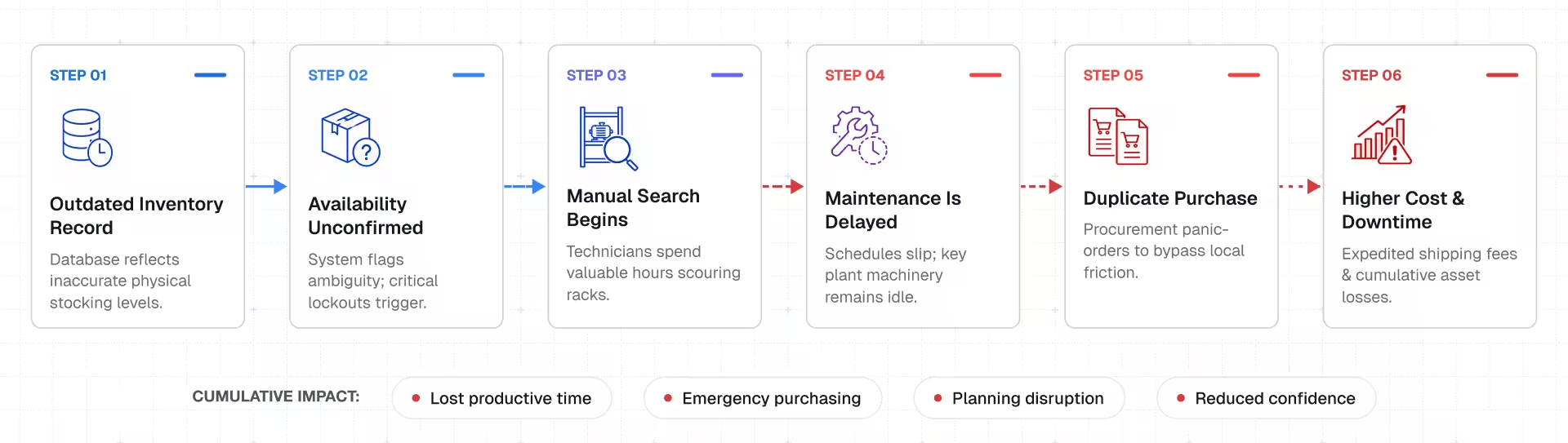
When these processes are followed consistently, compliance becomes a natural outcome of daily operations. When they rely on manual workarounds, memory, or inconsistent practices, organizations gradually lose confidence in the accuracy of their records.
Strong compliance is rarely the result of extraordinary effort. It is the result of ordinary work performed consistently.
Compliance should not depend on last-minute preparation. Discover how Scatterlink helps organizations build accurate, intelligent, and actionable operational information through everyday digital workflows.
Today's industrial organizations operate in an increasingly complex environment.
Supply chain disruptions, workforce shortages, stricter regulations, and rising customer expectations have made resilience a business priority. Organizations cannot predict every disruption, but they can control how consistently work is executed across their operations.
This is where compliance and resilience become closely connected. Organizations with disciplined operational processes recover faster because they trust their information. They know where materials are, who completed each transaction, and how work has progressed across the operation. Decisions can be made quickly because reliable information is already available.
Organizations with inconsistent processes often face the opposite challenge. Before they can respond to a disruption, they first need to verify what actually happened.
One of the biggest misconceptions about compliance is that improving it requires employees to complete more paperwork or follow more complicated procedures.
In reality, the most effective compliance programs simplify everyday work.
When technology fits naturally into existing workflows, employees are more likely to follow established processes consistently. Transactions are captured as work happens rather than being entered hours later. Information becomes more accurate because it reflects real operational activity instead of relying on memory.
Compliance improves not because employees are doing more work, but because the right process becomes the easiest process to follow.
The best compliance systems work in the background, supporting your teams instead of slowing them down. See how Scatterlink helps simplify operational workflows while improving accountability.
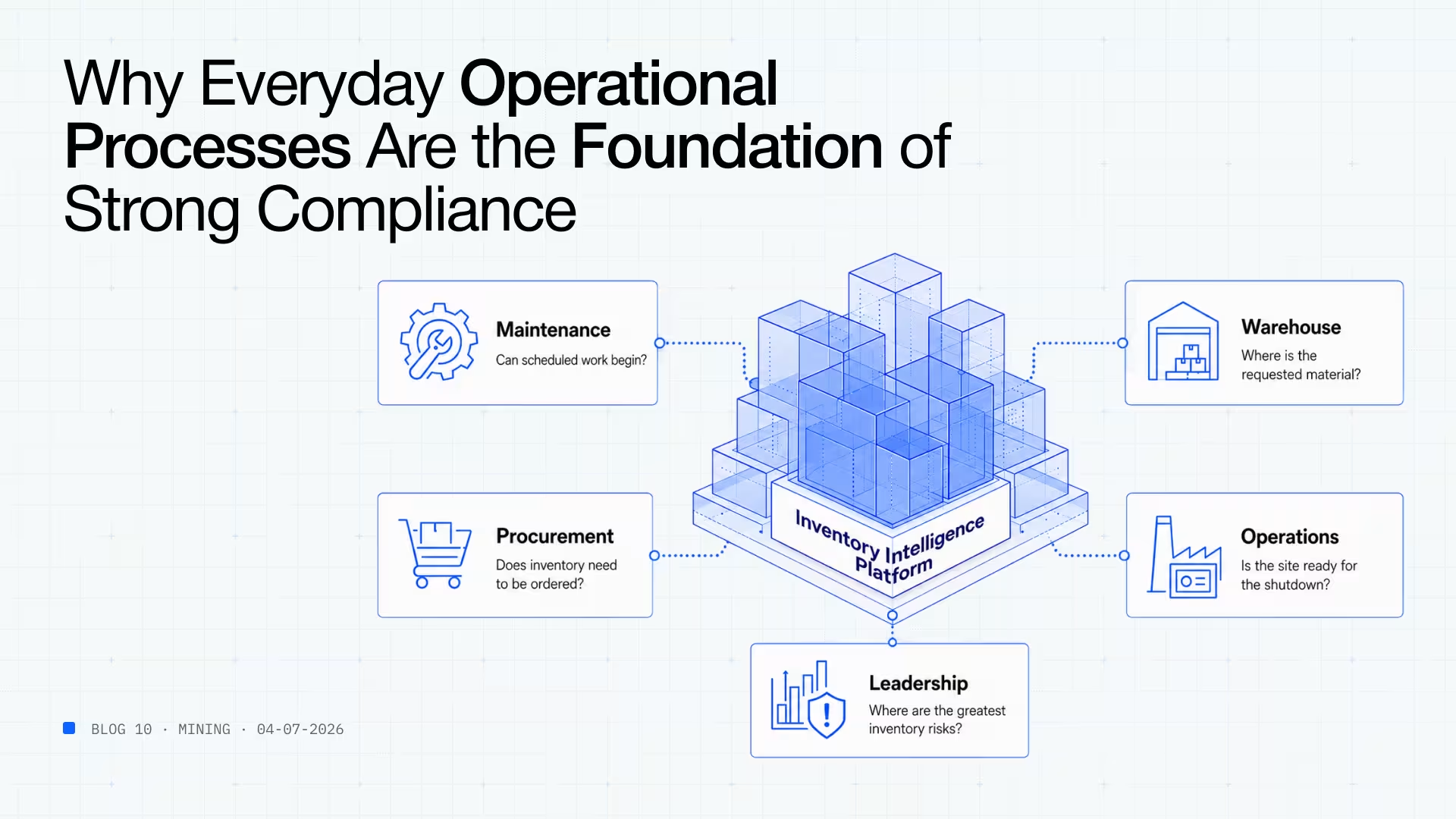
Compliance nvolves warehouse teams receiving materials correctly, maintenance technicians documenting inventory usage, supervisors approving transactions, procurement maintaining accurate records, and leadership having confidence in the information used for decision-making.
Every team contributes to operational integrity. When everyone follows consistent workflows, organizations create an environment where accountability becomes part of everyday work instead of something enforced only during audits.
This shared responsibility strengthens not only compliance but also operational performance.
Digital transformation is often viewed as a technology initiative. Its greatest value, however, lies in creating consistency.
Digital workflows reduce manual errors, standardize processes, improve traceability, and provide real-time visibility into operational activities. Instead of depending on spreadsheets, handwritten notes, or delayed system updates, organizations create a reliable record of work as it happens.
The result is greater confidence in operational information and a stronger foundation for compliance, governance, and business continuity.
At Scatterlink, we believe compliance should never feel like additional work.
The most effective systems are those that fit naturally into existing operations and help employees complete the right process without unnecessary complexity.
Through intuitive mobile workflows, RFID, barcode scanning, IoT technology, and seamless ERP integration, Scatterlink enables organizations to capture operational activities as they happen. Employees require minimal training because the platform is designed to support the way people already work, not force them into complicated new processes.
This approach helps organizations generate accurate, intelligent, and actionable operational information that supports frontline teams, supervisors, managers, and executives alike. Rather than preparing for compliance when an audit is scheduled, organizations build compliance into every transaction, every workflow, and every working day.
Strong compliance is built one workflow at a time. Discover how Scatterlink helps industrial organizations simplify everyday operations while improving visibility, accountability, and operational resilience.
Compliance should never be viewed as a yearly exercise or a regulatory obligation completed only when required.
The organizations that consistently perform well understand that compliance is the outcome of disciplined daily execution. Every transaction captured correctly, every workflow completed consistently, and every operational decision supported by reliable information contributes to a stronger, more resilient business.
Technology plays an important role in that journey, not by replacing people, but by making good operational practices easier to follow.
When compliance becomes part of everyday work instead of an additional task, organizations reduce risk, improve accountability, strengthen operational resilience, and create a foundation for better business performance.
Compliance is most effective when it is built into daily workflows rather than treated as a periodic activity. Consistent operational processes reduce risk, improve accountability, and make audits significantly easier.
Digital workflows standardize operational processes, reduce manual errors, improve traceability, and ensure that transactions are captured accurately as work takes place.
Organizations with strong compliance practices often respond more effectively to operational disruptions because they have accurate information, standardized processes, and reliable records that support faster decision-making.
Many compliance programs rely too heavily on documentation and periodic reviews while overlooking the importance of consistent day-to-day execution. Gaps in everyday processes gradually reduce data quality and increase operational risk.
Scatterlink helps organizations embed compliance into everyday operations through intuitive digital workflows, RFID, barcode scanning, IoT technology, and ERP integration. By making transactions easy to capture with minimal training, Scatterlink improves accountability, operational visibility, and compliance without adding unnecessary work.
%20(1).avif)
.avif)
%20(1).avif)