
Industrial operations rarely happen under ideal conditions. Mining sites, oil and gas facilities, construction projects, utilities, and remote maintenance locations often operate in environments where reliable internet connectivity cannot be guaranteed. Yet inventory transactions continue regardless of network availability. Materials are received, spare parts are issued, equipment is transferred, and maintenance teams consume inventory throughout the day. If these activities are not captured accurately when they occur, inventory records quickly become unreliable.
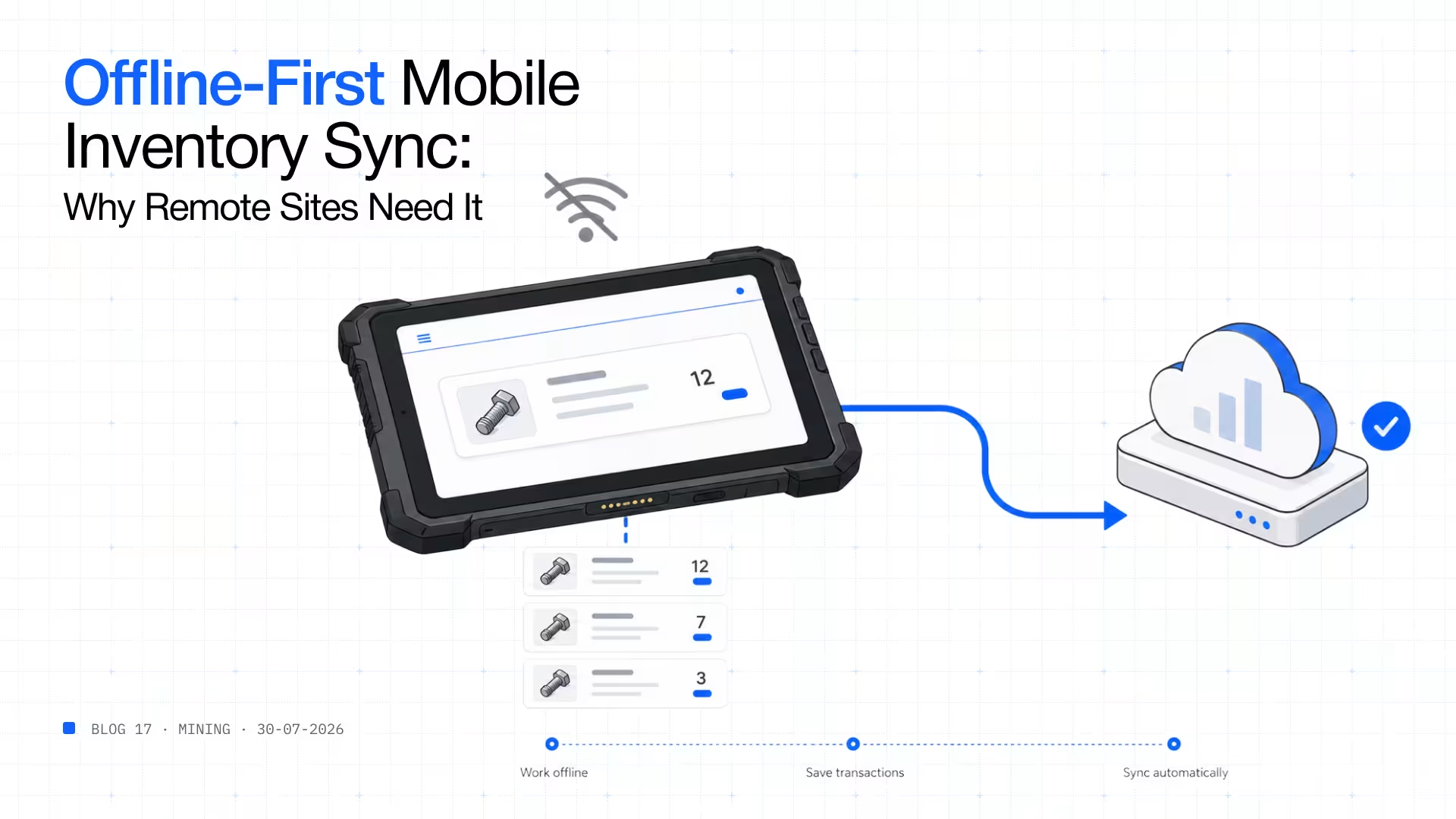
This is where offline inventory management software becomes essential. Unlike traditional inventory systems that depend on a continuous internet connection, offline inventory management software allows field teams to continue working even when connectivity is unavailable. Transactions are recorded locally on a mobile device and automatically synchronized once a connection is restored. The result is uninterrupted operations, improved inventory accuracy, and greater confidence in inventory data across the organization.
For industries that operate across remote sites, this capability is no longer a convenience. It has become a critical requirement for maintaining operational efficiency, reducing inventory discrepancies, and ensuring maintenance teams always have access to accurate information.
In this guide, we'll explain how offline inventory management software works, why it matters for industrial operations, and what organizations should look for when selecting a solution for remote field environments.
Offline inventory management software is designed to allow inventory transactions to continue even when internet or cellular connectivity is unavailable. Instead of relying on a constant connection to a central database, the application stores transaction data securely on the mobile device until connectivity becomes available again.
Once the device reconnects to the network, all inventory movements are synchronized automatically with the organization's central inventory platform or ERP system. This ensures that inventory records remain complete without requiring employees to re-enter transactions manually.
For organizations operating across remote facilities, this capability eliminates one of the biggest limitations of traditional inventory management systems. Employees no longer have to choose between completing operational work and maintaining accurate inventory records.
Many inventory platforms perform well inside offices and warehouses where reliable Wi-Fi is readily available. The challenge begins when inventory moves beyond those environments.
Mining operations extend across large surface sites and underground tunnels. Oil and gas companies manage offshore platforms, drilling locations, compressor stations, and pipeline infrastructure. Construction projects constantly shift as work progresses, while utility crews perform maintenance across geographically dispersed assets.
In these environments, internet connectivity is often inconsistent or unavailable altogether. Traditional cloud-based inventory systems may become inaccessible, preventing employees from recording inventory transactions in real time. As a result, many organizations revert to paper documentation, handwritten notes, or delayed system updates.
These workarounds create operational risk because inventory information no longer reflects what is happening in the field.
Inventory transactions are most accurate when they are captured immediately. Every delay increases the likelihood of missing information, incorrect quantities, or forgotten transactions.
Imagine a maintenance technician replacing a critical pump component at a remote processing facility. Because there is no internet connection, the spare part cannot be issued through the inventory system. Instead, the technician makes a note to update the transaction later.
Several hours pass before connectivity returns. During that time, another maintenance planner checks inventory levels and believes the same component is still available. A work order is scheduled using inventory that has already been consumed.
The result is avoidable delays, inaccurate inventory records, and unnecessary operational disruption.
This scenario occurs more frequently than many organizations realize, particularly where inventory management depends entirely on continuous connectivity rather than offline inventory management software.
Bring total stock visibility to every corner of your enterprise—from underground mines to stockyards—with Scatterlink RFID Inventory Management.
Modern offline inventory management software is designed around the realities of field operations rather than office environments.
When employees perform inventory activities, the application stores every transaction securely on the mobile device. These transactions may include receiving inventory, issuing spare parts, transferring materials, completing cycle counts, adjusting quantities, or recording inventory consumption.
As soon as a connection becomes available, the software automatically synchronizes the stored transactions with the central inventory platform. Users do not need to repeat the work or manually upload spreadsheets. The synchronization process occurs seamlessly while maintaining data integrity across all connected systems.
For frontline teams, the experience remains the same whether they are online or offline. They continue using the application exactly as they normally would, allowing inventory tracking to remain part of everyday operations rather than becoming an additional administrative task.
Not every inventory application that advertises offline functionality provides the same level of capability. Organizations should evaluate solutions based on how effectively they support real-world industrial workflows.
The most effective offline inventory management software should include:
These capabilities ensure inventory operations continue without interruption while maintaining confidence in inventory accuracy across every operational location.
The benefits of offline inventory management software extend well beyond maintaining accurate inventory records.
When employees can continue working regardless of connectivity, maintenance activities begin on time, warehouse operations remain productive, and procurement teams receive reliable inventory information. Supervisors spend less time reconciling transactions, while operational leaders gain greater confidence in the information used for planning and decision-making.
Most importantly, employees are no longer forced to create manual workarounds whenever connectivity disappears. Instead, inventory tracking becomes a natural part of operational workflows, regardless of location.
Not all offline inventory applications are built for industrial operations. Some solutions provide limited offline functionality, allowing users to view inventory records but preventing them from completing transactions until connectivity is restored. Others require manual synchronization, increasing the risk of duplicate entries, missing transactions, and inconsistent inventory records.
Organizations evaluating offline inventory management software should focus on how well the solution supports real operational workflows rather than simply checking whether an offline mode exists. The software should allow employees to perform every essential inventory task without interruption, whether they are working in a warehouse, an underground mine, an offshore platform, or a remote maintenance facility.
When assessing vendors, organizations should consider the following questions:
Answering these questions helps ensure the selected solution supports long-term operational efficiency rather than creating additional administrative work.
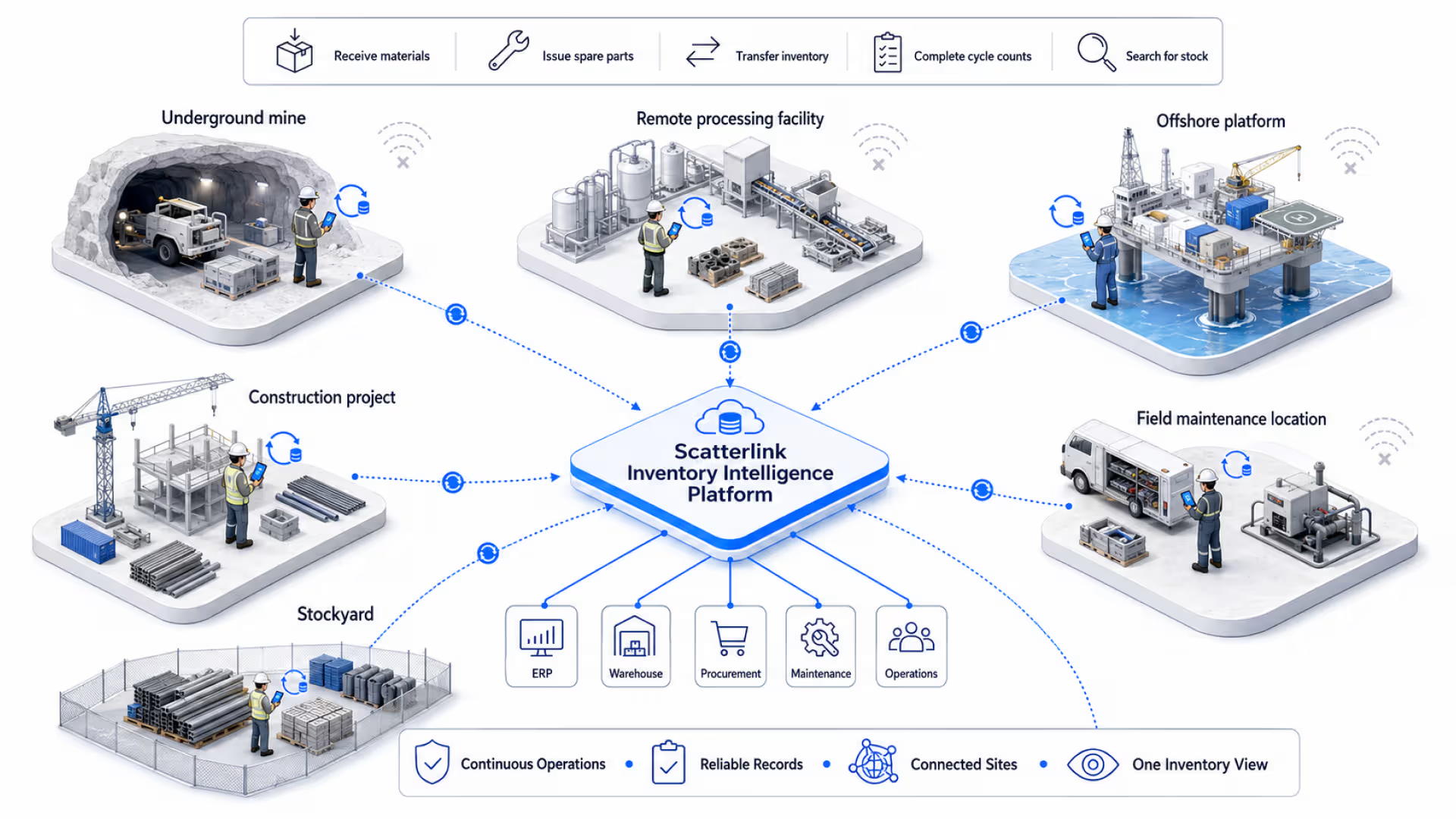
Industries such as mining, oil and gas, construction, utilities, and heavy manufacturing share one common characteristic. Their operations extend far beyond office buildings and distribution centers.
Maintenance activities often take place in remote processing plants, underground tunnels, offshore facilities, temporary project sites, and expansive stockyards where reliable internet connectivity cannot always be guaranteed. Yet inventory transactions continue throughout the day. Spare parts are issued, equipment is relocated, materials are received, and inventory is consumed regardless of network availability.
Without offline inventory management software, organizations are forced to choose between delaying inventory updates or relying on manual documentation. Neither approach supports accurate inventory management.
Offline capability ensures inventory visibility continues wherever operational work happens. Employees maintain accurate inventory records without changing the way they work, while supervisors and planners receive reliable information that supports better operational decisions.
Although inventory accuracy is often the primary objective, the benefits of offline inventory management software extend much further across the organization.
When inventory information remains accurate, maintenance teams spend less time searching for materials and more time completing repairs. Procurement teams gain confidence that purchasing decisions are based on current inventory availability rather than outdated records. Warehouse personnel avoid unnecessary reconciliation work, while operations leaders have greater visibility into inventory performance across every location.
Organizations implementing offline inventory management software frequently experience improvements in several key operational areas:
Rather than solving only a technology problem, offline inventory management software strengthens the operational processes that depend on accurate inventory information.
Ready to sync your ERP, procurement, and field maintenance into a single operational view? Explore the Scatterlink Homepage.
Remote industrial operations require technology that adapts to the environment rather than expecting the environment to adapt to the technology.
Scatterlink's Inventory Intelligence Platform has been designed specifically for organizations operating across remote and asset-intensive environments. Whether teams are working at a mine site, offshore platform, refinery, construction project, warehouse, or maintenance facility, they can continue managing inventory regardless of internet connectivity.
Using an offline-first mobile architecture, Scatterlink allows employees to receive inventory, issue spare parts, complete transfers, perform cycle counts, record adjustments, and search inventory directly from their mobile devices. Every transaction is securely stored locally and automatically synchronized with the central platform once connectivity becomes available.
Beyond offline capability, Scatterlink combines RFID, barcode scanning, IoT devices, GPS-enabled location tracking, and seamless ERP integration to provide complete visibility into inventory movement from receipt to consumption. Because the application is intuitive and designed around existing operational workflows, frontline employees require minimal training, allowing organizations to improve inventory accuracy without increasing administrative effort.
The result is accurate, intelligent, and actionable inventory information that supports everyone from warehouse personnel and maintenance technicians to procurement teams and executive leadership.
Stop relying on fragmented spreadsheets across dispersed field teams. Connect all your remote sites under one unified inventory platform today.
Reliable internet connectivity cannot be assumed across industrial operations, but reliable inventory information can.
As organizations continue expanding into remote and geographically dispersed environments, offline inventory management software has become an essential capability rather than an optional feature. It enables employees to continue capturing inventory transactions without interruption, maintains accurate inventory records, and ensures operational decisions are based on current information instead of delayed updates.
The organizations that achieve the greatest improvements in inventory performance are those that remove connectivity as a barrier to operational execution. By combining offline-first mobile technology with RFID, barcode scanning, ERP integration, and real-time inventory visibility, businesses can strengthen inventory accuracy, improve productivity, reduce operational risk, and support faster decision-making across every location.
For industries where operations never stop, inventory management shouldn't stop either.
Offline inventory management software allows users to perform inventory transactions without an internet connection. Data is stored securely on the mobile device and automatically synchronizes with the central system once connectivity returns.
It helps organizations maintain accurate inventory records in remote locations where internet connectivity is unreliable, reducing inventory discrepancies and improving operational efficiency.
Mining, oil and gas, construction, utilities, manufacturing, transportation, and other asset-intensive industries benefit significantly because employees frequently work in remote environments with limited connectivity.
Yes. Most modern offline inventory management software solutions integrate with ERP platforms, automatically synchronizing inventory transactions once network connectivity becomes available.
Yes. Many industrial solutions combine offline inventory management software with RFID, barcode scanning, GPS location tracking, and mobile inventory applications to improve inventory visibility and accuracy.
RFID inventory management uses radio frequency identification (RFID) technology to automatically identify, locate, and track inventory throughout its lifecycle. Compared to manual inventory processes and barcode-only systems, RFID provides faster inventory counts, improved inventory accuracy, and real-time visibility across warehouses, stockyards, field locations, and industrial operations.
RFID asset tracking software helps organizations monitor inventory and equipment in real time by combining RFID tags, readers, mobile applications, and centralized inventory intelligence. It reduces manual data entry, shortens inventory search time, improves inventory accuracy, and provides complete visibility across multiple operational locations.
Mining operations manage inventory across warehouses, stockyards, sea cans, laydown yards, workshops, field locations, and underground environments. Purpose-built asset tracking software for mining, mining asset tracking platforms, and mining equipment tracking systems provide real-time visibility, offline mobile capability, and RFID-based tracking that traditional warehouse management systems are not designed to support.
%20(1).avif)
.avif)
%20(1).avif)