

Mining inventory rarely sits in one place. Materials can move between central warehouses, surface yards, workshops, remote sites and underground storage areas before they are finally issued and consumed. When these locations operate with different processes or disconnected inventory records, it becomes difficult to know what stock is actually available, where it is located and whether the system reflects its physical position.
This is why mining inventory management requires more than simply maintaining accurate stock quantities in an ERP system. Mining companies need to control inventory across multiple locations while keeping track of material movements between them. Without this visibility, teams can spend valuable time searching for parts, purchase stock that already exists elsewhere or discover discrepancies only when a physical count is performed.
A connected approach to mining stock control helps bring these locations into one inventory environment. By combining consistent processes with mobile inventory management, RFID, offline capabilities and real-time inventory visibility, mining operations can maintain a clearer view of stock from receipt through to consumption.
Mining inventory management is the process of controlling, tracking and maintaining visibility over materials used across mining operations. It includes receiving, storing, transferring, issuing, counting and consuming inventory across warehouses, yards, workshops, remote sites and underground locations.
Mining inventory can include critical spare parts, maintenance materials, consumables, tools and other stock required to support production and maintenance. Because these materials may be distributed across multiple locations, the organisation needs to know both how much inventory exists and where it is currently available.
Effective mining inventory management connects physical inventory activity with digital inventory records. When a material moves from one location to another, the inventory record should reflect that movement so that employees are not relying on outdated information.
The objective is not simply to maintain a stock count. It is to create reliable inventory visibility that helps teams find materials, control stock levels and make better decisions about purchasing and allocation.
Mining operations can cover large geographic areas and involve several distinct storage environments. A single operation may have a central warehouse, multiple surface yards, workshops, satellite stores and underground storage points.
Each location can have different inventory requirements and operating conditions. Materials may also move frequently between locations, particularly when maintenance teams require parts at short notice.
When these movements are not captured consistently, inventory records can quickly become inaccurate. A system may show a component as available in the warehouse even though it has already been transferred to a remote site or moved underground.
This creates a fundamental inventory visibility problem. Teams may know that the organisation owns a particular item but still be unable to determine where it is or whether it can actually be accessed when needed.
Multi-location inventory management means maintaining visibility and control over stock across multiple physical locations within the same operational environment. Rather than treating every warehouse, yard or remote site as a separate inventory silo, the organisation maintains a connected view of inventory.
This allows teams to understand what stock is available at each location and how materials move between them. A maintenance team can determine whether a required spare part is available locally or whether it needs to be transferred from another location.
Multi-location management also supports better stock allocation. If one location is holding excess stock while another is experiencing a shortage, the organisation can assess whether an internal transfer is more appropriate than purchasing additional inventory.
For mining operations, this approach is particularly important because inventory is often distributed deliberately to support maintenance and production requirements. The challenge is maintaining visibility over that distribution.
The first step is to establish consistent inventory processes across every location. Receiving, transfers, issues, counts and adjustments should follow defined workflows regardless of where the transaction occurs.
The next step is to maintain a clear location structure. Inventory records should identify where materials are expected to be stored, whether that is a central warehouse, surface yard, remote facility or underground location.
Every movement should then be captured as part of the inventory lifecycle. When a spare part moves from a warehouse to a yard, the system should record the transfer. When it moves underground, that movement should also be reflected.
This creates a connected inventory record rather than a collection of isolated stock balances. It allows teams to understand not only what inventory exists but where it is positioned within the operation.
Inventory visibility gives mining teams a clearer understanding of what materials are available and where they are located. Without it, employees may have to rely on physical searches, spreadsheets or informal knowledge to find required stock.
This becomes particularly problematic for critical spare parts. A component may be available somewhere within the operation but remain effectively unusable if employees cannot determine its location.
Better visibility can also improve purchasing decisions. Before ordering a new item, teams can check whether the required material already exists at another location and whether it can be transferred.
For mining operations, inventory visibility therefore affects more than warehouse efficiency. It can influence maintenance response times, working capital, stock utilisation and the availability of materials required to keep operations running.
Mining inventory software provides a central environment for managing inventory transactions across multiple locations. Instead of maintaining separate spreadsheets or disconnected records, teams can work from a common inventory structure.
The software can support processes such as receiving, transfers, stock issues, inventory counts and consumption. These transactions provide a record of how inventory moves through the operation.
Mobile functionality can extend these workflows beyond the warehouse. Employees can capture transactions at yards, workshops, remote sites and other operational locations instead of waiting until they return to a desktop.
When the software also supports offline workflows, employees can continue recording inventory activity in locations where connectivity is unreliable. This is particularly relevant for remote and underground mining environments.
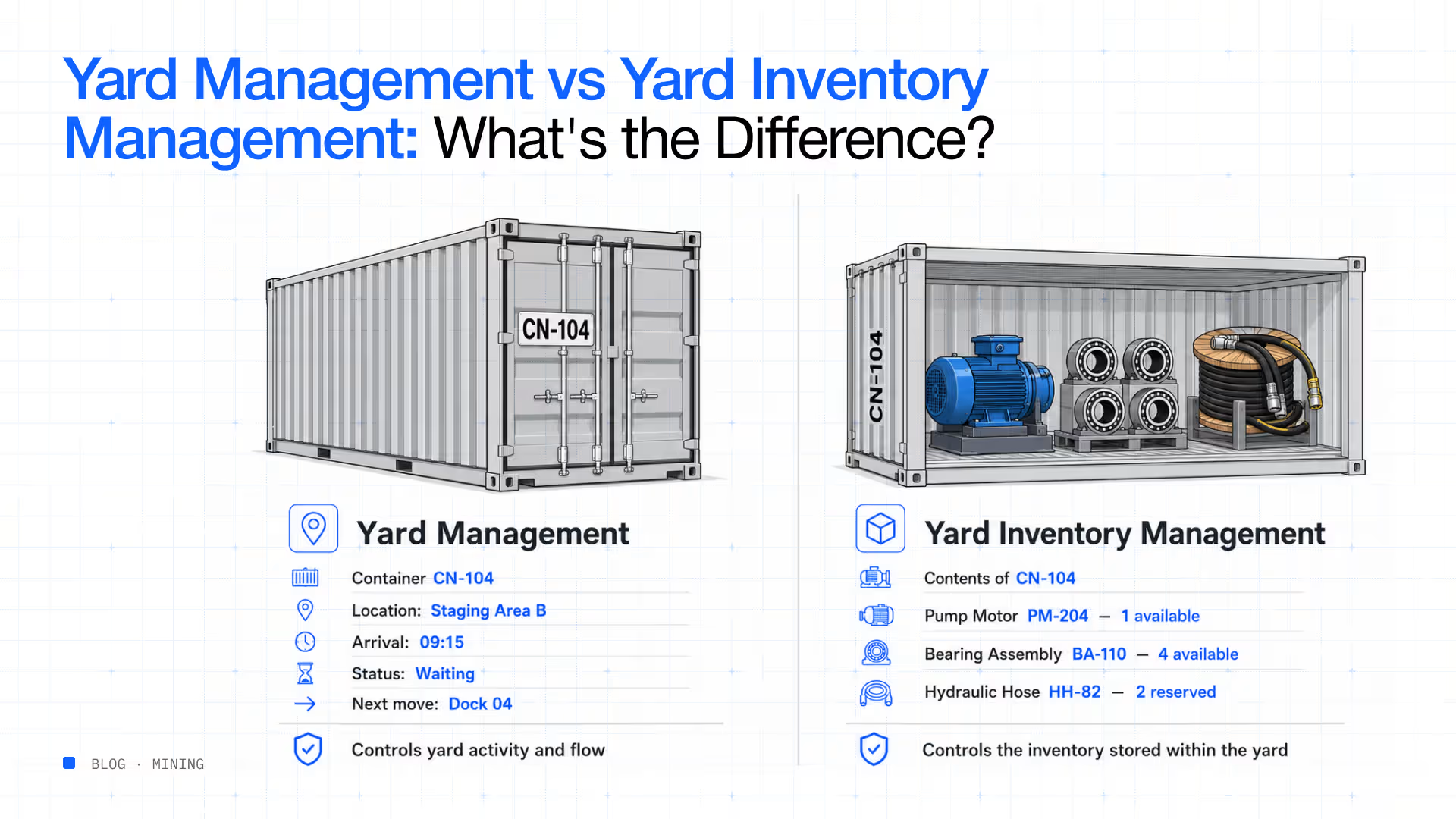
Warehouses and yards often operate as interconnected parts of the material supply process. Inventory may be received into a warehouse, transferred to a yard for staging and then moved to another operational location.
If these movements are not recorded properly, the system can show an inaccurate location for the material. Employees may then search the warehouse for stock that is physically sitting in the yard.
Mining inventory tracking should therefore capture the movement between these environments. Location information should remain connected to the inventory record as materials are transferred.
RFID inventory tracking can provide an additional method of identifying materials where the operating environment is suitable. Mobile workflows can also allow employees to capture transfers and other inventory transactions closer to where they occur.
Remote sites often have smaller stores or distributed inventory that supports local maintenance and operational requirements. These locations need enough material to respond to local demand, but central teams still need visibility into what is being held there.
Without a connected inventory process, remote stock can become difficult to monitor. Materials may be consumed without timely updates, transferred without being recorded or left in storage after demand has changed.
Remote inventory management helps connect these locations to the wider inventory environment. Employees can record receipts, transfers, issues and consumption using mobile workflows.
Offline inventory capabilities are particularly useful when remote locations have unreliable network connectivity. Transactions can be captured locally and synchronised when connectivity becomes available, reducing the need for separate manual records.
Improve inventory control across remote mining locations: Explore Scatterlink’s RFID inventory management solution to see how mobile, RFID and offline workflows support distributed operations.
Underground inventory management introduces another layer of complexity. Materials may need to be stored close to work areas, but underground environments can have limited connectivity and restricted physical access.
If inventory transactions cannot be captured underground, employees may record them later or use manual processes. This can create delays between physical activity and the inventory record.
A mobile inventory management approach allows employees to capture transactions closer to the point of use. If the system supports offline functionality, those transactions can also be recorded without an active connection.
This helps maintain continuity as materials move between surface and underground locations. The same inventory record can follow the material through its movement rather than becoming disconnected when it leaves the surface environment.
RFID can help mining companies identify and track inventory with less reliance on manual data entry. RFID tags can be associated with specific inventory records, allowing compatible readers to identify tagged materials.
This can support processes such as receiving, inventory counts and material movement. Where large volumes of materials need to be identified, RFID can provide a more efficient alternative to individually entering information.
RFID inventory management is most effective when identification events are connected to actual inventory workflows. Detecting an item is useful, but the information becomes more valuable when it contributes to a reliable record of inventory movement and location.
RFID can therefore form one part of a broader mining inventory management strategy. It can work alongside mobile applications, offline functionality and ERP integration to improve the accuracy and timeliness of inventory information.
Real-time inventory visibility helps teams make decisions using more current information about stock. This is important when materials move frequently between warehouses, yards, remote sites and underground locations.
If inventory information is updated only periodically, employees may not know whether a material is still available at a particular location. This can result in unnecessary searches or additional purchases.
More timely inventory information can help teams identify where stock is located and whether it has recently been transferred. This makes it easier to respond to maintenance requirements without relying entirely on physical checks.
Real-time visibility also supports better management decisions. Managers can identify locations holding excess stock and consider whether inventory should be redistributed to areas with greater demand.
Inventory can become difficult to locate when materials move between locations without consistent tracking. A part may be physically available but effectively lost because its recorded location is no longer accurate.
This problem becomes more common as the number of storage locations increases. A mining company managing stock across several warehouses, yards and remote sites has more opportunities for inventory movements to go unrecorded.
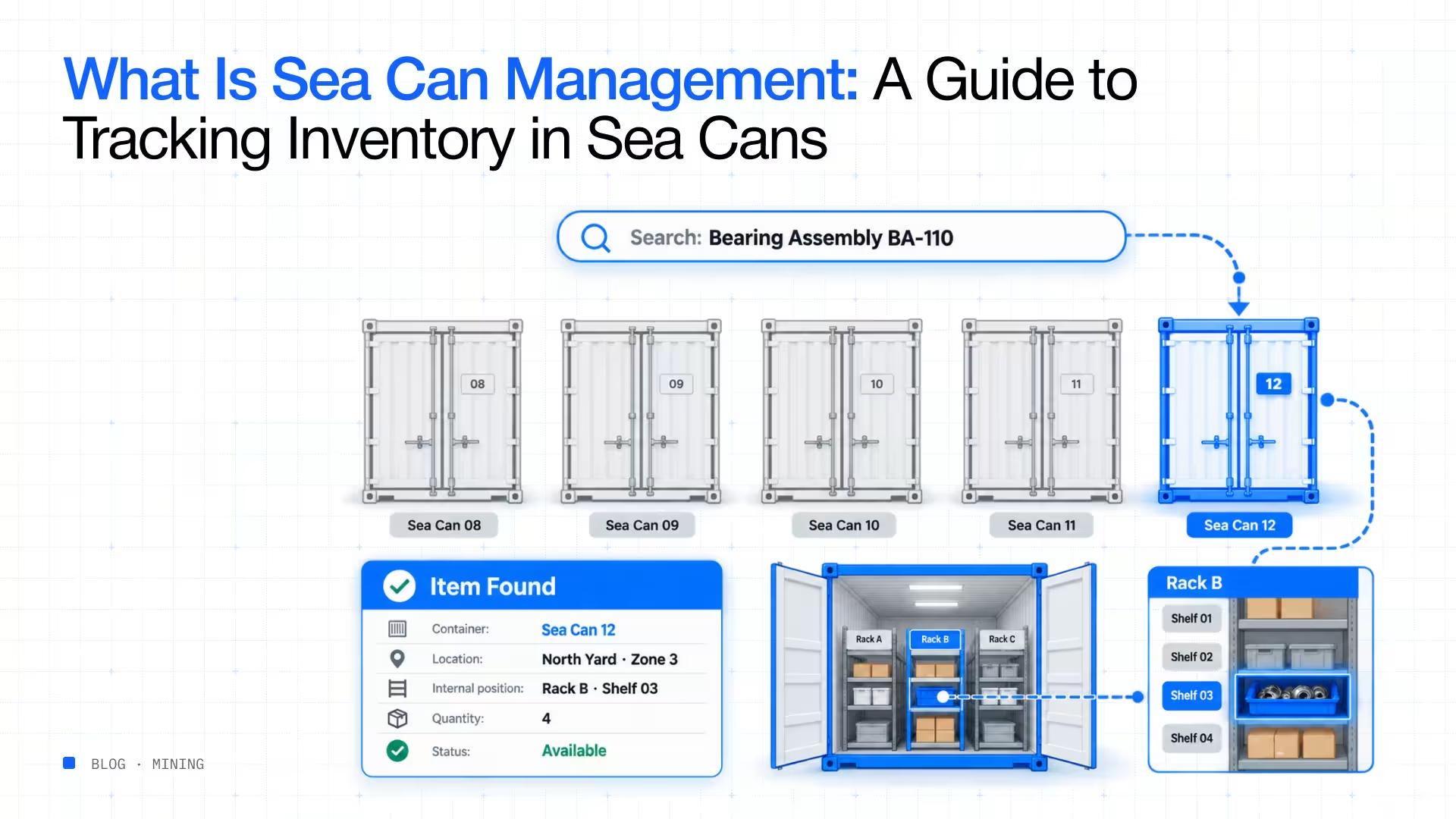
A reliable inventory tracking system can reduce this risk by maintaining movement and location information. Employees can use the system to identify the expected location of a material before beginning a physical search.
This does not eliminate every instance of misplaced inventory. However, it gives teams a structured way to determine where stock should be and investigate discrepancies when the physical and digital records do not match.
Duplicate purchasing often happens when employees cannot determine whether the required material already exists within the organisation. If stock is distributed across multiple locations, a local shortage does not necessarily mean the organisation has no stock available.
For example, a maintenance team may need a particular spare part at a remote site. If the local store does not have it, the immediate response may be to raise a purchase request rather than checking other locations.
With better inventory visibility, teams can search across locations before purchasing. If the item is available at another warehouse or remote site, the organisation can assess whether an internal transfer is possible.
This can reduce unnecessary inventory accumulation while making better use of stock that the organisation already owns. It can also help identify where inventory levels are consistently mismatched with actual demand.
Spare parts can have a direct impact on maintenance response times. A required component may be in stock, but if employees cannot locate it quickly, the practical benefit of having that inventory is reduced.
Mining spare parts management should therefore consider both quantity and accessibility. Teams need to know whether the required part exists, where it is located and whether it can be made available when required.
Multi-location inventory management helps provide this broader view. Instead of checking only the local warehouse, employees can determine whether the part exists elsewhere in the operation.
This can support faster decisions around transfers and allocation. It also helps organisations understand whether critical spare parts are positioned appropriately across their operating locations.
Mining inventory transactions do not always happen inside a warehouse. Materials can be received at a yard, transferred to a workshop, issued to a maintenance team or moved underground.
Mobile inventory management allows employees to complete relevant transactions at the point where physical activity occurs. This reduces the need to rely on paper records or delayed data entry.
Mobile workflows can also make inventory processes more accessible to field teams. Employees can check inventory information and record movements without returning to a fixed workstation.
When mobile functionality is combined with offline capability, it becomes even more valuable for remote mining environments. Employees can continue capturing inventory activity even when network connectivity is unavailable.
Inventory accuracy depends on maintaining consistency between physical stock and digital records. When inventory moves without being recorded, the system gradually becomes less reliable.
One way to improve accuracy is to capture transactions as close as possible to the physical event. This means recording receipts when materials arrive, transfers when stock moves and issues when materials leave available inventory.
Technology can support this process by reducing manual steps. Mobile applications, RFID and offline workflows can help employees record transactions without needing to return to a central workstation.
Regular inventory counts can then be used to validate the system against physical stock. The objective should be to identify and resolve discrepancies rather than allowing them to accumulate over time.
A mining inventory management system should support the operational realities of distributed and remote environments. Multi-location inventory visibility is essential because stock may be spread across warehouses, yards, workshops, remote sites and underground areas.
Mobile inventory management is also important because transactions can happen far from a desktop workstation. Offline capability becomes particularly valuable where connectivity cannot be guaranteed.
The system should support core inventory workflows such as receiving, transfers, issues, counts and consumption. RFID and barcode capabilities can provide additional identification options depending on the environment.
Integration with existing ERP systems is another important consideration. The inventory platform should complement the ERP while providing the operational visibility and field-level functionality required to manage physical inventory movements.
Finally, usability should be considered as part of inventory control. If employees require extensive training to complete routine transactions, adoption can become a barrier to maintaining accurate inventory information.
The strongest approach to mining inventory management is to track materials throughout their lifecycle. Inventory visibility should begin when materials enter the operation and continue through storage, transfer, issue and final consumption.
At receipt, the material should be correctly identified and assigned to the appropriate location. When it moves to another warehouse, yard or remote site, that transfer should be recorded.
When the material is issued to maintenance or another operational team, the system should reflect that transaction. Once the material is consumed, the inventory record should show that it is no longer available stock.
This creates a connected inventory trail. Instead of isolated stock balances at individual locations, teams can understand how materials move through the entire operation.
Connect every inventory movement: See how Scatterlink provides inventory visibility from receipt to consumption across warehouses, yards, surface and underground operations.
Holding inventory across multiple locations is often necessary in mining. Remote operations need access to materials without depending entirely on a central warehouse, particularly when distance and transport time can affect maintenance response.
However, distributing inventory without visibility can lead to uneven stock levels. One location may hold excess quantities while another repeatedly experiences shortages.
Multi-location inventory management allows organisations to compare stock positions across locations. This helps managers identify opportunities to redistribute existing inventory rather than automatically purchasing additional stock.
The goal is not to centralise every item. It is to position the right inventory where it is needed while maintaining visibility and control across the broader operation.
Traditional inventory systems primarily record transactions and stock balances. Inventory intelligence takes this information further by helping teams understand what the data means in the context of the operation.
For mining organisations, this can include understanding where inventory is concentrated, which locations experience recurring shortages and where materials remain unused. These insights can support better decisions around purchasing, stock allocation and inventory control.
Scatterlink is designed around this broader concept of inventory intelligence. It combines inventory data, physical tracking and operational workflows to provide a more actionable view of inventory.
The objective is to help teams move from simply recording inventory activity to using inventory information to make faster and more informed operational decisions.
Managing inventory across multiple mining locations requires more than maintaining separate stock records. Teams need a connected way to capture material movements and maintain visibility across warehouses, yards, remote locations and underground operations.
Scatterlink combines RFID, mobile and offline capabilities to support inventory visibility from receipt to consumption. This allows inventory activity to be captured closer to where physical transactions occur, including environments where network connectivity may be limited.
The platform is designed to help industrial teams maintain a more accurate and actionable view of inventory across distributed operating environments. By connecting physical inventory activity with digital records, Scatterlink can help reduce the gaps that develop between what the system says exists and what is actually available.
For mining companies focused on improving mining inventory management, the objective is to create a reliable inventory environment where teams can locate materials, control stock and make decisions based on current information.
Build a connected mining inventory environment: Learn more about Scatterlink and its inventory intelligence approach for mining and other asset-intensive industrial operations.
Better mining inventory management can improve visibility, stock control and the availability of materials across the operation. When teams know where inventory is located, they can spend less time searching for parts and more time responding to operational requirements.
Improved visibility can also reduce unnecessary purchasing. Before ordering new stock, teams can determine whether the required material is already available at another location.
Consistent inventory tracking can reduce discrepancies between physical stock and system records. Mobile and offline workflows can make it easier to capture transactions when and where they happen.
Over time, these improvements can help organisations make better use of existing inventory. Instead of viewing warehouses, yards and remote stores as separate stock pools, mining companies can manage them as connected parts of the same inventory environment.
Mining inventory management becomes more complex as stock is distributed across multiple warehouses, yards, remote sites and underground locations. The challenge is not simply knowing how much inventory exists, but knowing where it is, how it has moved and whether it is available when the operation needs it.
A connected approach can improve this visibility. Multi-location inventory management, mobile workflows, RFID, offline inventory tracking and real-time inventory information can work together to create a more reliable record of inventory movement.
The goal is to keep physical inventory and digital inventory information aligned from receipt through to consumption. When teams can confidently locate materials and understand stock availability across the operation, they can reduce search time, avoid unnecessary purchasing and improve inventory control.
For mining companies, effective inventory management is ultimately about making critical materials available where they are needed while maintaining control over stock across the entire operation.
Mining inventory management is the process of tracking, controlling and managing materials used across mining operations. It includes receiving, storing, transferring, issuing, counting and consuming inventory across multiple locations.
Inventory management helps mining companies maintain visibility over critical materials and spare parts. It can reduce search time, prevent unnecessary purchasing, improve stock accuracy and support the availability of materials required for maintenance and production.
Multi-location inventory management is the process of controlling inventory across multiple warehouses, yards, workshops, remote sites and other storage locations. It provides a connected view of stock rather than treating each location as an isolated inventory environment.
Mining companies can use inventory management software with multi-location visibility, mobile workflows, RFID or barcode identification and offline capabilities. These technologies help capture inventory movements and maintain records across distributed locations.
Mining stock control is the process of maintaining appropriate inventory levels while ensuring materials are accurately recorded, located and available when required. It involves monitoring stock movements, transfers, issues, consumption and inventory balances.
Mining inventory software can provide a centralised view of stock across multiple locations and support transactions such as receiving, transfers, issues and counts. This can help reduce discrepancies and improve inventory visibility.
RFID can help identify tagged materials and support inventory counts and movement tracking. When integrated with inventory software, RFID can contribute to more efficient inventory identification and better visibility.
Inventory transactions can take place far from a desktop workstation. Mobile inventory management allows employees to record inventory activity at warehouses, yards, workshops, remote sites and other operational locations.
Remote and underground mining locations may have unreliable network connectivity. Offline inventory management allows employees to continue recording supported inventory transactions without an active connection and synchronise the information later.
Better inventory visibility allows employees to check whether a required material already exists at another location before purchasing additional stock. This can help organisations make better use of existing inventory.
It can provide visibility into the quantity and location of spare parts across multiple locations. This helps teams determine whether a required component is available locally or can be transferred from another site.
Important capabilities include multi-location inventory visibility, mobile inventory management, offline functionality, inventory transfers, stock counts, RFID or barcode support, ERP integration and controlled inventory transactions.
A connected inventory management platform can bring these locations into a common inventory environment. Materials can be tracked as they move between locations, while teams can access a broader view of stock availability.
Mining inventory management focuses on stock such as spare parts, materials and consumables, including their quantity, location and movement. Asset management generally focuses on longer-term equipment, machinery or other operational assets.
Scatterlink combines RFID, mobile and offline capabilities with inventory intelligence to support inventory visibility across distributed industrial operations. It is designed to help teams track inventory from receipt to consumption across warehouses, yards, surface and underground environments.
%20(1).avif)
.avif)
%20(1).avif)