
Inventory does not necessarily disappear because it has been stolen or consumed. In many industrial operations, materials become difficult to find simply because nobody can confidently say where they were last recorded. A component may have been received correctly, moved to a yard, transferred to another storage area or issued to a team, yet the inventory record may still point to its previous location.
This problem becomes more difficult in large industrial yards where materials can be spread across open storage areas, containers, warehouses, workshops and temporary holding locations. When inventory movements are not captured consistently, teams can spend hours searching for materials that the organisation already owns. The result is not just wasted time, but unnecessary purchasing, excess stock and reduced confidence in inventory records.
A reliable inventory tracking system can help address this problem by connecting physical inventory with accurate location and movement information. When combined with yard inventory management, RFID inventory tracking and mobile workflows, organisations can create a clearer record of where materials are, how they moved and whether they are actually available for use.
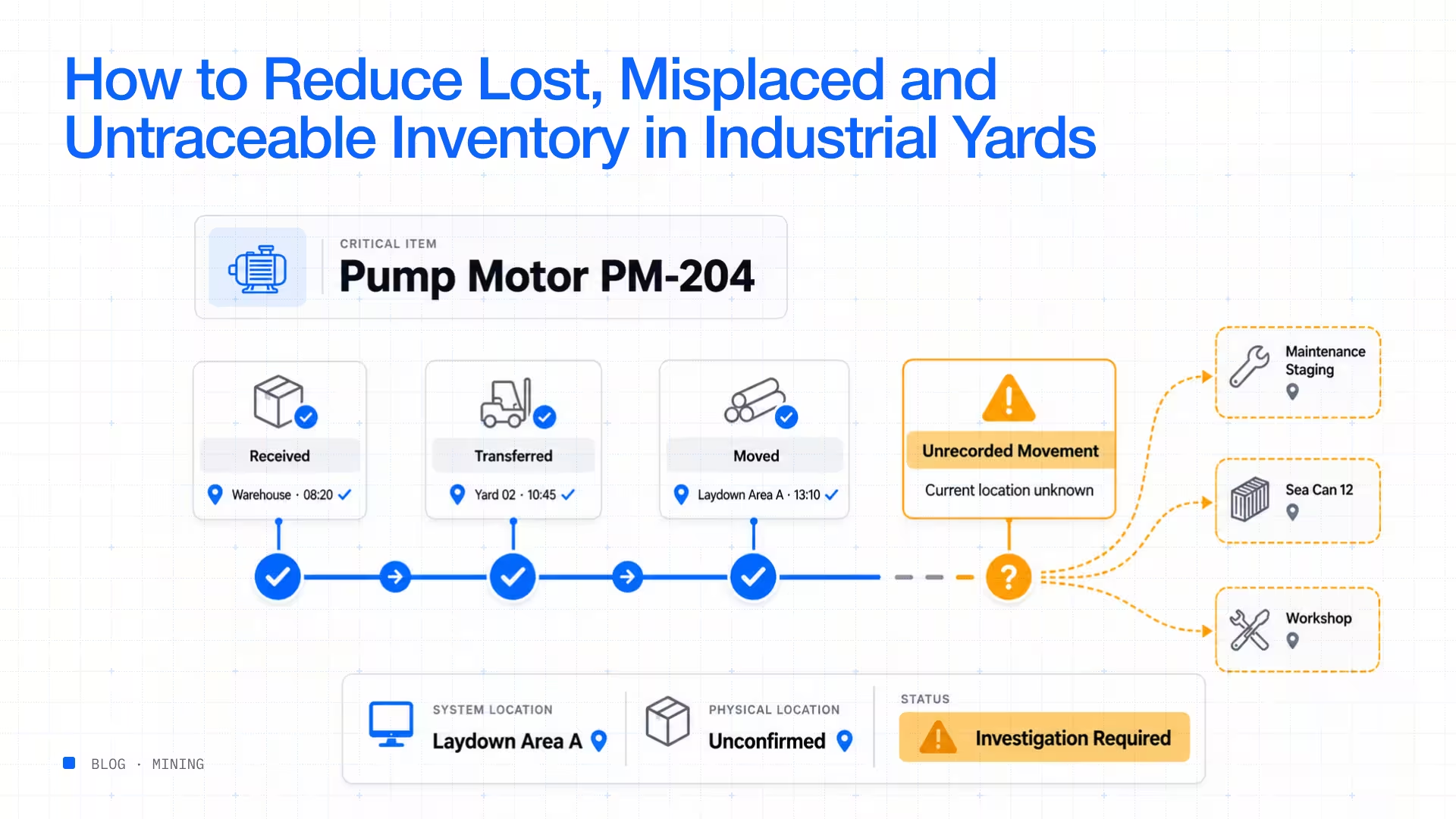
Inventory becomes difficult to locate when the physical movement of materials is not matched by timely digital records. A part may be moved from one yard location to another without the transfer being recorded, or an employee may know where it was placed but never update the formal inventory record.
Industrial yards make this particularly challenging because materials are rarely stored in one controlled environment. Stock can sit in open areas, sea cans, racks, laydown areas, workshops and temporary locations, making it difficult to maintain consistent location information.
The problem can become even more significant when several teams handle the same inventory. A warehouse employee may receive the material, a yard team may move it, a maintenance team may request it and another employee may eventually issue it. If any part of this chain is missed, the inventory trail becomes incomplete.
Over time, these small gaps create a much larger problem. The system may show that the organisation has inventory, but employees cannot confidently determine where it is or whether it can actually be accessed.
Untraceable inventory is stock that exists physically or is recorded in an inventory system but cannot be reliably located or connected to a known movement history. It may have an incorrect location, incomplete transaction history or insufficient identification information.
For example, a spare part may appear in the system as available in a central warehouse even though it was transferred to a remote yard several months earlier. The inventory has not technically disappeared, but its location is no longer reliable.
Untraceable inventory creates a gap between inventory records and physical reality. Employees may need to search several locations before determining whether the item still exists.
This is why inventory visibility is about more than knowing how much stock an organisation owns. It also requires knowing where that stock is and what has happened to it throughout its lifecycle.
Inventory visibility allows teams to understand what inventory exists, where it is located and how it has moved through the operation. Without this information, employees are often forced to rely on physical searches or individual knowledge.
In a large industrial yard, even a relatively simple search can become time-consuming. An employee may need to check multiple storage areas, contact other teams or physically travel across the site before locating a required item.
This becomes particularly costly when the material is needed for maintenance or another time-sensitive activity. The inventory may technically be available, but poor visibility makes it difficult to access quickly.
Better visibility provides a clearer starting point. Instead of asking where an item might be, employees can use the inventory record to identify its expected location and movement history.
The cost of misplaced inventory is rarely limited to the time spent searching for it. When employees cannot find an item, the organisation may purchase another one even though the original material still exists somewhere in the operation.
This creates unnecessary inventory and ties up working capital. If the original item is eventually found, the business may end up holding more stock than it actually needs.
Poor inventory tracking can also increase labour costs. Employees may spend significant amounts of time searching storage areas, checking spreadsheets, making phone calls or asking colleagues for information.
There can also be operational consequences. If a critical spare part cannot be located quickly, maintenance work may be delayed while teams search for it or arrange a replacement.
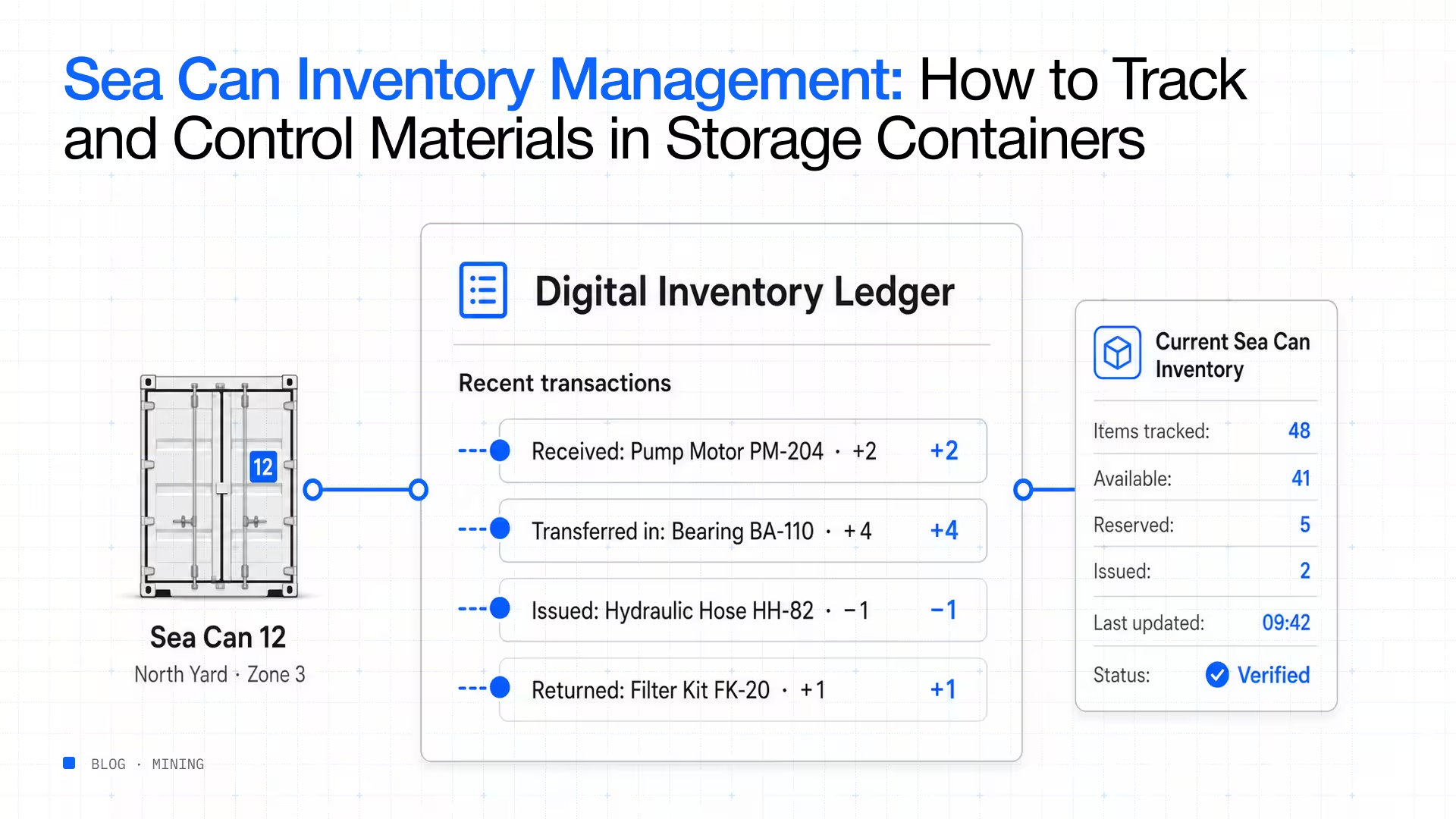
An inventory tracking system creates a structured way to record where inventory is received, stored, transferred, issued and consumed. Instead of relying on informal knowledge, the organisation maintains a digital record of inventory movement.
When an item moves from one location to another, the transaction can update its recorded location. When it is issued to a maintenance team, the system can reflect that change as well.
This creates a traceable inventory history. If an item cannot be found, employees have more information available to determine its last recorded location and investigate what happened.
The system does not eliminate physical mistakes, but it reduces the dependency on memory and manual tracking. It gives employees a consistent source of information when they need to locate inventory.
An effective inventory tracking system should track more than quantity. It should provide information about the item’s identity, location, status and relevant movement history.
For industrial operations, this may include the item’s current storage location, previous locations, transfers, receipts, issues and consumption. Depending on the inventory process, the system may also need to capture additional information such as item condition or transaction details.
Location accuracy is particularly important in large yards. Knowing that an item exists is not enough if the system cannot indicate where it should be found.
The more closely the digital record reflects the physical movement of inventory, the more useful the system becomes for everyday operations.
Yard inventory management provides a structured approach to controlling materials stored across industrial yards. It creates defined processes for receiving, locating, moving and issuing inventory within the yard environment.
Without a clear process, employees may place materials wherever space is available. The material may still be physically present, but its location may not be recorded accurately.
A structured yard inventory management process assigns inventory to identifiable locations and records relevant movements. This makes it easier for employees to determine where materials should be stored.
It also creates greater accountability around inventory movement. When a material changes location, there is a defined process for updating the inventory record.
RFID inventory tracking can help organisations identify and locate tagged inventory without relying entirely on manual identification. RFID tags can be associated with inventory records, while compatible readers can capture information from tagged items.
This can be particularly useful in environments where large volumes of materials need to be identified or counted. Instead of manually checking each item, RFID-enabled workflows can help streamline the identification process.
RFID can also support inventory counts and movement tracking where the operating environment is suitable. This can help organisations identify discrepancies between recorded inventory and physical stock.
However, RFID is most effective when it is connected to a broader inventory management process. Identification technology needs to feed into inventory records and workflows so that the information can actually support operational decisions.
Improve inventory identification and visibility: Explore Scatterlink’s RFID inventory management solution to see how RFID can support tracking across industrial yards.
Inventory transactions often happen away from the main warehouse office. Employees may receive materials, move stock between yard locations or issue items from a storage area while working in the field.
Mobile inventory tracking allows employees to record these activities where they happen. Instead of writing down the transaction and entering it later, the employee can update the inventory record closer to the point of movement.
This can reduce delays between physical activity and digital recording. The sooner a movement is captured, the less likely the system is to continue showing an outdated inventory location.
Mobile workflows can also make inventory management more practical for yard teams. Employees do not need to return to a fixed workstation every time they need to complete a routine inventory transaction.
Industrial yards do not always have consistent network connectivity across every storage area. Large sites can have dead zones or remote sections where employees cannot reliably access a connected inventory system.
When connectivity is unavailable, employees may revert to paper records or informal tracking. These records then need to be entered into the system later, increasing the risk of missed or incorrect transactions.
Offline inventory tracking allows employees to continue recording supported inventory activity without an active network connection. The information can then synchronise when connectivity becomes available.
This can help maintain continuity between physical inventory movements and digital records. It is particularly useful for industrial operations where teams regularly work across large or remote areas.
Searching for inventory is often a symptom of poor location information. If an employee knows that a part exists but does not know where it was stored, the search can involve several physical locations.
A reliable inventory tracking system can provide the recorded location of the material. Employees can then start their search from a defined location rather than checking the entire yard.
Movement history can provide additional context. If the material is not found where the system indicates, teams can review the last recorded transfer or transaction to identify where the discrepancy may have occurred.
This can significantly reduce unnecessary searching. It also helps identify recurring location problems that may require changes to the yard’s storage or inventory processes.
The first step is to give inventory a consistent identity. Items should have reliable identifiers that allow employees and systems to distinguish one material from another.
The second step is to maintain accurate location information. Inventory should be associated with identifiable storage locations, and movements between those locations should be recorded.
The third step is to capture transactions at the point where they occur. Delayed recording creates opportunities for inventory information to become outdated.
Finally, organisations should regularly compare physical inventory with system records. Industrial inventory control works best when discrepancies are identified and corrected before they become long-term problems.
Inventory identification is the foundation of reliable tracking. If employees cannot consistently identify an item, it becomes difficult to maintain an accurate record of where it is or how it has moved.
Traditional identification methods such as barcodes can be effective for many environments. RFID can provide another option where organisations need faster or more automated identification.
The appropriate approach depends on the material, storage environment and operational workflow. The important point is that every tracked item should have a reliable connection between its physical identity and its digital inventory record.
When identification is consistent, yard inventory management becomes easier to control. Employees can connect receipts, transfers, counts and issues to the correct inventory record.
Duplicate purchasing is one of the common consequences of poor inventory visibility. If employees cannot locate a required item, they may assume that the organisation does not have it.
This can be particularly costly for specialised industrial materials and critical spare parts. A replacement may be purchased while the original item remains somewhere in the yard or another storage location.
A centralised inventory tracking system can help employees determine whether the required item already exists. They can search inventory records before raising a new purchase request.
If the item is available elsewhere, the organisation can consider transferring it instead. This helps improve stock utilisation while reducing unnecessary additions to inventory.
Spare parts often need to be available quickly when maintenance work is required. If a critical part is technically in stock but cannot be located, the operational benefit of holding that inventory is significantly reduced.
Better inventory visibility helps maintenance and warehouse teams understand where spare parts are recorded. This can make it easier to determine whether the required component is available locally or elsewhere.
Movement history can also provide additional context. Teams can identify whether a part has recently been transferred, issued or moved to another storage location.
This creates a more practical approach to spare parts management. The focus shifts from simply owning inventory to ensuring that critical materials are identifiable, locatable and available when required.
Inventory accuracy depends on keeping physical stock aligned with system records. The more frequently inventory moves without being recorded, the greater the chance that these two records will diverge.
One way to improve accuracy is to standardise inventory transactions across the yard. Receiving, transfers, issues and adjustments should follow consistent workflows.
Technology can make these processes easier to follow. Mobile applications can capture transactions in the field, while RFID or barcode identification can reduce manual entry where appropriate.
Regular inventory counts should then validate the digital records. When discrepancies are identified, organisations can investigate the underlying movement or process that caused them instead of simply adjusting the quantity.
An industrial inventory tracking system should provide more than basic stock counts. It should give teams the information required to understand inventory identity, location, movement and status.
Multi-location inventory visibility is important for organisations operating across warehouses, yards and remote sites. Mobile functionality allows employees to capture transactions away from fixed workstations.
Offline capability can support operations in areas where connectivity is unreliable. RFID and barcode functionality can provide flexible options for identifying physical inventory.
Integration with existing ERP systems is also important. The tracking system should complement existing enterprise records while providing the operational-level visibility required to manage physical inventory movements.
Finally, the system should be simple enough for employees to use consistently. Complex workflows can become a barrier to adoption and ultimately reduce the quality of inventory data.
Reducing lost and misplaced inventory requires a connection between the physical material and the information used to manage it. Employees need to know what inventory exists, where it is recorded and how it has moved through the operation.
Scatterlink combines inventory intelligence with RFID, mobile and offline capabilities to support inventory visibility across complex industrial environments. This allows teams to capture inventory activity closer to where physical movements occur rather than relying entirely on delayed manual updates.
The platform supports inventory visibility from receipt through to consumption, helping organisations maintain a clearer record as materials move across warehouses, yards and operational locations. Where RFID is appropriate, tagged inventory can also be connected to digital inventory records.
For industrial operations dealing with large yards and distributed inventory, the objective is to reduce the gap between what the system says exists and what teams can actually find and use.
Maintain visibility across complex inventory environments: Learn more about Scatterlink’s inventory intelligence approach.
The strongest inventory tracking processes follow materials throughout their lifecycle. The process begins when inventory is received and continues as it is stored, transferred, issued and eventually consumed.
If only the initial receipt is recorded, the system cannot provide reliable visibility after the material moves. Every significant movement needs to become part of the inventory trail.
This is particularly important in industrial yards where materials may move through several storage areas before reaching their point of use. A connected record helps teams understand the material’s journey rather than seeing isolated inventory transactions.
Connect the complete inventory lifecycle: See how Scatterlink provides inventory visibility from receipt to consumption across industrial environments.
A reliable inventory tracking process can reduce the time employees spend searching for materials. It can also help reduce unnecessary purchasing by making existing inventory easier to locate.
Better tracking improves confidence in inventory records because transactions and movements are captured more consistently. This gives warehouse, maintenance and management teams a stronger basis for making inventory decisions.
RFID, mobile and offline capabilities can further improve the practicality of inventory tracking in complex industrial environments. They allow teams to capture information closer to the physical activity instead of relying entirely on manual processes.
Ultimately, better tracking turns inventory from something employees have to search for into something they can locate and manage with greater confidence.
Lost and misplaced inventory is rarely just a warehouse problem. In large industrial yards, it can result from gaps between physical movement and digital records, inconsistent location tracking, delayed transactions and disconnected inventory processes.
A reliable inventory tracking system can help close these gaps by connecting inventory identity, location and movement. Combined with yard inventory management, RFID inventory tracking, mobile workflows and offline capabilities, it can provide the visibility required to keep distributed inventory under control.
The objective is not to track inventory for the sake of tracking it. It is to make inventory easier to find, easier to control and more reliable when teams need it.
For industrial operations, better inventory visibility means fewer unnecessary searches, fewer duplicate purchases and greater confidence that the inventory recorded in the system reflects what is actually available across the yard.
An inventory tracking system is software used to monitor inventory quantities, locations, movements and transactions. It helps organisations maintain visibility over stock as it moves through warehouses, yards and operational locations.
Inventory can become difficult to locate when movements are not recorded, storage locations are unclear or different teams use disconnected tracking processes. Over time, the digital inventory record may no longer match the physical location.
It records inventory identity, location and movement, giving employees a structured way to determine where materials are expected to be. This reduces reliance on memory, spreadsheets and informal communication.
Yard inventory management is the process of controlling and tracking materials stored across industrial yards. It includes receiving, storing, moving, counting and issuing inventory within the yard environment.
RFID inventory tracking uses RFID tags and compatible readers to identify tagged inventory. The captured information can be connected to inventory records and used to support identification, counts and movement tracking.
RFID can improve identification and visibility, but it does not independently prevent every instance of misplaced inventory. Its effectiveness depends on how RFID data is integrated with inventory processes and location tracking.
Mobile inventory tracking allows employees to record inventory transactions at the location where the physical activity occurs. This can reduce delayed entries and improve the timeliness of inventory records.
Offline inventory tracking allows employees to continue recording supported inventory transactions when network connectivity is unavailable. Transactions can synchronise when connectivity is restored.
Better inventory visibility helps employees determine whether a required item already exists elsewhere in the operation. This can allow organisations to transfer existing stock instead of purchasing another item.
They can standardise inventory processes, use reliable item and location identifiers, capture transactions when they occur and perform regular physical counts to identify discrepancies.
Key capabilities can include multi-location inventory visibility, mobile functionality, offline workflows, RFID or barcode identification, inventory movement tracking, stock counts and ERP integration.
It provides structured information about where materials are expected to be stored. Employees can use the recorded location and movement history to narrow their search instead of checking multiple areas.
Yes. A multi-location inventory tracking system can maintain inventory records across different warehouses, yards, remote sites and other storage locations within a connected environment.
Scatterlink combines RFID, mobile and offline capabilities with inventory intelligence to help industrial teams maintain visibility over inventory across complex operating environments. It supports inventory visibility from receipt to consumption.
%20(1).avif)
.avif)
%20(1).avif)