
Supply chains have always been influenced by changing demand. What has changed is the speed at which those changes now occur.
Shifting customer expectations, global disruptions, fluctuating commodity prices, geopolitical events, and changing market conditions can rapidly alter demand patterns. Organizations that were adequately stocked one month may suddenly face shortages the next, while others find themselves holding excess inventory that ties up working capital.
While businesses cannot eliminate uncertainty, they can improve how they respond to it. The organizations that recover fastest are rarely those with the largest inventory buffers. They are the ones with the visibility, processes, and operational intelligence to adapt quickly when demand changes.
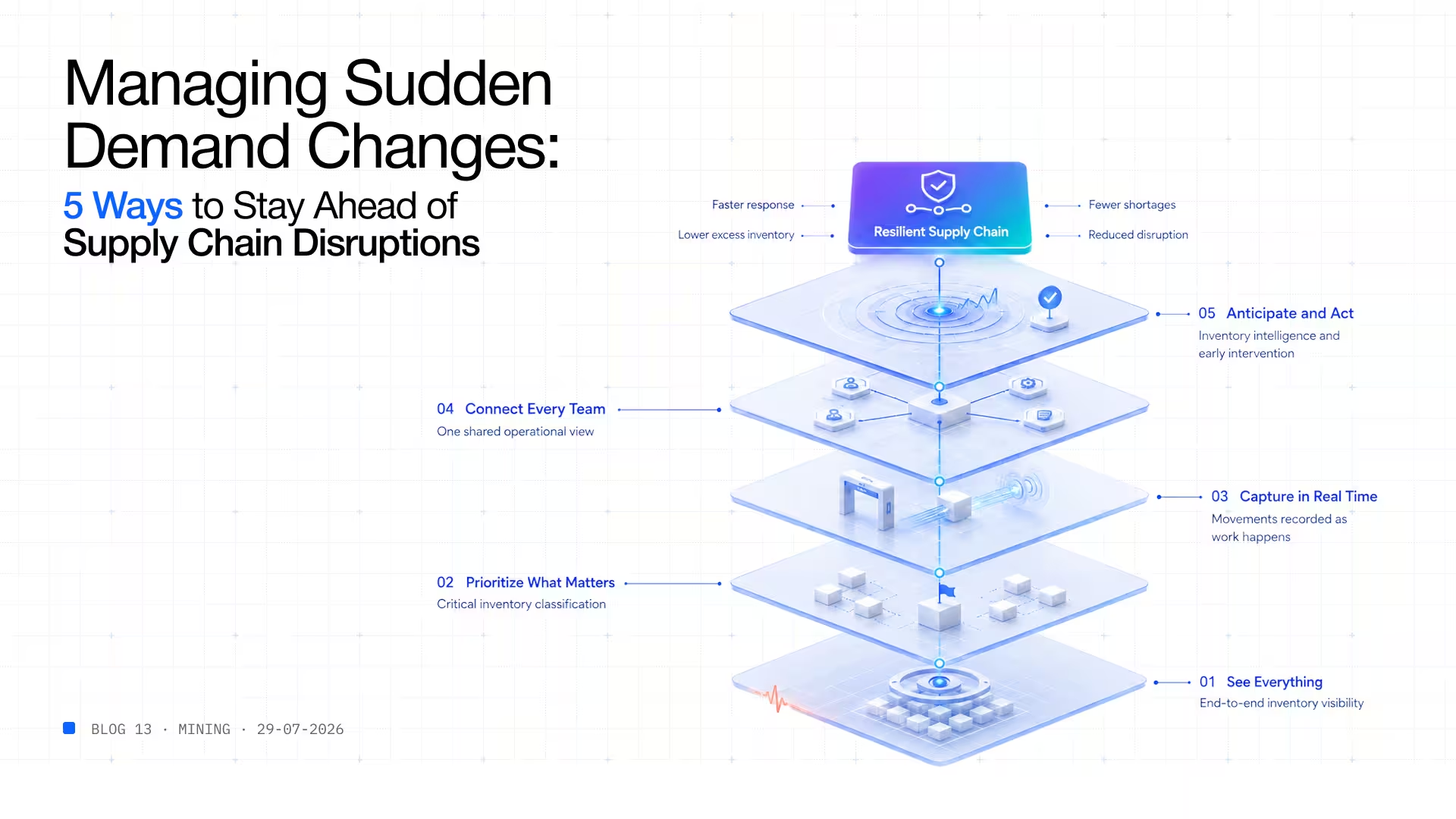
Here are five practical ways organizations can strengthen supply chain resilience and stay ahead of unexpected demand shifts.
When demand changes unexpectedly, one of the first questions organizations ask is simple:
What inventory do we actually have?
Surprisingly, this is often the hardest question to answer.
Inventory may be spread across multiple warehouses, maintenance facilities, stockyards, or remote operational sites. ERP systems provide inventory records, but they don't always reflect where inventory is physically located or how it has moved after being received into storage.
Without complete visibility, organizations spend valuable time verifying inventory availability instead of responding to changing demand.
Real-time inventory visibility allows teams to locate critical inventory quickly, identify available stock across locations, and make faster operational decisions before disruptions escalate.
Stop overstocking and start protecting critical parts. Learn how Scatterlink’s inventory risk management tools automate inventory classification and track high-impact components in real time.
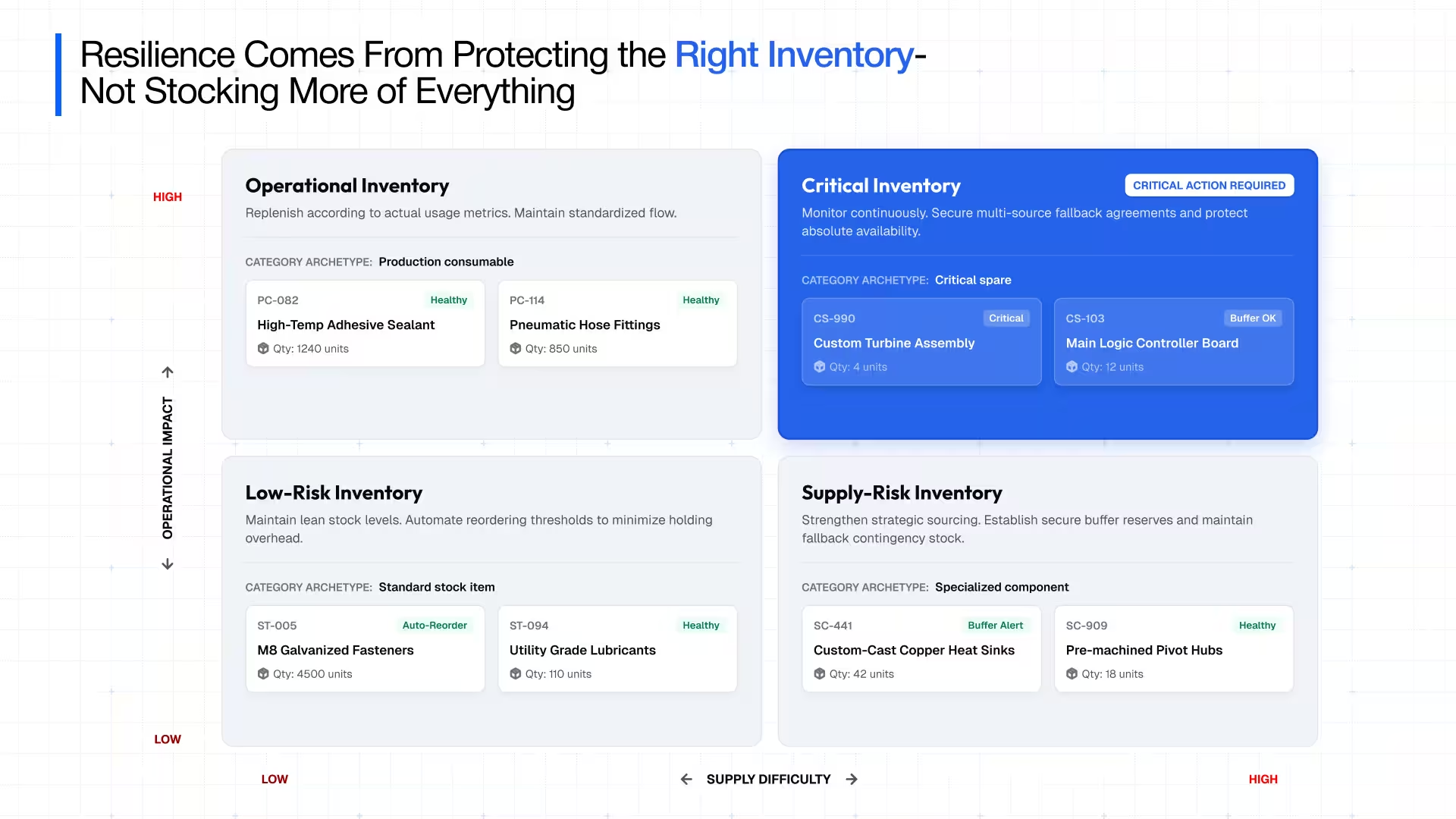
Not every inventory item carries the same level of operational risk.
During periods of changing demand, organizations often focus on increasing inventory levels across the board. This approach can increase inventory costs without necessarily improving operational resilience.
Instead, organizations should identify inventory that directly supports production continuity, maintenance activities, and customer commitments.
By classifying critical inventory and monitoring its availability more closely, businesses can reduce the likelihood of operational disruptions while making better use of available inventory.
Prioritization helps organizations make smarter decisions when resources become constrained.
Inventory information becomes less valuable the moment it stops reflecting reality.
When transfers, issues, returns, and consumption are recorded hours later or at the end of a shift, organizations begin making decisions based on outdated information. During periods of stable demand, these delays may go unnoticed. During periods of rapid change, they can lead to unnecessary purchases, delayed maintenance, and inaccurate planning.
Real-time transaction capture ensures every inventory movement is reflected as work happens. This allows warehouse teams, maintenance personnel, procurement, and operations to work from the same current information.
Accurate operational data creates confidence when decisions need to be made quickly.
Unify your supply chain across every yard, site, and warehouse. Explore how Scatterlink provides complete operational visibility to keep multi-location enterprises resilient.
Responding to demand changes requires coordination across multiple departments.
Procurement needs accurate inventory availability before placing new orders. Maintenance teams need confidence that critical parts are available before scheduled work begins. Warehouse teams require visibility into inventory movements, while operations leaders need reliable information to prioritize production.
When each department works from different information, response times slow and operational risk increases.
A shared, real-time view of inventory enables every team to make decisions using the same trusted information. Instead of reacting independently, organizations can respond as one connected operation.
This level of collaboration becomes increasingly valuable as demand volatility grows.
Collecting inventory data is only the beginning.
The organizations that respond best to changing demand don't simply gather more information. They transform that information into insights that support faster and more confident decision-making.
Understanding inventory movement patterns, identifying frequently used materials, recognizing potential shortages, and monitoring inventory utilization all help organizations anticipate challenges before they impact operations.
When inventory data becomes operational intelligence, organizations shift from reacting to disruptions to preparing for them.
That transition creates a significant competitive advantage in uncertain environments.
Capture inventory movements as work happens. See how Scatterlink's mobile-first inventory solution eliminates data lag between field operations and your ERP.
Supply chain resilience is often associated with forecasting models, supplier diversification, and contingency planning. While these strategies remain important, they are only part of the solution.
The ability to respond effectively to changing demand depends on the quality of operational information available every day. If inventory cannot be located quickly, if transactions are delayed, or if inventory records no longer reflect operational reality, even the best supply chain strategy becomes difficult to execute.
Resilience is built through consistent execution.
Every transaction contributes to the organization's ability to respond when demand changes unexpectedly.
At Scatterlink, we help industrial organizations build resilience by strengthening one of the most critical components of supply chain performance: inventory visibility.
Our Inventory Intelligence Platform combines RFID, barcode technology, IoT devices, intuitive mobile workflows, and seamless ERP integration to provide real-time visibility into inventory movement, location, and usage. Because the platform is designed to fit naturally into existing workflows, employees can capture transactions with minimal training and without adding unnecessary administrative work.
The result is accurate, intelligent, and actionable inventory information that helps frontline workers, supervisors, procurement teams, and executives make faster decisions when changing demand puts pressure on operations.
Sudden demand changes are inevitable.
Organizations cannot control market conditions, supplier delays, or global disruptions. What they can control is how prepared they are to respond.
Building resilience requires more than better forecasting. It requires confidence in the information that supports operational decisions every day.
By combining real-time inventory visibility with consistent operational workflows and intelligent decision-making, organizations can reduce uncertainty, respond faster to disruption, and keep operations moving regardless of what the market demands next.
Sudden demand changes can result from market shifts, economic conditions, seasonal demand, geopolitical events, supply disruptions, changing customer behavior, or unexpected operational requirements.
Organizations can improve resilience by increasing inventory visibility, prioritizing critical inventory, capturing real-time inventory movements, improving collaboration between departments, and using operational intelligence to support decision-making.
Real-time inventory visibility enables organizations to locate inventory quickly, avoid duplicate purchases, reduce maintenance delays, and make faster operational decisions during periods of uncertainty.
Real-time tracking ensures inventory records remain accurate as inventory moves through warehouses, stockyards, and operational sites, allowing teams to respond using current information rather than outdated records.
Scatterlink extends inventory visibility beyond traditional ERP systems by combining RFID, barcode scanning, IoT technology, mobile workflows, and inventory intelligence. This enables organizations to make faster, more informed decisions when responding to changing demand and supply chain disruptions.
RFID inventory management uses radio frequency identification (RFID) technology to automatically identify, locate, and track inventory throughout its lifecycle. Compared to manual inventory processes and barcode-only systems, RFID provides faster inventory counts, improved inventory accuracy, and real-time visibility across warehouses, stockyards, field locations, and industrial operations.
RFID asset tracking software helps organizations monitor inventory and equipment in real time by combining RFID tags, readers, mobile applications, and centralized inventory intelligence. It reduces manual data entry, shortens inventory search time, improves inventory accuracy, and provides complete visibility across multiple operational locations.
Mining operations manage inventory across warehouses, stockyards, sea cans, laydown yards, workshops, field locations, and underground environments. Purpose-built asset tracking software for mining, mining asset tracking platforms, and mining equipment tracking systems provide real-time visibility, offline mobile capability, and RFID-based tracking that traditional warehouse management systems are not designed to support.
%20(1).avif)
.avif)
%20(1).avif)