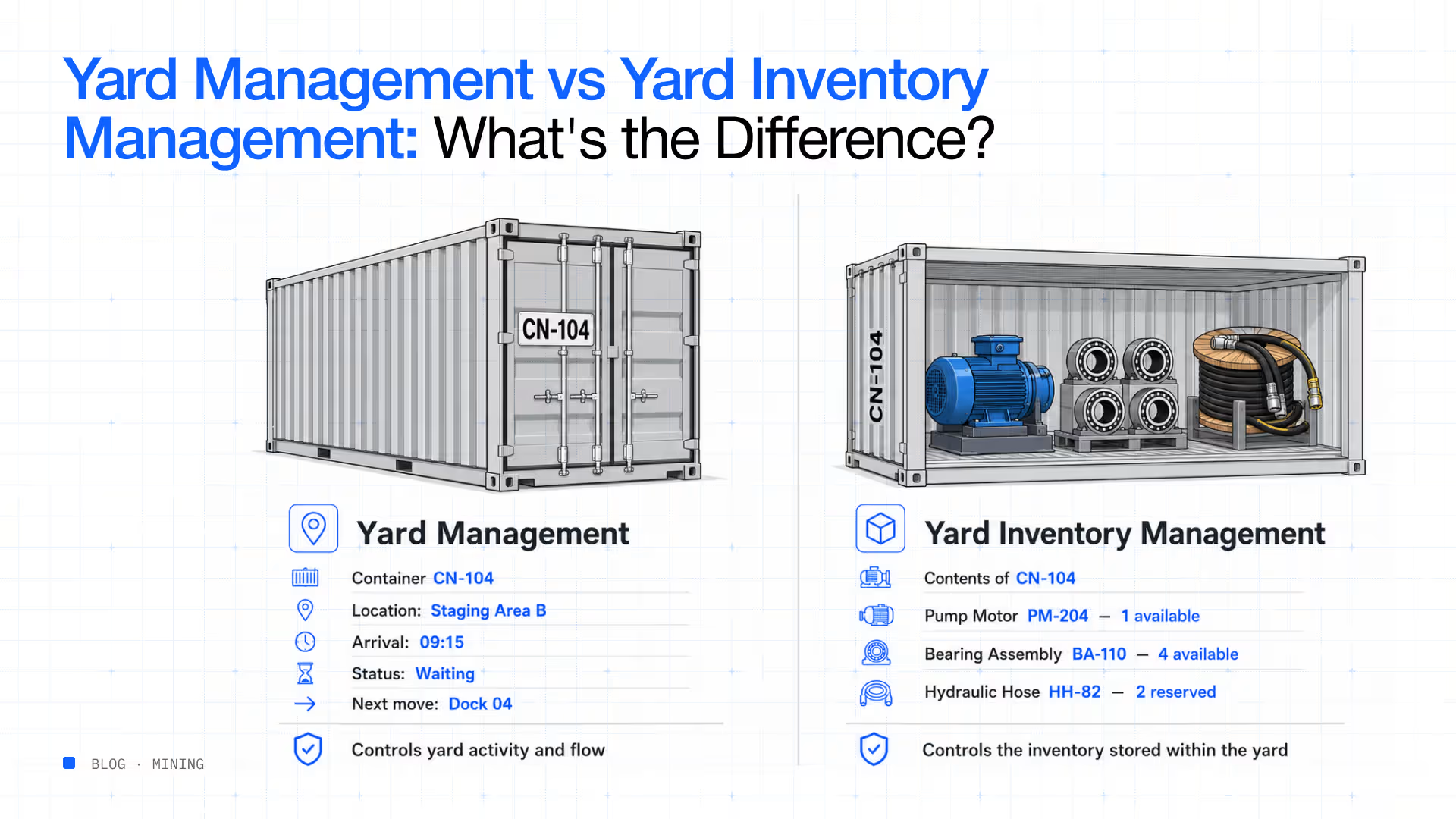

Mining operations rarely manage inventory from a single warehouse. Critical spare parts, maintenance tools, consumables, and operational supplies are distributed across central warehouses, workshops, laydown yards, satellite stores, sea cans, contractor compounds, and both surface and underground locations. While this decentralized approach supports operational efficiency, it also creates one of the biggest challenges facing the industry today: maintaining complete visibility across every inventory location. Effective remote mining inventory management is no longer simply about tracking stock levels. It is about ensuring every team knows what inventory exists, where it is located, and whether it is immediately available when production depends on it.
As mining operations expand into increasingly remote environments, inventory visibility becomes harder to maintain using traditional warehouse processes alone. Inventory is constantly moving between locations, often without immediate system updates, creating blind spots that lead to duplicate purchases, unnecessary transfers, delayed maintenance, and excess inventory. Organizations that solve this visibility challenge gain a significant operational advantage by reducing search time, improving maintenance planning, and making better inventory decisions across every site.
Unlike manufacturing facilities that operate from a single production location, mining organizations manage inventory across vast geographical areas. A single operation may include several warehouses, multiple maintenance workshops, remote exploration camps, processing plants, contractor storage areas, explosive magazines, fuel facilities, and temporary sea cans located kilometres apart.
This distributed inventory model exists for good reason. Maintenance teams require inventory close to operating equipment to reduce response times. Shutdown activities often require temporary storage areas near production assets. Contractors maintain their own working inventory to complete specialized work efficiently. Remote crews cannot afford to travel long distances every time they require a replacement component.
While operationally necessary, this approach creates a significant inventory management challenge.
The further inventory moves away from controlled warehouse environments, the more difficult it becomes to maintain accurate inventory records. Transfers are delayed, temporary storage becomes permanent, and inventory that was intended for one project often remains at another location long after work has finished.
Over time, organizations lose confidence in where inventory actually resides. Warehouse systems may indicate inventory is available, but maintenance teams still spend hours locating it because the physical location no longer matches the digital record.
For large mining organizations, this visibility gap affects every department. Procurement purchases additional inventory because existing stock cannot be located. Maintenance delays repairs while technicians search multiple storage areas. Finance struggles to reconcile inventory valuations during audits because inventory has moved beyond its recorded location.
The problem is rarely that inventory does not exist. The problem is that no one can confidently say where it is.
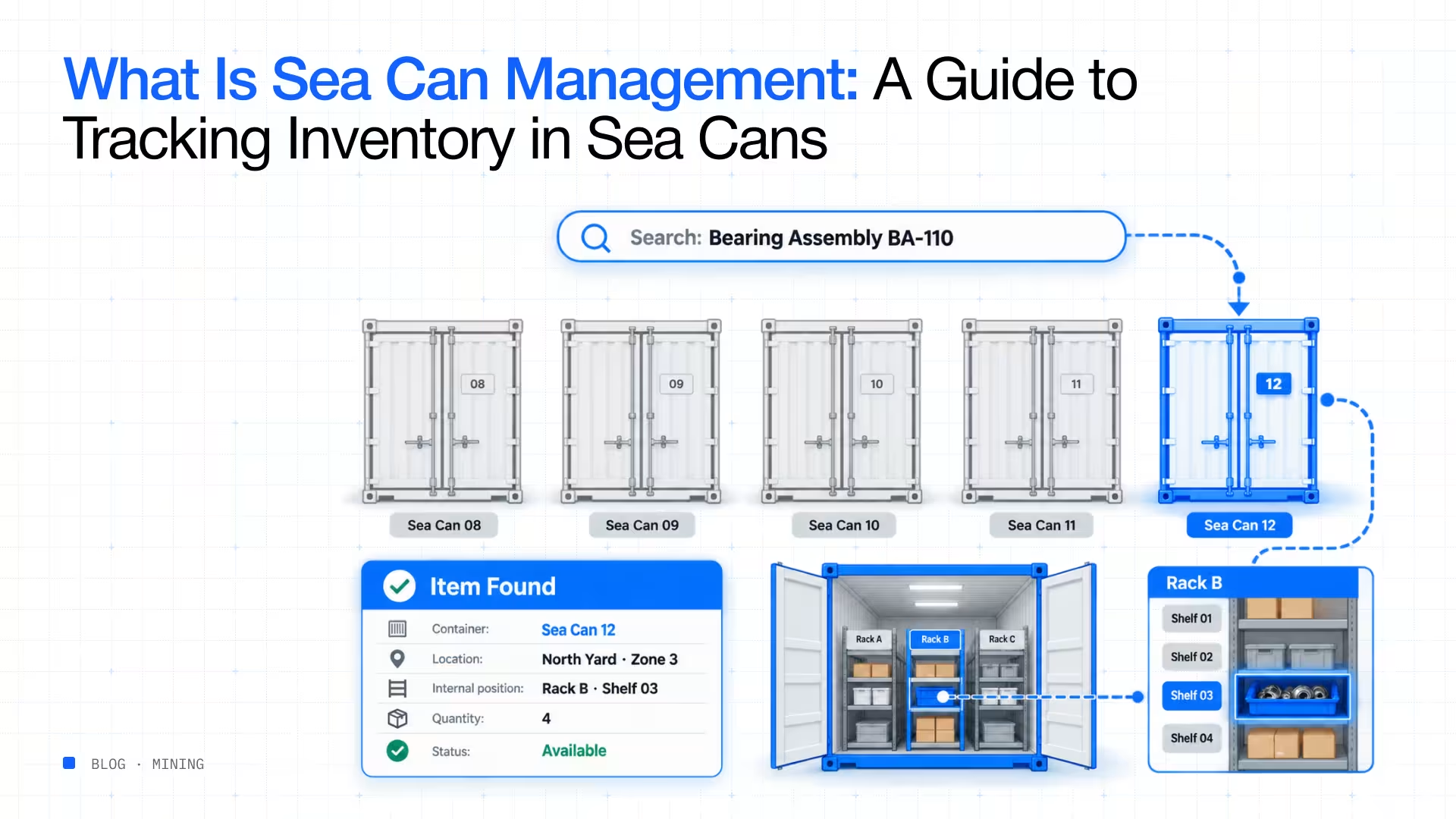
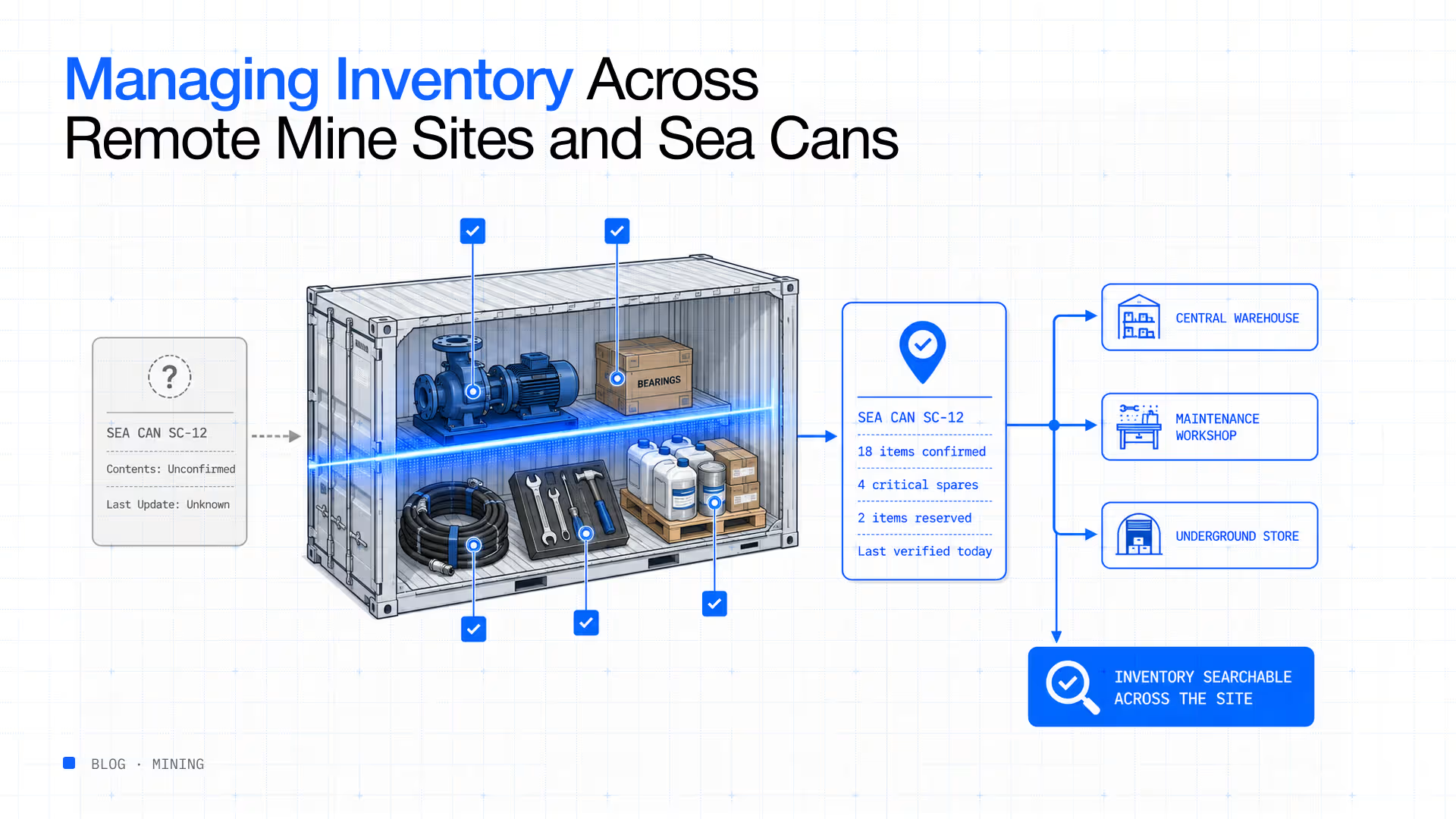
Sea cans have become an essential part of mining operations because they provide secure, weather-resistant storage close to where maintenance work happens. During shutdowns, equipment rebuilds, exploration projects, and expansion activities, sea cans often hold hundreds of critical spare parts, tools, and consumables that would otherwise require repeated trips to the central warehouse.
The challenge is that these locations are rarely managed with the same discipline as permanent warehouses.
Inventory is issued into a sea can for a planned maintenance activity, but unused items are not always returned immediately. Additional materials may be delivered directly from suppliers, while contractors may temporarily store company-owned inventory alongside their own equipment. As projects evolve, inventory gradually accumulates without anyone maintaining an accurate record of what remains inside.
Several months later, another maintenance team may purchase identical components simply because no one knows they already exist inside a sea can located elsewhere on site.
The same problem occurs in laydown yards, mobile workshops, temporary maintenance facilities, and remote storage compounds. These locations are operationally necessary, but without continuous inventory visibility they become isolated pockets of inventory that exist outside day-to-day inventory management.
The consequences are significant:
For mining organizations operating across multiple sites, every untracked storage location increases operational uncertainty. What begins as temporary storage often becomes a permanent inventory blind spot.
Mining organizations rarely operate from a single location. Inventory may be distributed across several mines, processing plants, regional warehouses, contractor compounds, and remote operational sites. Although each location manages inventory independently, production depends on viewing inventory as one connected network rather than isolated storage facilities.
Without multi-site visibility, organizations frequently purchase inventory that already exists somewhere else within the business.
A warehouse may have surplus bearings while another operation raises an urgent purchase order for the same item. One maintenance team may classify a spare as obsolete while another site continues ordering identical components from suppliers. These situations occur because inventory decisions are made using local information instead of enterprise-wide visibility.
Real-time inventory visibility changes this approach completely.
Instead of checking individual warehouses one by one, authorized users can immediately determine:
This level of visibility transforms inventory from a site-specific resource into a shared operational asset.
It also supports better collaboration between procurement, maintenance, warehouse, and finance teams. Procurement can reduce emergency purchasing by redistributing inventory between sites. Maintenance planners gain confidence that critical parts can be sourced internally before placing supplier orders. Finance benefits from lower inventory investment while maintaining operational readiness.
Rather than increasing stock across every location, organizations improve service levels by improving visibility.
Connect every warehouse, sea can, workshop, and remote storage location with one source of truth. Discover how Scatterlink delivers complete inventory visibility across every mining operation.
Scatterlink's Inventory Intelligence Platform is designed for industrial operations where inventory is constantly moving beyond the traditional warehouse. Instead of limiting visibility to fixed storage locations, Scatterlink captures inventory movement wherever work takes place, providing organizations with a complete view of inventory from receipt through consumption.
Using RFID technology, barcode scanning, offline mobile applications, GPS-enabled location awareness, and seamless ERP integration, Scatterlink tracks inventory across central warehouses, maintenance workshops, laydown yards, sea cans, contractor facilities, satellite stores, and both surface and underground operations.
Every inventory movement is recorded in real time, allowing teams to locate materials quickly, verify availability before maintenance begins, and eliminate the uncertainty that leads to duplicate purchases and unnecessary inventory transfers.
Because the platform supports offline transactions, field teams working in remote areas can continue issuing, receiving, and transferring inventory even when internet connectivity is unavailable. Once connectivity is restored, inventory records automatically synchronize, ensuring every team continues working from accurate, up-to-date information.
The result is a connected inventory ecosystem where every location contributes to a single, trusted source of inventory intelligence.
Managing inventory across remote mine sites is no longer simply a logistics challenge. It is a visibility challenge.
As inventory spreads across warehouses, sea cans, laydown yards, contractor compounds, workshops, and underground storage areas, organizations lose confidence in where inventory actually resides. This uncertainty drives duplicate purchases, extends maintenance delays, increases working capital, and reduces overall operational efficiency.
By improving remote mining inventory management through real-time inventory visibility, mining organizations can connect every storage location into one intelligent inventory network. Teams spend less time searching, procurement makes better purchasing decisions, maintenance gains faster access to critical spare parts, and leadership gains complete visibility into inventory investment across the entire operation.
For modern mining operations, inventory should never disappear simply because it changed location.
Remote mining inventory management is the process of tracking and managing inventory across multiple operational locations, including warehouses, workshops, sea cans, laydown yards, satellite stores, and underground operations while maintaining real-time inventory visibility.
Sea cans are often used as temporary storage during maintenance projects and shutdowns. Without digital inventory tracking, materials stored inside can become difficult to locate, increasing duplicate purchases and reducing inventory accuracy.
Enterprise-wide inventory visibility allows organizations to identify inventory already available at other locations, reducing unnecessary purchases, minimizing excess stock, improving inventory utilization, and lowering working capital requirements.
%20(1).avif)
.avif)
%20(1).avif)