
Industrial inventory management has changed significantly over the past decade. Organizations are no longer satisfied with simply knowing how much inventory they own. They need to know where inventory is located, how it is moving, when it is being used, and whether it will be available before operations are affected. In today's industrial environment, inventory information must be accurate, current, and immediately accessible.
This growing demand for visibility has accelerated the adoption of IoT inventory management across industries such as mining, oil and gas, manufacturing, construction, utilities, and logistics. By connecting inventory, equipment, sensors, RFID devices, and software platforms, IoT inventory management enables organizations to collect inventory data automatically instead of relying solely on manual updates.
The result is a smarter approach to inventory management. Rather than waiting for periodic inventory counts or manually verifying stock availability, organizations gain continuous visibility into inventory movement and condition. This allows maintenance teams, warehouse personnel, procurement departments, and operations leaders to make faster and more informed decisions.
In this guide, we'll explore how IoT inventory management works, the technologies that enable it, and why it is becoming a key component of modern industrial operations.
IoT inventory management refers to the use of Internet of Things (IoT) technologies to monitor, track, and manage inventory automatically. Instead of relying entirely on manual inventory transactions, IoT-enabled devices collect and transmit inventory information in real time through connected sensors, RFID readers, GPS devices, gateways, and cloud-based platforms.
Every inventory movement generates useful operational data. Materials arriving at a warehouse, equipment leaving a maintenance facility, inventory transferred between job sites, or spare parts issued for repairs can all be captured automatically using connected technologies.
This continuous flow of information gives organizations a more accurate picture of inventory availability, location, movement, and usage than traditional inventory management methods.
Unlike conventional systems that depend heavily on manual updates, IoT inventory management helps keep inventory information current as operational activities occur.
Many organizations continue to rely on barcode scanning, spreadsheets, paper-based inventory logs, or manual ERP updates to maintain inventory records. Although these methods remain useful, they depend on employees completing inventory transactions accurately and consistently.
In busy industrial environments, inventory updates are sometimes delayed or missed entirely. Materials may be issued before transactions are recorded. Equipment may be transferred between locations without updating inventory records. Inventory counts may occur weeks after inventory has already moved.
These gaps reduce confidence in inventory information.
When inventory records no longer match physical inventory, maintenance teams spend more time searching for materials, procurement departments purchase inventory that already exists elsewhere, and operational decisions become increasingly difficult.
IoT inventory management addresses these limitations by automating much of the inventory data collection process, reducing dependence on manual intervention.
Several technologies work together to make IoT inventory management possible.
RFID enables inventory to be identified automatically without requiring direct line-of-sight scanning. RFID readers capture information from tagged inventory as materials move through operational areas, improving inventory accuracy while reducing manual effort.
IoT sensors collect information about inventory location, movement, environmental conditions, and equipment status. Depending on operational requirements, sensors may monitor temperature, vibration, humidity, motion, or occupancy.
These sensors continuously transmit information to centralized inventory platforms, allowing organizations to monitor inventory in real time.
Large industrial organizations frequently manage inventory across stockyards, remote facilities, construction sites, and mining operations.
GPS-enabled devices improve IoT inventory management by providing location information for mobile equipment, containers, trailers, and high-value inventory stored across extensive operational areas.
The information collected by RFID readers, IoT sensors, mobile applications, and GPS devices is consolidated within centralized inventory management platforms.
These platforms transform raw inventory data into dashboards, reports, alerts, and operational insights that support inventory planning, maintenance scheduling, and procurement decisions.
Organizations adopting IoT inventory management often experience improvements across multiple areas of their operations.
Some of the most significant benefits include:
These benefits help organizations shift from reactive inventory management toward proactive inventory intelligence.
Inventory data becomes far more valuable when it updates itself. Discover how Scatterlink combines IoT, RFID, and mobile technologies to deliver real-time inventory visibility across industrial operations.
Collecting inventory data is only the first step. The real value of IoT inventory management comes from transforming that information into decisions.
When inventory information updates continuously, maintenance planners know whether spare parts are available before scheduling repairs. Procurement teams can identify inventory shortages before they become operational problems. Warehouse personnel spend less time conducting manual searches, while operations leaders gain greater confidence in planning production activities.
Instead of reacting to inventory problems after they occur, organizations begin identifying trends early and responding before operational performance is affected.
This shift from reactive inventory tracking to proactive inventory intelligence is one of the most significant advantages of IoT inventory management.
Traditional inventory systems have served industrial organizations well for decades, but they were designed for a different operational environment. Inventory updates typically depend on employees scanning barcodes, entering transactions into ERP systems, or performing scheduled inventory counts. While these processes can maintain inventory records, they often provide a delayed picture of what is actually happening on the ground.
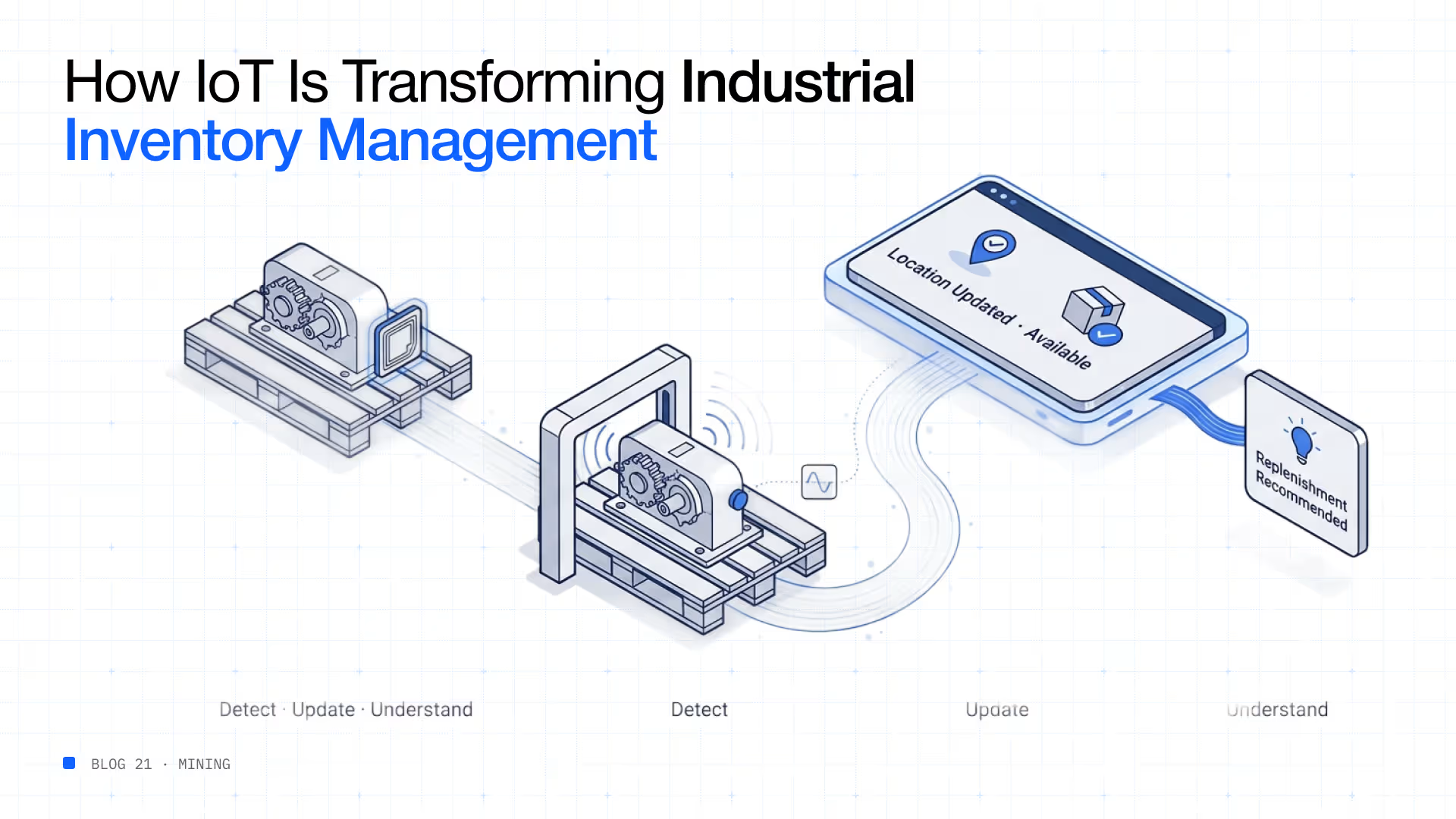
IoT inventory management takes a fundamentally different approach. Instead of waiting for manual updates, connected devices continuously collect inventory information as operational activities occur. RFID readers detect inventory movement automatically, IoT sensors monitor inventory conditions, GPS devices track equipment locations, and mobile applications capture field transactions in real time.
The difference is not simply faster technology. It is the ability to make operational decisions using current inventory information rather than historical records.
The value of IoT inventory management becomes most apparent when applied to real industrial operations.
In mining, IoT-enabled RFID readers and mobile devices help track critical spare parts, consumables, and maintenance inventory across surface operations and underground facilities. Maintenance teams spend less time locating inventory and more time completing repairs.
Oil and gas companies use IoT inventory management to monitor inventory across refineries, drilling sites, offshore platforms, and remote storage facilities. Continuous inventory visibility reduces operational risk while improving procurement planning.
Construction companies benefit from connected inventory tracking by monitoring tools, materials, and equipment across multiple active job sites. Real-time visibility reduces equipment loss, improves material availability, and supports better project coordination.
Manufacturing organizations use IoT inventory management to ensure production materials remain available throughout the manufacturing process while reducing inventory shortages that interrupt production schedules.
Although each industry faces different operational challenges, the objective remains the same: providing accurate inventory information that supports faster and more informed decisions.
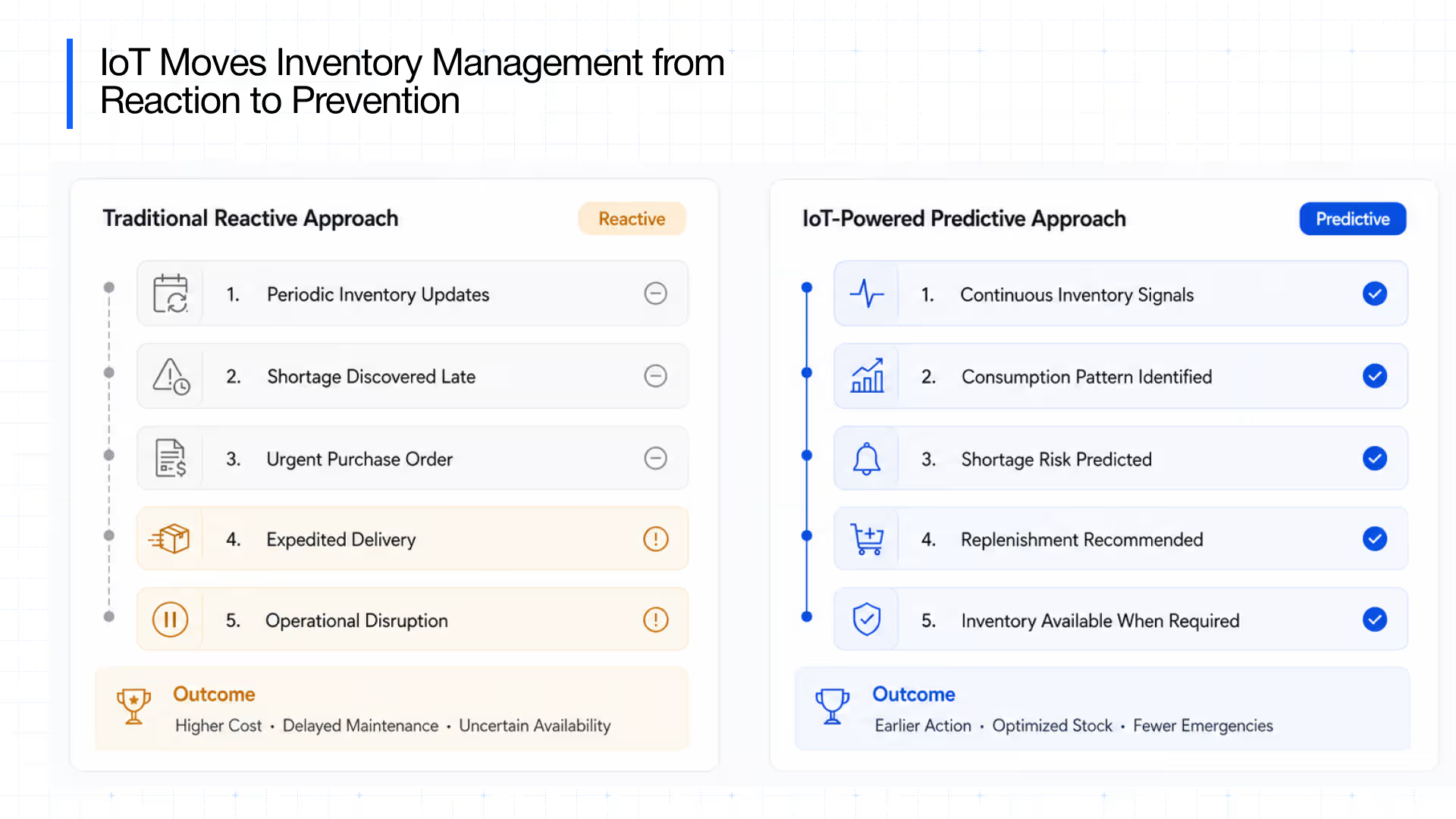
One of the most significant advantages of IoT inventory management is its ability to support predictive decision-making.
Traditional inventory management often identifies shortages only after inventory levels become critically low. Procurement teams then respond reactively, placing urgent purchase orders or expediting deliveries to prevent operational disruptions.
IoT changes this process.
Because connected devices continuously collect inventory information, organizations gain visibility into inventory consumption patterns over time. This allows inventory management systems to identify trends, forecast demand, and generate replenishment recommendations before shortages occur.
Predictive inventory management helps organizations:
Instead of reacting to inventory problems, organizations begin preventing them.
Inventory visibility is valuable. Inventory intelligence is even more powerful. Discover how Scatterlink helps industrial organizations transform inventory data into proactive operational decisions.
Many organizations already collect large amounts of inventory data. The challenge is not generating more information but understanding what that information means.
Knowing that a spare part exists in inventory is useful.
Knowing that the same spare part has remained unused for two years while another location repeatedly purchases it is actionable.
Knowing inventory levels is valuable.
Knowing which inventory is approaching critical shortages, which materials are moving faster than expected, and which assets are underutilized enables significantly better operational planning.
This is where IoT inventory management evolves into inventory intelligence.
By combining connected devices with analytics, organizations gain insights that improve maintenance planning, procurement strategies, inventory optimization, and operational performance across the business.
Scatterlink's Inventory Intelligence Platform is built around the principle that inventory should be more than a collection of records. It should provide accurate, intelligent, and actionable information that supports better operational decisions.
By integrating RFID technology, IoT devices, barcode scanning, GPS-enabled location tracking, mobile applications, and ERP connectivity, Scatterlink creates a connected inventory ecosystem where inventory movements are captured as they happen.
Whether inventory is received into a warehouse, transferred between operational sites, issued for maintenance, or consumed in the field, the platform continuously updates inventory information to provide complete visibility from receipt to consumption.
For organizations operating across remote environments, Scatterlink's offline-first mobile capability ensures inventory transactions continue even without network connectivity. Once connectivity is restored, inventory information synchronizes automatically, maintaining a single source of truth across the organization.
Rather than simply displaying inventory quantities, Scatterlink transforms operational data into meaningful insights that help warehouse teams, maintenance planners, procurement professionals, operations managers, and executive leadership make faster and more confident decisions.
Looking to modernize your inventory operations? Learn how Scatterlink combines IoT, RFID, mobile technology, and real-time inventory intelligence to help industrial organizations improve visibility, accuracy, and operational performance.
Industrial organizations can no longer rely solely on periodic inventory counts and manual updates to manage increasingly complex operations. As inventory moves across multiple facilities, remote sites, and field locations, timely and accurate information becomes essential for maintaining operational efficiency.
IoT inventory management addresses this challenge by connecting inventory, equipment, sensors, and digital platforms into a unified ecosystem that continuously captures inventory activity. The result is greater visibility, improved inventory accuracy, faster maintenance planning, and better decision-making across the organization.
However, the greatest value of IoT inventory management lies beyond automation. It enables organizations to transform inventory data into inventory intelligence, allowing teams to anticipate shortages, optimize inventory levels, reduce operational risk, and support continuous improvement.
For asset-intensive industries, adopting IoT inventory management is no longer simply a technology upgrade. It is a strategic investment that strengthens inventory performance while supporting safer, more efficient, and more resilient operations.
IoT inventory management uses connected devices such as RFID readers, IoT sensors, GPS trackers, and mobile applications to automatically monitor and manage inventory in real time.
By automating inventory data collection, IoT inventory management reduces manual data entry, captures inventory movements as they occur, and helps ensure inventory records accurately reflect physical inventory.
Mining, oil and gas, manufacturing, construction, utilities, logistics, and other asset-intensive industries benefit because they require real-time inventory visibility across multiple operational locations.
Yes. Modern IoT inventory management platforms integrate with ERP systems to synchronize inventory transactions and provide a unified view of inventory across the organization.
Common technologies include RFID, IoT sensors, barcode scanning, GPS location tracking, mobile inventory applications, cloud platforms, analytics, and ERP integrations.
RFID inventory management uses radio frequency identification (RFID) technology to automatically identify, locate, and track inventory throughout its lifecycle. Compared to manual inventory processes and barcode-only systems, RFID provides faster inventory counts, improved inventory accuracy, and real-time visibility across warehouses, stockyards, field locations, and industrial operations.
RFID asset tracking software helps organizations monitor inventory and equipment in real time by combining RFID tags, readers, mobile applications, and centralized inventory intelligence. It reduces manual data entry, shortens inventory search time, improves inventory accuracy, and provides complete visibility across multiple operational locations.
Mining operations manage inventory across warehouses, stockyards, sea cans, laydown yards, workshops, field locations, and underground environments. Purpose-built asset tracking software for mining, mining asset tracking platforms, and mining equipment tracking systems provide real-time visibility, offline mobile capability, and RFID-based tracking that traditional warehouse management systems are not designed to support.
%20(1).avif)
.avif)
%20(1).avif)