
Inventory management depends on knowing what stock exists, where it is located and how it moves through an organisation. Every time inventory enters a warehouse, moves between locations, is issued to a maintenance team or is consumed during an operational activity, the inventory record changes. These changes are captured through inventory transactions.
For industrial organisations, inventory transactions are particularly important because materials rarely remain in one place throughout their lifecycle. Spare parts and MRO inventory can move between warehouses, workshops, surface locations, underground operations and maintenance activities before reaching their final point of consumption.
When these movements are recorded accurately, organisations can maintain a reliable view of inventory quantity, location and availability. When transactions are delayed, skipped or recorded incorrectly, inventory data can quickly become unreliable, leading to stock discrepancies, unnecessary purchases and difficulty finding critical parts.
Inventory transactions are recorded events that change the quantity, location, status or ownership of inventory. They create a digital record of what happened to stock and provide the information needed to maintain an accurate inventory balance.
Common inventory transactions include receiving, issuing, transferring, returning and consuming stock. Adjustments, cycle count corrections and disposals may also affect inventory records depending on the organisation’s processes.
Each transaction should represent a genuine physical event. When the physical movement of inventory and the corresponding digital transaction remain aligned, teams can maintain greater confidence in their inventory information.
Inventory transactions provide the connection between physical stock and inventory records. Without them, an inventory management system cannot reliably determine how much stock is available, where it is located or how much has been consumed.
Accurate transactions also support purchasing and replenishment decisions. If consumption is not recorded correctly, an organisation may underestimate demand or believe that stock is still available when it has already been used.
For industrial operations, strong transaction control can improve:
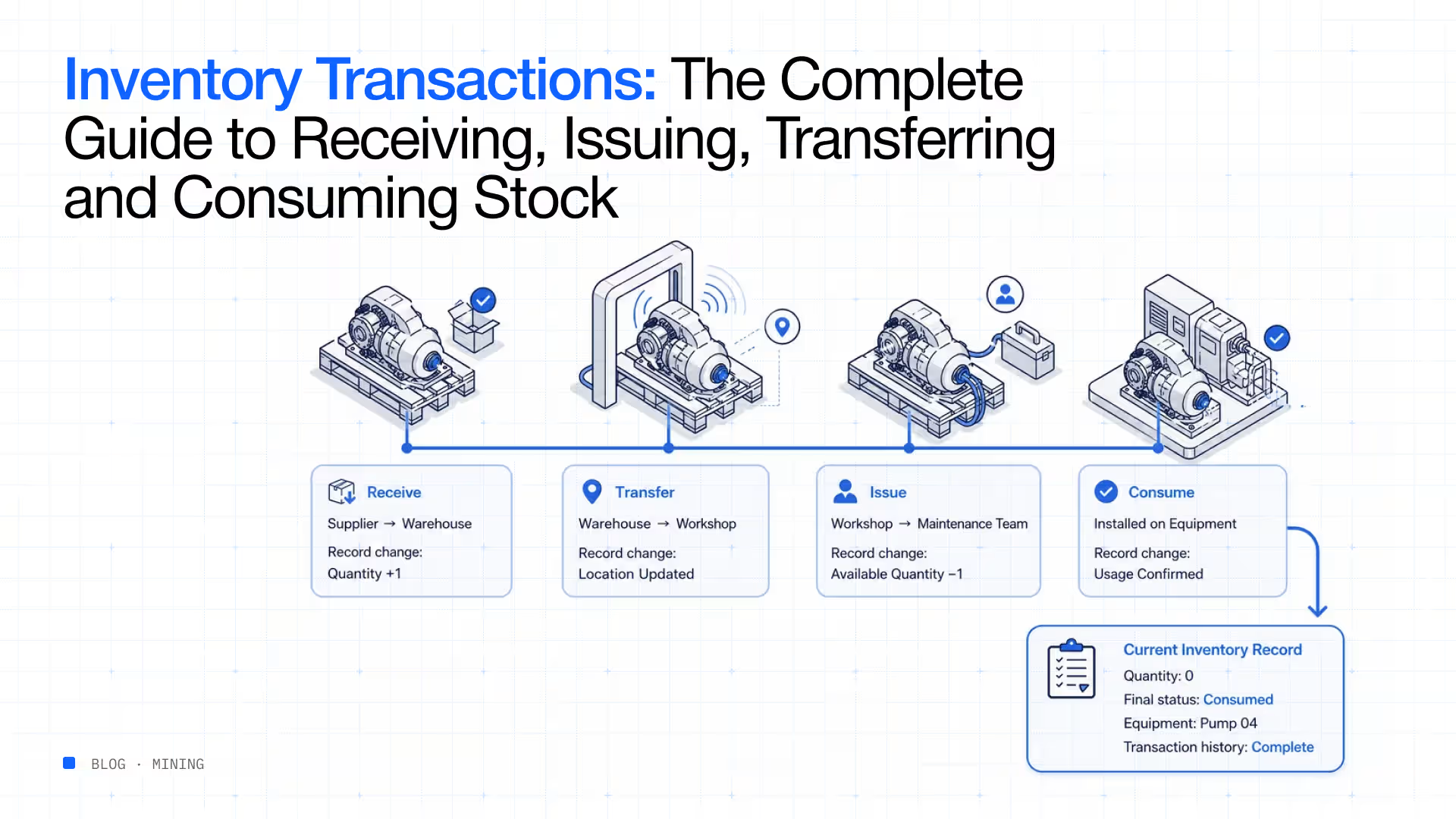
Although organisations may use different terminology, four core inventory transactions form the foundation of most inventory management processes:
Each transaction represents a different stage in the inventory lifecycle. Understanding how they work and how they affect inventory records is essential for maintaining accurate stock information.
Inventory receiving is the process of recording materials when they enter an organisation or inventory-controlled location. It establishes the initial inventory record and confirms that the expected materials have physically arrived.
Receiving typically involves verifying the item, quantity and relevant purchasing information before adding the stock to available inventory. Depending on the material, organisations may also capture serial numbers, batch numbers, supplier information, condition and storage requirements.
Accurate receiving is important because errors at this stage can continue throughout the entire inventory lifecycle. If the wrong quantity or item is recorded, subsequent inventory balances and transactions may be based on incorrect information.
A typical inventory receiving process involves several steps. The receiving team confirms the shipment against the purchase order or expected delivery, identifies the materials and verifies the quantity received.
The materials are then recorded in the inventory system and assigned to an appropriate storage location. Any required inspection, quality checks or documentation can also be completed before the stock becomes available for use.
The exact process depends on the organisation, but the objective remains the same: create an accurate record that connects the physical receipt with the digital inventory record.
Receiving errors can create inventory discrepancies before the material has even reached its storage location. For example, receiving 20 units into the system when only 15 physically arrived creates a false inventory balance that may remain undetected until someone attempts to locate the missing stock.
Incorrect item identification can create an even more serious issue. If a similar component is received against the wrong inventory record, the organisation may later believe it has a required part when the physical item is actually different.
A controlled receiving process therefore provides the first layer of inventory accuracy.
Inventory issuing is the process of removing stock from a controlled inventory location and allocating it to a maintenance activity, work order, department or operational requirement.
An issue transaction reduces the available quantity at the inventory location. It should also capture enough information to establish where the material is going and why it is being issued.
For example, a spare part issued to a maintenance team may be linked to a specific work order or equipment requirement. This creates greater visibility into how inventory is being used rather than simply reducing the warehouse balance.
Issuing inventory without recording the transaction creates a gap between physical stock and system records. The warehouse may physically have 49 units remaining after issuing one, while the inventory system continues to show 50.
Repeated discrepancies of this type can significantly affect inventory accuracy. They can also lead to incorrect replenishment decisions because the system does not reflect actual stock consumption or availability.
Controlled issuing ensures that inventory leaving a storage location is recorded at the point of movement. This creates greater accountability and helps maintain accurate inventory balances.
An inventory transfer occurs when stock moves from one inventory location to another without being consumed. The total quantity owned by the organisation may remain unchanged, but the location of that inventory changes.
Transfers can occur between warehouses, operational sites, maintenance stores, workshops or other controlled locations. In industrial environments, materials may also move between surface and underground operations.
A transfer transaction should update both sides of the movement. The source location should decrease by the transferred quantity while the destination location should increase by the same quantity.
Inventory transfers can become difficult when physical movement occurs faster than the corresponding digital transaction. A part may leave one location immediately but remain recorded there until someone updates the system later.
If the receiving location does not record the arrival, the organisation can end up with an inventory record that is inaccurate at both locations. The source may show stock that has already left, while the destination may not show stock that has physically arrived.
This is one of the reasons why real-time or near-real-time transaction capture is important for distributed inventory environments.
Inventory consumption occurs when a material is actually used for its intended operational purpose. This may involve installing a spare part on equipment, using a consumable during maintenance or otherwise removing the material from usable inventory.
Consumption is different from issuing. An item can be issued to a maintenance activity but not immediately consumed. It may remain with the maintenance team, be returned to inventory or be transferred to another location before final use.
Recording consumption accurately gives organisations a clearer understanding of actual material demand. This information can then support replenishment, forecasting and inventory optimisation.
The distinction between issue and consumption is particularly important for MRO and spare parts inventory. If every issued item is immediately treated as consumed, the organisation may lose visibility into materials that were issued but later returned or remained unused.
For example, a technician may request two spare parts for a maintenance task but install only one. If both are recorded as consumed, the system will understate available inventory by one unit.
Separating issue from consumption can therefore provide a more accurate picture of where inventory is in the operational lifecycle. It also supports better accountability for materials outside the warehouse.
Every transaction can change the inventory record. A receiving transaction increases stock, an issue reduces available stock, a transfer changes location and a consumption transaction reduces usable inventory.
When these transactions are captured correctly, the inventory system can maintain a continuous record of stock movement. When they are missed or entered incorrectly, the system gradually becomes disconnected from physical inventory.
This is why inventory accuracy is not simply a counting problem. It is also a transaction management problem.
Delayed transactions create temporary gaps between physical and digital inventory. The longer the delay continues, the more likely it becomes that other transactions will occur based on incorrect information.
For example, if a transfer is completed physically but not recorded for two days, another team may check the system and assume the inventory remains at the original location. They may then purchase another unit or initiate another transfer unnecessarily.
Capturing inventory transactions as close as possible to the physical event reduces this uncertainty. Explore Scatterlink’s RFID inventory management solution to improve inventory visibility and transaction control across distributed industrial operations.
Multi-site inventory environments make transaction accuracy even more important. A single item may move between a central warehouse, regional store, maintenance workshop and operational site before it is consumed.
Without consistent transaction processes, each movement can create a new opportunity for inventory information to become inaccurate. Different sites may also use different transaction rules, making it difficult to establish a consistent view of inventory across the network.
A connected inventory approach allows organisations to standardise these movements and maintain greater visibility across locations. Learn more about Scatterlink and how inventory intelligence can support connected inventory management.
Surface and underground operations can introduce additional challenges because inventory may move through environments with different connectivity, access and operating conditions. Materials can be transferred underground, issued to maintenance teams and consumed at equipment locations without passing through a conventional warehouse process.
Transaction systems therefore need to support the way inventory actually moves through the operation. Mobile and offline capabilities can help teams record transactions in environments where continuous connectivity is not guaranteed.
Capturing these movements helps maintain a more complete inventory record from receipt through final consumption.
Accurate inventory transactions depend on consistent processes that reflect how materials actually move through the operation. Organisations should define clear transaction rules for receiving, issuing, transferring, returning and consuming inventory, and ensure that these rules are followed across every relevant location.
The process should also make it easy for employees to record transactions at the point where the physical activity occurs. When recording a transaction is difficult, time-consuming or dependent on returning to a desktop system later, teams are more likely to delay or skip the transaction altogether.
Inventory transactions should be captured as close as possible to the physical movement. Receiving should be recorded when materials arrive, transfers when inventory changes location, issues when stock leaves controlled storage and consumption when the material is actually used.
This reduces the gap between the physical inventory position and the digital record. It also prevents employees from having to reconstruct a series of inventory movements later, which can introduce errors and missing information.
Every location should follow a consistent approach to inventory transactions wherever practical. If one warehouse records transfers immediately while another waits until the end of the day, inventory visibility across the organisation will become inconsistent.
Standardised processes also make training, auditing and performance measurement easier. Local operational requirements can still be accommodated, but the fundamental inventory transaction rules should remain consistent.
A transaction should capture enough information to explain what happened to the inventory. Depending on the transaction type, this may include the item, quantity, source location, destination location, user, date, time, work order and relevant operational reference.
Capturing too little information can make transactions difficult to investigate later. At the same time, overly complicated transaction screens can encourage users to bypass the process, so the information captured should be both useful and practical.
Inventory transaction errors can occur at almost any stage of the inventory lifecycle. Some are caused by incorrect data entry, while others result from physical movements that are never recorded in the system.
Common errors include:
Individually, these errors may appear minor. Across thousands of inventory transactions, however, they can create significant discrepancies between physical inventory and system records.
An unrecorded transaction means the inventory system does not know that a physical event has occurred. This can affect quantity, location, availability and demand information simultaneously.
For example, if a critical spare is physically issued but not recorded, the system may continue showing it as available. Another employee may then search for the part, fail to find it and initiate an unnecessary purchase.
Unrecorded transactions can therefore create a chain reaction. A single missing movement can contribute to inaccurate stock levels, longer search times, duplicate purchasing and unreliable replenishment decisions.
Transaction controls establish rules around who can perform specific inventory activities and what information must be recorded. These controls help prevent unauthorised or incomplete movements from entering the inventory system.
For example, an inventory transfer may require confirmation of both the source and destination locations. A consumption transaction may require a work order or operational reference. A receiving transaction may require quantity verification before stock becomes available.
These controls create greater accountability without requiring every inventory movement to be managed manually. Explore Scatterlink’s RFID inventory management solution to support controlled inventory transactions and greater visibility across the inventory lifecycle.
Mobile inventory applications allow employees to complete inventory transactions while working in warehouses, workshops and operational areas. This reduces dependence on fixed workstations and makes it easier to capture inventory activity where it physically occurs.
A mobile application can support receiving, issuing, transferring, counting and other inventory processes without requiring employees to return to a central office. This is particularly useful in large industrial environments where inventory may be spread across significant distances.
The benefit is not simply convenience. Faster transaction capture can reduce the time between physical movement and digital recording, improving the reliability of inventory information.
Industrial operations may include remote areas, underground locations and environments where network connectivity is inconsistent. Inventory transactions still need to be captured in these conditions, even when users cannot connect continuously to a central system.
An offline-capable inventory application allows users to record transactions without waiting for connectivity. The information can then synchronise when the connection becomes available, helping maintain continuity in the inventory record.
This is especially relevant for organisations managing inventory across surface and underground operations. The ability to capture transactions wherever inventory moves helps prevent operational activity from being excluded simply because connectivity is limited.
RFID can support inventory transactions by making the identification and movement of tagged inventory more efficient. Instead of relying entirely on manual item identification, RFID-enabled processes can help capture inventory as it passes through defined locations or transaction points.
For example, RFID can support receiving by identifying tagged items as they enter a controlled area. It can also contribute to transfer and movement visibility when inventory passes between designated locations.
RFID does not replace transaction governance. The technology is most effective when integrated into a defined inventory process that connects physical movement with the appropriate digital transaction.
ERP systems often serve as the central system of record for purchasing, financial and broader business processes. However, inventory activity can occur in operational environments where capturing detailed transactions directly in the ERP may be difficult.
A connected inventory management layer can help capture physical inventory activity closer to the point of work and synchronise relevant information with the ERP. This allows operational teams to work through processes designed for inventory activity while maintaining alignment with enterprise records.
The objective is not to create another disconnected inventory database. The goal is to connect physical inventory movements with the systems the organisation already relies on.
Organisations should monitor inventory transaction performance to identify where processes are working and where discrepancies are developing. Measuring transaction quality provides a more proactive approach than waiting for stock counts to reveal problems.
This measures whether recorded transactions accurately reflect the corresponding physical inventory movement. High transaction accuracy supports reliable inventory quantity and location information.
This measures the percentage of required inventory movements that are actually recorded. A low completion rate indicates that physical activity is occurring outside the controlled transaction process.
This measures the time between a physical inventory event and the corresponding digital transaction. Shorter transaction delays generally improve the reliability of inventory availability information.
This measures how frequently inventory records require manual corrections. A high adjustment rate can indicate underlying problems with receiving, issuing, transferring or consumption processes.
This measures whether inventory is physically located where the inventory system says it should be. It is particularly important for organisations managing inventory across multiple warehouses and operational sites.
This measures how accurately actual material consumption is captured. Reliable consumption data supports better demand forecasting and replenishment decisions.
Inventory forecasting depends on reliable information about historical demand. If materials are issued or consumed without accurate transactions, the organisation may not have a true picture of how much inventory is being used.
Accurate consumption transactions create a stronger demand history. This can help organisations identify frequently used parts, changing consumption patterns and locations where demand is increasing or decreasing.
Better demand information can then support replenishment decisions and reduce the risk of maintaining inventory levels based on outdated assumptions.
Replenishment decisions depend on knowing when inventory has actually been consumed. If the system does not reflect consumption accurately, replenishment triggers may occur too late or too early.
For example, if five units have been consumed but the system still shows them as available, the organisation may not reorder until the next physical count reveals the discrepancy. Conversely, incorrectly recording consumption can trigger unnecessary replenishment and create excess inventory.
Accurate transactions therefore provide the operational data required to maintain appropriate stock levels.
Inventory transactions create the history needed for material traceability. Each transaction provides information about what happened to a material and allows organisations to reconstruct its movement through the inventory lifecycle.
A receiving transaction establishes when inventory entered the organisation. A transfer records where it moved, an issue identifies when it left controlled storage and a consumption transaction establishes when it was ultimately used.
This connected history can help organisations investigate discrepancies, understand inventory movements and maintain stronger operational records. Learn more about Scatterlink to see how inventory visibility can connect transactions across the inventory lifecycle.
Improving transaction accuracy requires attention to both people and processes. Organisations should simplify transaction workflows, standardise procedures and provide employees with technology that makes accurate recording practical.
The process can be improved through several steps:
Document how inventory moves from receiving through storage, transfer, issue, return and consumption. Identify where transactions currently occur and where physical movements are not being captured.
Look for opportunities to reduce duplicate data entry and manual recording. Barcode, RFID and mobile technologies can help simplify identification and transaction capture.
Define clear rules for receiving, issuing, transferring and consuming stock. Employees should understand which transaction applies to each physical inventory event.
Encourage transaction recording at the point where the physical activity occurs. This reduces delays and prevents users from relying on memory later.
Where connectivity is inconsistent, provide an offline-capable method for recording inventory activity. This ensures that underground and remote operations can continue capturing transactions.
Track transaction accuracy, completion, timeliness, adjustments and location accuracy. Use the results to identify recurring problems rather than treating each discrepancy as an isolated event.
Ensure inventory transactions can flow into the broader enterprise systems that rely on accurate stock information. This reduces data fragmentation and creates greater consistency across business processes.
Inventory intelligence depends on reliable data. If receiving, transfers, issues and consumption are inaccurate, the information used to generate inventory insights will also be unreliable.
Accurate transactions provide the raw operational data needed to understand inventory movement, demand, location and utilisation. Once this information is connected, organisations can move beyond simply knowing how much stock they have to understanding how inventory behaves across the operation.
This creates a stronger foundation for forecasting, replenishment, purchasing, inventory optimisation and operational decision-making.
Inventory transactions may appear to be routine administrative activities, but they are fundamental to inventory accuracy and operational visibility. Every receipt, issue, transfer and consumption event changes the organisation’s understanding of what inventory is available and where it can be found.
When these transactions are delayed, incomplete or inaccurate, the consequences can extend well beyond the inventory team. Maintenance teams may struggle to find parts, procurement may purchase stock unnecessarily and management may make decisions based on unreliable inventory information.
The most effective approach is to make accurate transaction capture part of the operational workflow. With standardised processes, mobile capabilities, offline support, RFID where appropriate and connected ERP integration, industrial organisations can create a more reliable inventory record from receipt through consumption.
The four core inventory transactions are receiving, issuing, transferring and consuming inventory. Together, they represent the major stages through which stock moves from receipt to operational use.
Issuing means inventory has been released from controlled storage for a specific requirement, while consumption means the material has actually been used. Keeping these transactions separate can provide better visibility into materials that have been issued but not yet consumed.
Inventory transactions keep digital inventory records aligned with physical stock. Accurate transactions help organisations maintain visibility into quantity, location and availability while supporting purchasing, replenishment and inventory planning.
A missed transaction can cause the inventory system to show incorrect quantities, locations or availability. Repeated missed transactions can contribute to stock discrepancies, duplicate purchases and stockouts.
RFID can help identify tagged inventory and capture movements through defined locations more efficiently. When integrated with inventory management processes, it can improve visibility into inventory movements and reduce dependence on manual identification.
Mobile inventory management allows employees to record transactions where physical inventory activity occurs. This can reduce transaction delays and improve accuracy across warehouses, workshops and operational locations.
Yes. Offline-capable inventory applications can allow users to record inventory activity in environments with limited or unreliable connectivity. Transactions can then synchronise when connectivity becomes available.
Useful KPIs include inventory transaction accuracy, transaction completion rate, transaction timeliness, inventory adjustment rate, location accuracy and consumption recording accuracy.
Accurate consumption transactions create a reliable history of inventory demand. This information can help organisations understand usage patterns and make better replenishment and forecasting decisions.
%20(1).avif)
.avif)
%20(1).avif)