
Inventory shrinkage mining is one of the most overlooked contributors to rising operational costs and production delays across modern mine sites. Every missing spare part, unrecorded inventory issue, misplaced component, or inaccurate stock count creates a ripple effect that impacts maintenance schedules, procurement decisions, inventory accuracy, and ultimately production.
Unlike retail shrinkage, where losses are often associated with theft, inventory shrinkage mining is usually the result of multiple operational failures occurring simultaneously. Inventory may be issued without being recorded, transferred between locations without system updates, misplaced across stockyards and sea cans, or consumed during maintenance activities without proper documentation.
These inventory discrepancies quietly increase emergency purchases, inflate inventory carrying costs, reduce confidence in ERP records, and force maintenance teams to spend valuable time searching for critical materials instead of keeping equipment operational.
In this guide, we'll explore what inventory shrinkage means in mining, identify the biggest causes of inventory loss, calculate its true financial impact, and explain how real-time inventory visibility helps mining companies significantly reduce shrinkage across their operations.
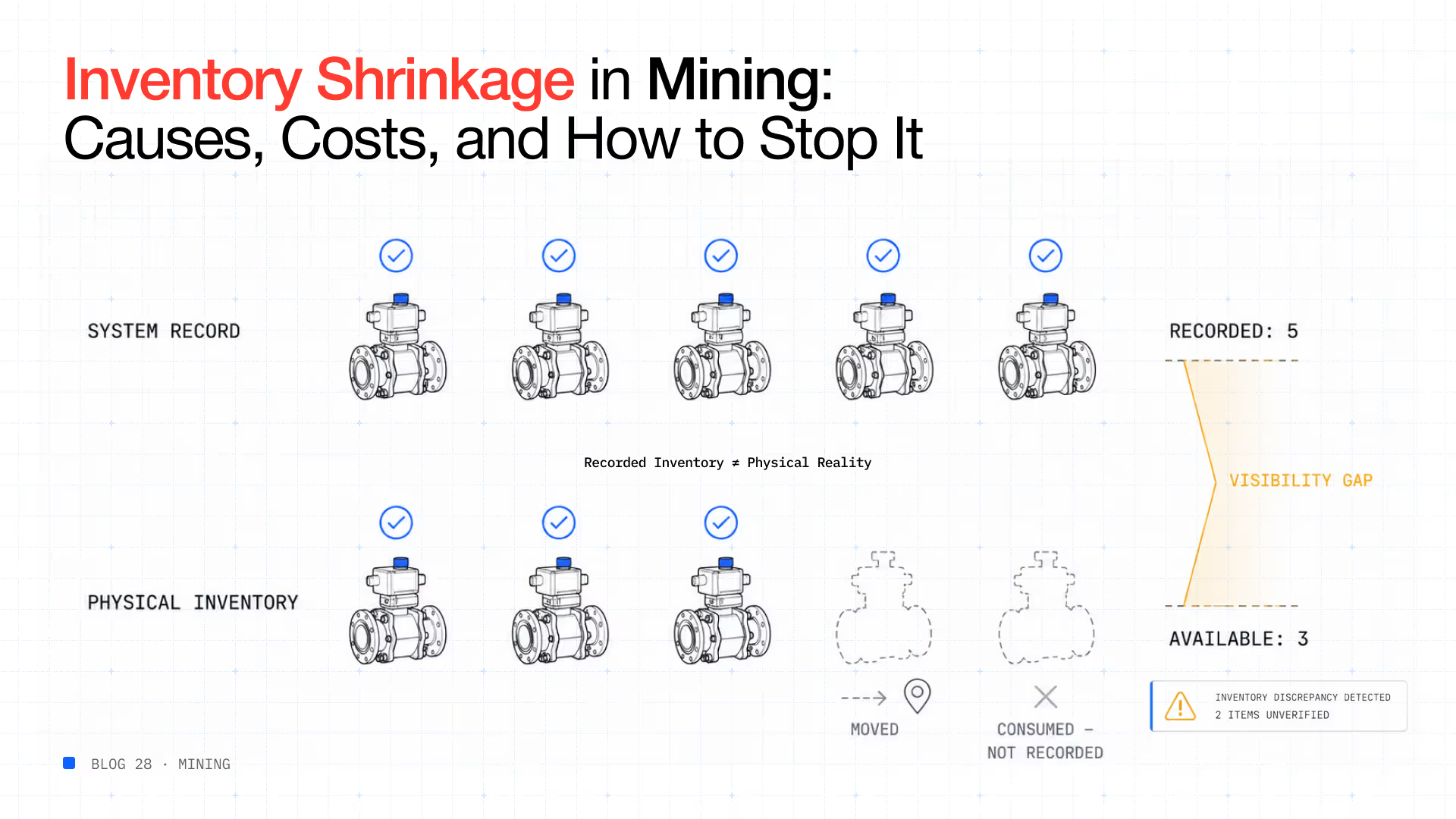
Inventory shrinkage mining refers to the difference between the inventory recorded in business systems and the inventory physically available across the operation. In simple terms, the system says inventory exists, but when someone needs it, it cannot be found, has already been consumed, or is no longer where it was expected to be.
Shrinkage is not always the result of theft. On mine sites, it is more commonly caused by operational processes that fail to capture inventory movement accurately. A spare part may be moved from the warehouse to a maintenance workshop without updating the system. Consumables may be issued during an emergency repair before inventory transactions are completed. Equipment stored in sea cans or laydown yards may be relocated months later without anyone recording the movement.
Over time, these small discrepancies accumulate across thousands of inventory items, creating significant gaps between physical inventory and digital records. As confidence in inventory data declines, maintenance teams begin manually verifying stock, procurement purchases duplicate inventory unnecessarily, and operations lose valuable time locating parts that should already be available.
Because mining operations often manage inventory across multiple warehouses, stockyards, underground facilities, and remote operational sites, even minor process failures can quickly develop into large-scale inventory shrinkage if left unresolved.
Inventory shrinkage includes any situation where inventory records no longer accurately reflect physical inventory.
Common examples include:
Not every discrepancy represents permanent inventory loss. However, until the inventory is located or corrected, it creates operational uncertainty that affects maintenance planning, purchasing decisions, and inventory accuracy.
Understanding what contributes to inventory shrinkage mining is the first step toward improving inventory control and reducing unnecessary operational costs.
Several operational factors contribute to inventory shrinkage mining, and in most organizations, shrinkage results from a combination of issues rather than a single cause.
One of the biggest contributors is unrecorded inventory consumption. During urgent maintenance activities, technicians often prioritize restoring production over completing inventory transactions. While this keeps equipment running, it creates discrepancies between physical inventory and system records.
Another common cause is inventory movement without visibility. Inventory frequently moves between warehouses, stockyards, maintenance facilities, sea cans, and underground storage areas. Without real-time tracking, these transfers may never be reflected accurately in inventory systems.
Poor inventory location management also contributes significantly. Inventory may technically exist but cannot be located because storage locations have changed, labels have deteriorated, or items have been relocated without documentation.
Cycle count inaccuracies create additional challenges. Manual counting processes often identify discrepancies weeks or months after they occur, making root cause analysis extremely difficult.
Other common contributors include:
Mining organizations that rely heavily on manual inventory management typically experience higher shrinkage rates because inventory visibility depends on consistent human intervention rather than automated inventory capture.
Inventory shrinkage doesn't happen overnight. It builds through thousands of small visibility gaps. Discover how Scatterlink helps mining organizations identify and eliminate inventory shrinkage with real-time inventory intelligence.
The financial impact of inventory shrinkage mining extends far beyond the value of the missing inventory itself. While organizations often focus on replacing lost or misplaced parts, the indirect costs are usually far greater and can significantly affect operational performance.
One of the largest hidden costs is production downtime. When a critical spare part cannot be located during a planned or unplanned maintenance activity, repairs are delayed until the part is found or a replacement is purchased. Even a few hours of equipment downtime can cost mining operations thousands of dollars in lost production.
Shrinkage also drives unnecessary procurement. When inventory records cannot be trusted, procurement teams often purchase replacement parts because the ERP indicates insufficient stock or because existing inventory cannot be located quickly. These duplicate purchases increase inventory investment while creating excess stock across multiple locations.
Working capital is another major concern. Organizations frequently compensate for poor inventory visibility by purchasing additional safety stock, increasing the amount of capital tied up in inventory that may never be used. Over time, this leads to higher inventory carrying costs, increased warehouse utilization, and more obsolete inventory.
Inventory shrinkage also creates operational inefficiencies that are difficult to quantify but highly significant. Maintenance personnel spend valuable time searching for inventory instead of repairing equipment. Warehouse teams perform repeated inventory verification. Finance teams question inventory valuations, while operations managers make planning decisions based on incomplete information.
For mining organizations, inventory shrinkage is not simply an inventory problem. It is a productivity problem, a financial problem, and a business continuity risk.
The most effective way to reduce inventory shrinkage mining is to eliminate the visibility gaps that allow discrepancies to occur in the first place. Real-time inventory tracking provides continuous insight into inventory movement, location, and availability, making it far easier to detect and prevent inventory loss before it affects operations.
Instead of relying on manual updates after inventory has already been moved or consumed, real-time tracking captures inventory transactions as they occur. Every receiving activity, transfer, issue, adjustment, and return is recorded immediately, creating an accurate and continuously updated inventory record.
Technologies such as RFID, barcode scanning, mobile inventory applications, GPS-enabled location tracking, and IoT devices further strengthen inventory control by reducing manual data entry and improving inventory traceability. Inventory can be located quickly across warehouses, stockyards, sea cans, laydown yards, maintenance workshops, and underground storage locations, significantly reducing the likelihood of inventory being misplaced.
Real-time visibility also enables proactive inventory management. Instead of discovering discrepancies during annual audits, organizations can identify unusual inventory movements, investigate inconsistencies, and resolve issues while they are still small. This improves inventory accuracy, strengthens accountability, and reduces the operational impact of shrinkage.
Scatterlink's Inventory Intelligence Platform is designed to help mining organizations reduce inventory shrinkage mining by providing complete visibility into inventory from receipt to consumption.
Rather than relying solely on manual inventory transactions, Scatterlink captures inventory movement using RFID technology, barcode scanning, IoT devices, GPS-enabled location tracking, and offline-first mobile applications. Every inventory movement becomes visible in real time, regardless of whether inventory is stored in warehouses, stockyards, sea cans, laydown yards, maintenance facilities, or underground operations.
This continuous visibility allows warehouse personnel, maintenance teams, procurement professionals, and operations managers to work from accurate inventory information. Inventory can be located within seconds, movement history can be reviewed instantly, and discrepancies can be investigated before they grow into larger operational issues.
The platform also integrates with existing ERP systems, ensuring that inventory records remain synchronized across operational and enterprise systems. Instead of replacing current infrastructure, Scatterlink strengthens inventory accuracy while providing the operational intelligence needed to improve inventory control and reduce shrinkage across the business.
By combining real-time inventory visibility with actionable insights, mining organizations can improve inventory accountability, reduce duplicate purchases, shorten maintenance delays, and maintain greater confidence in their inventory records.
Inventory shrinkage is often a visibility problem, not an inventory problem. Learn how Scatterlink helps mining organizations track every inventory movement in real time and reduce costly inventory discrepancies.
Inventory shrinkage mining is one of the most expensive operational issues affecting mining organizations because its impact extends well beyond missing inventory. Poor inventory visibility leads to duplicate purchases, inaccurate inventory records, delayed maintenance, unnecessary working capital, and production downtime that can significantly reduce operational efficiency.
Many of these issues develop gradually through manual inventory processes, delayed transaction updates, and disconnected inventory systems. Without real-time visibility, organizations often discover discrepancies long after they occur, making them difficult to investigate and even harder to prevent.
Modern inventory technologies such as RFID, barcode scanning, GPS-enabled location tracking, mobile inventory management, and Inventory Intelligence Platforms provide the visibility needed to capture inventory movement as it happens. This enables organizations to improve inventory accuracy, strengthen accountability, reduce shrinkage, and make faster operational decisions based on trusted inventory data.
For mining companies looking to improve inventory performance while reducing operational risk, reducing inventory shrinkage begins with gaining complete visibility into every inventory movement across the operation.
Ready to reduce inventory shrinkage across your mining operation? Discover how Scatterlink helps organizations achieve real-time inventory visibility, improve inventory accuracy, and strengthen inventory control from receipt to consumption.
Inventory shrinkage mining refers to the difference between recorded inventory and the physical inventory available across a mining operation. It may result from unrecorded consumption, misplaced inventory, inaccurate transfers, theft, or inventory counting errors.
Common causes include unrecorded inventory issues, inventory transfers without system updates, misplaced inventory, inaccurate cycle counts, duplicate records, damaged inventory, manual data entry errors, and unauthorized inventory access.
Inventory shrinkage leads to production delays, duplicate purchases, emergency procurement, reduced inventory accuracy, higher carrying costs, longer inventory search times, and lower confidence in inventory records.
Mining companies can reduce shrinkage by implementing real-time inventory tracking, RFID technology, barcode scanning, mobile inventory management, regular cycle counting, standardized inventory processes, and Inventory Intelligence Platforms that improve inventory visibility.
Real-time inventory visibility captures inventory movement as it happens, allowing organizations to detect discrepancies early, improve inventory accuracy, strengthen accountability, and prevent inventory loss before it affects operations.
%20(1).avif)
.avif)
%20(1).avif)