
Inventory shrinkage is often associated with retail theft, but for mining and industrial organizations, the reality is far more complex. Inventory rarely disappears because of a single incident. Instead, losses accumulate gradually through inaccurate inventory records, unrecorded movements, damaged materials, administrative errors, misplaced inventory, and poor inventory visibility. These seemingly small discrepancies eventually create significant financial losses while reducing confidence in inventory data across the organization.
For operations that depend on critical spare parts, maintenance consumables, tools, and operational equipment, inventory shrinkage affects much more than warehouse accuracy. Maintenance teams experience unexpected stock shortages, procurement raises unnecessary purchase orders, finance struggles to reconcile inventory valuations, and production schedules are disrupted because inventory believed to be available cannot actually be found.
Reducing inventory shrinkage is therefore not simply about preventing loss. It is about creating a reliable inventory environment where every movement is visible, every transaction is captured, and every department works from accurate inventory information.
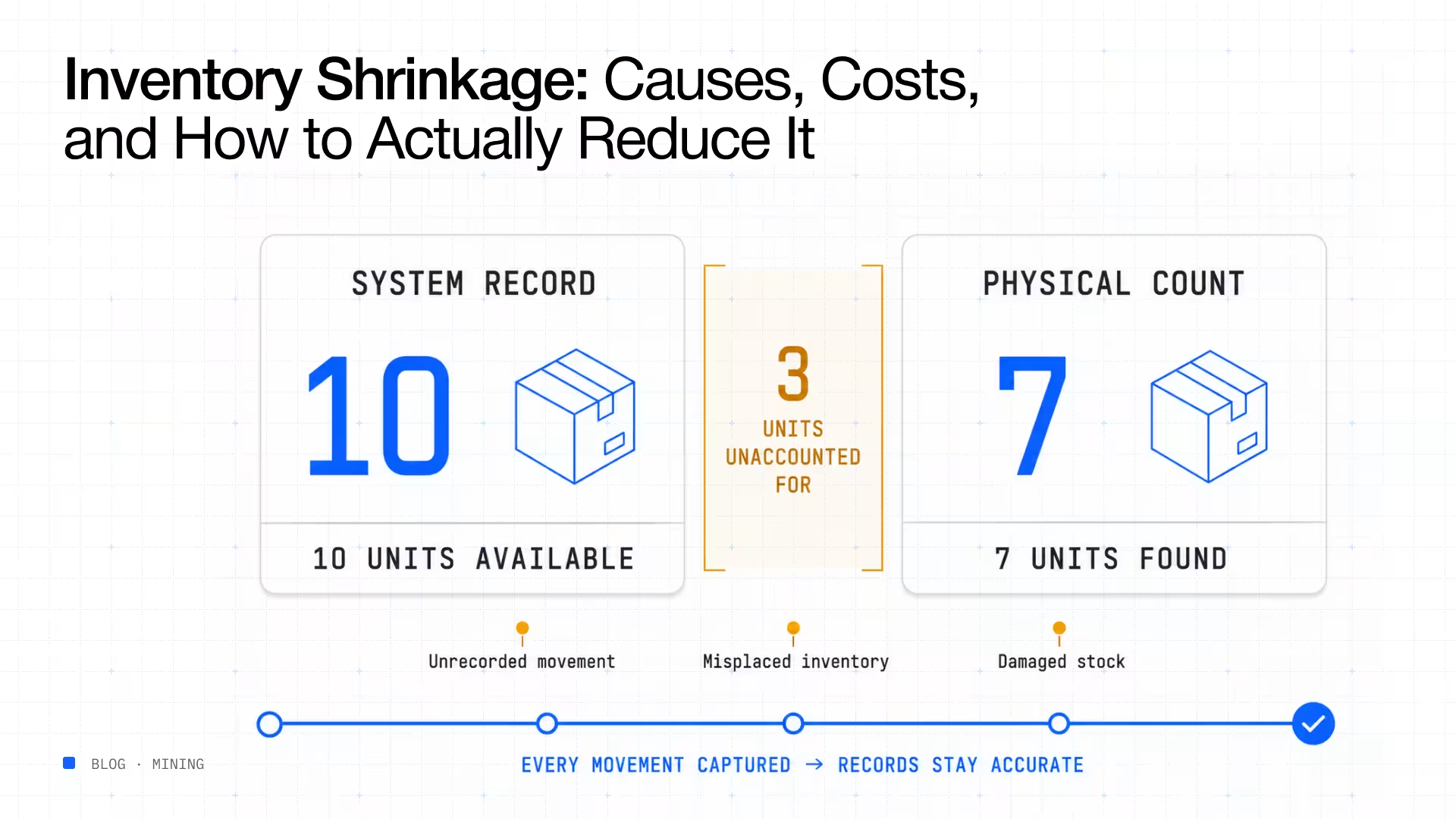
Inventory shrinkage is the difference between the inventory an organization believes it owns according to its records and the inventory that physically exists.
This difference can occur for many reasons. Inventory may be issued without being recorded, transferred to another location without updating the system, damaged during storage, misplaced inside temporary storage areas, or incorrectly counted during stocktakes. In some cases, inventory may genuinely be stolen. In many industrial operations, however, inventory shrinkage is more commonly caused by operational processes than deliberate theft.
For mining organizations managing inventory across warehouses, workshops, sea cans, contractor compounds, laydown yards, and underground operations, maintaining accurate inventory records becomes increasingly challenging as inventory moves between locations.
Every inventory movement that is not recorded immediately increases the likelihood of inventory shrinkage.
As these discrepancies accumulate over months or years, organizations gradually lose confidence in their inventory records. Warehouse personnel begin manually checking inventory before issuing stock. Procurement verifies availability through phone calls instead of relying on inventory systems. Maintenance teams keep unofficial inventory reserves because they no longer trust warehouse availability.
Inventory shrinkage therefore creates operational inefficiencies long before organizations recognize the financial loss.
Many organizations assume inventory shrinkage results primarily from theft. While unauthorized removal certainly contributes in some industries, industrial organizations usually experience shrinkage because inventory processes fail to keep pace with operational activity.
One of the most common causes is unrecorded inventory movement.
Inventory may be transferred between warehouses, workshops, shutdown areas, or maintenance crews without updating inventory records. Although the inventory still exists, it effectively disappears from the perspective of warehouse systems because its recorded location no longer matches reality.
Administrative errors are another major contributor.
Incorrect stock codes, duplicate inventory records, inaccurate quantity updates, and manual data entry mistakes gradually reduce inventory accuracy. Small discrepancies that seem insignificant individually can collectively create substantial inventory differences over time.
Damage and deterioration also contribute significantly to inventory shrinkage.
Industrial inventory is frequently exposed to harsh environmental conditions. Improper storage, corrosion, contamination, expired consumables, or handling damage may render inventory unusable while it continues appearing as available stock within inventory systems.
Other common causes include:
Regardless of the cause, the result remains the same: organizations make operational decisions using inventory information that no longer reflects reality.
The financial impact of inventory shrinkage extends far beyond the value of the inventory that cannot be found. While writing off missing stock is the most visible consequence, the larger costs are operational and continue affecting the business long after the inventory has disappeared.
One of the first areas impacted is procurement. When inventory records indicate that critical parts are unavailable, procurement teams often raise emergency purchase orders to prevent maintenance delays. In many cases, the required inventory still exists somewhere within the operation, but because its location is unknown, another purchase is made. This increases inventory investment while doing nothing to improve inventory availability.
Maintenance teams experience similar challenges.
Technicians frequently arrive to perform scheduled work only to discover that the required spare part cannot be located. Production schedules must be adjusted while warehouse personnel search multiple storage locations or procurement sources a replacement from external suppliers. A repair that should have taken an hour can quickly become an all-day disruption simply because inventory visibility is poor.
Finance also bears the burden.
Inventory shrinkage complicates stock valuation, increases audit preparation efforts, and creates discrepancies between financial records and physical inventory. Leadership loses confidence in inventory reports, making it more difficult to make informed purchasing and operational decisions.
Over time, inventory shrinkage creates a cycle where departments begin relying on manual verification rather than trusted inventory systems. This reduces productivity across the organization and increases the cost of managing inventory every single day.
Inventory shrinkage cannot be eliminated through annual stocktakes alone. By the time discrepancies are discovered during a physical count, the underlying issues have often existed for months. Reducing shrinkage requires continuous inventory control supported by accurate, real-time information.
The most effective strategies include:
Every receipt, issue, transfer, return, and adjustment should be recorded immediately. Delayed updates create gaps between physical inventory and inventory records that grow larger over time.
Inventory should remain visible whether it is stored in a warehouse, workshop, sea can, laydown yard, contractor facility, mobile maintenance unit, or underground operation. The more inventory locations an organization manages, the more important enterprise-wide visibility becomes.
Consistent receiving, issuing, transfer, and return procedures reduce administrative errors while ensuring inventory records remain accurate throughout the inventory lifecycle.
Duplicate inventory records, inconsistent descriptions, and poor inventory classifications make it difficult to accurately identify inventory. Clean inventory data improves both inventory accuracy and inventory search performance.
Instead of discovering inventory discrepancies during annual stocktakes, organizations should continuously monitor inventory movement using digital technologies that capture transactions as they occur.
These practices reduce inventory shrinkage while simultaneously improving inventory accuracy, maintenance planning, procurement efficiency, and operational confidence.
Inventory shrinkage often starts with invisible inventory movements. Discover how Scatterlink helps industrial organizations capture every transaction and maintain complete inventory visibility across every operational location.
Scatterlink's Inventory Intelligence Platform helps industrial organizations reduce inventory shrinkage by providing real-time visibility into inventory movement from receipt through consumption. Rather than relying on delayed manual updates, Scatterlink captures inventory activity as it happens, ensuring inventory records remain aligned with physical inventory.
Using RFID technology, barcode scanning, offline mobile inventory applications, IoT devices, GPS-enabled location tracking, and seamless ERP integration, Scatterlink enables organizations to monitor inventory across warehouses, workshops, laydown yards, sea cans, contractor facilities, and both surface and underground operations.
Because every inventory movement is digitally recorded, organizations gain immediate visibility into inventory transfers, issues, returns, and consumption. Warehouse teams spend less time searching for inventory, procurement avoids unnecessary purchases, maintenance gains faster access to critical spare parts, and finance benefits from improved inventory accuracy.
Instead of discovering shrinkage months later during stocktakes, organizations can identify discrepancies as they occur and take corrective action before they become significant financial losses.
Inventory shrinkage is rarely the result of one major event. More often, it develops through hundreds of small inventory inaccuracies that accumulate over time. Unrecorded inventory movements, administrative errors, misplaced materials, damaged stock, and inconsistent inventory processes gradually reduce inventory accuracy until organizations lose confidence in their inventory data.
For mining and industrial organizations, the cost of inventory shrinkage extends well beyond missing inventory. It increases duplicate purchasing, delays maintenance, complicates audits, inflates working capital, and reduces operational efficiency across the business.
By combining strong inventory governance with real-time inventory visibility, organizations can significantly reduce inventory shrinkage while improving inventory accuracy, strengthening procurement decisions, and ensuring critical inventory remains available when operations depend on it.
The goal is not simply to count inventory more often. It is to create an inventory environment where every movement is visible, every transaction is captured, and every inventory decision is based on trusted information.
Inventory shrinkage is the difference between recorded inventory and the actual physical inventory available. It typically results from unrecorded inventory movements, administrative errors, damaged stock, misplaced materials, or unauthorized removal.
Common causes include manual inventory transactions, inaccurate inventory records, inventory transfers that are not recorded, duplicate stock codes, damaged materials, poor inventory governance, and limited inventory visibility across multiple storage locations.
Organizations can reduce inventory shrinkage by capturing every inventory transaction in real time, improving inventory visibility across all locations, standardizing inventory processes, maintaining clean item master data, and using technologies such as RFID and mobile inventory management.
%20(1).avif)
.avif)
%20(1).avif)