
Inventory reconciliation is the process of comparing physical inventory with inventory records in an ERP, inventory management system or other business system to identify and resolve discrepancies. It helps organisations determine whether the quantity, location and status of inventory in their records accurately reflect what is physically available.
For industrial operations, inventory reconciliation is more than a periodic accounting exercise. When inventory moves through warehouses, workshops, yards, maintenance areas and operational sites, even small gaps between physical inventory and system records can affect purchasing, maintenance planning, working capital and operational continuity.
A reconciliation process can tell you that a discrepancy exists. The bigger question is why the discrepancy happened in the first place.
If inventory records repeatedly become inaccurate after reconciliation, the problem may not be the reconciliation process itself. It may be the way inventory transactions are captured throughout the inventory lifecycle.
Inventory reconciliation is the process of comparing physical inventory quantities and locations against the corresponding inventory records in a business system and correcting any discrepancies.
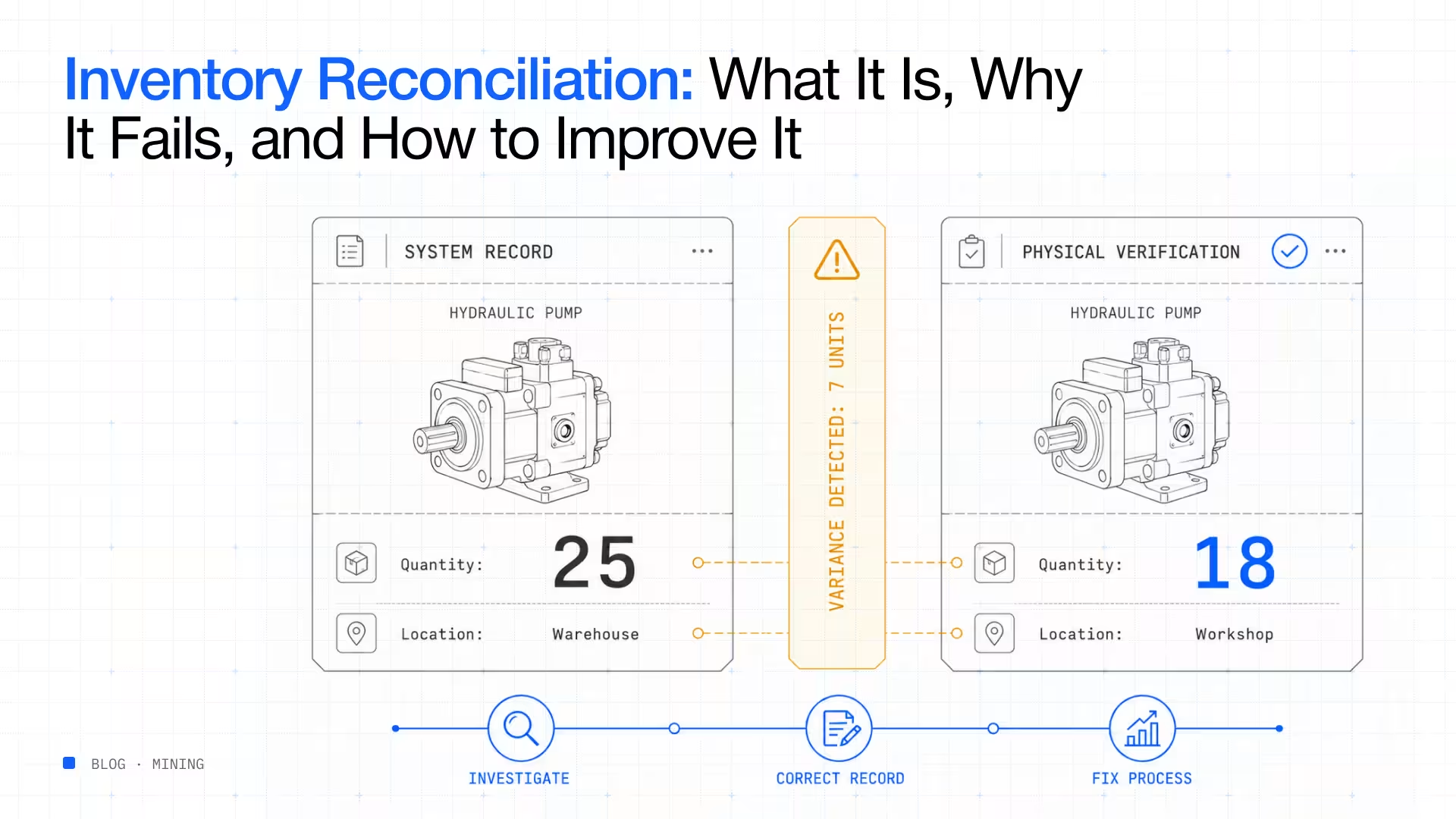
The process typically involves counting or verifying physical inventory, comparing those results with system records, identifying differences and investigating the reason for each variance.
For example, if an ERP shows 25 units of a critical spare part but a physical count finds only 18, the organisation has an inventory discrepancy of seven units. Reconciliation identifies the difference, while the investigation determines whether those seven units were issued but not recorded, transferred to another location, consumed, misplaced or incorrectly counted.
Effective inventory reconciliation therefore requires more than adjusting the system quantity to match the physical count.
The goal is to understand what changed, where it changed and why the inventory record did not reflect that change.
An effective inventory reconciliation process generally follows five stages.
The organisation first identifies the inventory record against which the physical inventory will be compared.
This may include:
The quality of this baseline directly affects the quality of the reconciliation.
The next step is to physically count or verify the inventory.
Depending on the operation, this may involve a full physical inventory count, cycle counting, barcode scanning, RFID identification or a combination of methods.
The objective is to establish what is actually present at the location.
The physical count is compared with the corresponding inventory record.
This can reveal discrepancies such as:
This is where inventory reconciliation becomes more valuable than simply adjusting a quantity.
An inventory variance should trigger an investigation into the underlying transaction history.
Was the inventory issued without a transaction?
Was it transferred to another location?
Was it consumed but never recorded?
Was the original receipt entered incorrectly?
Was the item physically moved but never updated in the system?
Without answering these questions, the same discrepancy can occur again during the next inventory count.
5. Correct the Inventory Record and Process
Once the cause is identified, the organisation can correct the inventory record and address the process responsible for the discrepancy.
This distinction matters.
Inventory adjustment fixes the record. Inventory reconciliation identifies why the record became inaccurate.
Inventory records differ from physical inventory when system transactions do not accurately reflect what has happened to inventory in the physical environment.
This can occur for several reasons, particularly in industrial operations where inventory moves frequently between locations.
One of the most common causes of inventory discrepancies is delayed transaction entry.
A spare part may be physically issued to a maintenance team at 10:00 AM, while the inventory transaction is entered into the system hours later.
During that period, the ERP may show the part as available even though it has already left the warehouse.
When multiple transactions are delayed, inventory accuracy can deteriorate quickly.
Inventory often moves beyond the central warehouse.
It may be transferred to:
If these movements are not captured consistently, the organisation may know that it owns the inventory but not where that inventory actually is.
This creates an inventory visibility problem as well as a reconciliation problem.
Manual inventory transactions create opportunities for incorrect quantities, item numbers, locations and units of measure to be entered.
A single incorrect transaction may appear insignificant.
Repeated across hundreds or thousands of inventory movements, these errors can create substantial discrepancies.
In maintenance and industrial environments, inventory may be consumed directly at the point of work.
If the consumption transaction is not recorded at that moment, the system can continue showing the material as available.
This creates a particularly important gap between inventory on record and inventory actually available for use.
Inventory can exist physically but still appear to be missing because the system associates it with a different location.
For example, a component may be recorded in a warehouse while physically sitting in a workshop or sea can.
The inventory has not necessarily disappeared.
It has become difficult to find.
Industrial inventory environments are particularly vulnerable to inventory discrepancies because inventory rarely remains stationary.
Materials are received, stored, transferred, issued, returned, consumed and sometimes moved between multiple operational locations before their lifecycle is complete.
The more physical movements occur outside the system's immediate visibility, the greater the risk of inventory records becoming inaccurate.
Managing inventory across multiple warehouses, yards, workshops and operational areas makes reconciliation more complex.
A central ERP may contain the inventory record, but the physical inventory can be distributed across locations that do not have consistent transaction processes.
Remote sites create another challenge.
When network connectivity is unreliable, employees may delay transactions or use manual workarounds.
By the time information reaches the central inventory system, the physical situation may already have changed.
Critical spare parts require particular attention.
A discrepancy involving an inexpensive consumable may have limited operational impact.
A discrepancy involving a critical component needed to restore production can create significant downtime risk.
Inventory reconciliation also depends on accurate master data.
Duplicate item numbers, inconsistent descriptions, incorrect units of measure and poorly maintained location data make it harder to identify what physical inventory actually corresponds to which system record.
This is why improving inventory accuracy requires attention to both inventory transactions and inventory data quality.
Inventory reconciliation is important because it helps organisations maintain accurate inventory records, identify discrepancies and make better purchasing, maintenance and operational decisions.
When system records are unreliable, organisations may make decisions based on inventory that is not actually available.
They may reorder parts they already own, delay maintenance because a system shows a part as unavailable, carry excess stock because existing inventory cannot be located or discover a critical shortage only when the material is urgently required.
Accurate inventory records improve confidence across procurement, finance, warehouse management and operations.
But reconciliation should not become a substitute for continuous inventory control.
Scatterlink helps organisations move beyond periodic inventory reconciliation by capturing inventory movements closer to the point where they occur. With mobile inventory applications, barcode and RFID capabilities, offline functionality and ERP integration, teams can maintain greater visibility into inventory from receipt through consumption.
Improving inventory reconciliation starts with addressing the reasons inventory records become inaccurate between physical counts. If transactions are captured late, movements are missed or inventory is recorded against the wrong location, the same discrepancies will continue to appear.
The focus should therefore shift from correcting inventory after the fact to improving the accuracy of inventory transactions throughout the inventory lifecycle. When receipts, transfers, issues, returns and consumption are captured consistently, reconciliation becomes a way to verify inventory accuracy rather than repair recurring data problems.
This requires a combination of clear processes, accurate inventory data and technology that makes it easier to capture transactions at the point where inventory activity occurs.
Periodic inventory counts provide a snapshot of inventory accuracy at a particular point in time. They do not necessarily explain what happened between one count and the next.
Continuous inventory tracking provides greater visibility into inventory movements as they occur. When inventory is received, transferred, issued or consumed, the corresponding transaction can update the inventory record rather than waiting for a later reconciliation exercise.
This creates a more reliable inventory history and makes it easier to investigate discrepancies when they do occur.
The longer the gap between a physical inventory movement and its system transaction, the greater the opportunity for inventory records to become inaccurate.
For example, if a maintenance technician takes a spare part from a storage location but the transaction is entered later, the system may temporarily show inventory that is no longer physically available.
Mobile inventory applications can help capture these transactions closer to where the activity occurs. Instead of relying on users to remember and update records later, the inventory transaction can become part of the workflow at the point of issue, movement or consumption.
Inventory reconciliation becomes more difficult when different locations use different processes to record inventory movements.
One warehouse may record transfers immediately, while another may use a spreadsheet and update the ERP at the end of the day. A remote site may rely on paper records when connectivity is unavailable.
Standardising the underlying process helps ensure that inventory movements are captured consistently across warehouses, workshops, yards and operational sites. The technology can then support that process rather than forcing each location to develop its own workaround.
A full physical inventory count may only happen periodically. Cycle counting provides a way to verify selected inventory more frequently.
Instead of waiting for an annual or scheduled count to reveal a large discrepancy, organisations can prioritise critical, high-value or frequently used inventory for more regular verification.
Cycle counting can also help identify locations or inventory categories where discrepancies occur repeatedly. This creates an opportunity to investigate the underlying process rather than simply adjusting the quantity each time.
Not all inventory carries the same operational risk.
A discrepancy involving a low-value consumable may have limited consequences. A discrepancy involving a critical spare part needed to restore production can have a much greater impact.
Inventory reconciliation processes should therefore consider factors such as criticality, value, usage frequency and operational consequence. Critical inventory can receive greater attention where an inaccurate record could contribute to maintenance delays, production interruptions or unnecessary emergency procurement.
Inventory reconciliation should verify more than quantity.
An item can exist physically but still be considered inaccurate if its recorded location does not match where it is actually stored. This creates a situation where the inventory technically exists but cannot be found when required.
Accurate location tracking helps organisations understand not only how much inventory they have, but where it is held.
For operations with multiple warehouses, workshops, yards, surface facilities and underground locations, this becomes an important part of overall inventory visibility.
Scatterlink provides connected inventory visibility across locations, helping teams track inventory movements and maintain more accurate records from receipt through consumption. Explore Scatterlink's inventory intelligence platform to see how inventory visibility can extend beyond the warehouse.
RFID can help organisations identify and track inventory with less dependence on manual data entry. When tagged inventory is captured through an RFID-enabled workflow, the resulting information can contribute to a more accurate record of inventory location and movement.
This can be particularly useful in environments where inventory moves frequently or where manually identifying individual items is time-consuming.
However, RFID alone does not solve inventory reconciliation. Its value comes from connecting identification and movement data to the broader inventory management process so that the information can be used to maintain and verify inventory records.
Barcode scanning can also reduce manual entry by allowing users to identify inventory through a scan rather than manually entering item information.
This can reduce errors associated with typing item numbers, quantities or other inventory information. When scanning is incorporated into receiving, issuing, transferring and counting workflows, it can create a more consistent method of capturing inventory transactions.
The right approach depends on the inventory environment, item characteristics and operational requirements. In some environments, barcode and RFID technologies may also be used together.
Remote and underground operations may not always have reliable network connectivity. If users cannot update the inventory system when a transaction occurs, they may resort to paper notes, spreadsheets or delayed data entry.
Offline-capable inventory applications can help address this problem by allowing relevant inventory activity to be captured without continuous connectivity and synchronised when a connection becomes available.
This can reduce the gap between physical inventory activity and system records, particularly in locations where connectivity cannot be assumed.
ERP systems often contain the organisation's central inventory records, but the ERP cannot maintain an accurate inventory position if the transactions reaching it are incomplete or delayed.
Integration between inventory capture tools and the ERP can help connect operational inventory activity with the central system of record.
This allows inventory transactions captured in the field, warehouse or other operational locations to flow into the broader inventory process rather than remaining isolated in local records.
The objective is not to replace the ERP. It is to improve the quality and timeliness of the inventory information feeding into it.
Correcting a discrepancy is only one part of reconciliation. Organisations should also determine whether the same type of discrepancy is occurring repeatedly.
For example, if a particular location regularly shows shortages after inventory issues, the underlying issue may be delayed transaction capture. If discrepancies repeatedly occur after transfers, the transfer process may require closer review.
Tracking discrepancy patterns can therefore help organisations move from reactive inventory adjustment towards preventative inventory control.
A strong inventory reconciliation process should combine physical verification with reliable transaction management.
Key practices include:
The objective is not simply to achieve a matching number during the next stock count. It is to create an inventory process that makes accurate records easier to maintain continuously.
Inventory adjustment and inventory reconciliation are often treated as the same activity, but they serve different purposes.
An inventory adjustment changes the recorded quantity or other inventory information to reflect the verified physical position.
Inventory reconciliation goes further by comparing the records, identifying the discrepancy and investigating why the difference occurred.
For example, if a system shows 50 units and a physical count finds 45, adjusting the system to 45 corrects the immediate record. Reconciliation asks what happened to the missing five units.
That distinction is important because repeated adjustments without investigation can hide an underlying inventory control problem.
Measuring reconciliation performance can help organisations understand whether inventory accuracy is improving.
Useful metrics may include:
These metrics can reveal whether the organisation is simply correcting discrepancies or actually reducing the number of discrepancies occurring in the first place.
Technology can improve reconciliation when it is used to strengthen the inventory process rather than simply automate the final comparison.
Mobile applications can capture transactions where inventory activity occurs. Barcode and RFID technologies can improve identification. Offline capabilities can support remote operations. Integration can connect operational inventory activity with the ERP.
Together, these capabilities can create a more continuous flow of inventory information.
That changes the role of reconciliation. Instead of discovering large gaps after inventory has moved through several locations and processes, organisations can identify and investigate discrepancies closer to when they occur.
Scatterlink helps connect inventory transactions, locations and physical inventory activity so organisations can build greater confidence in their inventory records. Learn more about Scatterlink and how it supports inventory visibility from receipt through consumption.
Inventory reconciliation remains an important part of inventory control, but it should not be the only mechanism used to maintain inventory accuracy.
If discrepancies continue to appear after every count, the solution may not be another physical inventory exercise. The underlying inventory processes may need to change.
Capturing transactions closer to the point of activity, improving location visibility, standardising inventory movements and connecting operational data with the ERP can help reduce the causes of recurring discrepancies.
The goal is simple: make the inventory record reflect reality as closely as possible, throughout the inventory lifecycle, not only when reconciliation takes place.
If inaccurate inventory records are making reconciliation a recurring problem, visit Scatterlink to see how connected inventory intelligence can help improve visibility and inventory control.
Inventory reconciliation is the process of comparing physical inventory with system records, identifying discrepancies and investigating the reasons behind those differences.
The frequency depends on the organisation, inventory criticality, transaction volume and operational requirements. High-value or critical inventory may benefit from more frequent verification through cycle counting.
Common causes include delayed transactions, unrecorded movements, manual data entry errors, incorrect inventory locations, unrecorded consumption and poor inventory master data.
An adjustment changes the inventory record to match the verified physical quantity. Reconciliation investigates why the discrepancy occurred and helps identify the process that caused it.
RFID can help automate inventory identification and capture movement or location information, reducing reliance on manual data entry when incorporated into an appropriate inventory workflow.
Parts of the reconciliation process can be supported by digital inventory systems, including inventory counting, scanning, discrepancy identification, transaction history and reporting. However, investigating the root cause of a discrepancy may still require operational review.
Continuous inventory tracking provides a record of inventory movements between physical counts. This gives teams more information to investigate discrepancies and can help prevent recurring inventory inaccuracies.
Yes. Inventory systems with mobile and offline capabilities can support inventory capture in remote or underground locations where reliable connectivity is not always available.
ERP integration can connect operational inventory transactions with the central inventory record, helping reduce delays and duplicate data entry while improving the flow of inventory information.
The most effective approach is to identify and address the underlying cause of discrepancies, whether that involves delayed transactions, poor location control, manual data entry, inconsistent processes or inadequate inventory visibility.
%20(1).avif)
.avif)
%20(1).avif)