
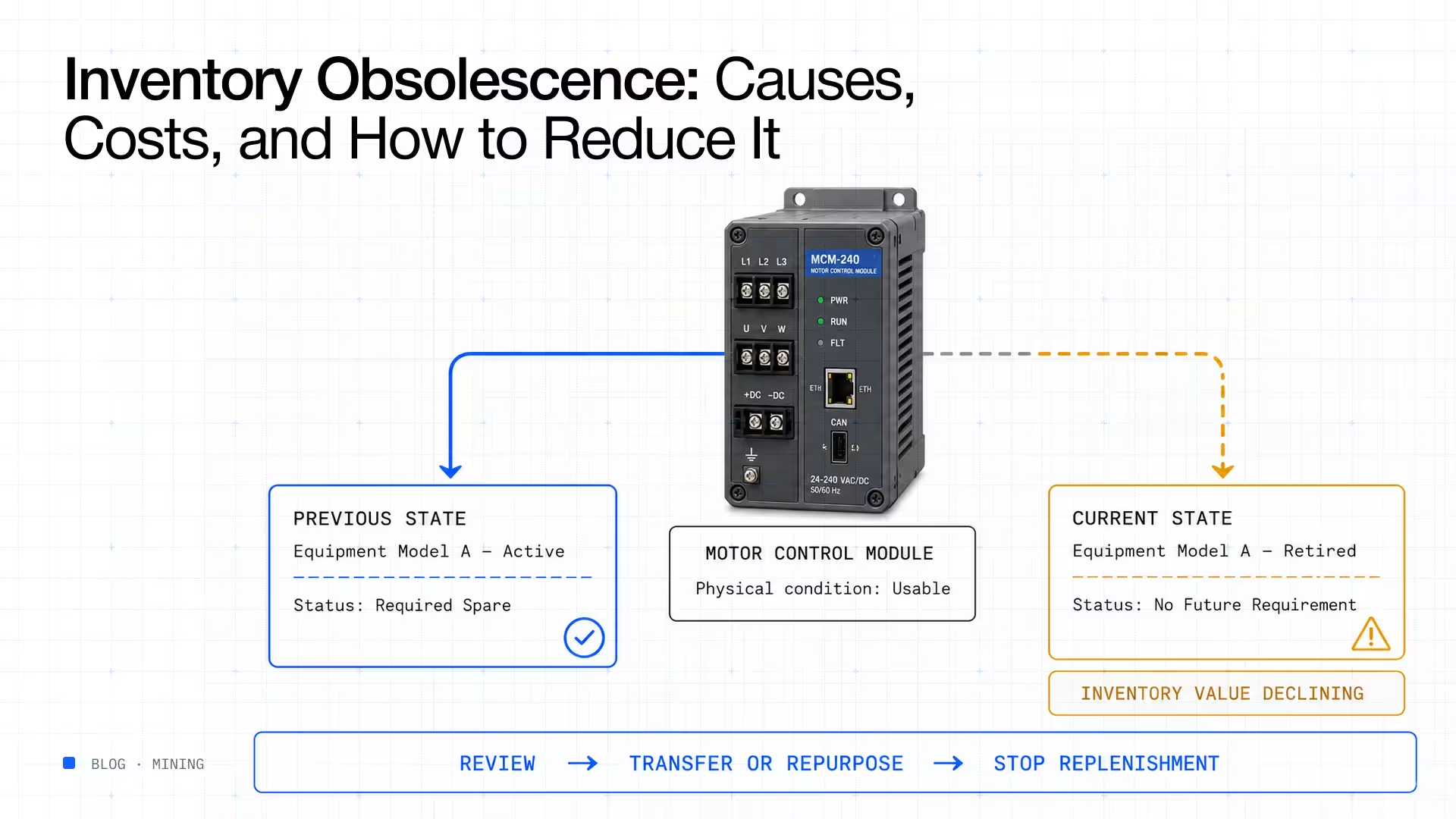
Inventory does not always lose value because it is damaged or defective. A spare part can remain physically usable and still become obsolete because the equipment it supports has been replaced, a component specification has changed or the organisation no longer has a requirement for it. In industrial operations, this can leave warehouses holding large quantities of inventory that has little or no future operational value.
Inventory obsolescence is particularly challenging for organisations managing MRO inventory, spare parts and specialised components. These items may have long procurement lead times, high unit values and low consumption rates, making it difficult to determine whether they should be retained or removed. Without accurate visibility into inventory movement, demand and equipment requirements, obsolete stock can remain hidden for years while continuing to tie up capital and storage capacity.
Inventory obsolescence occurs when inventory loses its practical or economic value because it is no longer required, usable or expected to be consumed. The inventory may still physically exist and may even be in perfect condition, but changes in operational requirements can make it unnecessary. In an industrial environment, this can happen when equipment is retired, upgraded, replaced or supported by a different component.
Obsolete inventory is different from damaged inventory. A damaged part may be unusable because of its physical condition, while an obsolete part may be perfectly functional but no longer relevant to the operation. This distinction matters because the strategies for preventing and managing each type of inventory loss are different.
There is rarely a single reason why inventory becomes obsolete. Obsolescence can develop gradually as equipment changes, demand declines, product specifications are updated or purchasing decisions accumulate excess stock. By the time an item is formally classified as obsolete, the organisation may have already carried the inventory for several years.
For industrial operations, common causes include equipment retirement, engineering changes, discontinued components, inaccurate demand forecasts, excessive purchasing and fragmented inventory management. Identifying these causes is important because reducing inventory obsolescence requires organisations to address the decisions and processes that create obsolete stock in the first place.
Equipment lifecycle changes are one of the most common causes of spare parts obsolescence. When a machine or system is replaced, the components previously required to maintain it may no longer have a practical use. If the organisation continues holding those parts without reviewing future requirements, they can gradually become obsolete inventory.
This problem can become more complex when different sites operate different generations of equipment. A spare part may become obsolete at one location while remaining essential at another site. Without visibility across the inventory network and equipment requirements, organisations may dispose of stock that could still be useful elsewhere or continue purchasing parts that are no longer required.
Engineering modifications can also create obsolete inventory. A component may be replaced by a newer specification, redesigned part or approved alternative, leaving existing stock without a clear future application. This is particularly relevant for specialised industrial components where a small design change can make an existing part unsuitable for future maintenance.
The inventory does not necessarily become physically unusable immediately. However, if the new specification becomes the standard for future maintenance, demand for the previous component can disappear. Inventory teams therefore need visibility into engineering and maintenance changes to identify potential obsolescence before large quantities accumulate.
Inventory obsolescence can begin with a purchasing decision that exceeds actual demand. An organisation may purchase large quantities to secure supplier discounts, protect against potential shortages or meet an expected future requirement. If the anticipated demand does not materialise, the remaining stock can sit unused for an extended period.
This risk increases when purchasing decisions are made independently across multiple locations. Several sites may order the same component without visibility into existing inventory elsewhere, creating more stock than the organisation can realistically consume. Better multi-location inventory visibility can help procurement teams understand existing stock before committing to additional purchases.
Demand forecasting plays an important role in inventory planning, but industrial spare parts can be difficult to forecast because consumption is often irregular. Some components may be used frequently, while others are only required when a specific equipment failure occurs. Forecasts based solely on historical consumption can therefore produce misleading inventory requirements.
A change in production levels, maintenance strategy or equipment utilisation can also alter future demand. If inventory parameters are not updated when those conditions change, organisations may continue replenishing parts at levels that are no longer justified. Over time, this can convert excess inventory into slow-moving and eventually obsolete inventory.
Suppliers can discontinue components, change product ranges or stop supporting older equipment. When this happens, organisations may need to purchase replacement components or identify approved alternatives. Existing inventory can become difficult to use if the associated equipment has also moved to a new specification.
Discontinued inventory requires careful management because the organisation may need to retain a final quantity as protection against future failures. Buying additional stock may be impossible once the supplier has stopped manufacturing the component, while disposing of the remaining inventory too quickly could create a future maintenance risk.
The financial impact of obsolete inventory extends beyond the value of the stock itself. Organisations may need to write down or write off inventory, while also continuing to incur storage, handling, counting and administration costs. Capital that could have been used elsewhere remains tied up in inventory that no longer contributes to operational performance.
There is also an opportunity cost associated with obsolete stock. Warehouse space occupied by unusable inventory cannot be used for parts that are actually required, and procurement teams may continue purchasing new inventory because existing stock is not visible or correctly classified. This can create a cycle where organisations simultaneously hold obsolete inventory and continue accumulating new stock.
Inventory obsolescence can result in:
The longer obsolete inventory remains unidentified, the harder it can become to recover any value from it. Early identification therefore plays an important role in reducing the total cost of inventory obsolescence.
Identifying obsolete inventory requires organisations to look beyond current stock quantities. Inventory teams should review movement history, last consumption dates, demand patterns and future operational requirements to determine whether an item still has a legitimate purpose. This analysis becomes particularly important for high-value and specialised spare parts that may have very low consumption.
A useful starting point is to identify items with no movement over a defined period and then investigate the reason for inactivity. Teams should check whether the associated equipment is still operating, whether maintenance is planned, whether another location uses the same part and whether an approved alternative has replaced the item. This prevents organisations from automatically classifying every inactive item as obsolete.
Inventory visibility gives organisations the information required to understand what inventory they hold and whether it is being used effectively. When teams can see inventory across warehouses, workshops, surface and underground locations, they can identify stock that is inactive at one location but still required elsewhere. This can create opportunities to transfer or consume inventory before it becomes obsolete.
Real-time transaction visibility is equally important because inventory status can change through receiving, issuing, transferring and consumption. Scatterlink provides inventory visibility from receipt through to consumption, helping industrial operations improve control over inventory movements across complex environments. Explore Scatterlink's RFID inventory management solution.
Reducing obsolete inventory is more effective when organisations prevent unnecessary accumulation rather than only disposing of stock after it becomes obsolete. Purchasing decisions should consider existing inventory, future demand, equipment lifecycle information and the potential for inventory to be shared across locations. This helps organisations avoid purchasing quantities that are unlikely to be consumed.
Inventory teams should also regularly review slow-moving and inactive items before they reach the point of obsolescence. Early intervention creates more options, including transferring stock, adjusting replenishment levels, returning inventory to suppliers or using existing parts in planned maintenance. Learn more about Scatterlink and how better inventory visibility can support proactive inventory control.
Inventory obsolescence becomes harder to control when each operational location manages its own stock independently. A component that appears obsolete at one site may still be required at another location, while the same item may be purchased again because procurement teams cannot see existing stock across the network. Without a consolidated inventory view, organisations can make conflicting decisions about the same part.
A multi-location inventory strategy helps teams compare stock levels, consumption and requirements across the wider organisation. This makes it easier to identify where inventory can be transferred, where replenishment should be reduced and where inactive stock genuinely has no remaining operational purpose. It also helps organisations make better use of inventory before it reaches the point where disposal becomes the only practical option.
Reducing inventory obsolescence requires a shift from reactive disposal to proactive inventory management. Organisations need to identify the conditions that cause inventory to become inactive and intervene before stock loses its operational value. This means connecting purchasing, inventory, maintenance and equipment lifecycle decisions rather than managing each activity independently.
A practical strategy should focus on controlling new inventory accumulation while continuously reviewing existing stock. The objective is not simply to reduce inventory quantities, but to maintain the inventory required to support operations while limiting the amount of capital tied up in parts with declining or uncertain demand.
Slow-moving inventory can be an early warning sign of potential obsolescence. An item that once had regular demand may begin moving less frequently because equipment requirements have changed, maintenance schedules have been reduced or an alternative component has been introduced. Regular reviews allow teams to investigate these changes before the inventory becomes completely inactive.
The review should consider consumption history, current stock levels, equipment requirements and future demand. Critical spare parts should receive particular attention because low consumption does not necessarily mean the item should be removed. A component may move only once every few years while still being essential to maintaining production-critical equipment.
Inventory requirements often change when equipment is installed, modified, upgraded or retired. If inventory planning does not account for these lifecycle changes, organisations can continue holding or purchasing spare parts for equipment that is no longer operating. Linking inventory requirements to equipment lifecycle information can help teams identify potential obsolescence earlier.
This is particularly important in mining and other asset-intensive environments where equipment can operate across long lifecycles and different sites may use different configurations. When a piece of equipment is approaching retirement, inventory teams can review associated spare parts and adjust procurement before additional stock is accumulated.
Demand planning for spare parts needs to account for more than historical consumption. Maintenance schedules, equipment reliability, operating conditions, planned shutdowns and known engineering changes can all influence future requirements. Using these factors alongside historical data can provide a more realistic view of expected demand.
Forecasting will never eliminate uncertainty from spare parts management, particularly for components driven by unexpected failures. However, better demand information can reduce unnecessary purchasing and help teams distinguish between inventory that should be protected and inventory that no longer needs replenishment.
Poorly configured minimum and maximum inventory levels can contribute directly to excess stock and eventual obsolescence. If the maximum level is significantly higher than realistic demand, each replenishment cycle can increase the quantity of inventory sitting unused. Over time, this can create a growing pool of slow-moving stock.
Min-max settings should therefore be reviewed as demand and operational conditions change. Criticality, supplier lead time, consumption patterns and future requirements should all be considered when determining appropriate stock levels. This ensures that replenishment decisions support operational availability without continuously adding unnecessary inventory.
Multiple locations can create hidden duplication and excess inventory. Each site may maintain its own stock levels and purchasing processes, resulting in several locations holding the same component even when combined demand across the organisation does not justify the total quantity. Some of this inventory may eventually become slow-moving or obsolete.
A consolidated view of inventory allows organisations to identify these overlaps. Before purchasing a new component, teams can check whether suitable stock is already available elsewhere and determine whether it can be transferred. This improves inventory utilisation and can reduce the amount of new stock entering the system.
RFID can support inventory visibility by helping organisations identify tagged items and capture their movement through inventory locations. This can reduce dependence on manual inventory updates and provide more timely information about where inventory is located. For industrial operations managing large quantities of spare parts and MRO inventory, this can make inventory tracking more efficient.
The value of RFID extends beyond simply knowing where an item is. When RFID data is connected with inventory transactions and operational processes, organisations can build a clearer picture of how inventory moves from receipt through storage, transfer, issue and consumption. Explore Scatterlink's RFID inventory management solution to see how connected inventory visibility can support better inventory control.
Once inventory has been confirmed as obsolete, organisations need a defined process for deciding what happens next. Depending on the condition and circumstances, inventory may be returned to the supplier, transferred to another operation, repurposed, sold, recycled or formally written off. The appropriate option depends on whether the item has any remaining operational or commercial value.
Disposal should not be the first step simply because an item has not moved recently. Teams should first confirm that there is no current or future requirement and that the item cannot be used at another location. This is particularly important for specialised industrial components because replacing a discarded item later may be difficult or expensive.
A structured review process can help organisations identify and manage obsolete inventory consistently. Rather than relying on individual warehouse teams to decide when stock should be removed, organisations can establish clear criteria for identifying items that require investigation. This creates greater consistency across locations and reduces the likelihood that inactive inventory will remain unnoticed.
A practical inventory obsolescence review can include:
Confirm whether the inventory is still required to maintain active equipment.
Consider planned maintenance, production requirements and equipment lifecycle information.
Determine whether another site still uses the same component before classifying it as obsolete.
Stop or reduce future purchases where demand has declined permanently.
Determine whether the inventory can be reused, transferred, returned or repurposed.
Follow an appropriate disposal, recycling, resale or write-off process.
Review why the inventory became obsolete and address the process that allowed it to accumulate.
This process turns inventory obsolescence management into an ongoing discipline rather than an occasional warehouse clean-up exercise.
Reducing obsolete inventory can release working capital that would otherwise remain tied up in stock with little or no future value. It can also reduce storage requirements and improve warehouse capacity by removing inventory that no longer supports operational requirements. These benefits become more significant when organisations manage large and distributed MRO and spare parts inventories.
The financial benefit is not limited to removing existing obsolete stock. Preventing new obsolete inventory from accumulating can have an even greater long-term impact. Better purchasing decisions, more accurate inventory data, appropriate replenishment settings and stronger visibility across locations can reduce the amount of unnecessary inventory entering the organisation in the first place.
Inventory obsolescence decisions depend heavily on the quality of the underlying inventory data. If item descriptions are inconsistent, equipment associations are unclear or transaction records are incomplete, teams may struggle to determine whether an inactive part is genuinely obsolete. Poor data can therefore cause both unnecessary disposal and continued accumulation of unwanted inventory.
Reliable inventory data should provide a clear view of item identity, quantity, location, movement history and current status. When this information is consistently maintained, inventory teams can identify patterns earlier and make better decisions about replenishment, transfers and stock reduction. Learn more about Scatterlink's inventory intelligence approach.
Inventory obsolescence is not simply a warehouse problem. It is often the result of decisions made across purchasing, maintenance, inventory planning, equipment management and operational sites. When organisations lack visibility into how inventory is being used and where future requirements are changing, excess stock can remain unnoticed until its value has already declined.
The most effective strategy is to identify the warning signs early. Regular reviews of slow-moving inventory, accurate transaction data, appropriate min-max levels, equipment lifecycle information and visibility across locations can help organisations determine which inventory should be retained and which stock is moving towards obsolescence.
For industrial operations, the goal is not to eliminate low-use inventory at all costs. It is to maintain the right parts for operational continuity while preventing unnecessary stock from accumulating. Better inventory visibility gives teams the information needed to make that distinction and take action before excess inventory becomes obsolete.
Inventory obsolescence occurs when stock loses its practical or economic value because it is no longer required, supported or expected to be consumed. This can happen when equipment is retired, components are discontinued, specifications change or demand falls significantly.
Common causes include equipment retirement, engineering changes, discontinued components, inaccurate demand forecasting, excessive purchasing, duplicate inventory and poor visibility across locations. Changes in maintenance strategies or operating requirements can also cause previously necessary inventory to become obsolete.
Companies can reduce inventory obsolescence by regularly reviewing slow-moving stock, improving demand planning, linking inventory requirements with equipment lifecycle information and maintaining appropriate replenishment levels. Multi-location inventory visibility can also help organisations use existing stock before purchasing additional quantities.
Excess inventory is stock held in quantities greater than current or expected requirements, while obsolete inventory has little or no realistic future operational use. Excess inventory may still be consumed if demand increases, whereas obsolete inventory generally requires a decision about transfer, return, resale, recycling or disposal.
Inventory visibility helps organisations understand what stock they hold, where it is located and how it is being consumed. This makes it easier to identify duplicate quantities, transfer stock between locations and detect inactive inventory before it becomes obsolete.
No. Before disposal, organisations should determine whether the inventory can be used at another location, returned to a supplier, repurposed, sold or used for a future maintenance requirement. Disposal should generally occur after the organisation has confirmed that the inventory has no realistic remaining value or operational purpose.
RFID can improve the visibility of tagged inventory by helping organisations track items and their movements through inventory locations. When RFID data is connected with inventory management processes, it can support more accurate information about inventory location and movement, helping teams identify inactive or misplaced stock earlier.
%20(1).avif)
.avif)
%20(1).avif)