
Inventory is one of the most valuable assets an organisation owns. It represents working capital, supports production, enables customer fulfilment and keeps operations moving. Yet despite its importance, many businesses continue managing inventory with disconnected systems, spreadsheets or software that provides little more than basic stock balances.
The result is familiar.
Inventory records differ from physical inventory. Employees spend valuable time searching for materials. Procurement teams reorder inventory that already exists. Warehouse staff manually update transactions hours after work is completed. Operations leaders make decisions based on outdated information rather than real-time inventory data.
These problems are rarely caused by a lack of effort.
More often, they result from using inventory management software that no longer supports the complexity of modern operations.
Today's businesses require more than inventory tracking.
They need software that provides inventory visibility across warehouses, workshops, production areas and remote operational sites. They need systems that integrate with ERP platforms, support mobile inventory management, enable barcode scanning and RFID, and provide the insights needed to optimise inventory rather than simply record it.
Choosing the right inventory management software is therefore no longer an IT decision alone.
It is an operational strategy that influences inventory accuracy, warehouse productivity, procurement efficiency, maintenance planning and customer service.
This guide explores the features every business should look for, how inventory management software has evolved and what separates modern inventory platforms from traditional inventory tracking systems.
Inventory management software is a digital solution that helps organisations monitor, control and optimise inventory throughout its lifecycle.
Rather than manually recording inventory transactions or relying on spreadsheets, businesses use inventory management software to maintain accurate inventory records while supporting daily operational activities.
Depending on the organisation, the software may manage:
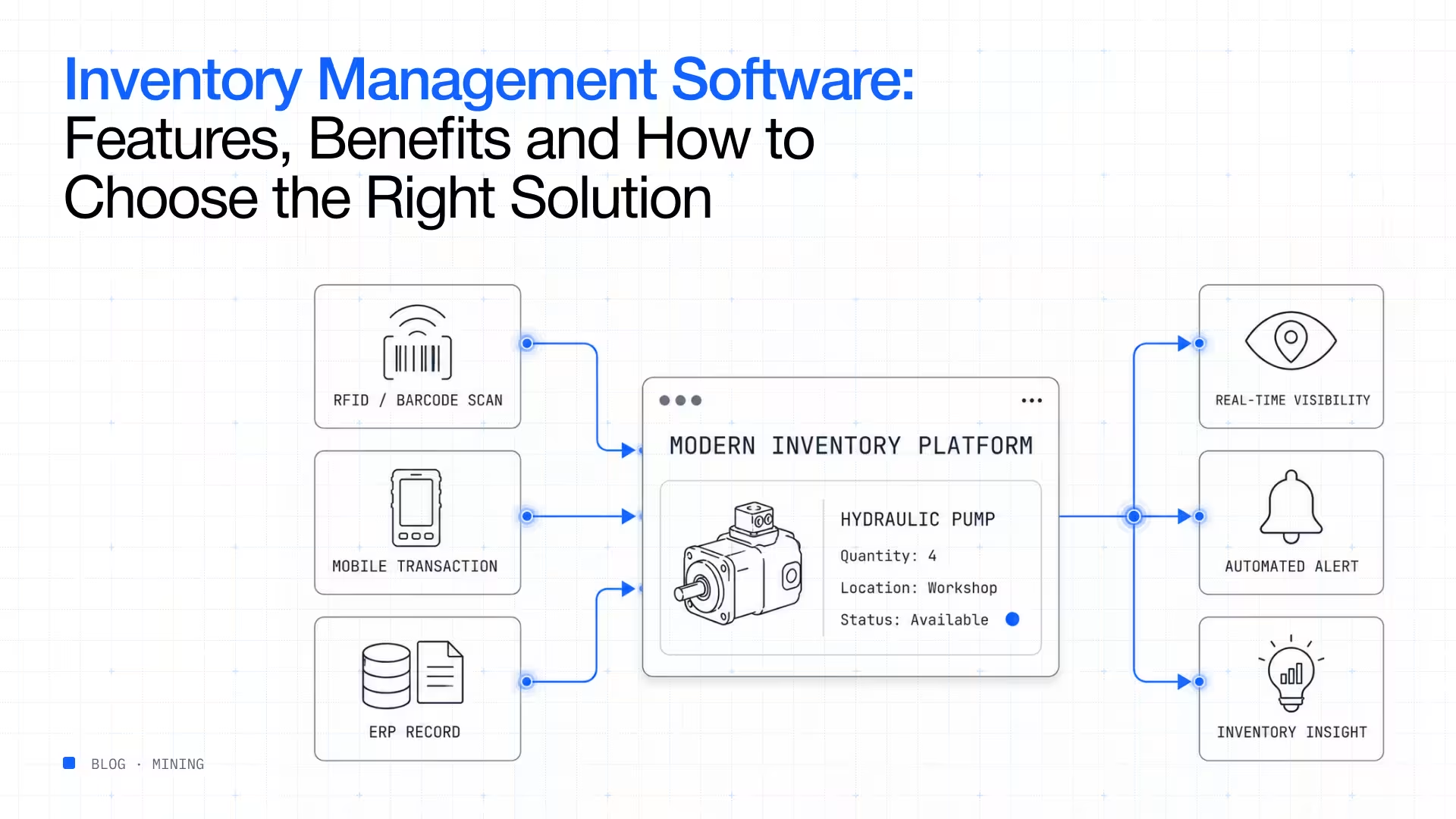
Modern inventory management systems also integrate with ERP platforms, Warehouse Management Systems (WMS), barcode scanners, RFID readers and mobile devices, creating a connected inventory ecosystem that supports real-time operational decision-making.
The objective extends well beyond inventory tracking.
Effective inventory management software enables businesses to know exactly what inventory they have, where it is located, how it is moving and when action is required.
Many organisations continue using inventory systems implemented years ago.
While these platforms may still record inventory balances, they often struggle to support today's operational requirements.
Inventory now moves across multiple warehouses, contractor compounds, workshops, production facilities and remote operational locations.
Employees increasingly work from mobile devices rather than fixed desktop computers.
Decision makers expect real-time operational information instead of end-of-day reports.
Traditional inventory systems frequently fail to meet these expectations.
They rely heavily on manual data entry.
Inventory transactions are delayed.
Inventory visibility remains limited.
Departments operate from disconnected information.
Modern inventory management software addresses these challenges by connecting inventory processes across the organisation.
Instead of waiting for employees to update inventory later, transactions occur in real time.
Instead of viewing inventory only at warehouse level, businesses gain visibility across the entire operational network.
The result is greater confidence in inventory information and faster operational decision-making.
Not every inventory management system delivers the same capabilities. When evaluating software, organisations should focus on features that improve operational performance rather than simply expanding functionality.
Real-time inventory visibility has become one of the most important capabilities of modern inventory management software. Inventory movements should update immediately as receiving, transfers, issues and returns occur.
Real-time visibility enables procurement teams, warehouse managers and operations leaders to make decisions using current inventory information rather than outdated reports. It also reduces duplicate purchasing, inventory searches and unexpected stockouts.
Many organisations manage inventory far beyond a single warehouse. Inventory may be stored in regional warehouses, workshops, laydown yards, production facilities, contractor compounds or remote operational sites.
Inventory management software should provide visibility across every inventory location rather than limiting reporting to individual warehouses. This creates a unified inventory view throughout the business.
Barcode scanning improves both inventory speed and accuracy. Employees can verify inventory identity during receiving, picking, transfers and cycle counting while reducing manual data entry.
Barcode technology also supports faster warehouse operations and more reliable inventory records.
As inventory operations become increasingly automated, RFID continues gaining importance. Unlike traditional barcode scanning, RFID allows multiple tagged inventory items to be identified simultaneously without direct line-of-sight scanning.
This significantly improves inventory visibility while reducing transaction times. Inventory management software should support RFID alongside barcode technology rather than forcing organisations to choose one approach.
Scatterlink combines barcode scanning, RFID, offline mobile inventory management and ERP integration to provide real-time inventory visibility from receipt through consumption. This enables organisations to move beyond basic inventory tracking and manage inventory with greater confidence and accuracy.
Inventory work rarely happens beside a desktop computer.
Warehouse employees, maintenance teams and field personnel need the ability to complete inventory transactions wherever work occurs.
Mobile inventory management enables users to:
When supported by offline capability, inventory transactions continue even in locations without reliable internet connectivity.
Inventory management software should integrate seamlessly with existing ERP systems.
Rather than duplicating data entry, inventory transactions should automatically update purchasing, finance and inventory records across the enterprise.
Strong ERP integration improves operational consistency while reducing administrative effort.
Basic inventory tracking is no longer enough for growing organisations. The most effective inventory management platforms provide advanced capabilities that help businesses optimise inventory rather than simply monitor it.
Forecasting tools analyse historical inventory usage, supplier lead times and demand patterns to recommend future replenishment decisions. This helps organisations maintain appropriate inventory levels while reducing excess inventory investment.
Inventory management software should notify users when action is required.
Examples include:
These alerts help organisations respond proactively instead of discovering problems after operational performance has already been affected.
Reporting and Analytics
Good software records inventory transactions. Great software helps organisations understand them. Comprehensive dashboards and reporting tools allow businesses to analyse inventory turnover, carrying costs, stock accuracy, inventory movement and operational performance. These insights support continuous inventory improvement rather than simple transaction management.
The true value of inventory management software is not measured by the number of features it offers. It is measured by the operational improvements those features enable. When implemented correctly, inventory management software improves performance across multiple departments.
Accurate inventory is the foundation of every successful inventory operation.
When inventory transactions are captured in real time and inventory movements are consistently recorded, discrepancies between physical inventory and system records decrease significantly.
Higher inventory accuracy leads to fewer stockouts, fewer emergency purchases and greater confidence in inventory data.
Warehouse personnel spend less time searching for inventory when location information is reliable. Barcode scanning, mobile inventory management and optimised inventory records reduce manual work while accelerating receiving, picking, transfers and cycle counting.
This allows employees to focus on productive warehouse activities rather than administrative tasks.
Many organisations hold excess inventory because they lack confidence in existing inventory records.
Modern inventory management software provides greater visibility into inventory availability, movement patterns and demand trends, allowing businesses to reduce unnecessary inventory investment while maintaining operational readiness.
Operational leaders should not have to wait until the end of the day or the end of the week to understand inventory performance.
Real-time dashboards and reporting provide immediate access to inventory information, enabling procurement, warehouse and operations teams to make informed decisions faster.
Industries with strict compliance requirements benefit significantly from accurate inventory records.
Comprehensive transaction histories, user activity logs and inventory traceability simplify audits while improving accountability across inventory operations.
Choosing inventory management software should involve much more than comparing feature checklists. The best solution is the one that supports both current operational requirements and future business growth.
Before evaluating software vendors, identify the problems the organisation is trying to solve.
Common objectives include:
A clear understanding of operational priorities helps narrow software options more effectively.
Inventory requirements rarely remain static. As organisations grow, they often add warehouses, operational sites, suppliers and inventory categories.
Inventory management software should scale without requiring complete system replacement. Solutions that support multiple locations, expanding user bases and increasing transaction volumes provide greater long-term value.
Powerful software delivers little value if employees struggle to use it.Warehouse personnel, maintenance technicians and inventory controllers should be able to complete transactions quickly with minimal training. Simple interfaces improve user adoption while reducing implementation time.
Inventory software should integrate naturally with existing business systems rather than creating another isolated application. ERP integration, barcode support, RFID compatibility, mobile applications and reporting platforms should work together to create a connected inventory environment.
Many organisations purchase inventory software based solely on immediate operational needs. A stronger approach is selecting a platform capable of supporting future initiatives such as RFID adoption, predictive inventory management, AI-powered analytics and expanded operational visibility.
Scatterlink is designed to grow alongside your operations. By integrating with existing ERP systems while supporting RFID, barcode scanning, offline mobile inventory management and Inventory Intelligence, Scatterlink provides organisations with a future-ready inventory management platform rather than a standalone tracking tool.
Lower implementation costs can become significantly more expensive if the software cannot support future operational requirements.
Businesses should evaluate total long-term value rather than initial purchase price alone.
Basic inventory tracking is no longer sufficient.
Modern operations require inventory visibility, analytics, mobility, automation and integration across the enterprise.
Software that simply records inventory balances may struggle to support evolving operational requirements.
Even the most sophisticated platform cannot deliver value if employees avoid using it. Successful implementations prioritise intuitive workflows and practical employee training.
Software cannot automatically correct inaccurate inventory records.
Before implementation, organisations should review item master data, inventory descriptions, warehouse locations and existing inventory processes to maximise implementation success.
Inventory management software continues evolving rapidly. Artificial intelligence is increasingly helping organisations forecast demand, recommend replenishment quantities and identify unusual inventory behaviour before problems occur.
Machine learning is improving inventory optimisation by analysing historical usage patterns and operational trends. IoT devices, RFID and mobile inventory applications continue expanding real-time inventory visibility beyond traditional warehouse environments.
Cloud-based inventory platforms are also making advanced inventory capabilities more accessible to organisations of every size. Perhaps the biggest shift is moving from inventory management toward Inventory Intelligence.
Instead of simply recording inventory transactions, modern platforms help organisations understand inventory performance, identify operational risks and support proactive decision-making.
Inventory management software has become a critical operational platform rather than simply an inventory database.
The right solution improves inventory accuracy, warehouse productivity, procurement efficiency and operational visibility while reducing manual processes and unnecessary inventory costs.
Businesses evaluating new software should look beyond basic inventory tracking features.
Real-time inventory visibility, mobile inventory management, barcode scanning, RFID integration, ERP connectivity and advanced reporting capabilities all contribute to stronger inventory performance and better business outcomes.
As operations become increasingly connected and data-driven, organisations that invest in modern inventory management platforms will be better positioned to optimise inventory, respond to disruption and make faster operational decisions.
Scatterlink delivers more than inventory management software. It provides an Inventory Intelligence Platform that combines real-time inventory visibility, RFID, barcode technology, offline mobile applications and ERP integration to help organisations manage inventory confidently from receipt through consumption.
Inventory management software helps businesses track, control and optimise inventory throughout its lifecycle. It manages inventory transactions, improves inventory visibility and supports purchasing, warehouse operations and inventory planning.
Key features include real-time inventory visibility, barcode scanning, RFID integration, mobile inventory management, ERP integration, inventory forecasting, reporting, automated alerts and multi-location inventory tracking.
Real-time inventory visibility ensures inventory records reflect actual inventory movements as they occur. This improves inventory accuracy, reduces stockouts, prevents duplicate purchasing and supports faster operational decision-making.
Yes. Most enterprise inventory management platforms integrate directly with ERP systems, allowing inventory transactions to update purchasing, finance and inventory records automatically.
Scatterlink combines inventory management with Inventory Intelligence by integrating RFID, barcode scanning, offline mobile inventory applications and ERP systems into a single platform. This provides real-time inventory visibility across warehouses, workshops, remote sites and operational facilities, enabling organisations to move beyond inventory tracking and make smarter inventory decisions.
%20(1).avif)
.avif)
%20(1).avif)