
Oil and gas operations depend on one critical factor that often receives less attention than production, drilling, or asset reliability: inventory. From drilling consumables and maintenance, repair, and operations (MRO) inventory to high-value spare parts and safety equipment, inventory plays a direct role in keeping facilities operational. When critical materials are unavailable, maintenance activities are delayed, production schedules are disrupted, and operational costs increase rapidly.
Despite significant investments in ERP systems and digital technologies, oil and gas inventory management remains one of the industry's most persistent operational challenges. Organizations frequently struggle with inventory spread across multiple warehouses, offshore platforms, remote drilling sites, refineries, and storage yards. Maintaining accurate inventory records while ensuring materials are available exactly when needed is considerably more complex than managing inventory in a traditional warehouse environment.
The challenge is not simply maintaining inventory levels. It is maintaining visibility, accuracy, and control across geographically dispersed operations where connectivity may be limited and inventory movements occur continuously. As the industry focuses on improving operational efficiency and reducing unnecessary costs, oil and gas inventory management has become a strategic priority rather than a purely administrative function.
This guide explores the biggest challenges affecting oil and gas inventory management, the operational risks created by poor inventory visibility, and the technologies and best practices helping organizations improve inventory performance across upstream, midstream, and downstream operations.
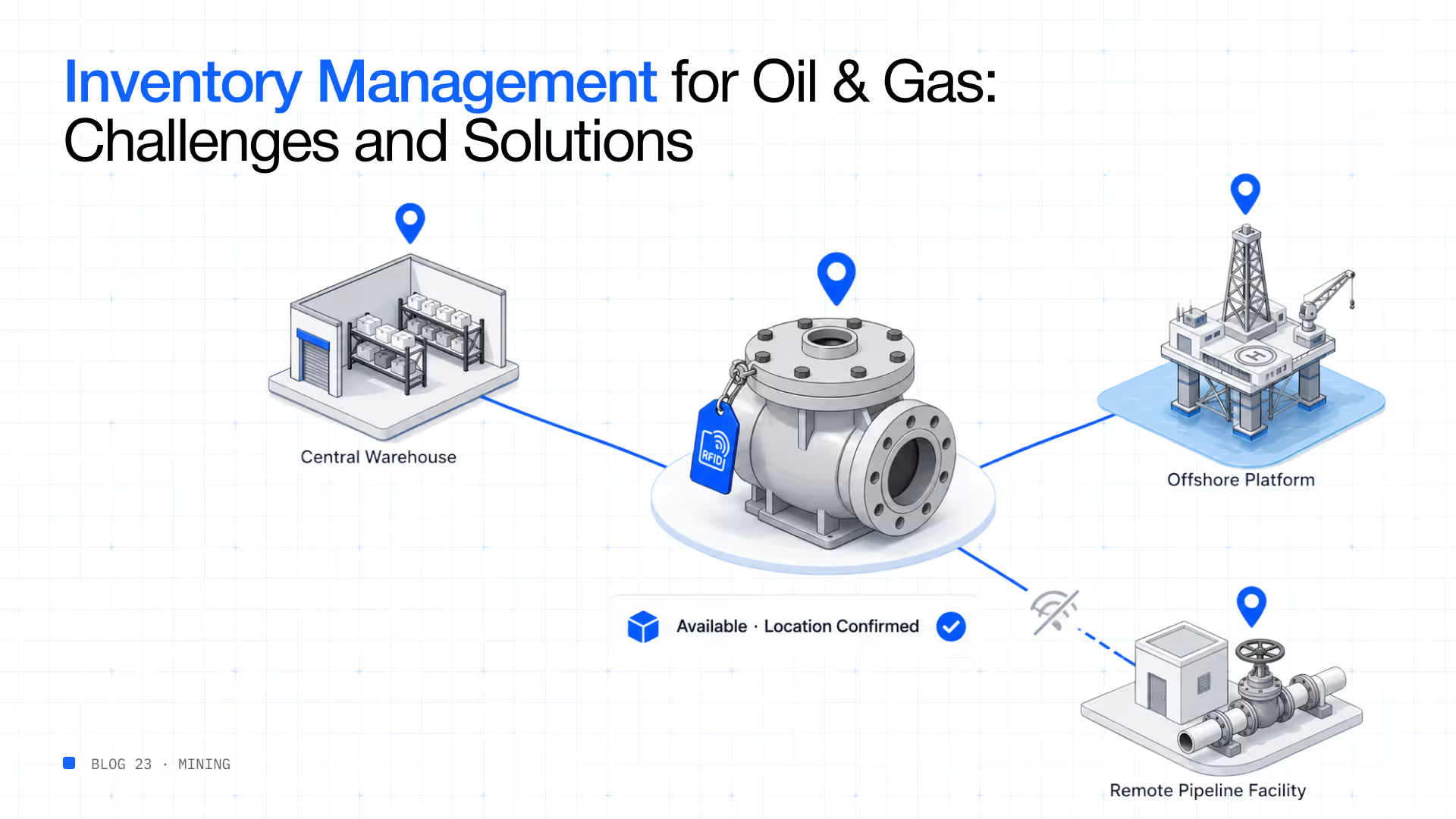
Unlike many industries, oil and gas organizations rarely manage inventory from a single centralized location. Inventory is distributed across production facilities, warehouses, offshore platforms, drilling rigs, compressor stations, pipelines, maintenance workshops, and remote operational sites. Every location requires access to critical materials while maintaining accurate inventory records across the entire organization.
The diversity of inventory also adds complexity. A single operation may manage thousands of stock keeping units, including valves, pumps, bearings, electrical components, drilling consumables, personal protective equipment, specialized tools, instrumentation, and emergency repair kits. Some items move frequently, while others remain in storage for years until an unexpected equipment failure occurs.
This combination of distributed inventory, diverse asset types, and operational urgency makes oil and gas inventory management significantly more demanding than conventional warehouse inventory management.
Many organizations experience similar inventory challenges regardless of their size or location. These challenges often develop gradually, but their operational impact can be substantial.
One of the most common challenges in oil and gas inventory management is maintaining visibility across geographically dispersed operations.
Materials are constantly transferred between central warehouses, drilling locations, offshore facilities, maintenance workshops, and temporary project sites. Without real-time inventory visibility, organizations struggle to determine where inventory is located or whether it is immediately available.
As a result, maintenance teams often spend valuable time searching for materials instead of completing repairs, while procurement teams initiate purchases for inventory that already exists elsewhere in the organization.
Equipment reliability depends heavily on the availability of critical spare parts.
Unlike standard inventory, many oil and gas components have long procurement lead times and are only required during equipment failures or planned shutdowns. Organizations cannot afford stockouts, yet carrying excessive inventory ties up significant working capital and increases storage costs.
Balancing inventory availability with inventory optimization remains one of the most difficult aspects of oil and gas inventory management.
Although many organizations have implemented ERP systems, inventory transactions are still frequently recorded manually.
Materials issued during emergency maintenance may not be recorded immediately. Inventory transferred between locations is often updated hours later, while returned materials may remain undocumented until the end of a shift.
These delays gradually reduce inventory accuracy. Over time, system records no longer reflect operational reality, forcing employees to manually verify inventory before making decisions.
Inventory decisions are only as reliable as the information behind them. Discover how Scatterlink helps oil and gas organizations improve inventory visibility across warehouses, remote sites, and operational facilities.
Remote operations introduce another significant challenge for oil and gas inventory management.
Drilling sites, pipeline infrastructure, offshore facilities, and temporary project locations often operate in areas where reliable internet connectivity cannot be guaranteed. Traditional inventory systems depend on continuous network access, making real-time transaction updates difficult or impossible in these environments.
As a result, field teams frequently rely on paper documentation or delayed system updates. Inventory movements are recorded after work has been completed rather than during the activity itself, creating blind spots that affect maintenance planning, inventory replenishment, and purchasing decisions.
Modern inventory solutions address this challenge through offline-first mobile applications that continue capturing inventory transactions even when network connectivity is unavailable. Once connectivity returns, the data automatically synchronizes with central systems, maintaining inventory accuracy without interrupting operational workflows.
Many organizations believe inventory shortages are the primary issue affecting operational performance. In reality, inaccurate inventory information often creates greater operational risk than inventory levels themselves.
When maintenance planners cannot trust inventory records, every repair begins with verification. Warehouse teams conduct manual searches, procurement confirms stock availability across multiple locations, and supervisors delay maintenance activities until materials have been physically located.
The inventory may exist. The problem is that no one has confidence in the information.
Improving oil and gas inventory management therefore begins with improving inventory accuracy rather than simply increasing inventory levels.
Improving oil and gas inventory management is not simply about investing in new technology. It requires organizations to combine standardized processes, accurate inventory data, and real-time visibility into a single inventory strategy. The most successful organizations treat inventory as a strategic operational resource rather than a warehouse function.
The following best practices consistently help organizations improve inventory performance while reducing operational risk.
One of the biggest challenges facing large oil and gas organizations is maintaining consistency across multiple facilities. Central warehouses, offshore platforms, drilling sites, maintenance workshops, and remote storage locations often develop their own inventory procedures over time. While these processes may work locally, they create inconsistencies that reduce inventory accuracy across the wider organization.
Standardizing how inventory is received, issued, transferred, adjusted, and returned creates a common operational framework. When every location follows the same inventory processes, inventory records become more reliable and inventory visibility improves across the entire operation.
Many organizations respond to inventory shortages by purchasing additional stock. While this may appear to reduce operational risk, it often increases carrying costs without solving the underlying problem.
Before investing in additional inventory, organizations should determine whether existing inventory can actually be located and accessed when required. Improved inventory visibility frequently uncovers materials that were previously considered unavailable simply because they could not be found quickly.
This shift from increasing inventory to improving visibility is one of the most effective ways to optimize oil and gas inventory management while reducing unnecessary working capital.
Manual inventory processes remain one of the leading causes of inaccurate inventory records.
RFID and barcode technology significantly reduce manual data entry by allowing inventory transactions to be captured quickly and consistently. Materials can be received, transferred, issued, and returned with minimal effort, reducing human error while improving inventory accuracy across multiple operational sites.
For organizations managing thousands of inventory items, these technologies provide a practical way to strengthen oil and gas inventory management without increasing administrative workload.
Inventory management should not stop at the warehouse door.
Field technicians, maintenance crews, and operational teams need the ability to access and update inventory information wherever work takes place. Mobile inventory applications allow employees to search for inventory, complete transactions, verify stock availability, and record material usage directly from the field.
For remote oilfields, offshore platforms, and isolated pipeline operations, offline mobile capabilities are equally important. Employees should be able to continue capturing inventory transactions even without network connectivity, with information synchronizing automatically once a connection becomes available.
This ensures that oil and gas inventory management remains accurate regardless of where operational work is being performed.
ERP systems remain essential for procurement, finance, and enterprise reporting. However, they are not always designed to capture the dynamic inventory movements that occur throughout daily operations.
Integrating operational inventory management with ERP systems enables organizations to maintain financial control while improving day-to-day inventory visibility. Rather than replacing existing ERP investments, organizations extend their capabilities with real-time operational information that supports faster and more informed decision-making.
Real-time inventory visibility helps maintenance, warehouse, and procurement teams work from the same trusted information. Explore how Scatterlink extends inventory visibility beyond traditional ERP systems.
Digital transformation is changing how industrial organizations approach inventory management.
Instead of relying on periodic inventory counts and manual reconciliation, organizations are increasingly adopting technologies that provide continuous operational visibility. RFID, barcode scanning, IoT devices, GPS location tracking, mobile applications, and cloud-based inventory platforms work together to create a connected inventory ecosystem.
These technologies allow inventory movements to be captured automatically, reducing delays between operational activity and system updates. Maintenance teams gain faster access to critical spare parts, procurement receives more accurate inventory information, and operational leaders can make decisions with greater confidence.
The result is oil and gas inventory management that is proactive rather than reactive.
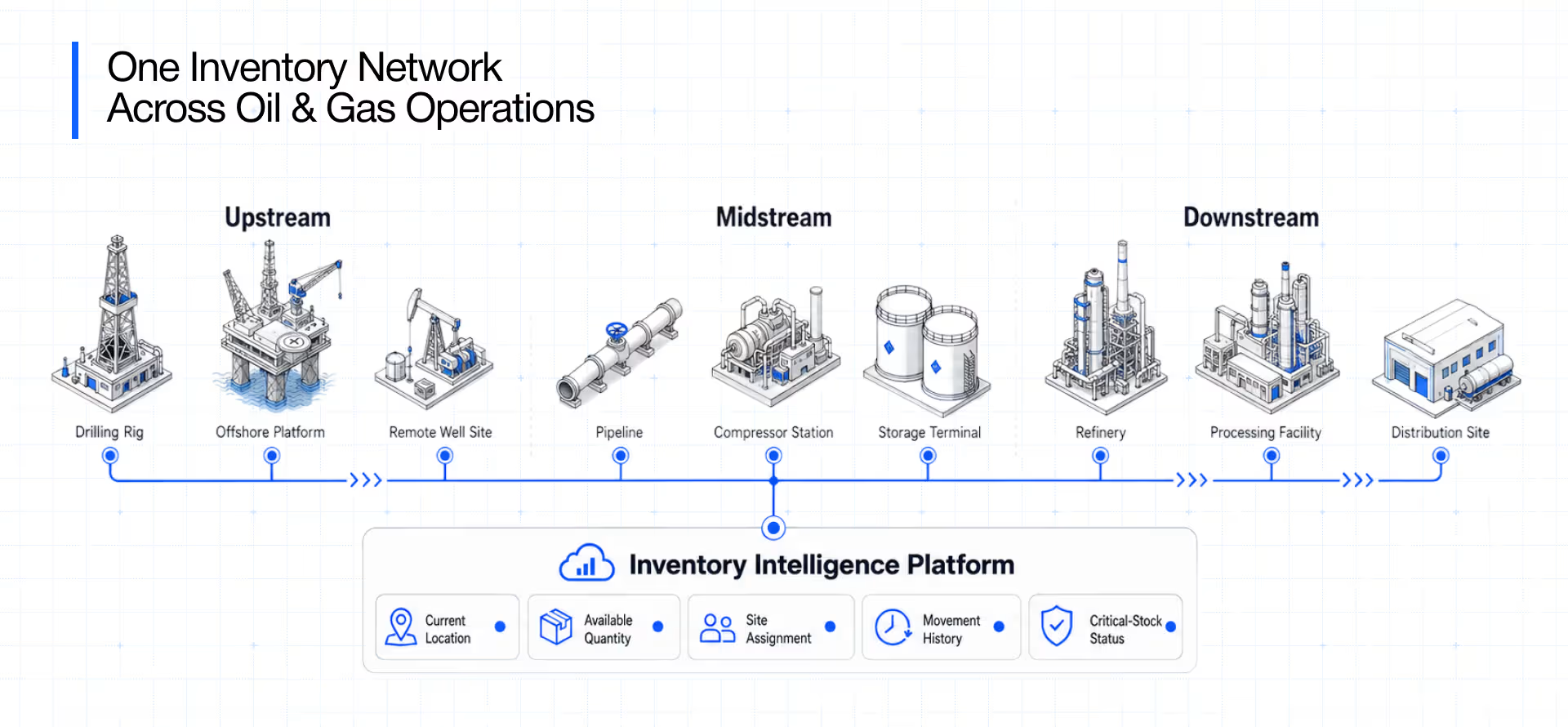
Managing inventory across oil and gas operations requires more than accurate inventory records. It requires continuous visibility into where inventory is located, how it is moving, and when it is available for operational use.
Scatterlink's Inventory Intelligence Platform is designed specifically for asset-intensive industries where inventory is distributed across warehouses, stockyards, remote facilities, maintenance workshops, and operational sites. By combining RFID, barcode scanning, IoT devices, mobile applications, GPS-enabled location tracking, and seamless ERP integration, Scatterlink provides real-time visibility into inventory movement throughout its entire lifecycle.
Built with an offline-first mobile architecture, Scatterlink allows field teams to continue capturing inventory transactions even in locations with limited or no network connectivity. Once connectivity is restored, transactions automatically synchronize with enterprise systems, ensuring inventory records remain accurate without interrupting operational workflows.
More importantly, Scatterlink is designed to be intuitive for frontline employees. Inventory tracking becomes part of everyday work rather than an additional administrative task, enabling organizations to generate accurate, intelligent, and actionable information that supports everyone from warehouse personnel and maintenance technicians to procurement managers and executive leadership.
Looking to improve oil and gas inventory management across remote sites and multiple facilities? Discover how Scatterlink helps organizations achieve real-time inventory visibility with accurate, intelligent, and actionable inventory information.
Effective oil and gas inventory management has become a competitive advantage for organizations seeking to improve operational efficiency, reduce costs, and minimize downtime. As operations become increasingly distributed and complex, maintaining accurate inventory records alone is no longer enough. Organizations also need real-time visibility into inventory movement, availability, and usage across every operational location.
By standardizing inventory processes, improving inventory accuracy, adopting mobile technologies, and extending visibility beyond traditional ERP systems, organizations can significantly reduce inventory-related inefficiencies. Maintenance teams spend less time searching for materials, procurement makes more informed purchasing decisions, and operations continue with fewer disruptions.
Ultimately, successful oil and gas inventory management is about giving every team access to reliable information at the moment decisions need to be made. Organizations that invest in inventory intelligence rather than simply inventory tracking will be better positioned to improve productivity, strengthen operational resilience, and support long-term business growth.
Oil and gas inventory management is the process of tracking, controlling, and optimizing inventory across upstream, midstream, and downstream operations to ensure critical materials are available while minimizing excess inventory and operational costs.
Effective oil and gas inventory management helps reduce equipment downtime, improve inventory accuracy, optimize spare parts availability, reduce emergency purchases, and improve operational efficiency across multiple sites.
The most common challenges include limited inventory visibility, remote operating locations, inventory discrepancies, manual inventory processes, long procurement lead times, and managing critical spare parts across multiple facilities.
Organizations can improve oil and gas inventory management by implementing RFID and barcode technology, adopting mobile inventory management solutions, integrating with ERP systems, standardizing inventory processes, and improving real-time inventory visibility.
Modern oil and gas inventory management combines RFID, barcode scanning, IoT devices, GPS tracking, offline mobile applications, ERP integration, and inventory intelligence platforms to improve inventory visibility and operational decision-making.
%20(1).avif)
.avif)
%20(1).avif)