
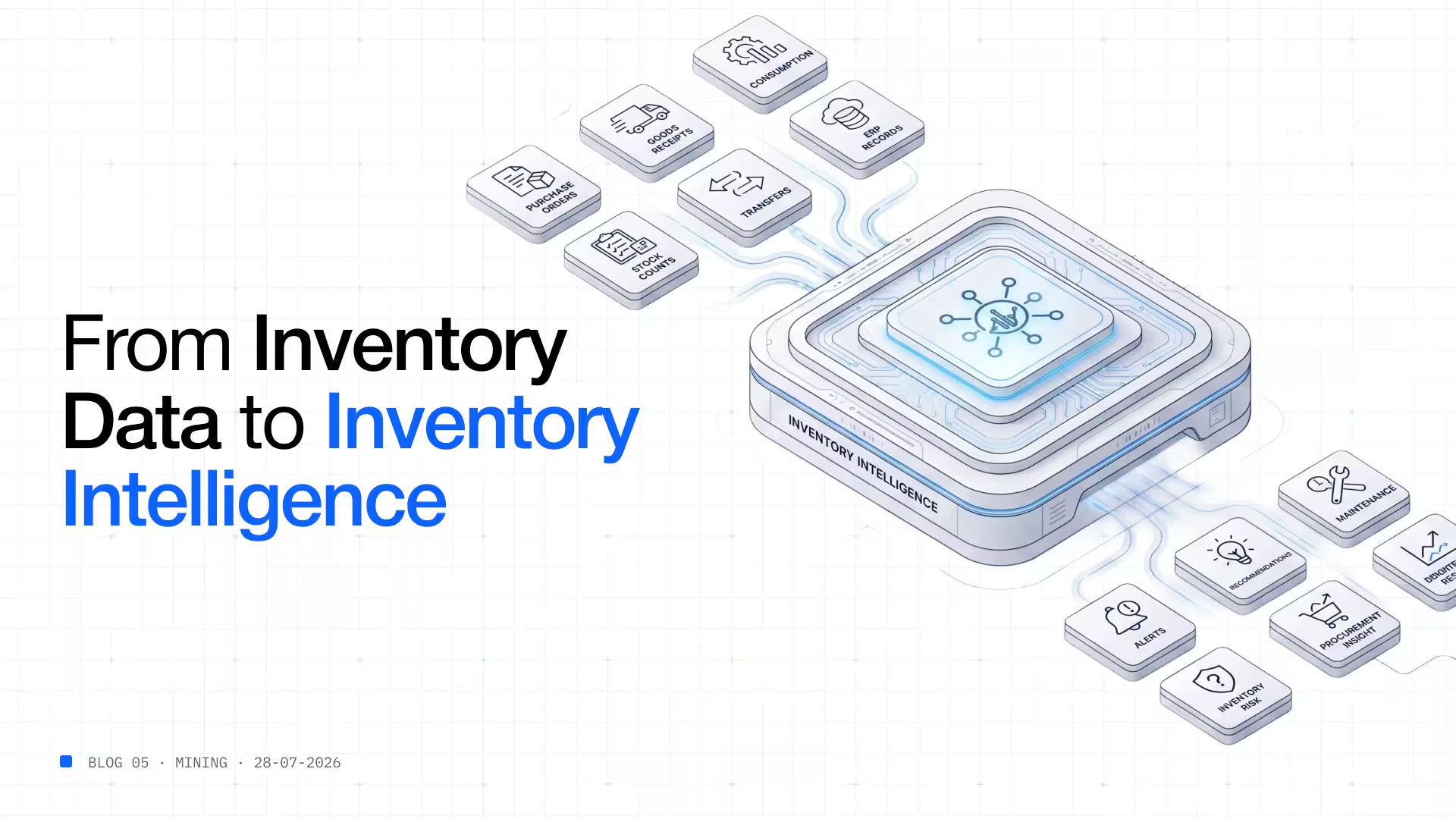
Every industrial organization generates vast amounts of inventory data. Purchase orders, goods receipts, inventory transactions, stock counts, transfers, and consumption records all contribute to an ever-growing pool of operational information. Yet despite having access to this data, many organizations continue to experience inventory-related challenges that affect productivity and operational performance.
The reason is simple. Data alone does not improve decision-making.
For inventory data to create business value, it must be transformed into information that is accurate, intelligent, and actionable. This is where the journey from inventory data to inventory intelligence begins.
Every inventory operation generates data through daily activities. Receiving inventory, issuing parts, transferring materials between locations, and updating stock records all create valuable information about how inventory moves through the business.
Most organizations already collect this data through ERP systems, warehouse management systems, spreadsheets, or manual processes. These systems are effective at recording transactions and maintaining inventory records.
However, recording data is not the same as understanding what that data means. Without context, inventory data remains a collection of isolated records that tell part of the story but not the complete picture.
Inventory data answers questions such as:
Inventory intelligence answers more operational questions:
The difference is significant. Data reports what has happened. Intelligence helps organizations decide what to do next.
Your business already generates inventory data. Discover how Scatterlink transforms that data into accurate, intelligent, and actionable information that supports better operational decisions.
Organizations often assume that collecting more data will automatically improve inventory management. In reality, more data can create more complexity if it is fragmented across multiple systems or lacks operational context.
Consider a maintenance planner preparing for scheduled equipment repairs. The ERP may confirm that a critical spare part exists, but it may not indicate whether the part has been moved to a laydown yard, issued to another team, or relocated to a remote site. The data is technically accurate, but it does not provide the intelligence needed to make an informed decision.
This is where operational uncertainty begins. Teams spend time verifying information instead of executing work.
Organizations typically progress through several stages as their inventory management capabilities mature.
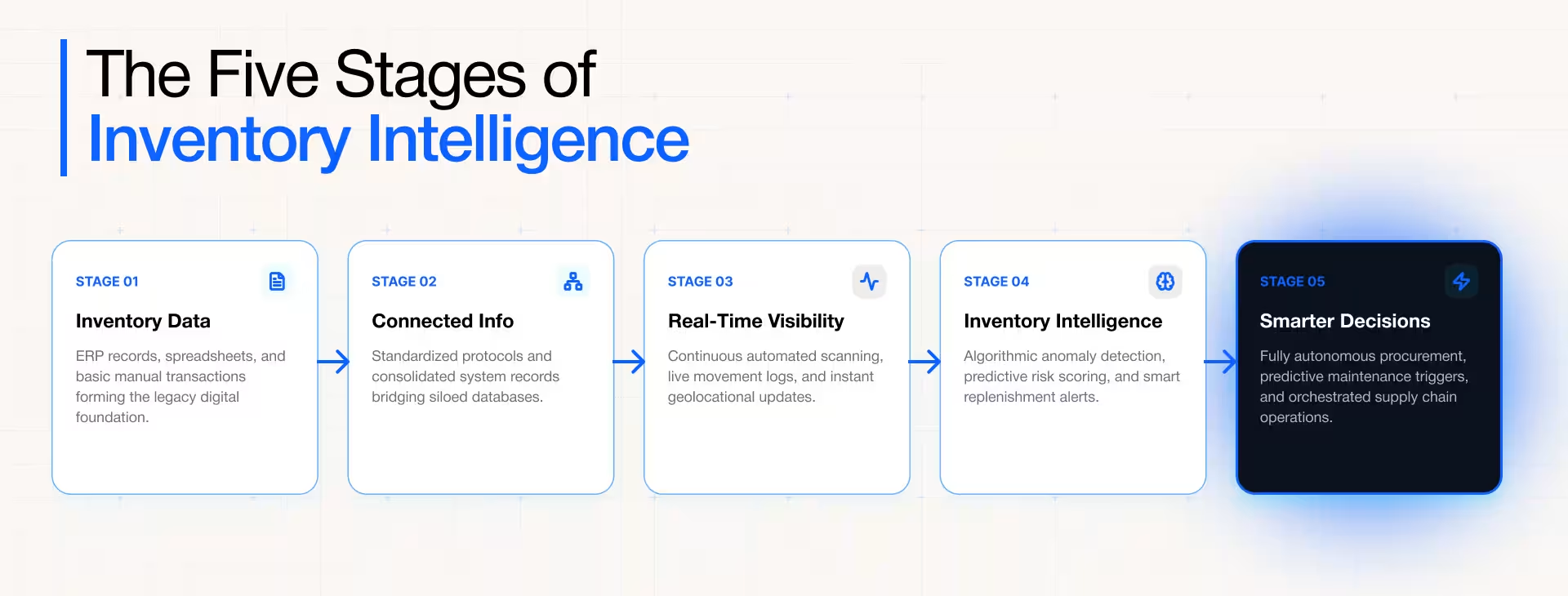
Inventory transactions are recorded through ERP systems, spreadsheets, or manual processes. Data exists, but it is often fragmented and difficult to use for operational decision-making.
Inventory records from different sources are standardized and consolidated. Organizations establish a more consistent view of inventory across warehouses and operational locations.
Inventory movements are captured as they occur using technologies such as RFID, barcode scanning, mobile inventory applications, and GPS-enabled location tracking. Teams gain confidence in where inventory is and how it is moving.
Inventory data is enriched with operational context. Organizations can identify trends, understand inventory behaviour, monitor usage patterns, and quickly respond to changing operational needs.
Decision-makers across the business use accurate, intelligent, and actionable inventory information to improve maintenance planning, procurement, warehouse operations, and overall business performance.
Each stage builds on the previous one. Organizations that reach the final stage are no longer managing inventory reactively. They are making proactive, intelligence-driven decisions.
Moving from inventory data to inventory intelligence requires more than better reporting. Learn how Scatterlink provides real-time visibility that enables faster, smarter decisions across every operational site.
When inventory information becomes intelligent, the benefits extend far beyond inventory management.
Operations teams can begin work with confidence because they know where critical inventory is located. Maintenance planners spend less time verifying availability and more time executing planned activities. Procurement teams make purchasing decisions based on accurate inventory information rather than assumptions.
Organizations that build inventory intelligence are better equipped to:
The value lies not in collecting more information but in making existing information more useful.
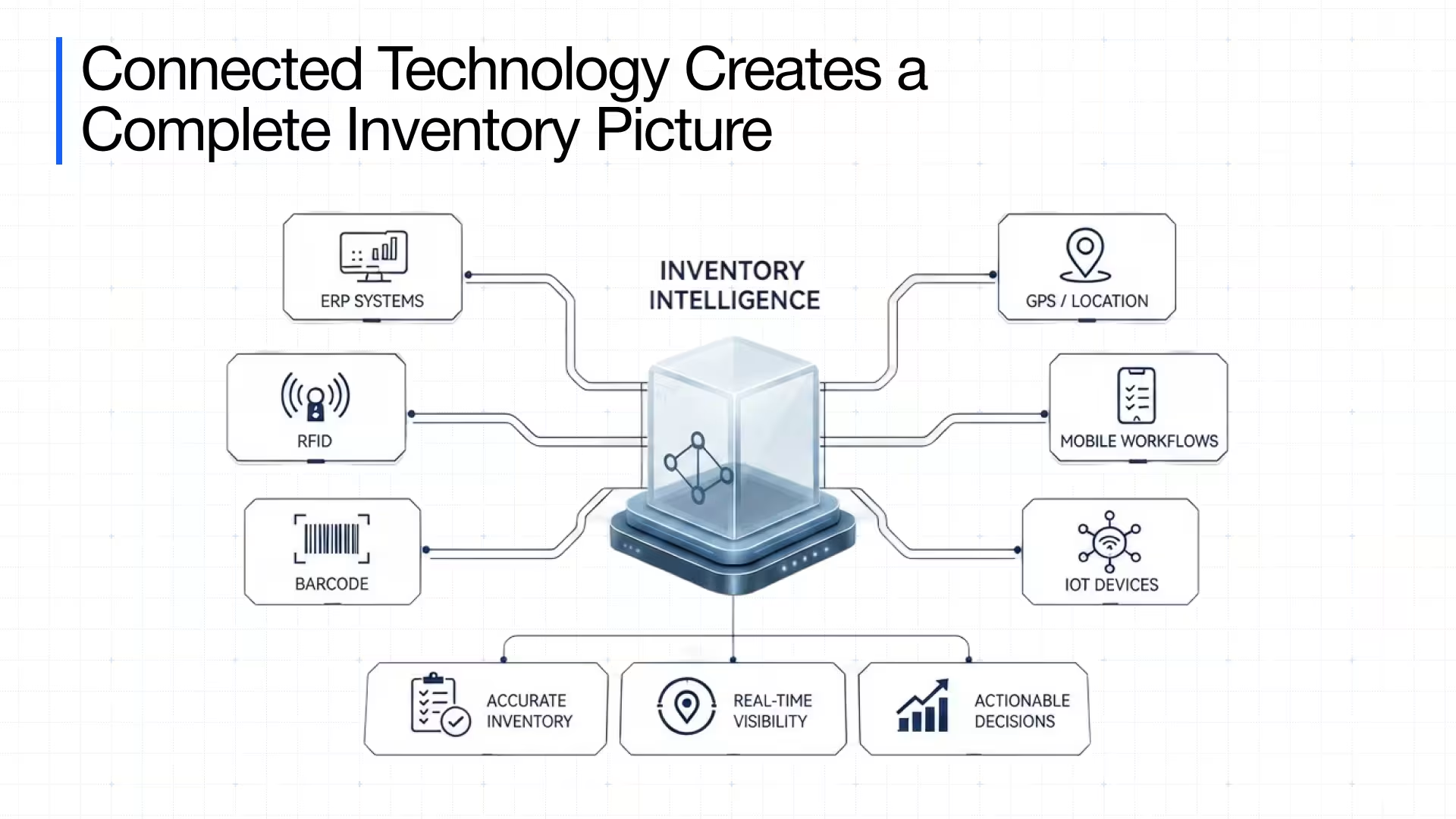
ERP systems, RFID, barcode scanning, GPS-enabled location tracking, mobile workflows, and IoT devices all play an important role in modern inventory management.
However, these technologies should not be viewed as individual solutions. Their true value comes from working together to create a complete picture of inventory across its lifecycle.
When inventory data flows seamlessly between systems and is enriched with real-time operational information, organizations gain something much more valuable than visibility. They gain intelligence.
Scatterlink helps industrial organizations bridge the gap between inventory records and operational decision-making.
By combining RFID technology, barcode scanning, GPS-enabled location tracking, mobile workflows, IoT devices, and ERP integration, Scatterlink transforms inventory data into accurate, intelligent, and actionable information. From frontline workers locating inventory in the field to executives monitoring inventory performance across multiple sites, every decision-maker has access to the insights they need in just a few clicks.
Inventory intelligence is not about replacing existing systems. It is about helping organizations unlock greater value from the inventory data they already have.
Inventory data tells you what has happened. Inventory intelligence helps you decide what happens next. Explore how Scatterlink transforms inventory information into real-time operational intelligence for every team, from the frontline to the C-suite.
Most organizations already possess large amounts of inventory data. The challenge is not collecting more information but turning that information into something meaningful.
Inventory intelligence bridges the gap between data and decision-making by providing accurate, intelligent, and actionable information that reflects what is happening across the operation in real time. This enables organizations to reduce uncertainty, improve efficiency, and make faster, more confident operational decisions.
The journey from inventory data to inventory intelligence is not simply a technology upgrade. It is a shift in how organizations use inventory information to drive operational excellence.
Inventory intelligence is the process of transforming inventory data into accurate, intelligent, and actionable information that supports operational decision-making. It combines inventory records with real-time visibility, movement tracking, and operational context.
Inventory data consists of raw records such as inventory transactions, stock levels, and purchase information. Inventory intelligence builds on that data by providing context, visibility, and insights that help organizations make informed decisions.
Inventory intelligence enables organizations to reduce inventory search time, improve inventory accuracy, strengthen maintenance planning, optimize procurement, and make faster operational decisions based on reliable information.
Organizations typically combine ERP systems with technologies such as RFID, barcode scanning, mobile inventory workflows, GPS-enabled location tracking, and real-time analytics to create continuous inventory visibility and actionable insights.
Yes. Inventory intelligence platforms complement ERP systems by extending visibility beyond transactional records. They provide real-time information about inventory movement, location, usage, and availability while integrating with existing enterprise systems.
%20(1).avif)
.avif)
%20(1).avif)