
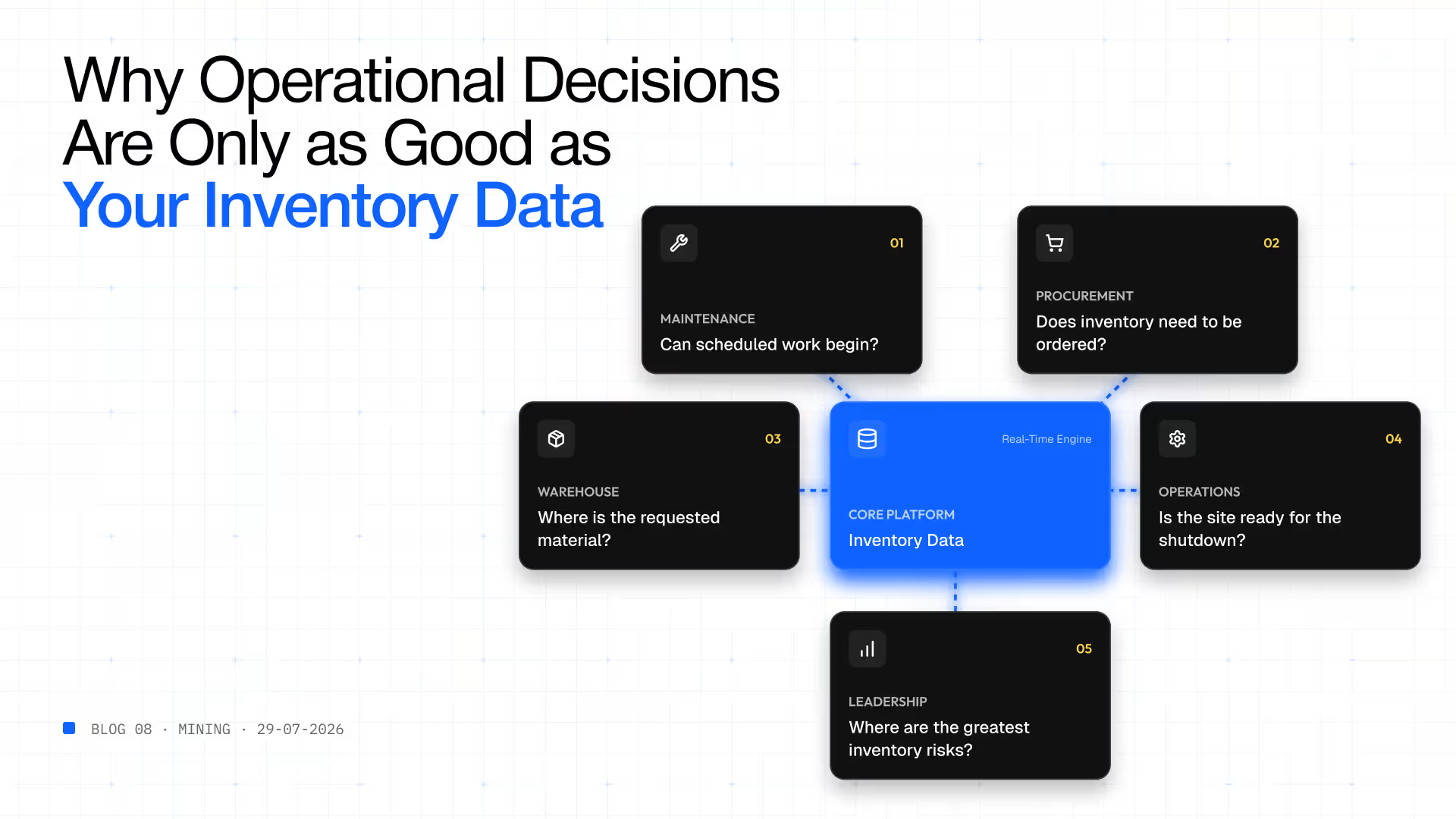
Every operational decision depends on information. Whether a maintenance manager is scheduling equipment repairs, a procurement team is ordering replacement parts, or an operations leader is planning a shutdown, the quality of the decision depends on the quality of the information available at that moment.
Inventory data is one of the most critical sources of operational information. It tells organizations what inventory they own, where it is located, how it is being used, and whether it is available when work needs to begin. When that information is incomplete, outdated, or inconsistent, even well-planned decisions can lead to costly delays and inefficiencies.
This is why leading industrial organizations are placing greater emphasis on inventory intelligence rather than simply inventory management. Better decisions begin with better inventory data.
Industrial operations are becoming increasingly complex. Inventory is no longer stored in a single warehouse or managed by one department. It moves across warehouses, laydown yards, maintenance workshops, surface operations, underground sites, and remote facilities, often changing hands multiple times before it is consumed.
Every movement generates valuable information. If that information is captured accurately and made available in real time, organizations gain a clear picture of their inventory operations. If it is delayed or missing, uncertainty begins to influence operational decisions.
The result is not just poor inventory management. It is slower decision-making across the business.
Every day, teams rely on inventory data to answer questions that directly affect productivity.
Maintenance teams need to know whether critical spare parts are available before scheduling work. Procurement teams need accurate inventory levels to avoid unnecessary purchases. Warehouse teams depend on current location data to fulfil requests quickly, while operations leaders need reliable information to plan maintenance and minimize disruption.
When inventory data is accurate, these decisions happen with confidence. When the data cannot be trusted, every decision requires additional verification, manual checks, or assumptions that increase operational risk.
Reliable decisions start with reliable inventory information. Discover how Scatterlink helps organizations capture accurate, intelligent, and actionable inventory data across every stage of the inventory lifecycle.
Poor inventory data rarely causes a single problem. Instead, it creates a chain reaction that affects multiple departments.
Maintenance teams spend valuable time confirming inventory availability before beginning work. Procurement teams reorder inventory because existing stock cannot be located with confidence. Warehouse personnel interrupt daily activities to manually verify inventory records, while supervisors make decisions based on information that may no longer reflect operational reality.
Common outcomes include:
Over time, these challenges reduce productivity and increase operational costs, even when inventory is physically available.
Accurate inventory data provides far more than an updated stock count. It gives decision-makers confidence that the information they are using reflects what is happening across the operation.
With accurate inventory data, organizations can:
Instead of reacting to uncertainty, teams can focus on executing work more efficiently.
Collecting inventory data is only the beginning. The real value comes from transforming that data into information that supports action.
Inventory intelligence combines inventory transactions, movement history, location data, and operational context to provide a complete understanding of inventory throughout its lifecycle. Rather than simply reporting what has happened, it helps organizations understand what is happening now and what actions need to be taken next.
This shift allows inventory data to become a strategic business asset rather than just an operational record.
Inventory data should do more than populate reports. Learn how Scatterlink transforms inventory information into real-time intelligence that supports faster, smarter operational decisions.
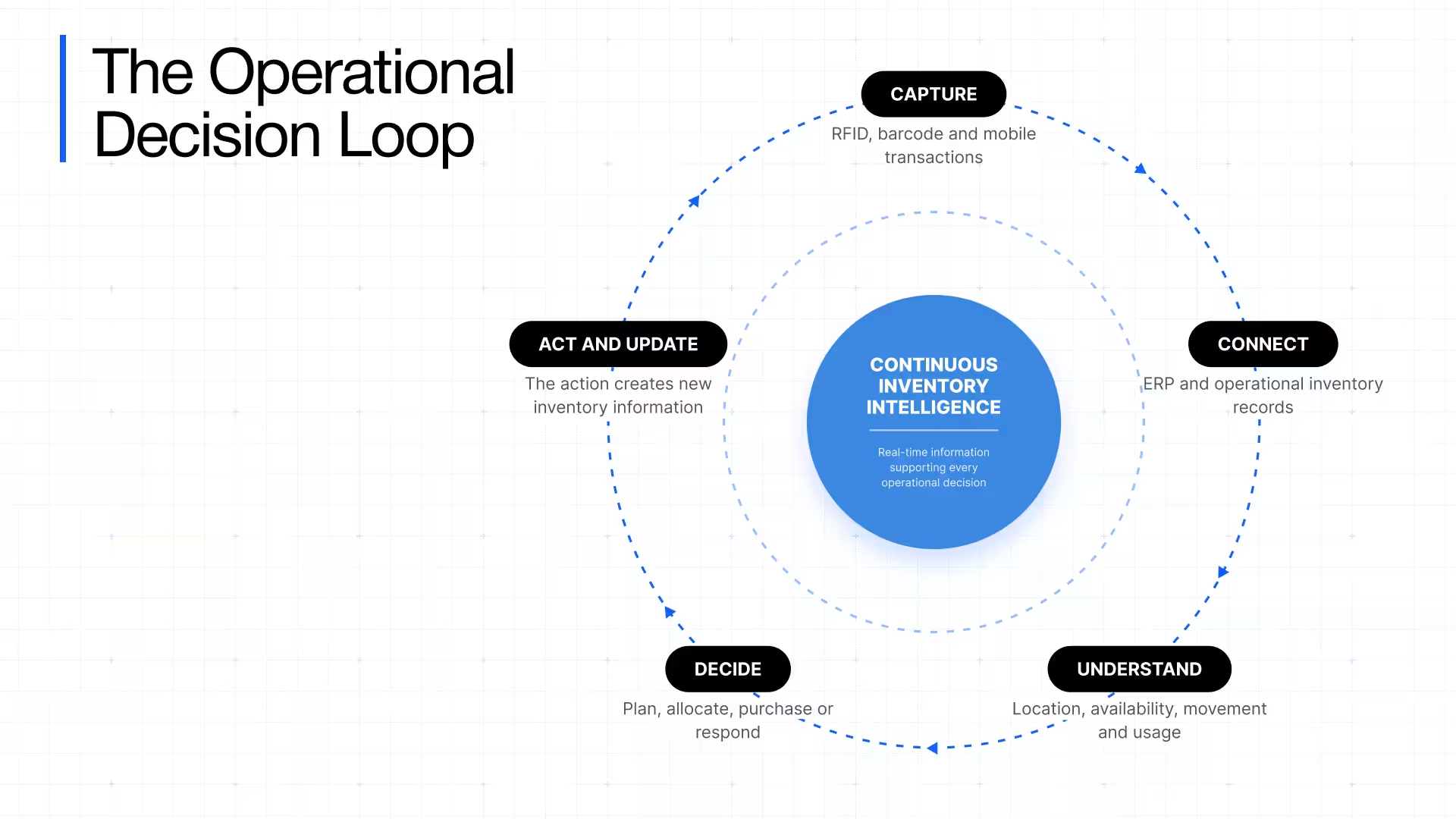
Operational decisions become more effective when inventory information is current, complete, and accessible.
Real-time inventory visibility allows teams to verify inventory locations, monitor inventory movement, and confirm availability before work begins. Instead of relying on outdated reports or manual verification, decision-makers have immediate access to the information they need.
This is particularly valuable during maintenance shutdowns, emergency repairs, and large operational projects where delays caused by missing inventory can have significant financial consequences.
Better visibility does not replace operational expertise. It strengthens it by ensuring every decision is supported by reliable information.
Improving operational decision-making starts with improving the quality of inventory information.
Organizations that invest in standardized inventory records, mobile transaction capture, RFID, barcode scanning, and real-time inventory tracking create a stronger foundation for every inventory-related decision. These capabilities reduce uncertainty, improve collaboration between departments, and increase confidence in inventory records.
Scatterlink brings these capabilities together through its Inventory Intelligence Platform, providing accurate, intelligent, and actionable inventory information to everyone, from frontline workers managing daily operations to executives responsible for strategic planning.
Every inventory decision is only as good as the information behind it. Explore how Scatterlink helps industrial organizations turn inventory data into accurate, intelligent, and actionable insights that improve operational performance.
Operational excellence depends on making informed decisions at the right time. While experience and expertise remain essential, they must be supported by inventory information that is accurate, current, and actionable.
Organizations that treat inventory data as a strategic resource gain more than better inventory records. They improve maintenance planning, strengthen procurement decisions, reduce operational delays, and create greater confidence across every level of the business.
The future of inventory management is not simply collecting more data. It is delivering the right information to the right people at the right time, enabling faster and smarter operational decisions.
Inventory data provides the information teams need to plan maintenance, manage procurement, allocate inventory, and support daily operations. Accurate data helps organizations make faster and more informed decisions.
Inventory data consists of raw inventory records, transactions, and stock information. Inventory intelligence transforms that data into meaningful, actionable insights by combining location, movement, usage, and operational context.
Poor inventory data can lead to delayed maintenance, duplicate purchasing, longer inventory search times, reduced inventory accuracy, and lower confidence in operational decisions.
Organizations can improve inventory data by standardizing inventory records, capturing transactions in real time, using RFID and barcode technology, integrating with ERP systems, and maintaining continuous visibility into inventory movement.
Real-time inventory visibility ensures decision-makers always have access to current inventory information. This reduces uncertainty, improves operational planning, and helps teams respond more quickly to changing business needs.
Scatterlink's Inventory Intelligence Platform captures inventory movement, location, and usage in real time, transforming inventory data into accurate, intelligent, and actionable information. This enables everyone, from frontline workers to the C-suite, to make faster, smarter operational decisions with confidence.
%20(1).avif)
.avif)
%20(1).avif)