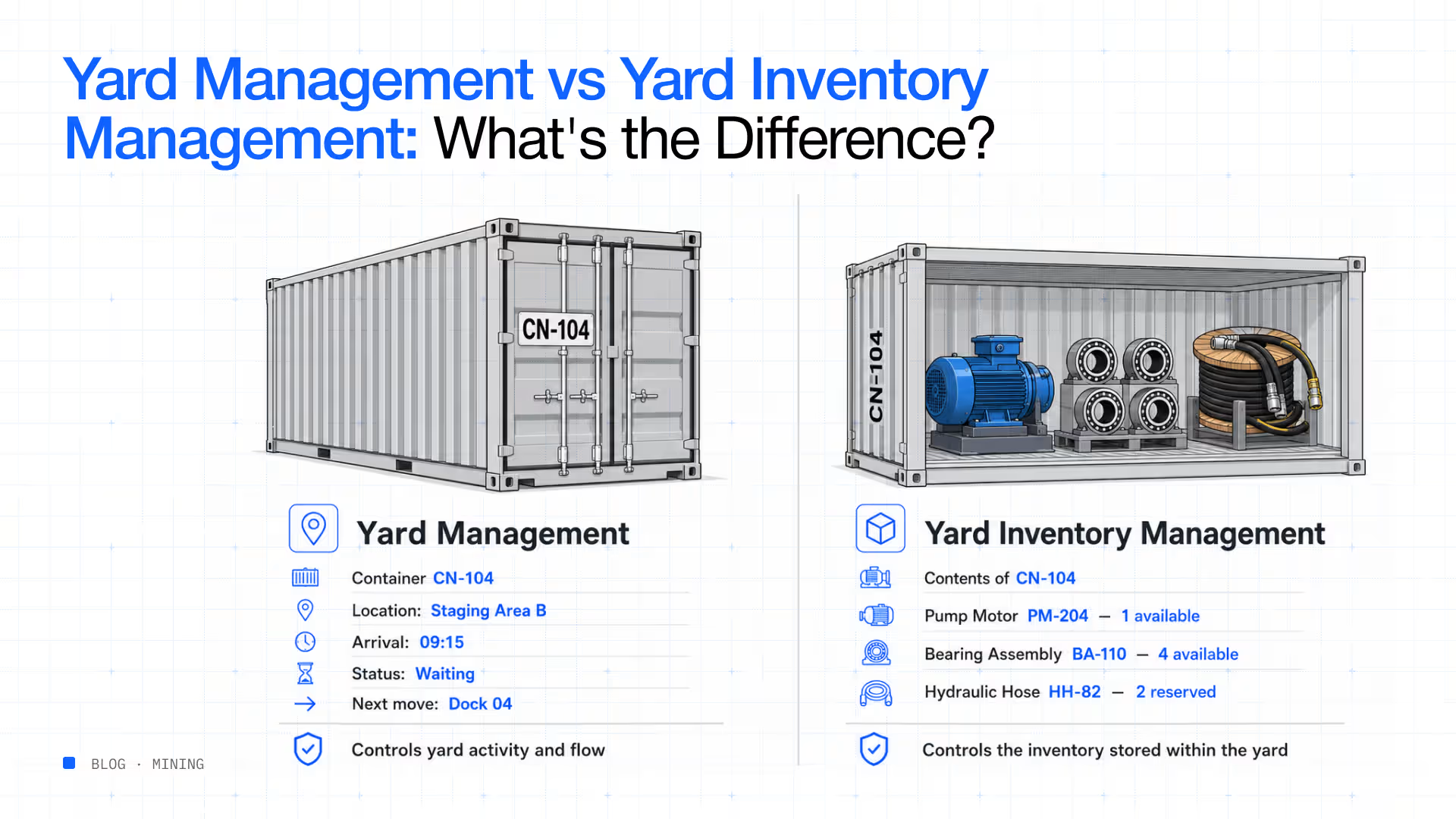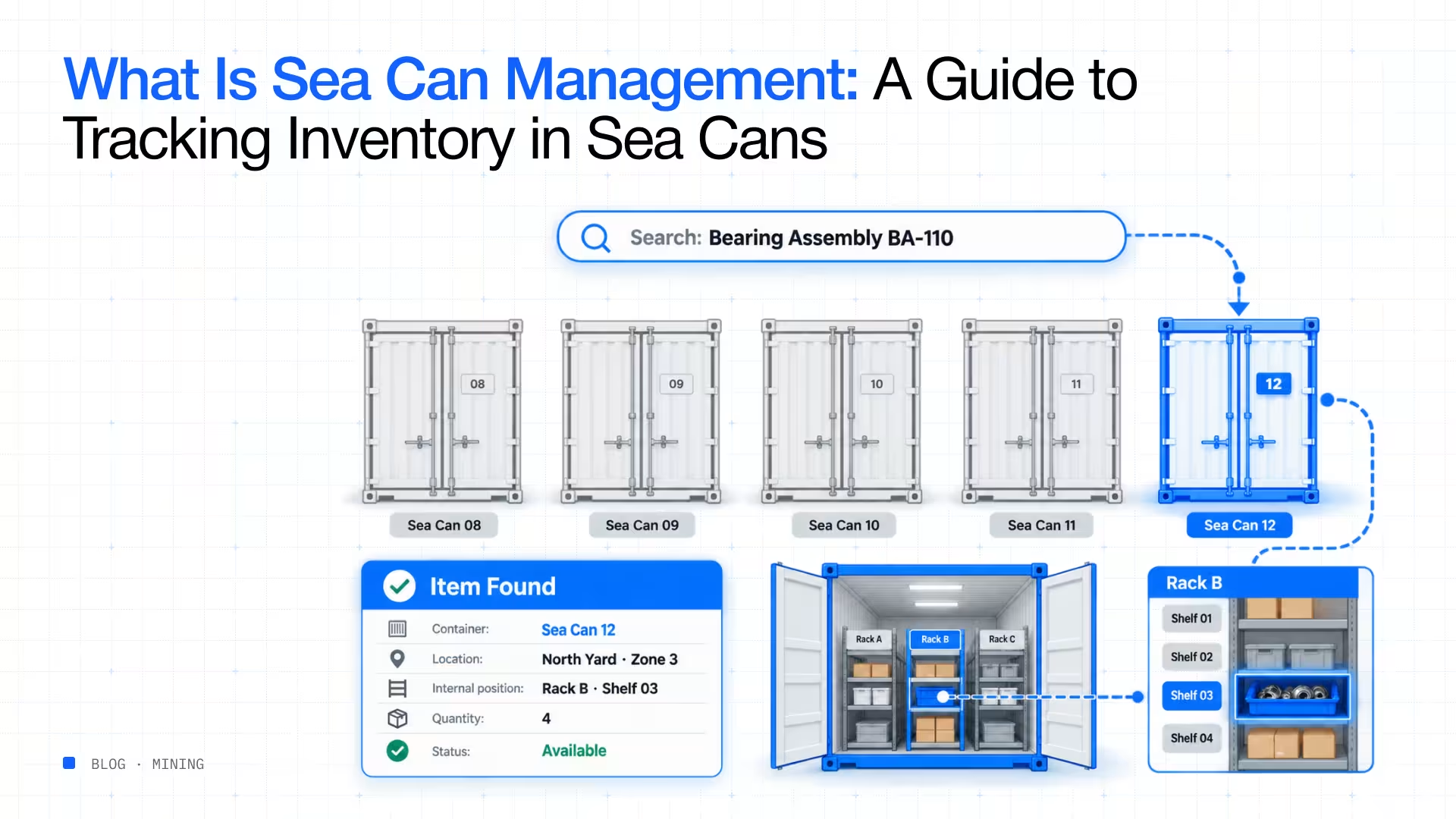

Tracking inventory in a small, structured warehouse is relatively straightforward because materials usually have defined shelves, aisles, bins and storage locations. The situation changes considerably when inventory is spread across a large industrial yard, where materials may be stored in open areas, laydown zones, containers, racks or temporary locations and can move several times before they are consumed. In these environments, knowing that an item exists is not enough because teams also need to know exactly where it is, whether it is available and how quickly it can be retrieved. This is why yard inventory tracking has become an important part of maintaining reliable inventory visibility across industrial operations.
Large yards create a different inventory challenge because physical space, movement and storage conditions are constantly changing. A material that was recorded in one location in the morning may have been moved to another zone by the afternoon, while a critical spare part may technically remain in stock but become difficult to locate when a maintenance team needs it. Manual counts, spreadsheets and delayed updates can make these discrepancies harder to identify and resolve. A more effective inventory tracking system connects physical inventory with digital records so teams can understand what is available and where it is located without relying entirely on physical searches.
For industrial organisations, the objective should not simply be to count inventory more frequently. The bigger objective is to create a reliable connection between inventory, location and movement throughout the yard. This requires the right combination of processes, location structures, mobile workflows and tracking technologies, including RFID where the environment and inventory type make it appropriate.
Large industrial yards are not designed like conventional warehouses. Materials may be stored across extensive areas, with different types of inventory requiring different storage conditions and handling methods. Some materials may remain stationary for months, while others move frequently between receiving areas, storage zones, workshops, warehouses and operational sites. As the physical footprint and number of movements increase, maintaining accurate inventory records becomes more difficult.
Another challenge is that the location of inventory can be just as important as its quantity. A system may show that a specific part is available, but that information has limited operational value if employees cannot determine where the part is physically stored. This is why yard inventory tracking needs to capture location information alongside quantity and item identity. Current industrial tracking solutions increasingly focus on real-time location and material visibility because manual procedures become harder to sustain as inventory volumes and physical areas grow.
The problem becomes even more significant when multiple teams interact with the same inventory. Warehouse personnel, maintenance teams, procurement staff, contractors and field workers may all move or request materials at different points in the inventory lifecycle. If those transactions are not captured consistently, the digital inventory record can quickly become different from what is physically present in the yard.
Yard inventory tracking is the process of identifying, locating, monitoring and managing inventory stored within an industrial yard. It allows organisations to maintain information about what materials are present, where they are stored, how they move between locations and whether they are available for use. Depending on the environment, an inventory tracking system can use barcodes, RFID, mobile applications, sensors or a combination of technologies to capture this information.
The most effective approach treats inventory tracking as a continuous process rather than a periodic stock-counting exercise. Inventory needs to be captured when it enters the yard, associated with its physical location, updated when it moves and reconciled when it is issued or consumed. This creates a more complete record of the inventory lifecycle and reduces the gap between physical activity and digital information.
For large industrial yards, this distinction is important because periodic counts only provide a snapshot. If materials move several times between counts, teams may still be working with outdated location information for much of the operating cycle. Real-time inventory tracking aims to reduce that gap by capturing relevant transactions closer to the point where they occur.
A useful inventory tracking system should capture more than an item number and quantity. The information required will depend on the organisation, but industrial operations commonly need visibility into the item's identity, location, status, movement history and relationship to the broader inventory record.
Every tracked item needs a reliable identity. This could be a part number, SKU, serial number, barcode, RFID tag or another identifier depending on the inventory type and tracking requirements. Consistent identification ensures that employees are looking at the same item in the physical environment and in the digital system.
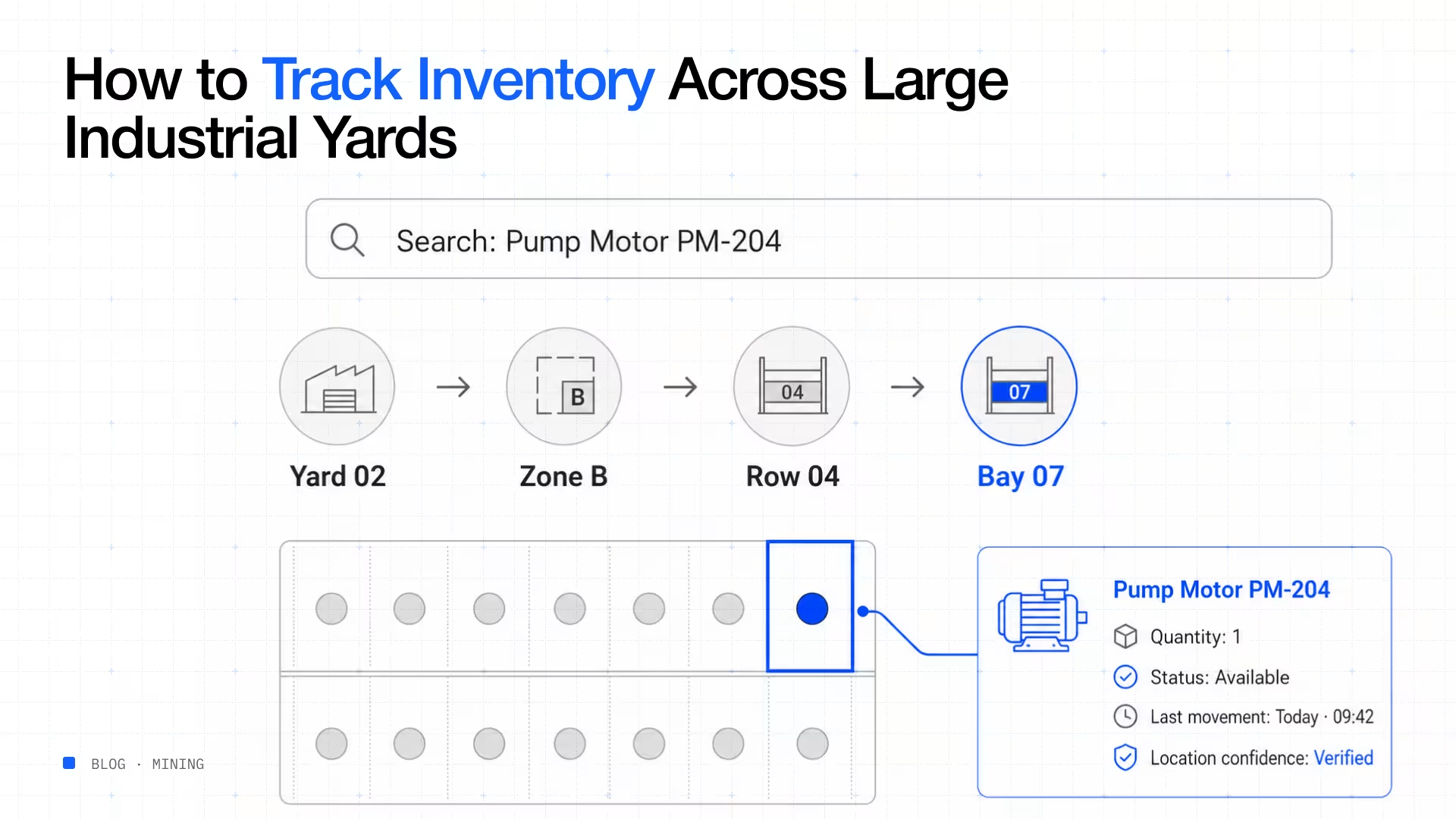
Location is one of the most important pieces of information for yard inventory tracking. Instead of recording only that an item is “in the yard,” organisations can create a location hierarchy such as yard, zone, row, rack, bay, container or storage position. This gives employees a much more practical way to locate inventory when it is needed.
The system should maintain current information about how much stock exists and whether it is actually available. An item can physically exist in the yard while being reserved, quarantined, damaged or allocated to another requirement. Connecting quantity with status prevents teams from assuming that every physically present item is immediately usable.
Tracking where an item has been provides context when discrepancies occur. If a material cannot be found in its expected location, movement history can help identify when it was last recorded and where it was transferred. This creates greater accountability without requiring employees to rely on memory or informal communication.
Inventory visibility should continue until the material is actually issued or consumed. This is particularly important for industrial spare parts and maintenance materials because an item leaving a yard does not necessarily mean it has already been consumed. Recording the final transaction helps maintain a more accurate inventory balance.
There is no single technology that works for every industrial yard. The right approach depends on the physical environment, inventory type, movement frequency, connectivity, required accuracy and level of automation. However, organisations can follow a structured process to create a stronger foundation for yard inventory tracking.
The first step is to understand the physical environment. Large yards should be divided into logical locations that can be represented consistently in the inventory system. These may include receiving areas, storage zones, racks, laydown areas, containers, staging areas and dispatch locations.
A location structure gives the inventory system a physical framework. Without it, even sophisticated tracking technology can produce information that is difficult for employees to interpret. A well-designed location hierarchy makes it possible to move from a broad view of the yard to the specific location of an individual material.
The next step is to ensure that inventory has consistent identifiers. Different teams should not use different names or codes for the same material because this can create duplicate records and make inventory searches unreliable.
Barcodes, QR codes or RFID tags can be used depending on the environment. The important principle is that the physical identifier should connect directly to the digital inventory record, creating a consistent relationship between the material on the ground and the information in the system.
Inventory should be recorded as close as possible to the point where it enters the yard. Receiving information can include the item identity, quantity, location, supplier details and any other attributes required for traceability.
Capturing this information immediately reduces the risk of materials entering the physical yard before they appear in the inventory record. It also establishes the starting point for tracking future movements.
One of the biggest weaknesses in manual inventory processes is that not every physical movement is recorded. A material may be shifted temporarily to make space for another delivery, transferred to another zone or moved closer to a work area without the digital record being updated.
A robust yard inventory management process should identify which movements need to be captured and make those transactions as simple as possible. Mobile applications can help employees update inventory from the yard rather than returning to a desktop workstation after every movement.
The value of an inventory tracking system depends heavily on how current its information is. If an item moves at 9:00 AM but the system is updated at the end of the shift, employees using the system during the day may be directed to the wrong location.
Real-time inventory tracking aims to minimise this information gap. It allows teams to work from information that more closely represents the physical state of the yard, which is particularly valuable when inventory is frequently moved or urgently required.
Even with automated technologies, organisations should maintain processes for reconciliation. Physical verification can help identify damaged tags, unrecorded movements, identification errors or other discrepancies that may affect inventory accuracy.
The objective is not to rely on manual counts as the primary tracking mechanism. Instead, periodic verification should complement continuous digital tracking and help ensure that the system remains aligned with the physical environment.
RFID can provide a more automated method of identifying and tracking inventory across large industrial yards. Instead of requiring employees to manually scan every item individually, RFID systems can use tags and readers to capture the identity of tagged materials as they move through defined areas or workflows. This can be particularly useful in environments where inventory volumes are high and manual scanning is difficult to sustain.
RFID is already being applied to outdoor and industrial inventory environments where large physical areas make traditional tracking methods challenging. RFID-based solutions can support location visibility, automated identification and faster inventory counts, depending on the system design and reader configuration.
For a large yard, the value of RFID is not simply that it can identify an item. The more important benefit is the ability to connect that identification with inventory records and operational transactions. When RFID information is integrated with location data and inventory workflows, teams can build a more continuous view of inventory movement rather than depending entirely on manual updates.
However, RFID should be implemented according to the physical characteristics of the yard. Metal structures, tag placement, reader positioning, environmental conditions and the required read range can all influence system performance. A successful RFID inventory tracking programme therefore requires both appropriate technology and a well-designed operational process.
Improve visibility across complex industrial environments: Explore Scatterlink’s RFID inventory management solution to understand how RFID can support yard inventory tracking.
Mobile technology can make inventory tracking more practical because employees can record transactions where the physical activity takes place. Instead of writing down a movement and updating the system later, a worker can use a mobile application to identify the material, update its location and record the relevant transaction at the point of activity.
This is particularly useful in large yards where employees may be working far away from a central office or workstation. Mobile inventory management can reduce the dependency on paper records and make inventory updates more immediate. It can also make the process easier for employees because the system becomes part of their normal workflow rather than an administrative task performed separately.
Connectivity is another important consideration. Industrial yards and remote locations may have inconsistent network coverage, which means an inventory application should be able to support workflows appropriate to the operating environment. Offline capabilities can allow transactions to be captured even when connectivity is temporarily unavailable and synchronised when a connection is restored.
Real-time inventory tracking changes the role of inventory data from a historical record into an operational information source. When teams can see current inventory locations and statuses, they can make decisions without waiting for the next physical count or asking another employee to confirm what is available.
This can reduce the amount of time spent searching for materials. Instead of walking through multiple yard areas to locate a component, an employee can use the system to identify its recorded location and determine whether it is available. Solutions using visual location mapping and real-time inventory information are increasingly designed around this objective, helping teams navigate inventory by physical location rather than relying solely on static lists.
Real-time information can also support procurement and inventory control. If teams have a reliable view of stock across the yard, they can check existing inventory before placing additional orders. This can reduce unnecessary purchasing and help organisations make better use of inventory already on hand.
Build connected, real-time inventory visibility: See how Scatterlink helps industrial organisations maintain visibility across warehouses, yards and other distributed locations.
A properly implemented inventory tracking system can improve several areas of yard operations. The first is inventory accuracy, because transactions and movements can be recorded closer to the point where they happen. This reduces the reliance on memory and delayed data entry that can cause discrepancies.
The second is faster inventory retrieval. When employees have reliable location information, they can find materials more efficiently instead of physically searching large areas. This can be especially important when maintenance teams require critical parts and delays can affect operational continuity.
Another benefit is better inventory utilisation. Organisations can identify stock that already exists in the yard before purchasing additional material, while also gaining greater visibility into slow-moving or underused inventory. This can help reduce unnecessary stock accumulation and improve working capital control.
Finally, connected inventory tracking provides a stronger foundation for decision-making. When inventory data is current, location-aware and connected across the operation, teams can use it to support procurement, maintenance, planning and operational decisions rather than treating inventory records as a simple compliance requirement.
Managing one large yard is challenging enough, but many industrial organisations operate across several locations. Inventory may be distributed between a central warehouse, multiple yards, remote storage areas and operational sites, making it difficult to understand the total stock position.
A multi-location inventory tracking system should therefore allow organisations to view inventory at both the individual location level and the broader operational level. Employees may need to know exactly where a part is stored, while procurement or management teams may need to know how much of that part exists across the entire network.
This is where connected inventory intelligence becomes important. Instead of creating separate inventory records for each yard, organisations can maintain a connected view of inventory while preserving the physical location of each item. This allows teams to make decisions based on the full inventory position rather than what happens to be visible at one site.
One of the most common mistakes is treating inventory counts as the same thing as inventory visibility. Counting inventory periodically can tell an organisation what was physically present at a particular moment, but it does not explain what happened between counts. In a high-movement yard, that gap can quickly become significant.
Another mistake is failing to standardise physical locations. If employees use inconsistent descriptions for the same area, the inventory system may technically contain location data while still being difficult to use. Location naming needs to be simple, consistent and aligned with how employees physically navigate the yard.
Organisations can also make the mistake of introducing technology without changing the underlying workflow. RFID, mobile applications and other technologies can improve data capture, but they cannot compensate for unclear processes or inconsistent inventory identification. Technology should support a clearly defined inventory lifecycle rather than being treated as a standalone fix.
Finally, organisations should avoid treating yard inventory as separate from the rest of their inventory environment. Materials often move between warehouses, yards, sea cans, remote sites and operational areas, so inventory visibility should extend across those transitions.
For industrial organisations, inventory rarely follows a simple warehouse-to-warehouse journey. Materials can move through receiving areas, yards, storage containers, remote sites and operational locations before they are ultimately consumed. Scatterlink is built around this broader inventory challenge, helping organisations maintain visibility from receipt to consumption rather than losing visibility when materials move beyond the traditional warehouse.
Scatterlink combines RFID, mobile workflows and inventory intelligence to connect physical inventory with the information teams need to make operational decisions. This is particularly relevant for organisations managing inventory across large industrial environments where surface and underground locations, remote sites and distributed storage areas can make traditional inventory processes difficult to maintain.
The objective is not simply to tell teams how much inventory exists. It is to provide accurate and actionable information about what inventory is available, where it is located and what is happening to it across the operation.
Turn inventory data into operational intelligence: Learn more about Scatterlink and its approach to inventory intelligence for complex industrial operations.
Tracking inventory across a large industrial yard requires more than periodic stock counts or spreadsheets. The physical environment is constantly changing, materials move between locations, and employees need current information about both inventory quantity and physical location. A strong yard inventory tracking strategy connects these physical activities with digital records so teams can work from a more reliable view of what is actually available.
The right approach combines standardised locations, consistent inventory identification, mobile workflows and appropriate tracking technologies. RFID can add automated identification and improve the efficiency of inventory capture, while mobile applications can allow teams to record transactions directly from the yard. When these capabilities are connected to an inventory tracking system, organisations can move towards real-time inventory visibility rather than relying on information that may already be outdated.
For industrial operations, the ultimate goal is simple: inventory should be visible, traceable and usable wherever it is stored. When teams can confidently identify what they have and where it is, they can spend less time searching for materials and make faster, better-informed decisions across maintenance, procurement and operations.
Yard inventory tracking is the process of identifying, locating and monitoring inventory stored across an industrial yard. It can track inventory quantities, physical locations, movements and statuses using technologies such as barcodes, mobile applications and RFID.
Inventory can be tracked by creating standardised yard locations, assigning unique identifiers to materials, recording inventory when it enters the yard and capturing movements as they occur. Organisations can use barcode, mobile or RFID technologies depending on their tracking requirements and physical environment.
The right inventory tracking system depends on the size of the yard, inventory types, movement frequency, connectivity and required level of automation. Industrial operations should look for location tracking, mobile workflows, real-time visibility, RFID compatibility, multi-location support and integration with existing inventory or ERP systems.
Yes. RFID can be used to identify and track tagged inventory in outdoor environments, provided the tags, readers and system configuration are appropriate for the physical conditions. Factors such as material type, metal surfaces, reader placement and required read range should be considered during implementation.
Real-time inventory tracking captures inventory transactions and location information as close as possible to the point where physical activity occurs. The information is then reflected in the inventory system, giving teams a more current view of stock, location and status.
Knowing the quantity of inventory without knowing its location can still leave teams unable to use it efficiently. Accurate location information helps employees find materials faster, reduces search time and provides greater confidence that inventory records reflect physical reality.
Yes. Mobile inventory applications allow employees to record receiving, movements, transfers, issues and other transactions directly from the yard. This can reduce paper-based processes and help keep inventory information more current.
An inventory tracking system can associate materials with defined physical locations and maintain a record of their movements. When employees can see where an item was last recorded and how it moved, they are less dependent on manual searches or individual employee knowledge.
Yes. A connected inventory tracking system can maintain visibility across multiple yards while still showing the specific location of individual materials. This allows organisations to understand both site-level inventory and their broader stock position across locations.
%20(1).avif)
.avif)
%20(1).avif)