
When an organisation operates across multiple warehouses, mine sites, workshops, stores or remote facilities, purchasing the same inventory twice is easier than it should be. One location may already have the required part in stock, while another raises a purchase order because that inventory is not visible to the people making the purchasing decision. Over time, these disconnected decisions can create excess inventory, unnecessary procurement costs and capital tied up in parts the organisation already owns.
The problem is rarely as simple as someone ordering the wrong item. In many industrial operations, duplicate inventory purchases are a symptom of fragmented inventory visibility, inconsistent inventory records and disconnected processes between locations. When procurement teams cannot see what is available across the wider inventory network, they are forced to make purchasing decisions based primarily on local stock information. This creates a situation where an organisation can have excess inventory overall while still experiencing shortages at individual sites.
Duplicate inventory purchases occur when an organisation purchases inventory that is already available elsewhere within its network. This can happen when the same part is held at another warehouse, site or workshop but the purchasing team does not have sufficient visibility to identify and use that existing stock. The result is an unnecessary purchase even though the organisation already has the required inventory.
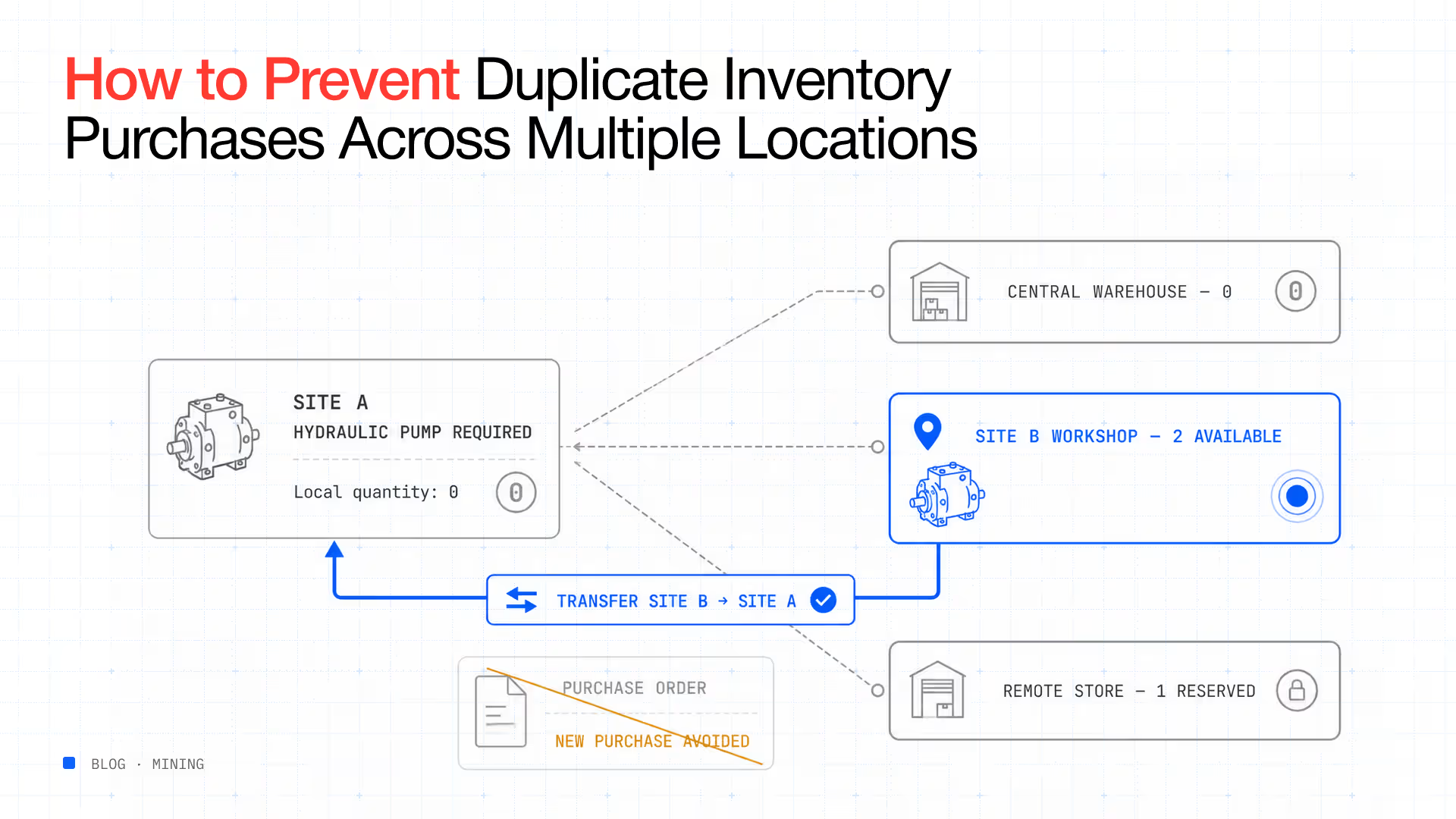
Consider a mining operation with multiple sites. A maintenance team at Site A needs a particular pump component and sees that its local inventory is at zero, so a purchase request is raised. Meanwhile, the same component may be sitting unused in a warehouse at Site B, but because the two locations are not operating from a reliable, shared inventory view, the existing stock is overlooked. The organisation then pays to purchase another unit, stores it again and increases its overall inventory holding.
This is why preventing duplicate inventory purchases requires more than tighter procurement approval. Organisations need to understand what inventory they already have, where it is located, whether it is actually available and whether it can be transferred before another purchase is approved.
One of the biggest causes of duplicate purchasing is the lack of a centralised view of inventory across locations. When each site primarily sees its own stock position, procurement teams may not know that another facility already has the required item available. This makes a new purchase appear necessary even when the organisation has sufficient inventory elsewhere.
The problem becomes more significant as the number of warehouses, workshops and operational sites increases. A procurement team cannot reasonably rely on emails, spreadsheets or manual phone calls every time it needs to determine whether a part exists somewhere else. Without real-time inventory visibility, the purchasing process is effectively operating with incomplete information.
Inventory visibility is only useful when the underlying information is accurate and current. If a part has been issued, transferred or consumed but the transaction has not been recorded, the system may continue to show inventory that is no longer available. The opposite can also happen, where inventory physically exists but has not been properly received or recorded in the system.
These transaction gaps create uncertainty for procurement teams. When employees cannot trust the quantity displayed in the system, they are more likely to purchase additional stock rather than risk waiting for an item that may not actually be available. Improving inventory accuracy therefore plays a direct role in reducing unnecessary purchases.
Duplicate purchases can also originate from inconsistent inventory data. The same component may have different descriptions, naming conventions, units of measure or internal identifiers at different locations. A buyer searching for one part may therefore fail to recognise that an equivalent item already exists under another record.
This is particularly common in large industrial operations where inventory has accumulated over many years. Legacy item records, supplier-specific descriptions and inconsistent part numbering can make it difficult to identify duplicate or interchangeable stock. Better item master data and standardised inventory classifications make it easier to search across the entire inventory network before purchasing.
Operational teams are often under pressure to resolve material requirements quickly. If a maintenance team needs a part to keep equipment running, raising a purchase order may appear faster than searching multiple locations and arranging an internal transfer. When this behaviour is repeated across sites, however, it can create significant duplication.
The organisation may effectively maintain several independent inventory pools instead of one connected inventory network. Each location protects itself by purchasing what it believes it needs, even when excess stock exists elsewhere. The result is higher inventory carrying costs without necessarily improving availability where it matters.
Duplicate purchasing does more than increase procurement spend. Every unnecessary purchase can increase the amount of working capital tied up in inventory, create additional storage requirements and increase the risk that parts become obsolete before they are consumed. For industrial operations managing large quantities of MRO and spare parts inventory, these costs can accumulate significantly across multiple sites.
There is also an operational consequence that is often overlooked. An organisation may appear to have plenty of inventory when looking at its total stock value, while individual locations continue to experience shortages because inventory is sitting in the wrong place. This creates the paradox of excess inventory and stockouts happening at the same time.
Duplicate inventory purchases can contribute to:
The wider issue is therefore not simply purchasing too much. It is the inability to make purchasing decisions using a complete view of existing inventory.
The first step in preventing duplicate inventory purchases is establishing a reliable view of inventory across the entire operational network. Procurement teams should be able to identify what stock exists, where it is located and whether it is currently available before deciding to purchase more. This is particularly important for organisations with multiple warehouses, surface and underground operations, workshops and remote sites.
A network-wide inventory view allows a purchase request to be evaluated against existing stock rather than only against the inventory available at the requesting location. If the required component is already available elsewhere, the organisation can consider transferring that stock instead of placing another order. This simple change can reduce unnecessary purchasing while making better use of inventory the organisation already owns.
Before a purchase order is raised, the process should answer several basic questions: Do we already have this item? Where is it located? Is it available for use? Can it be transferred? Is another quantity already on order? These questions should form part of the normal purchasing workflow rather than relying on someone remembering to check manually.
A more controlled process can follow a simple sequence: requirement identified, network inventory checked, available stock located, transfer considered, purchase approved only when required. This approach helps procurement teams distinguish between a genuine inventory shortage and a visibility problem.
Accurate inventory transactions are fundamental to preventing duplicate purchases. Receiving, issuing, transferring and consuming inventory should update the stock position as close to real time as possible, particularly for critical and high-value items. When transactions are delayed or missed, the system can quickly become disconnected from the physical inventory.
This is where real-time inventory tracking can make a significant difference. Technologies such as RFID, mobile inventory applications and connected inventory systems can improve the capture of inventory movements and reduce dependence on manual updates. See how Scatterlink supports RFID inventory management to improve inventory visibility from receipt through to consumption.
Preventing duplicate inventory purchases requires more than knowing how much stock is available. Procurement teams also need to know whether two inventory records actually refer to the same item, an equivalent item or interchangeable components. Without consistent item master data, the same part can appear under different descriptions or identifiers, making it difficult to recognise existing inventory before placing another order.
Standardising part numbers, descriptions, manufacturer information, units of measure and inventory categories creates a more reliable foundation for multi-location inventory management. Organisations should also identify equivalent and interchangeable parts where appropriate, particularly for commonly purchased MRO inventory. The objective is to make inventory searchable and understandable across the entire network, regardless of which site originally created the record.
When inventory is available at another location, an internal transfer may be more efficient than placing a new purchase order. This is particularly relevant for spare parts and MRO inventory that may have low consumption at one site but an immediate requirement at another. A transfer can make better use of inventory already owned while reducing unnecessary procurement and additional stock accumulation.
However, inter-site transfers only work when organisations have accurate visibility into stock location and availability. Teams need to know where the item is, whether it is physically available, whether it has already been reserved and what its current status is. Without reliable inventory tracking, transferring stock can simply move the visibility problem from one location to another.
A strong purchasing process should prevent a new order from becoming the default response to a local stock shortage. Before approving a purchase, organisations can introduce an inventory availability check that considers stock across warehouses, operational sites, workshops and other relevant locations. This creates a control point between identifying a requirement and committing additional capital.
The check should also consider stock already on order, inventory in transit and quantities reserved for other requirements. Looking only at available stock can produce another form of duplication if a shipment is already scheduled to arrive. A complete purchasing decision therefore requires visibility into both current inventory and inventory that is already moving through the supply chain.
Individual duplicate purchases may appear insignificant, but repeated purchasing patterns can reveal a much larger inventory management problem. If several sites repeatedly purchase the same components while other locations consistently hold excess quantities, the organisation may have an inventory distribution problem rather than a genuine shortage. Identifying these patterns allows procurement and inventory teams to investigate why the duplication is occurring.
Useful indicators include repeated purchases of identical part numbers, simultaneous purchases across different locations, frequent emergency orders and inventory transfers that occur shortly after new purchases. These patterns can indicate that procurement decisions are being made without sufficient network-wide inventory visibility. Reviewing purchasing and inventory movement data together can therefore reveal opportunities to consolidate stock and improve replenishment decisions.
Traditional ERP systems can provide an important foundation for inventory management, but the accuracy of purchasing decisions depends on the quality and timeliness of the information entering the system. In environments where inventory is constantly moving between warehouses, workshops, stores, surface operations and underground locations, manual updates can create gaps between recorded and physical stock. These gaps make it harder to determine whether an item really needs to be purchased.
Real-time inventory visibility helps close that gap by capturing inventory movements closer to the point where they occur. RFID, mobile applications and connected inventory processes can provide greater visibility into receiving, issuing, transferring and consuming stock. For industrial organisations looking to improve inventory control across complex operating environments, explore Scatterlink's inventory intelligence platform.
RFID inventory management can help organisations identify and track inventory without relying entirely on manual data entry. When inventory is tagged and captured through appropriate RFID processes, teams can improve visibility into where stock is located and when it moves between locations. This can make it easier to identify available inventory before purchasing additional quantities.
RFID is particularly useful where large volumes of inventory move through warehouses, stores and operational areas. Instead of relying solely on employees to manually locate and update every item, organisations can capture inventory movements more efficiently and improve the timeliness of inventory records. Learn more about Scatterlink's RFID inventory management solution.
A repeatable process can help organisations make inventory availability part of every purchasing decision. When a requirement is raised, the first step should be to identify the exact item and verify its inventory record. The organisation can then search across all relevant locations before deciding whether to transfer existing stock or purchase additional inventory.
A practical multi-location inventory process can follow these steps:
Confirm the part number, description, quantity and operational requirement before initiating procurement.
Search warehouses, stores, workshops, surface locations and underground operations for available stock.
Confirm whether identified stock is available, reserved, in transit, damaged or already allocated to another requirement.
Where applicable, check whether approved equivalent or interchangeable parts are available.
If suitable inventory exists at another location, determine whether transferring it is more appropriate than purchasing new stock.
Check whether the same item has already been ordered or is currently in transit.
If no suitable inventory is available across the network, proceed with procurement based on the actual requirement.
Ensure the purchase, receipt, transfer, issue or consumption is recorded so that future purchasing decisions are based on accurate information.
This process turns inventory visibility into an operational purchasing control. Instead of asking only whether a site has stock, procurement teams can determine whether the organisation as a whole already has what it needs.
Several warning signs can indicate that duplicate inventory purchasing is occurring across locations. One of the clearest is when the organisation carries high overall inventory levels while individual sites continue to report stock shortages. Another is frequent purchasing of the same part number by different locations without corresponding increases in consumption.
Other warning signs include excessive emergency purchasing, large quantities of dormant stock, frequent inter-site transfers after new purchases and significant differences between physical inventory and system records. If these issues occur together, the organisation may have a visibility and inventory control problem rather than simply a procurement problem.
Duplicate inventory purchases are often a visibility problem disguised as a procurement problem. When each location operates with limited information about inventory held elsewhere, purchasing additional stock can appear to be the safest and fastest decision. Over time, however, this behaviour can create excess inventory, increase working capital requirements and leave organisations with stock in the wrong locations.
The solution is to connect inventory visibility with purchasing decisions. Accurate item master data, real-time inventory transactions, network-wide stock visibility, controlled purchasing processes and efficient inter-site transfers can help organisations use inventory they already own before committing to another purchase.
For industrial operations managing inventory across multiple warehouses, surface and underground locations, workshops and remote sites, the goal should not simply be to reduce purchasing. It should be to make every purchasing decision using accurate, actionable information about what inventory exists, where it is and whether it is genuinely required. Discover how Scatterlink provides inventory visibility from receipt to consumption.
Duplicate inventory purchases are commonly caused by fragmented inventory visibility, inaccurate stock records, inconsistent item master data and purchasing processes that focus on individual locations rather than the entire inventory network. When procurement teams cannot see existing stock at other locations, they may purchase items the organisation already owns.
Inventory visibility allows procurement teams to see what stock exists, where it is located and whether it is available before purchasing additional quantities. This makes it possible to transfer existing inventory between locations instead of automatically placing a new purchase order.
ERP systems can support multi-location inventory management, but their effectiveness depends on the accuracy and timeliness of the inventory transactions entering the system. If receiving, issuing, transferring or consuming stock is recorded late or incorrectly, the system may not reflect the actual physical inventory available.
RFID can improve inventory tracking by automatically identifying tagged items and capturing movements with less reliance on manual data entry. When integrated into an inventory management process, RFID can improve visibility into stock location and movement, helping organisations make more informed purchasing and transfer decisions.
An internal transfer can be a better option when suitable inventory is already available elsewhere and can reach the requesting location within the required timeframe. However, the decision should consider operational urgency, transportation requirements, inventory criticality and whether the stock is actually available for transfer.
%20(1).avif)
.avif)
%20(1).avif)