
Choosing the right inventory tracking tool for mining is one of the most important technology decisions a mining operation can make. While many organizations initially consider generic Warehouse Management Systems (WMS), these platforms are typically designed for structured indoor warehouses and often struggle to support the realities of mining environments, where inventory is spread across stockyards, sea cans, laydown yards, maintenance workshops, and underground operations.
As mining sites become larger and operations more distributed, relying on warehouse-centric software can lead to inventory blind spots, inaccurate inventory records, duplicate purchases, and costly production delays. The right inventory platform should not only record inventory transactions but also provide real-time visibility into where inventory is, how it is moving, and when it is available for use.
In this guide, we'll compare a purpose-built inventory tracking tool for mining with traditional warehouse systems, explain why mining operations require a different approach, and provide an evaluation framework to help organizations choose the right solution for long-term operational success.
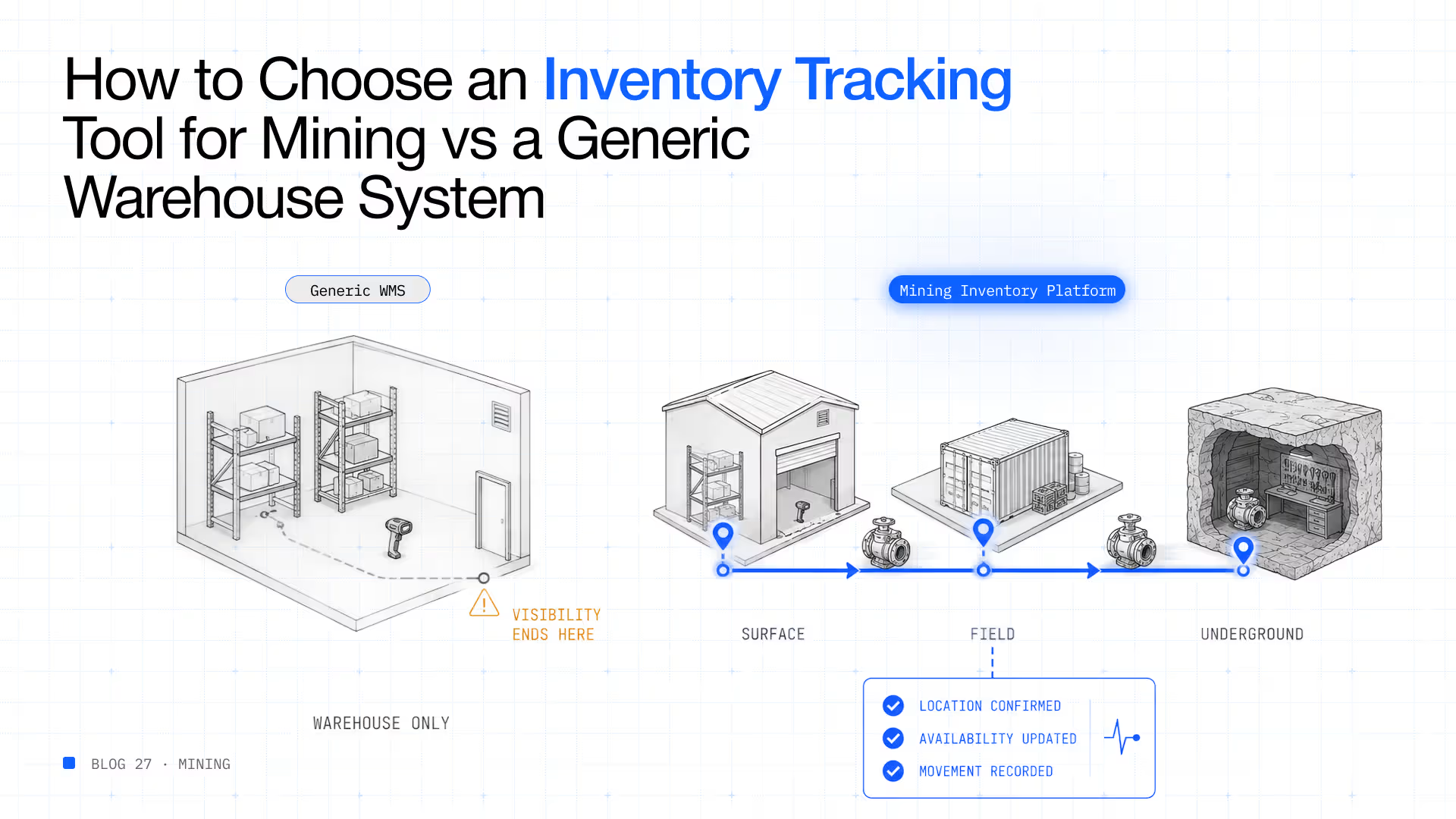
Generic Warehouse Management Systems are designed to optimize inventory inside structured warehouse environments where storage locations are fixed, internet connectivity is reliable, and inventory movement follows predictable workflows. Mining operations rarely fit this model.
Inventory on a mine site moves continuously between warehouses, stockyards, maintenance workshops, laydown areas, sea cans, mobile maintenance units, and underground storage locations. These environments are exposed to harsh weather, changing layouts, and remote operating conditions that conventional warehouse software was never built to support.
Most warehouse systems also assume that inventory transactions occur within a controlled facility. In mining, inventory is frequently issued directly in the field, transferred between remote sites, or consumed during maintenance activities long before someone has the opportunity to update the system. This delay creates inventory discrepancies that affect procurement, maintenance planning, and production schedules.
An inventory tracking tool for mining addresses these challenges by capturing inventory activity where work actually happens, providing continuous visibility instead of relying solely on manual transaction updates.
Mining inventory is operational inventory rather than warehouse inventory.
Unlike a distribution centre, where inventory moves through clearly defined receiving, storage, picking, and shipping processes, mining inventory supports ongoing production. Critical spare parts, maintenance tools, consumables, safety equipment, and operational materials must remain accessible across multiple operational environments at all times.
Inventory may be stored in:
Each location introduces different visibility challenges. Employees often spend significant time searching for inventory simply because there is no reliable way to determine its exact location.
An inventory tracking tool for mining is designed to manage inventory across these distributed environments while maintaining accurate inventory records regardless of where inventory is stored or moved.
One of the biggest operational challenges in mining is maintaining visibility across outdoor storage locations.
Stockyards, laydown yards, and sea cans rarely operate with the same level of structure as conventional warehouses. Inventory is frequently relocated to create space for incoming materials, support maintenance shutdowns, or improve equipment access. Unless every movement is recorded immediately, inventory quickly becomes difficult to locate.
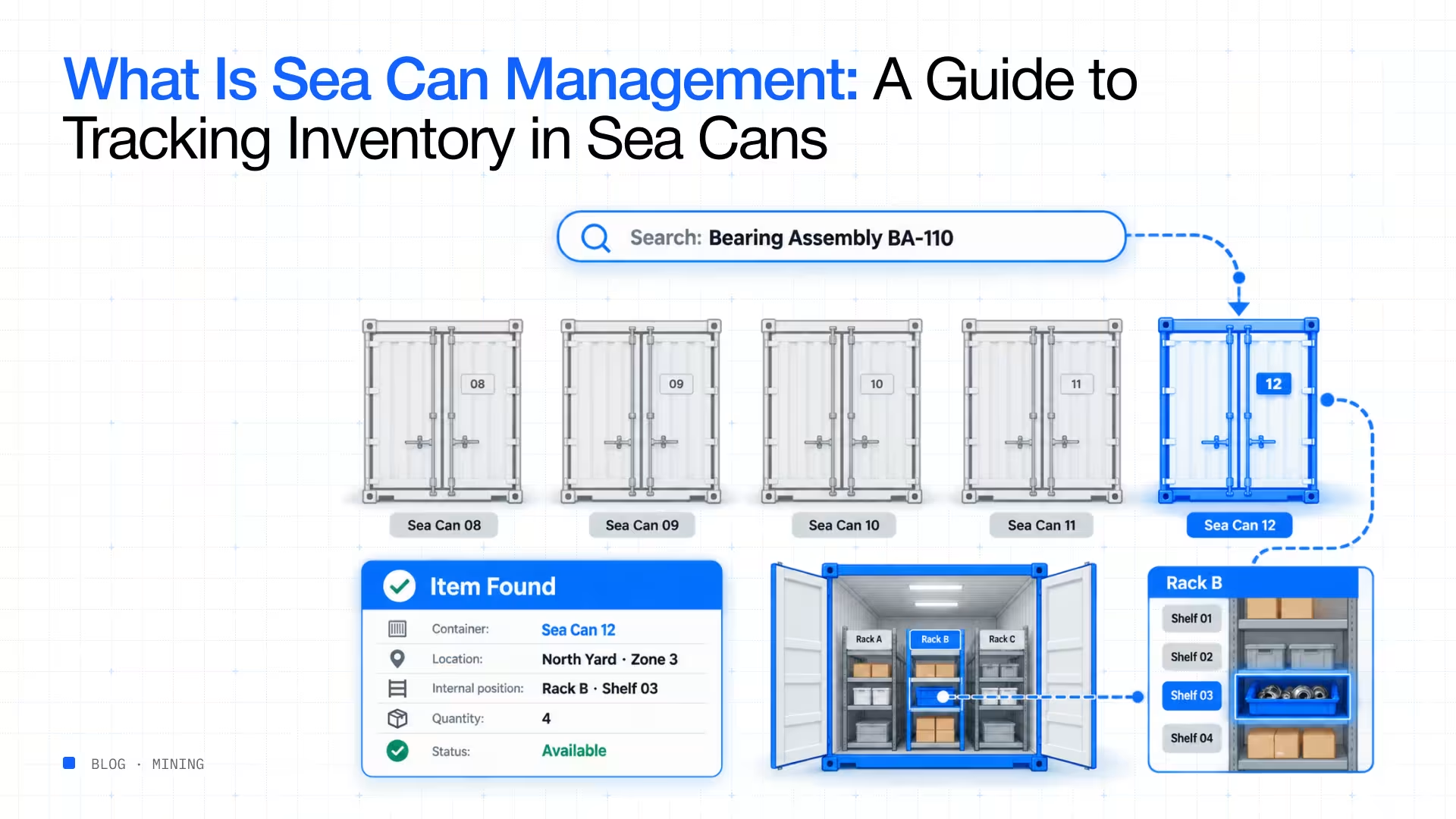
Sea cans present another challenge because they often contain hundreds of critical spare parts stored near active work areas. Over time, inventory may be added, removed, or relocated without proper documentation, resulting in inaccurate inventory records and lengthy searches during maintenance activities.
Laydown yards create similar issues. Large components may remain outdoors for months before installation, making it difficult for maintenance teams to determine whether inventory is still available or has already been moved elsewhere.
Purpose-built mining inventory platforms overcome these challenges by combining GPS-enabled location tracking, RFID technology, barcode scanning, and mobile inventory applications to provide accurate visibility across every storage location.
Choosing an inventory tracking tool for mining requires more than comparing feature lists. The platform should align with the operational realities of mining rather than adapting mining workflows to fit warehouse software.
An effective evaluation should consider whether the solution provides:
Organizations should also evaluate how easily frontline teams can adopt the solution. If warehouse personnel and maintenance technicians cannot use the platform efficiently, even the most advanced software will struggle to deliver operational value.
The right inventory tracking tool should fit your mining operation, not force your operation to fit the software. Discover how Scatterlink delivers real-time inventory visibility across every mining location.
The value of an inventory tracking tool for mining extends well beyond inventory control. When implemented correctly, it improves maintenance efficiency, procurement planning, inventory accuracy, and overall operational performance. Measuring return on investment helps mining organizations understand how inventory visibility contributes to business outcomes rather than simply evaluating software costs.
One of the first improvements organizations notice is a reduction in inventory search time. Maintenance teams can locate critical spare parts within minutes instead of spending hours searching warehouses, stockyards, or sea cans. This allows repairs to begin sooner, reducing equipment downtime and improving production continuity.
Another measurable benefit is improved inventory accuracy. Real-time inventory tracking ensures that inventory records closely match physical inventory, reducing the need for manual verification before issuing materials or placing purchase orders. Procurement teams gain greater confidence in inventory data, helping them avoid unnecessary emergency purchases and duplicate ordering.
Organizations also see measurable improvements in inventory utilization. With complete visibility across multiple storage locations, excess inventory can be identified and redistributed before new purchases are made. This lowers inventory carrying costs while freeing up working capital that would otherwise remain tied to idle stock.
Key performance indicators to monitor include:
Monitoring these KPIs provides a clear understanding of how an inventory tracking tool for mining contributes to operational efficiency and financial performance.
Warehouse Management Systems are designed primarily to manage storage locations and inventory transactions inside controlled warehouse environments. While they perform well in traditional distribution centres, they provide limited operational intelligence for mining organizations managing inventory across multiple outdoor and remote locations.
An Inventory Intelligence Platform takes a fundamentally different approach.
Instead of simply recording transactions, it continuously captures inventory movement, location, availability, and usage across the entire operation. Warehouse personnel, maintenance teams, procurement professionals, and operations managers gain access to accurate, real-time inventory information rather than relying on delayed updates or manual reconciliation.
Inventory intelligence also provides insights that traditional warehouse software typically cannot deliver. Organizations can identify slow-moving inventory, monitor inventory utilization, detect recurring discrepancies, analyze consumption trends, and improve replenishment strategies using real operational data.
Rather than functioning as another inventory database, an Inventory Intelligence Platform becomes an operational decision-support system that helps organizations improve inventory performance over time.
For mining companies operating across large, distributed sites, this level of visibility is essential for maintaining productivity and reducing inventory-related operational risk.
Scatterlink was built specifically to address the operational challenges that mining organizations face every day.
Unlike conventional warehouse software, Scatterlink's Inventory Intelligence Platform is designed to provide complete visibility across warehouses, stockyards, sea cans, laydown yards, maintenance workshops, and underground operations. It enables mining companies to manage inventory across every location through a single connected platform.
By combining RFID technology, barcode scanning, GPS-enabled location tracking, IoT devices, and offline-first mobile applications, Scatterlink captures inventory movements as they happen. Every inventory transaction becomes immediately visible across the organization, reducing delays between physical inventory activity and system updates.
The platform also integrates seamlessly with existing ERP systems, ensuring inventory information remains synchronized without disrupting established business processes. Maintenance teams can quickly locate spare parts, warehouse personnel can complete inventory transactions directly from mobile devices, and procurement teams can make purchasing decisions using accurate, real-time inventory information.
Designed for harsh industrial environments, Scatterlink requires minimal training and fits naturally into existing operational workflows. Instead of creating additional administrative work, it simplifies inventory management while providing the intelligence needed to support faster operational decisions.
Your inventory should never be a mystery. Discover how Scatterlink helps mining organizations gain complete visibility across surface and underground operations with real-time inventory intelligence.
Selecting the right inventory tracking tool for mining is about much more than replacing spreadsheets or upgrading warehouse software. It is about giving every operational team access to accurate, real-time inventory information that supports maintenance, procurement, warehouse operations, and production.
Generic Warehouse Management Systems often struggle to support the complexity of mining environments, where inventory is distributed across stockyards, sea cans, laydown yards, remote facilities, and underground operations. Purpose-built mining inventory platforms address these challenges by combining real-time visibility, RFID technology, offline mobility, GPS-enabled location tracking, ERP integration, and inventory intelligence into one connected solution.
Organizations that invest in a mining-specific inventory platform benefit from improved inventory accuracy, faster inventory searches, lower carrying costs, reduced duplicate purchases, and more efficient maintenance planning. These operational improvements translate directly into higher productivity and better financial performance.
For mining companies preparing for the future, choosing an inventory solution designed specifically for mining operations is one of the most effective ways to improve inventory control while reducing operational risk.
Ready to replace inventory uncertainty with complete visibility? See how Scatterlink helps mining operations track inventory from receipt to consumption across every surface and underground location.
A dedicated inventory tracking tool for mining is designed to manage inventory across warehouses, stockyards, sea cans, laydown yards, maintenance workshops, and underground locations. It provides real-time inventory visibility that generic warehouse systems typically cannot deliver.
Warehouse Management Systems can manage basic inventory transactions, but they are generally designed for structured indoor warehouses. Mining operations often require additional capabilities such as offline mobility, RFID tracking, GPS-enabled location tracking, and multi-site inventory visibility.
The most important features include real-time inventory visibility, RFID and barcode support, offline mobile applications, ERP integration, GPS-enabled location tracking, inventory intelligence, multi-site inventory management, and comprehensive inventory analytics.
Real-time inventory visibility helps maintenance teams locate parts faster, improves inventory accuracy, reduces duplicate purchases, lowers inventory carrying costs, and enables procurement and operations teams to make decisions using current inventory information.
No. A mining inventory platform complements an ERP by providing real-time operational visibility while allowing the ERP to continue serving as the organization's system of record.
%20(1).avif)
.avif)
%20(1).avif)