
Inventory management no longer happens only inside a warehouse. Across mining operations, construction sites, manufacturing facilities, oil and gas fields, utilities, and maintenance workshops, inventory transactions happen wherever work is taking place. Spare parts are issued during repairs, materials are received directly at job sites, equipment is transferred between locations, and inventory counts are performed across large operational areas.
Despite this shift, many organizations still rely on desktop systems or manual paperwork to update inventory records. Employees often complete their work in the field before returning to an office or warehouse terminal to record transactions. This delay creates inventory inaccuracies, slows decision-making, and increases the risk of missing inventory movements.
A mobile inventory management app solves this challenge by bringing inventory management directly to frontline teams. Instead of adapting field operations to fit office-based systems, organizations can enable employees to receive, issue, transfer, count, and search inventory from the exact location where work is happening.
As industrial operations become increasingly distributed, a mobile inventory management app has become an essential tool for improving inventory accuracy, increasing productivity, and providing real-time inventory visibility across every operational site.
In this guide, we'll explore how a mobile inventory management app supports field teams, the features organizations should look for, and why mobile inventory technology has become a key component of modern inventory intelligence.
Field teams work differently from warehouse teams.
Maintenance technicians repair equipment across large industrial sites. Construction supervisors receive materials directly at active projects. Mining personnel issue spare parts underground and across surface operations. Utility crews carry inventory in service vehicles while responding to field maintenance requests.
These employees rarely have immediate access to desktop inventory systems.
Without a mobile inventory management app, inventory transactions are often delayed until workers return to an office or warehouse. During that time, inventory records no longer reflect what is physically happening in the field.
This delay creates operational challenges throughout the organization. Maintenance planners cannot accurately verify inventory availability. Warehouse teams lose visibility into issued inventory. Procurement departments make purchasing decisions using outdated information.
By allowing transactions to occur where work happens, a mobile inventory management app keeps inventory information accurate and current throughout the working day.
Many industrial organizations continue to manage field inventory using manual methods. Employees complete paper issue slips. Inventory movements are written on whiteboards.
Stock transfers are communicated verbally. Inventory adjustments are entered into ERP systems hours later. Although these processes may appear manageable, they introduce unnecessary risk as operations grow.
Manual updates are easily forgotten. Paperwork is delayed. Inventory quantities become inaccurate. Employees spend valuable time correcting inventory records instead of completing operational work.
A mobile inventory management app eliminates these delays by allowing inventory information to be captured immediately, improving both inventory accuracy and operational efficiency.
A modern mobile inventory management app supports nearly every inventory activity performed by frontline teams.
Depending on operational requirements, users can:
Instead of waiting until the end of a shift, every transaction becomes part of the organization's real-time inventory record.
The biggest advantage of using a mobile inventory management app is not simply convenience.
It is visibility. As field teams record inventory movements in real time, every department gains immediate access to updated inventory information. Warehouse personnel know what inventory has been issued.
Maintenance planners know whether spare parts remain available. Procurement teams understand actual inventory levels before placing purchase orders. Operations managers gain greater confidence in inventory reporting across multiple sites.
Because inventory records remain current throughout the day, organizations spend less time verifying inventory and more time making informed operational decisions.
Your field teams shouldn't have to wait until they're back at a desk to update inventory. Discover how Scatterlink's mobile inventory management app helps capture inventory transactions in real time.
Not every mobile inventory management app is designed for industrial environments. Operations that span warehouses, stockyards, construction sites, mine sites, and remote facilities require capabilities that go well beyond simple stock updates.
The most effective solutions should include:
These features help ensure the app supports field operations rather than slowing them down.
Industrial operations don't always have reliable internet access.
Mining personnel work underground. Construction teams operate on remote project sites. Utility crews travel between field locations. Maintenance technicians often perform repairs in areas where network connectivity is weak or unavailable.
If a mobile inventory management app depends entirely on an internet connection, inventory updates are delayed until employees return to a location with network access. During that delay, inventory records no longer reflect what is actually happening in the field.
An offline-first mobile inventory management app removes this limitation.
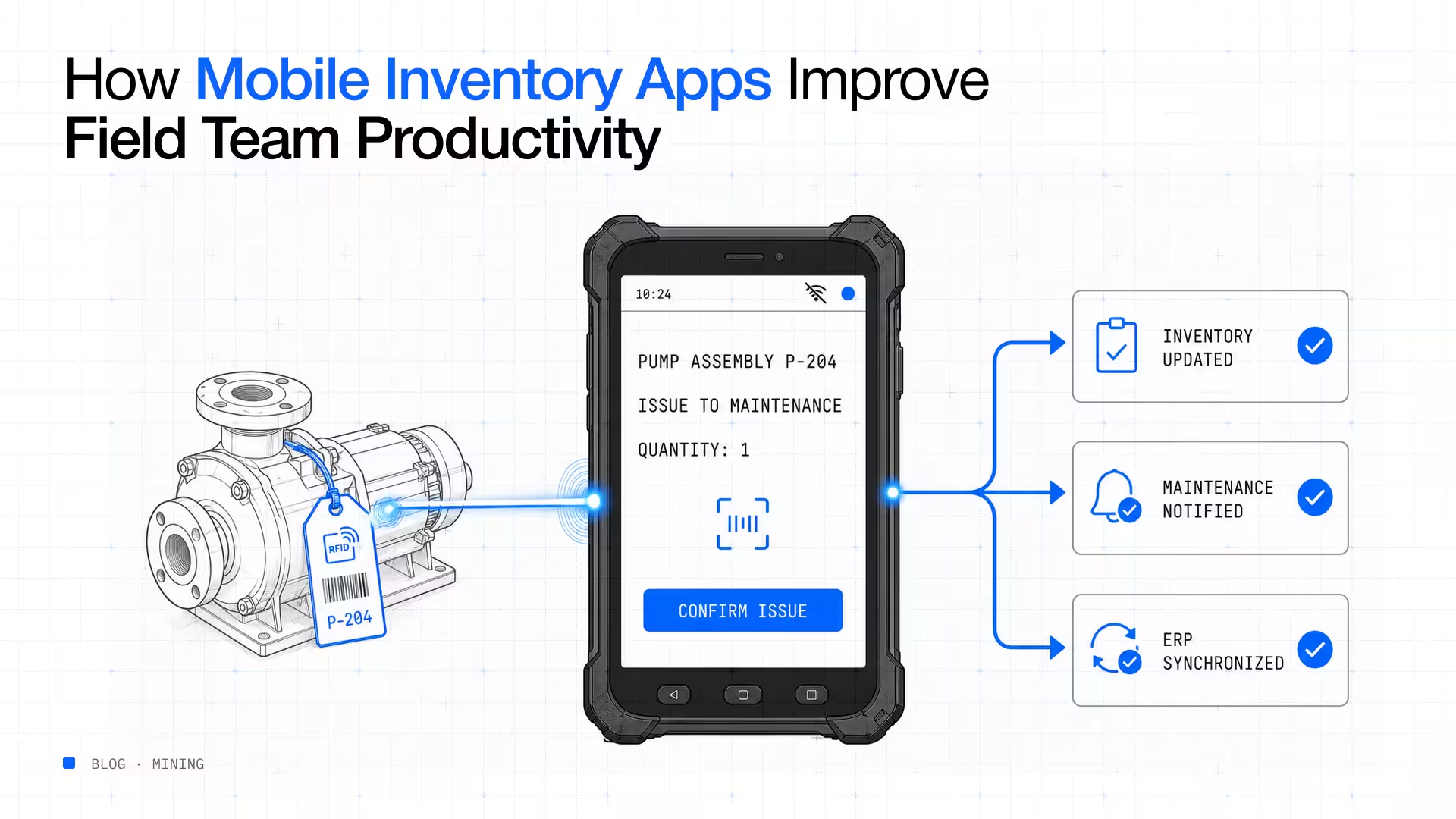
Employees can continue receiving inventory, issuing spare parts, transferring materials, completing cycle counts, and recording inventory adjustments even when disconnected from the network. Once connectivity is restored, transactions synchronize automatically with the central inventory platform.
This ensures inventory accuracy without disrupting field operations, making offline capability an essential feature for organizations operating across remote or challenging environments.
Speed matters when field teams are managing inventory alongside their primary responsibilities.
Entering part numbers manually increases the risk of errors and slows down routine tasks. Barcode and RFID technology simplify inventory transactions by allowing users to identify inventory quickly and accurately.
With a mobile inventory management app, field personnel can scan a barcode or RFID tag to:
This reduces manual data entry while ensuring inventory information remains accurate throughout the day.
For organizations managing thousands of inventory items across multiple sites, barcode and RFID functionality significantly improves both productivity and inventory accuracy.
The value of a mobile inventory management app extends beyond inventory management.
It improves how field teams work. Instead of walking back to a warehouse office to check inventory availability, technicians can search inventory from their mobile device.
Instead of completing paperwork after finishing maintenance work, transactions are recorded immediately. Instead of calling warehouse personnel to locate spare parts, employees can verify inventory locations before travelling across the site.
These seemingly small improvements eliminate countless interruptions throughout the working day. Field teams spend more time completing maintenance, inspections, and operational work, while less time searching for inventory, filling out paperwork, or waiting for inventory confirmations.
For organizations operating across large industrial facilities, these productivity gains quickly become measurable.
Your field teams should spend their time maintaining equipment, not updating spreadsheets. See how Scatterlink's mobile inventory management app helps simplify inventory transactions wherever work happens.
Many organizations view mobile inventory applications as a convenient way to replace paper forms.
In reality, they play a much larger role.
Every transaction completed through a mobile inventory management app contributes to a more accurate and complete picture of inventory activity across the organization.
This information supports:
As inventory information becomes more reliable, organizations move beyond simply tracking inventory and begin using inventory intelligence to support operational decision-making.
Scatterlink's Inventory Intelligence Platform is designed for industrial organizations where inventory management happens far beyond the warehouse.
Its mobile inventory management app allows field teams to receive inventory, issue spare parts, transfer materials, perform cycle counts, search inventory, and record inventory movements directly from their mobile devices.
By combining barcode scanning, RFID technology, offline-first mobile capability, GPS-enabled location support where required, IoT connectivity, and seamless ERP integration, Scatterlink provides real-time inventory visibility across warehouses, stockyards, construction sites, mine sites, maintenance workshops, and remote operational locations.
Because the application is built around frontline workflows, employees require very little training to begin using it. The interface is simple, intuitive, and designed to reduce administrative effort rather than add to it.
Instead of asking field teams to adapt to complex software, Scatterlink fits naturally into the way they already work.
The result is accurate, intelligent, and actionable inventory information that helps warehouse teams, maintenance personnel, procurement professionals, operations managers, and leadership make faster, more confident decisions.
Looking for a mobile inventory management app built for industrial operations? Discover how Scatterlink helps field teams improve productivity while delivering real-time inventory visibility from receipt to consumption.
As industrial operations become more distributed, inventory management can no longer depend on desktop systems and delayed updates. Field teams need tools that allow them to manage inventory wherever work takes place, whether that is on a construction site, inside a mine, at a maintenance workshop, or across a remote operational facility.
A mobile inventory management app enables organizations to capture inventory transactions in real time, improve inventory accuracy, reduce manual processes, and provide every department with immediate access to current inventory information.
When combined with barcode scanning, RFID, offline-first functionality, and ERP integration, mobile inventory technology becomes more than a productivity tool. It becomes a critical component of inventory intelligence, helping organizations make better operational decisions while improving efficiency across every location.
For asset-intensive industries, investing in a mobile inventory management app is no longer about replacing paper processes. It is about empowering field teams with the visibility and tools they need to keep operations moving.
A mobile inventory management app allows employees to receive, issue, transfer, search, count, and manage inventory directly from smartphones, tablets, or rugged handheld devices without relying on desktop systems.
Industrial organizations use a mobile inventory management app to improve inventory accuracy, reduce paperwork, increase field productivity, support real-time inventory visibility, and simplify inventory management across warehouses and remote operational sites.
Yes. An offline-first mobile inventory management app allows employees to continue recording inventory transactions without network connectivity. Once connectivity is restored, data synchronizes automatically with the central inventory platform.
Key features include barcode and RFID scanning, offline capability, inventory search, real-time synchronization, ERP integration, multi-location inventory visibility, cycle counting, and inventory transfer management.
Mining, construction, manufacturing, oil and gas, utilities, logistics, field services, and other asset-intensive industries benefit because inventory transactions frequently occur outside traditional warehouse environments.
%20(1).avif)
.avif)
%20(1).avif)