
Operational leaders are expected to make critical decisions every day.
Whether responding to supply chain disruptions, prioritizing maintenance work, reallocating resources, or managing inventory across multiple locations, those decisions often need to be made quickly and with limited room for error.
The challenge is that speed alone doesn't create better decisions. Reliable information does.
Many organizations have access to vast amounts of operational data through ERP systems, spreadsheets, maintenance software, and warehouse management platforms. Yet when a decision needs to be made, teams often spend valuable time verifying information, confirming inventory availability, or reconciling conflicting records before they can take action.
In today's operating environment, the ability to respond quickly depends on more than having data. It depends on having operational intelligence.
Industrial organizations generate thousands of operational data points every day. Purchase orders are created, inventory is received, work orders are completed, materials are issued, equipment is serviced, and inventory moves between warehouses and operational sites.
While these activities generate valuable information, raw data alone provides limited value. Decision-makers need context. They need confidence that the information reflects what is happening on the ground today, not what happened several hours or days ago. Without that confidence, every important decision takes longer than it should.
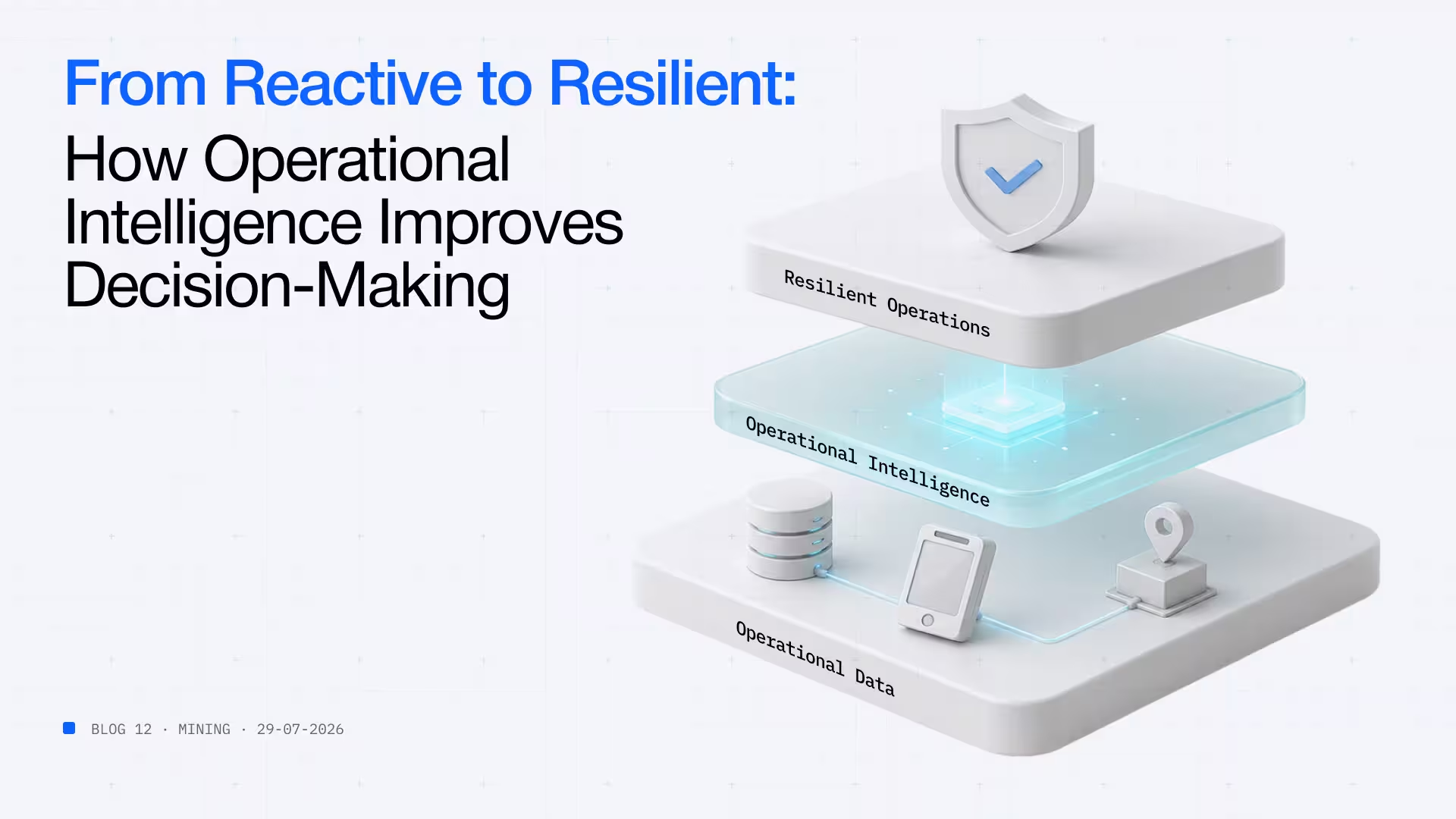
Operational intelligence transforms data into information that people can immediately use. Instead of simply showing inventory quantities or transaction histories, it helps organizations understand what those numbers mean and what actions should be taken next.
For example, operational intelligence can help answer questions such as:
Providing these answers in real time allows organizations to respond with greater speed and confidence.
Build compliance directly into your daily operations. Discover how Scatterlink’s digital workflow tools automate transaction tracking as work happens, keeping your data audit-ready.
Many operational delays are not caused by a lack of inventory or resources.
They occur because teams are working with outdated or incomplete information.
A maintenance supervisor waits for confirmation that a spare part is available. Procurement delays a purchase order while verifying existing inventory. Warehouse personnel manually search for materials because system records no longer reflect physical locations.
Each delay may only take a few minutes.
Across an organization, those minutes accumulate into hours of lost productivity, slower maintenance response times, and increased operational costs.
When information is available in real time, these unnecessary delays begin to disappear.
Operational intelligence should not be limited to senior leadership.
Every role benefits from having access to accurate and timely information.
Frontline employees need confidence that inventory records match physical inventory. Warehouse teams require visibility into inventory movement. Procurement depends on reliable stock information to avoid unnecessary purchases. Operations managers need a complete view of inventory availability to support production planning.
When every department works from the same trusted information, collaboration improves and decision-making becomes significantly faster.
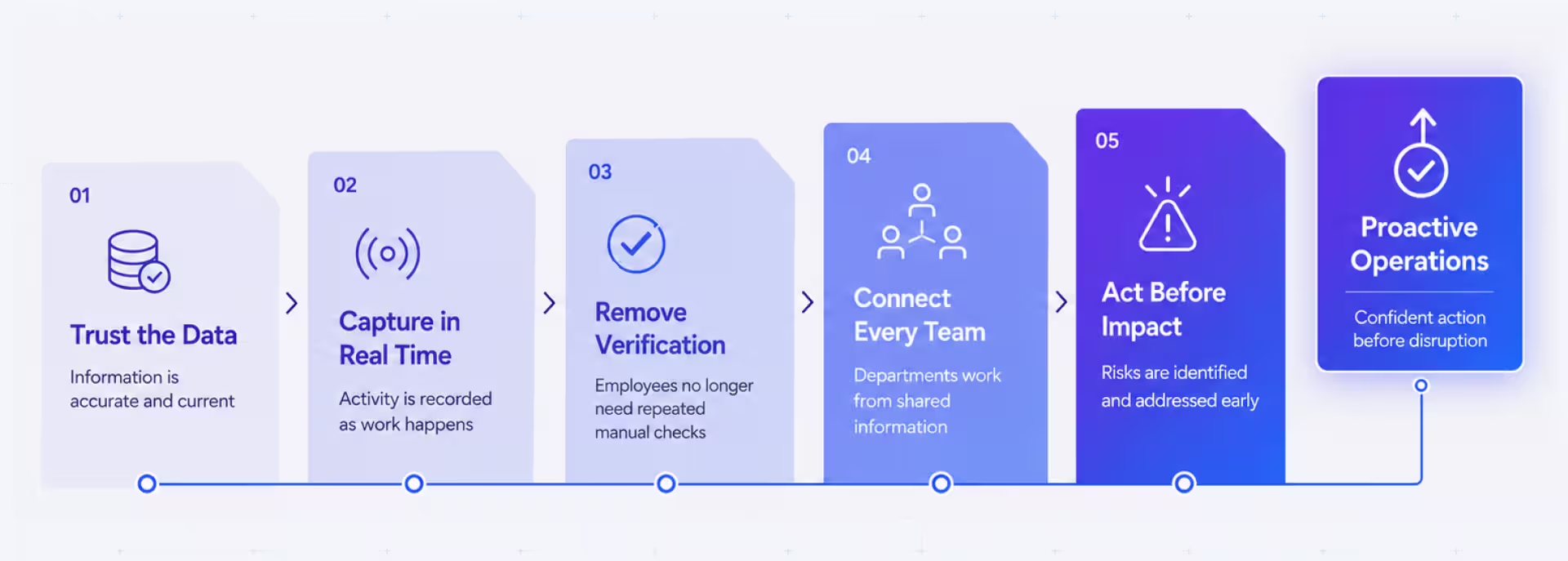
Organizations that consistently respond well to operational challenges often share several characteristics.
These characteristics strengthen operational performance regardless of industry or business size.
Stop losing productive hours to manual inventory searches. See how Scatterlink provides complete visibility into stock availability across all your warehouses and facilities.
Technology should never overwhelm employees with more dashboards or more data.
Its purpose is to simplify decision-making.
The most effective digital platforms remove uncertainty by providing accurate information at the moment decisions need to be made. They reduce manual processes, improve operational visibility, and help teams focus on solving problems rather than searching for answers.
This is where operational intelligence creates lasting business value.
At Scatterlink, we believe operational data should do more than record transactions.
It should help organizations make better decisions.
Our Inventory Intelligence Platform combines RFID, barcode scanning, IoT devices, intuitive mobile workflows, and ERP integration to provide real-time visibility into inventory movement, location, and usage. Rather than requiring employees to perform additional administrative work, Scatterlink integrates naturally into existing operational processes, making inventory tracking simple and intuitive.
The result is accurate, intelligent, and actionable information that supports everyone from frontline workers locating critical materials to executives making strategic operational decisions.
Eliminate duplicate purchases and emergency shipping fees. Book a live demo with a Scatterlink specialist to see how intelligent inventory management protects your operational budget.
Industrial organizations are under constant pressure to make faster, smarter decisions.
Meeting that expectation requires more than collecting operational data. It requires transforming that data into intelligence that people can trust and act on immediately.
Organizations that invest in operational intelligence reduce uncertainty, improve collaboration, strengthen operational resilience, and respond more effectively to change.
In an increasingly complex operating environment, the organizations that make the best decisions will not necessarily have the most data.
They will have the most reliable information.
Operational intelligence is the process of transforming real-time operational data into actionable insights that improve decision-making across an organization.
Operational data records business activities, while operational intelligence provides context and insights that help organizations make informed decisions based on that data.
Real-time information helps organizations respond faster to operational changes, reduce delays, improve collaboration, and make confident decisions using current information rather than outdated records.
Operational intelligence reduces uncertainty, improves inventory visibility, supports proactive decision-making, minimizes operational delays, and enables more efficient use of resources.
Scatterlink combines real-time inventory visibility, RFID, barcode scanning, IoT technology, mobile workflows, and ERP integration to provide accurate, intelligent, and actionable operational information that improves decision-making across industrial operations.
RFID inventory management uses radio frequency identification (RFID) technology to automatically identify, locate, and track inventory throughout its lifecycle. Compared to manual inventory processes and barcode-only systems, RFID provides faster inventory counts, improved inventory accuracy, and real-time visibility across warehouses, stockyards, field locations, and industrial operations.
RFID asset tracking software helps organizations monitor inventory and equipment in real time by combining RFID tags, readers, mobile applications, and centralized inventory intelligence. It reduces manual data entry, shortens inventory search time, improves inventory accuracy, and provides complete visibility across multiple operational locations.
Mining operations manage inventory across warehouses, stockyards, sea cans, laydown yards, workshops, field locations, and underground environments. Purpose-built asset tracking software for mining, mining asset tracking platforms, and mining equipment tracking systems provide real-time visibility, offline mobile capability, and RFID-based tracking that traditional warehouse management systems are not designed to support.
%20(1).avif)
.avif)
%20(1).avif)