
Explosives inventory does not remain in one place. It moves from receipt into storage, between locations, through issue and eventually into the blasting process. At every stage, the inventory record needs to remain connected to what is physically happening on site.
This is where explosives tracking becomes critical. Knowing the current stock balance is useful, but it does not provide the complete picture. Mining operations also need to understand where inventory came from, where it moved, who handled the relevant transaction and what happened to it after issue.
When these movements are recorded across paper registers, spreadsheets or disconnected systems, it becomes harder to establish a reliable inventory history. A connected tracking process can provide greater visibility from the moment explosives enter the operation through to their eventual consumption.
Explosives tracking is the process of recording and monitoring inventory movements throughout the explosives lifecycle.
For a mining operation, this can include receiving inventory, recording storage, transferring stock between locations, issuing inventory for use, recording returns where applicable and capturing relevant consumption information.
The purpose is not simply to know how much inventory exists. It is to maintain a clear connection between inventory, location, movement and transaction history.
The inventory lifecycle begins before explosives reach a magazine. Once received, inventory becomes part of the site’s stock position and may subsequently move through several locations and operational processes.
If each stage is recorded separately, the connection between those stages can become difficult to establish. A current stock balance may show what remains, but it may not explain how the inventory reached that position.
End-to-end explosives tracking creates a continuous inventory history. This gives authorised users greater visibility into what happened to inventory from receipt through storage and movement to its eventual use.
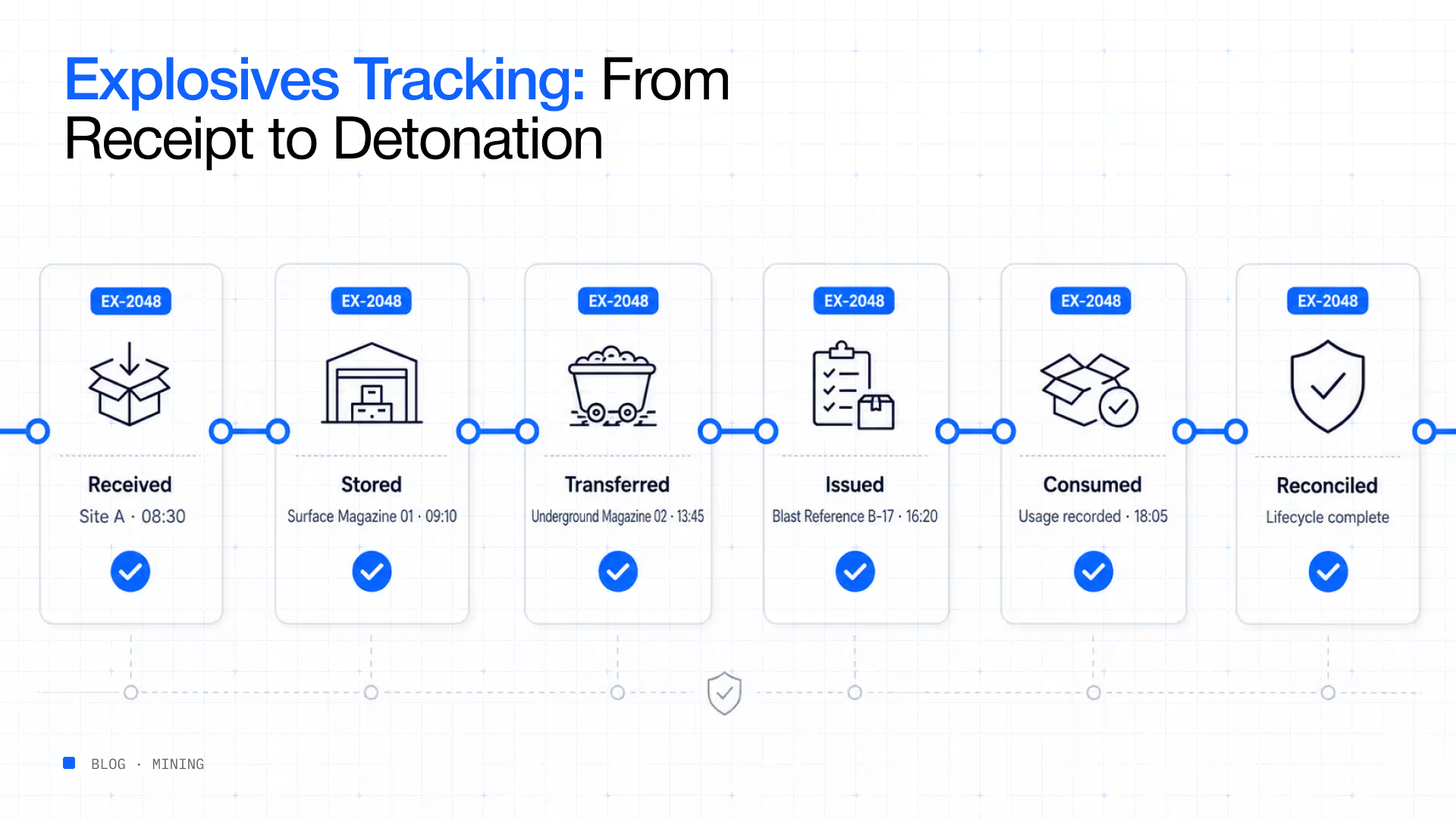
A typical explosives inventory lifecycle can be viewed across several connected stages:
Receipt → Storage → Movement → Issue → Use → Reconciliation
Each stage contributes information to the overall inventory record.
At receipt, the operation establishes what inventory has entered the system. During storage and movement, the location and transaction history need to remain accurate. At issue and use, the operation needs to maintain visibility into what left inventory and how that activity affected the recorded stock position.
The exact workflow will vary between mining operations, but the principle remains the same: each inventory event should contribute to one connected record.
The first stage of explosives tracking is receiving inventory into the operation.
The receipt transaction establishes the initial inventory record and provides the starting point for everything that follows. If this information is incomplete or inaccurate, subsequent inventory balances can also be affected.
Digital receiving workflows can help standardise how incoming inventory is recorded and associated with the appropriate location. This creates a reliable starting point for the inventory lifecycle.
Once explosives have been received, the inventory needs to remain associated with the correct storage location.
For operations managing multiple magazines, knowing the overall stock position is not enough. Teams need visibility into the inventory held at each relevant magazine and location.
Location-level tracking helps authorised users understand where stock is currently recorded and provides a foundation for subsequent movements, stocktaking and reconciliation.
If you need clearer visibility into explosives held across individual magazines, explore MagControl to see how Scatterlink supports digital explosives inventory management.
Explosives may move between magazines or other authorised inventory locations depending on operational requirements. Every movement changes the inventory position of the locations involved.
The tracking system should therefore connect the movement to both its originating and receiving locations. This creates a clearer record of where inventory came from and where it went.
Without this connection, teams may have to compare separate magazine records to determine whether a transfer was completed correctly.
Issue is another critical point in the inventory lifecycle. Once inventory leaves storage for operational use, the recorded stock position needs to reflect the transaction.
A controlled issue workflow can capture the relevant inventory movement and maintain it within the broader transaction history. This helps distinguish inventory that remains in storage from inventory that has moved into the next stage of the operational process.
The more consistently these transactions are recorded, the easier it becomes to maintain an accurate inventory balance.
The inventory lifecycle does not end simply because stock has been issued. Mining operations may also need visibility into what was ultimately consumed during blasting activity.
Consumption tracking can connect the inventory that left storage with the relevant operational use. This creates a stronger link between inventory management and the physical outcome of the blasting process.
It also helps explain the difference between inventory that was received, inventory that remains in storage and inventory that has been consumed.
The two concepts are closely connected, but they are not exactly the same.
Explosives inventory management focuses on controlling the overall inventory process, including stock levels, locations, transactions, reconciliation and inventory accuracy.
Explosives tracking focuses more specifically on following inventory as it moves through those processes.
Effective inventory management therefore depends on effective tracking. If an operation cannot reliably track inventory movements, maintaining an accurate inventory position becomes significantly harder.
Movement tracking creates the history behind the inventory balance.
Imagine a magazine currently shows a particular stock quantity. Without movement history, that number provides limited context. With a connected transaction history, authorised users can understand which receipts, transfers, issues and other transactions contributed to the current balance.
This is particularly valuable when investigating discrepancies. Instead of starting with a stock count and trying to reconstruct what happened, teams can review the relevant movement history.
Digital tracking can connect inventory movements to locations and transaction records within one system.
This means authorised users can access the information needed to understand both the current inventory position and the activity behind it. Instead of manually combining records from different locations, users can work from a connected inventory history.
For mining operations managing multiple magazines or sites, this can provide a much clearer view of how inventory moves through the operation.
Yes. Explosives may move through both surface and underground environments, making location visibility particularly important for mining operations.
A tracking system should be able to maintain records for different locations while keeping them connected within the broader inventory structure. This allows authorised users to understand where inventory is held and how it moves between operating environments.
For underground operations, mobile and offline workflows can also be important where connectivity is not consistently available.
Managing explosives across surface and underground operations? Explore MagControl to see how Scatterlink connects inventory visibility across mining locations.
Manual tracking can work when inventory activity is limited, but the complexity increases as the number of locations, transactions and users grows.
Paper records can be misplaced or delayed. Spreadsheet records can become outdated. Separate systems can create inconsistencies between locations. Each of these issues can make it harder to establish a reliable inventory history.
The problem is not necessarily the individual record. It is the lack of connection between records.
When receipt, storage, movement, issue and consumption are recorded independently, teams may have to reconstruct the inventory lifecycle manually.
Reconciliation requires an understanding of both the physical inventory and the recorded inventory position.
Movement history provides an important part of that context. When a discrepancy is identified, authorised users can review the transactions that affected the relevant stock balance.
This can help determine whether the difference may be associated with a transfer, issue, return, adjustment or another inventory event.
Tracking therefore supports reconciliation by providing the history needed to investigate inventory differences rather than simply identifying that a difference exists.
The exact data points will depend on the operation’s processes and requirements, but an explosives tracking system may need to capture:
The important consideration is how these records connect. A tracking system becomes significantly more useful when each event contributes to a continuous inventory history.
Effective tracking depends on three things: accuracy, continuity and visibility.
Accuracy means the recorded transaction reflects what actually happened. Continuity means each movement remains connected to the broader inventory lifecycle. Visibility means authorised users can access the information needed to understand the current position and its history.
When these three elements work together, tracking becomes more than a record-keeping exercise. It becomes a way to understand how inventory moves through the operation.
Want to connect explosives movements, locations and inventory records in one system? Explore MagControl to see how Scatterlink supports end-to-end explosives inventory visibility.
Effective explosives tracking depends on maintaining a continuous record as inventory moves through the operation. It is not enough to record the receipt and then create a separate record when inventory is issued. The events in between need to remain connected so that authorised users can understand the complete inventory history.
This requires a consistent process across magazines, sites and operational teams. When every relevant movement follows the same tracking workflow, the organisation can maintain greater visibility without relying on individual users to reconstruct what happened later.
A digital system can support this by connecting inventory records, locations and transactions within one environment.
The system should capture the inventory events that are relevant to the operation’s explosives lifecycle. These may include receipts, transfers, storage locations, issues, returns, consumption and reconciliation activity.
The value comes from connecting these events rather than treating them as separate records. For example, a transfer should affect the inventory position of the source and destination locations while remaining part of the same transaction history.
This creates a clearer chain of inventory activity from the initial receipt through to the eventual use of the explosives.
Tracking and traceability are closely related. Tracking tells an operation where inventory is and how it has moved, while traceability provides the history needed to understand those movements.
A connected transaction history can show how inventory progressed through different locations and activities. This gives authorised users greater context when reviewing a stock position or investigating an unexpected difference.
For mining operations, this can make inventory records more useful for operational control, reconciliation and compliance-related processes.
Multiple magazines create additional complexity because inventory can move between locations while each magazine maintains its own stock balance.
A centralised explosives tracking system can maintain these individual balances while connecting the movements between them. This means users can view a specific magazine without losing sight of the wider inventory position.
This is particularly useful when stock is redistributed across a site or between different mining locations. Instead of maintaining separate movement histories, the operation can work from one connected inventory record.
Managing explosives across multiple magazines? Explore MagControl to see how Scatterlink connects magazine-level inventory and movement visibility.
Underground mining introduces additional challenges for inventory tracking. Locations can be physically separated, connectivity may vary and inventory activity may need to be recorded away from a central office.
Mobile workflows can allow authorised users to capture relevant transactions closer to the point where inventory activity occurs. Where supported, offline functionality can allow information to be captured without continuous connectivity and synchronised later.
This helps reduce the gap between a physical inventory movement and its digital record, which is particularly important when inventory is moving through underground operations.
A tracking system is most useful when the inventory information reflects recent activity. Delays between a physical movement and its digital record can create uncertainty about the current stock position.
Real-time or near-real-time updates can give authorised users greater confidence in the information they are viewing. When a transfer or issue is recorded, the relevant inventory position can be updated rather than waiting for a later manual consolidation.
This can also help inventory managers identify changes sooner and investigate discrepancies before they become more difficult to trace.
A discrepancy tells you that the recorded inventory and physical inventory do not match. Tracking provides the history needed to investigate why.
Users can review relevant transactions and movements associated with the affected inventory or location. This may help identify whether the difference is connected to a transfer, issue, return, adjustment or another transaction.
Without this history, teams may have to search through multiple records or rely on individual recollection. A connected tracking system provides a more structured starting point for investigation.
Want a clearer transaction history behind your explosives inventory? Explore MagControl to see how Scatterlink provides digital visibility into inventory movements and records.
RFID can provide an additional layer of automated identification for suitable inventory workflows. Instead of relying entirely on manual identification and data entry, RFID can help capture information associated with tagged inventory.
However, RFID should not be viewed as the complete tracking solution. The value comes from connecting identification data with the inventory system so that relevant movements and records remain part of the wider inventory history.
For mining operations considering RFID, the key question is therefore not simply whether the technology can identify an item, but how that identification contributes to inventory control and traceability.
Tracking should continue beyond the point where explosives leave the magazine. The operation also needs visibility into what happened after issue and how the inventory was ultimately consumed.
Connecting issue transactions with consumption records can provide a clearer picture of inventory utilisation. It helps distinguish between stock that remains available, stock that has been issued and inventory that has been consumed.
This information can also support reconciliation between planned and actual inventory usage, depending on the operation’s processes and reporting requirements.
An audit trail provides the historical record behind inventory transactions. It can show what changed, when the change occurred and the transaction associated with that change.
For explosives tracking, this history is particularly useful when investigating discrepancies or reviewing the movement of inventory between locations.
The audit trail should therefore be treated as part of the tracking process rather than as a separate reporting feature. It provides the evidence needed to understand how the current inventory position was established.
Manual tracking often requires users to record the same information in multiple places. A movement may be written into a magazine register, added to a spreadsheet and later incorporated into a central report.
This creates additional administrative work and increases the opportunity for information to become inconsistent.
A connected digital workflow can reduce duplicate entry by allowing a transaction to update the relevant inventory record as part of the same process. This helps teams spend less time consolidating records and more time managing inventory.
Once explosives movements are recorded digitally, operations can monitor metrics that provide insight into tracking performance.
Relevant measures may include:
These measures can help identify whether tracking processes are working consistently or whether particular locations require additional attention.
The software should be evaluated against the complete inventory lifecycle rather than a list of isolated features.
Mining operations should consider whether the system can:
The most important question is whether these capabilities work together. A system may have strong reporting or tracking features individually, but if the underlying inventory records remain fragmented, visibility will still be limited.
Looking for explosives tracking that connects inventory, locations and transactions? Explore MagControl to see how Scatterlink supports connected explosives inventory management.
Several issues can weaken explosives tracking even when an operation has established inventory procedures.
When magazines or sites maintain separate records, it becomes harder to establish one reliable inventory position.
If transactions are recorded hours or days after physical movements occur, the system may not reflect the actual inventory position.
Repeatedly entering the same information into different records increases administrative effort and the possibility of errors.
If the system only shows the current balance, users may struggle to understand how that balance was created.
When different locations use different methods for recording inventory movements, consolidating information becomes more difficult.
Knowing the total stock quantity without knowing where it is held limits the usefulness of the inventory information.
A strong tracking process addresses these issues by connecting inventory activity across locations and throughout the lifecycle.
End-to-end tracking changes the way mining operations understand inventory. Instead of seeing isolated stock balances, authorised users can see the relationship between receipts, locations, movements, issues and consumption.
This creates a more complete picture of the inventory lifecycle. It also gives teams greater context when making decisions about stock, investigating discrepancies or reviewing historical activity.
The result is not simply more data. It is better-connected inventory information that can support faster and more informed operational decisions.
Explosives tracking is most effective when it follows inventory throughout its lifecycle rather than stopping at the magazine door.
From receipt and storage to transfers, issue, consumption and reconciliation, every relevant movement contributes to the overall inventory record. When those movements are connected digitally, mining operations can gain greater visibility into what they have, where it is and what has happened to it.
For operations managing multiple magazines, sites or surface and underground environments, this connected view becomes even more valuable. It provides the foundation for stronger inventory accuracy, clearer traceability and more controlled explosives inventory management.
Want to move beyond fragmented explosives tracking and build one connected inventory view? Visit Scatterlink to learn more.
Explosives tracking is the process of recording and monitoring inventory movements from receipt and storage through transfers, issue, consumption and reconciliation.
It connects inventory events throughout the lifecycle, helping authorised users understand where inventory came from, where it moved and what happened to it.
Yes. A digital system can maintain individual magazine records while connecting movements between locations within a broader inventory view.
Yes. A suitable system can maintain location-specific records across surface and underground environments while providing connected visibility across the operation.
Tracking focuses on monitoring inventory movements and current location, while traceability provides the historical context needed to understand those movements.
RFID can support automated identification and tracking in suitable workflows. Its effectiveness depends on how RFID information is connected to the wider inventory management process.
Movement and transaction history provides context when physical inventory does not match the recorded balance, helping authorised users investigate potential causes of discrepancies.
Important capabilities include inventory tracking, magazine-level visibility, movement management, transaction history, reconciliation, mobile workflows, multi-site visibility and reporting.
It can connect inventory transactions within one workflow, reducing the need to maintain multiple separate records and manually consolidate information.
%20(1).avif)
.avif)
%20(1).avif)