
An explosives stocktake tells a mining operation what is physically present at a particular location. But knowing the physical quantity is only one part of inventory control. The next question is whether that quantity matches what the inventory records say should be there.
When those two numbers differ, teams need to understand why. A missing transaction, incorrect quantity, delayed update or location error can create a discrepancy that affects confidence in the wider inventory record. The larger the operation and the more magazines involved, the harder these differences can become to investigate manually.
Digital inventory management can make this process more structured by connecting physical stocktaking with inventory records and transaction history. Instead of treating a stocktake as an isolated counting exercise, mining operations can use it as a verification point within a continuous inventory control process.
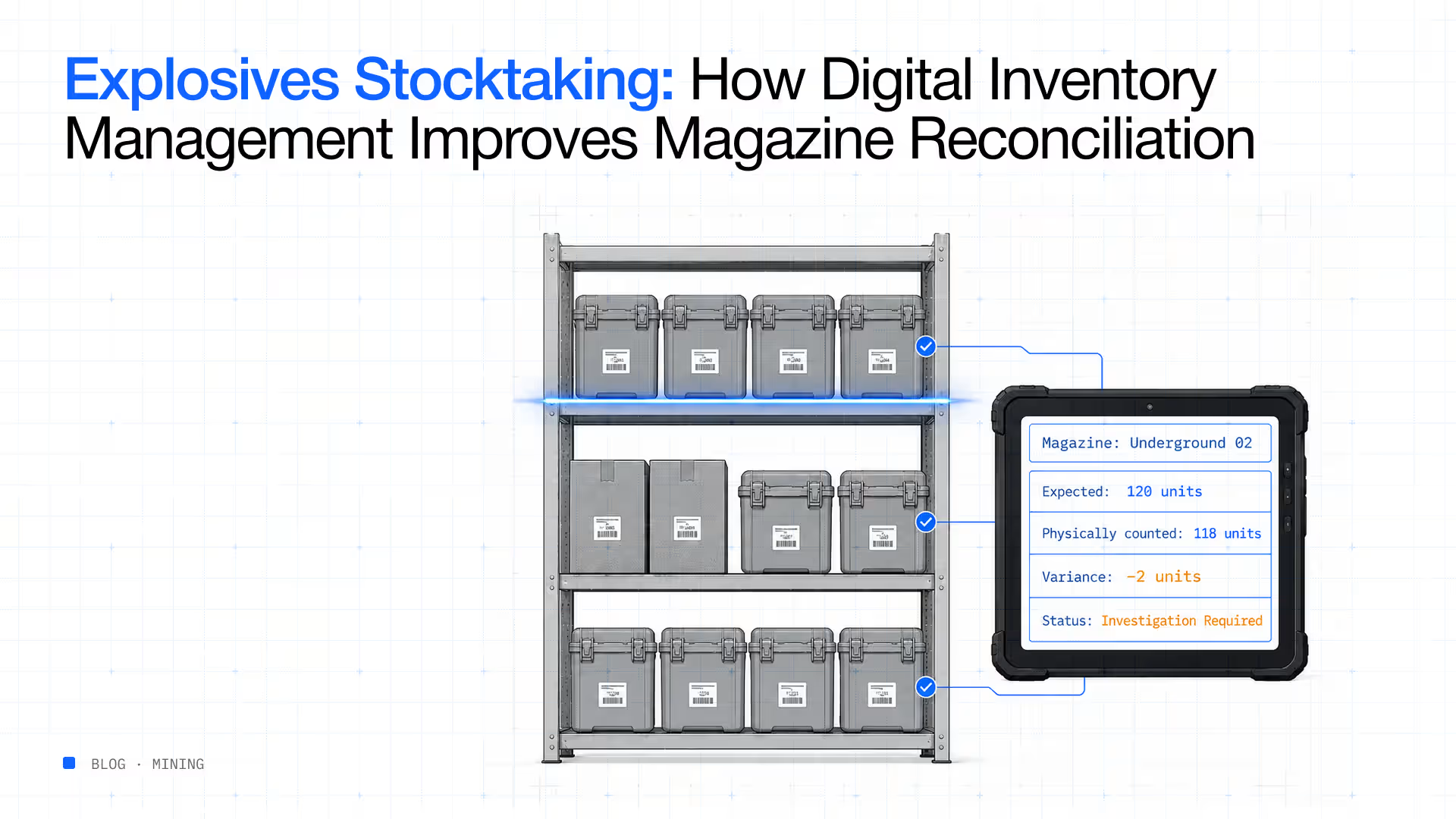
Explosives stocktaking is the process of physically counting or verifying explosives inventory held at a magazine or other authorised storage location and comparing the result with the corresponding inventory record.
The purpose is to establish whether the physical stock agrees with the quantity recorded by the operation. Where the two positions match, the stocktake provides confirmation of the recorded balance at that point in time.
Where they do not match, the difference becomes a discrepancy that needs to be investigated according to the organisation’s established inventory and compliance procedures.
Inventory records can become inaccurate when physical movements are not captured correctly. Stocktaking provides an opportunity to verify those records against what is actually present.
This is particularly important for explosives because inventory may move through several stages, including receiving, storage, transfers, issues, consumption and returns. Every transaction contributes to the recorded stock position.
Regular physical verification can therefore help identify differences that may not be visible from the digital record alone. It provides a direct comparison between recorded inventory and physical stock.
Stocktaking establishes the physical quantity. Reconciliation compares that physical quantity with the recorded inventory and investigates any difference.
For example, a stocktake may show that a magazine contains a particular quantity. If the inventory system records a different quantity, the stocktake has identified a variance. Reconciliation then involves examining the relevant records and transactions to determine what may have caused it.
Both processes are connected, but they serve different purposes. Stocktaking verifies physical inventory, while reconciliation helps explain and resolve differences between physical and recorded stock.
Traditional stocktaking can involve manually recording physical quantities and later comparing them against spreadsheets, registers or other inventory records. This can make the reconciliation process time-consuming, particularly when multiple locations are involved.
A digital inventory system can provide authorised users with the relevant recorded stock position while the physical verification takes place. The resulting information can then be compared within a more connected inventory workflow.
This reduces the need to manually gather information from multiple sources. It also creates a clearer link between the physical stocktake and the inventory record being verified.
If your teams are still relying on disconnected records to verify magazine stock, explore MagControl to see how Scatterlink connects explosives inventory records with stock control workflows.
The exact stocktaking process should follow the organisation’s established procedures and applicable regulatory requirements. However, the inventory control process generally begins by identifying the relevant magazine or location and establishing the inventory that should be physically present.
The physical stock is then verified and the result compared against the corresponding inventory record. Any difference should be documented and investigated through the appropriate process rather than being treated as an unexplained correction.
The value of the stocktake comes from maintaining a clear connection between the physical count and the inventory record. If that connection is lost, teams may have to repeat the investigation later.
Several factors can cause a physical stocktake to differ from the inventory record. The issue may originate from an inventory transaction that was delayed, entered incorrectly or associated with the wrong location.
Common causes can include:
The cause is not always immediately obvious. That is why transaction history is an important part of the reconciliation process.
A stocktake tells users that the physical and recorded quantities differ. Transaction history can help explain how the recorded quantity was created.
For example, if a magazine is physically short compared with its recorded balance, authorised users can review recent issues, transfers, returns and adjustments. If the physical quantity is higher, receiving or return transactions may need to be reviewed.
This makes the investigation more structured. Rather than searching through every inventory record, teams can focus on the transactions associated with the relevant location and period.
When inventory is distributed across several magazines, a consolidated inventory figure can hide problems at individual locations. A total may appear accurate even though one magazine is over-recorded and another is under-recorded.
Magazine-level stocktaking provides a more detailed view. Each location can be physically verified against its corresponding inventory record.
This helps identify where discrepancies are occurring and makes it easier to investigate the inventory movements associated with that particular magazine.
Digital magazine records can give authorised users a clearer view of the inventory associated with each location. When those records are connected to transactions, teams can see not only the current balance but also relevant movements that affected it.
This can make the stocktake process more informative. A discrepancy does not simply appear as a difference between two numbers. Users can access the history needed to investigate the potential cause.
Digital records can also make historical information easier to retrieve when a discrepancy needs to be reviewed after the stocktake has been completed.
Stocktaking often takes place at the physical inventory location rather than at an office workstation. Mobile workflows can allow authorised users to capture relevant stocktake information closer to where the physical verification occurs.
This can reduce the need to write down quantities and transfer them into another system later. It also helps maintain a closer connection between the physical count and the corresponding digital record.
For mining operations with large sites or underground environments, mobile capability can make stocktaking workflows more practical across different operational locations.
Want to make stock verification part of a connected digital workflow? Explore MagControl to see how Scatterlink supports mobile explosives inventory management.
Underground mining environments may not always provide consistent connectivity. If stocktaking workflows depend entirely on a live connection, teams may need to record information separately and update the inventory system later.
An offline-capable mobile workflow can allow authorised users to capture relevant information while disconnected and synchronise it when connectivity is restored, according to the system’s configuration.
This can help maintain consistency between surface and underground inventory processes. It also reduces reliance on temporary paper records that must later be manually transferred into the inventory system.
A physical stocktake provides the starting point for reconciliation, but the real value comes from what happens after the count is completed. When physical and recorded quantities differ, authorised users need a structured way to investigate the variance and determine what caused it.
The first step is to verify the count and confirm that the correct magazine, inventory records and stocktake period are being compared. If the difference remains, the relevant inventory transactions should then be reviewed.
This approach prevents teams from simply changing the recorded balance to match the physical count without understanding why the discrepancy occurred. Correcting the number may resolve the immediate difference, but identifying the cause is what helps prevent it from happening again.
A discrepancy should be investigated systematically rather than treated as an isolated number. The relevant receiving, transfer, issue, return and adjustment transactions should be reviewed for the period leading up to the stocktake.
Location information should also be checked. Inventory recorded against the wrong magazine can create an apparent shortage at one location and an unexplained surplus at another.
The objective is to establish where the physical and digital records stopped aligning. Once that point is identified, the operation can determine the appropriate corrective action and review whether its inventory process needs to be strengthened.
Manual reconciliation often requires teams to compare physical counts against multiple records. This becomes increasingly difficult when inventory is spread across several magazines or mining locations.
A connected digital system can bring the relevant stock balance, location information and transaction history into the same workflow. This gives authorised users a clearer basis for comparing physical and recorded inventory.
It can also reduce the amount of information that needs to be manually transferred between systems. Fewer manual handoffs can mean fewer opportunities for quantities or locations to be entered incorrectly during reconciliation.
If reconciling magazine stock still involves searching through multiple records, explore MagControl to see how Scatterlink connects inventory balances, transactions and locations.
A recurring discrepancy should be treated as an indication of a process problem rather than simply another stocktake result. If the same type of variance appears repeatedly, teams should investigate what is happening between stocktakes.
For example, repeated discrepancies following transfers could indicate that the transfer process is not being captured consistently. Frequent differences after issues or returns may indicate that those transactions are being recorded late or incompletely.
Tracking these patterns over time allows mining operations to address the underlying cause. This can gradually improve inventory accuracy instead of relying on repeated corrections.
Every inventory transaction contributes to the magazine’s recorded stock balance. If the transaction itself is inaccurate, the resulting inventory record will also be inaccurate.
This makes transaction accuracy an important part of stocktake preparation. Receiving quantities, transfers, issues, returns and adjustments should be recorded through consistent workflows and associated with the correct inventory location.
When transactions are accurate from the beginning, reconciliation becomes a verification process rather than an exercise in reconstructing what happened.
Knowing the total quantity of explosives across an operation is not enough when inventory is physically distributed across multiple magazines. Each location needs to have an accurate record that reflects what is actually held there.
Location visibility allows authorised users to compare the physical stock at a specific magazine with the corresponding digital record. It also helps identify whether an apparent discrepancy may actually be the result of inventory being recorded at another location.
This becomes particularly important when inventory is transferred frequently. A connected location history can help users understand where stock was recorded before and after a movement.
Stocktaking across surface and underground environments can involve different operational conditions. Teams may be working away from fixed workstations, and underground connectivity may not always be consistent.
A mobile inventory workflow can allow authorised users to capture relevant stocktake information directly at the location being verified. This reduces the need to write down physical counts and transfer them into another system later.
Where offline capability is available, the same workflow can support environments where connectivity is temporarily unavailable, with information synchronised when a connection is restored according to the system’s configuration.
Managing inventory verification across surface and underground locations? Explore MagControl to see how Scatterlink supports mobile inventory workflows across mining environments.
Stocktaking becomes more useful when the results are monitored over time rather than treated as individual events. Mining operations can use relevant measures to understand whether inventory accuracy and reconciliation processes are improving.
Useful indicators may include:
These measures can help identify whether problems are isolated or part of a broader inventory control issue.
Digital stocktaking can provide more than a record of the physical count. When connected to the broader inventory system, the stocktake becomes another data point within the inventory lifecycle.
Authorised users can compare the physical position with the recorded balance and, where required, review the transactions that contributed to that balance. This provides greater context around the stocktake result.
Over time, these records can also help identify patterns in inventory accuracy. This can give mining operations a stronger basis for improving processes across magazines and sites.
Stocktaking provides an independent physical check against the inventory record. That verification can strengthen confidence in the information used to manage inventory.
However, stocktaking works best when it is supported by accurate transactions throughout the inventory lifecycle. If receiving, transfers, issues and returns are poorly recorded, every subsequent stocktake may reveal the same underlying problems.
This is why stocktaking should be viewed as one component of a broader inventory control process. Physical verification, transaction accuracy, reconciliation and inventory visibility all work together to maintain reliable records.
A digital solution should support the actual workflow surrounding stocktaking rather than simply replace a paper counting sheet. Mining operations should consider whether the system can connect physical verification with inventory records and transaction history.
Key capabilities may include:
The system should also be practical for operational teams. A process that is difficult to use in the field can undermine the very inventory accuracy it is intended to improve.
Stocktaking should not be the only time an operation checks whether its inventory records can be trusted. The stronger approach is to build accuracy into everyday inventory transactions and use stocktaking as a verification point.
When inventory movements are recorded consistently, discrepancies can be identified earlier and investigated using the relevant transaction history. Stocktaking then provides an additional physical confirmation of the recorded position.
This creates a continuous inventory control cycle: record the movement, maintain the inventory history, verify physical stock, investigate discrepancies and improve the process.
Explosives stocktaking is essential for verifying that recorded inventory reflects physical stock. But the process becomes significantly more valuable when it is connected to digital inventory records, transaction history and magazine-level visibility.
Digital inventory management can reduce manual reconciliation work while giving authorised users better information when discrepancies occur. Mobile and offline workflows can also help extend consistent stocktaking processes across large mining sites and underground environments.
The goal is not simply to complete another stocktake. It is to build an inventory process where physical verification, digital records and transaction history work together to maintain accurate, reliable explosives inventory.
If you want to strengthen explosives inventory control from stocktaking through reconciliation, visit Scatterlink to see how inventory intelligence can bring greater visibility and control to mining operations.
Explosives stocktaking is the physical verification of explosives inventory held at a magazine or other authorised storage location and comparison of that quantity with the corresponding inventory record.
The purpose is to verify physical inventory, identify discrepancies and provide a basis for reconciliation and inventory control.
Stocktaking establishes the physical quantity. Reconciliation compares that quantity with the recorded inventory and investigates any differences.
It can connect physical stocktake information with inventory balances, locations and transaction history, reducing manual comparison and making discrepancies easier to investigate.
It verifies inventory at individual storage locations. This can identify discrepancies that may be hidden when only the total inventory across an operation is reviewed.
Yes. Mobile workflows can allow authorised users to capture stocktake information at the physical inventory location rather than recording it separately and entering it later.
Yes. Mobile and offline-capable workflows can support inventory verification in underground environments where connectivity may be inconsistent, subject to the system’s configuration and the operation’s procedures.
They can investigate the underlying causes of variances, improve transaction accuracy, standardise inventory workflows and monitor recurring discrepancies over time rather than simply correcting the recorded quantity.
%20(1).avif)
.avif)
%20(1).avif)