
An explosives inventory discrepancy is more than a difference between a physical count and a digital record. It is a signal that something in the inventory process may not have been captured, updated or recorded correctly. Until the difference is understood, teams cannot be completely confident that the inventory record reflects what is physically available.
This becomes increasingly difficult when explosives are managed across multiple magazines, mining sites and operational environments. Inventory may be received at one location, transferred to another, issued for use and partially returned, creating multiple transactions that affect the final stock position. If even one of these movements is recorded incorrectly or late, the resulting discrepancy can be difficult to trace.
Explosives inventory reconciliation provides a structured way to compare the recorded inventory position with physical stock and investigate differences. When reconciliation is supported by accurate transaction history and connected inventory records, mining operations can move beyond simply correcting discrepancies and start identifying why they occur.
Explosives inventory reconciliation is the process of comparing the inventory recorded in a system or inventory register with the physical stock held at the relevant location. The purpose is to identify differences and investigate the transactions or processes that may have caused them.
A reconciliation may involve reviewing quantities, locations, receipts, transfers, issues, returns, adjustments and physical stock counts. The exact process will depend on the operation’s inventory procedures and applicable requirements.
The important point is that reconciliation should not end when the numbers are made to match. Understanding the cause of a discrepancy is what helps prevent the same problem from recurring.
Inventory discrepancies can develop for several reasons. In many cases, the problem is not a single major error but a series of small gaps between physical activity and inventory records.
Common causes include:
These issues can become harder to identify when inventory information is spread across paper registers, spreadsheets and different systems. By the time a discrepancy is discovered, the original transaction may have occurred days or weeks earlier.
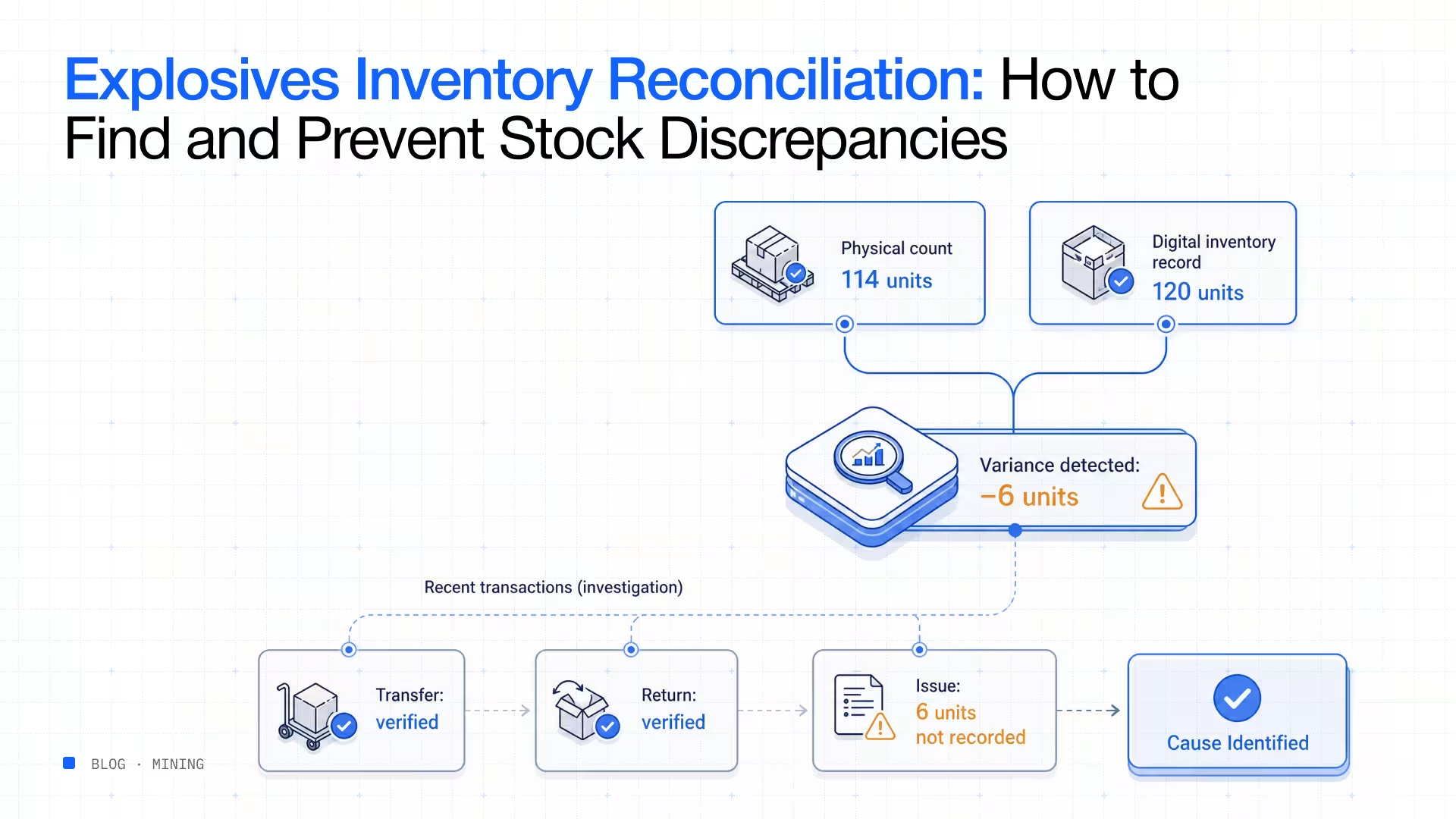
A typical reconciliation begins with a physical stock count. The physical quantity is then compared with the quantity recorded in the inventory system or relevant inventory records.
If the quantities match, the inventory position has been verified for that reconciliation point. If they do not match, the next step should be to investigate the difference rather than immediately change the recorded balance.
The investigation should examine the inventory transactions associated with the relevant location and period. Reviewing receiving, transfers, issues, returns and adjustments can help identify where the recorded and physical positions diverged.
Stocktaking establishes what physically exists at a particular point in time. Reconciliation goes a step further by comparing that physical position with the recorded inventory and investigating any differences.
For example, a stocktake may establish that a magazine physically holds a different quantity from what the system records. That count identifies the discrepancy, but reconciliation is the process of determining why the difference exists.
Both processes are therefore important. Regular stocktaking provides physical verification, while reconciliation connects that verification to the inventory records and transaction history.
Accurate inventory information gives mining teams greater confidence when making decisions about stock availability and movement. If the recorded quantity cannot be trusted, users may need to spend additional time physically checking locations or manually confirming information.
Inaccurate records can also make it harder to understand inventory across multiple magazines. A quantity that appears available at one location may not reflect the actual physical position, creating uncertainty when inventory needs to be located or reconciled.
Improving inventory accuracy is therefore not simply about achieving a better percentage on a report. It is about making inventory information reliable enough to support everyday operational decisions.
Transaction history provides the context needed to investigate a difference between recorded and physical stock. Rather than looking only at the current balance, authorised users can review how that balance changed over time.
For example, if the recorded stock is lower than the physical count, the team can review recent receipts, returns or adjustments. If the recorded quantity is higher than the physical stock, recent issues, transfers or other inventory movements may need to be examined.
This makes the investigation more structured. Instead of manually searching through multiple records, users can work backwards through the relevant inventory history to identify possible causes.
If your teams spend too much time tracing inventory discrepancies across separate records, explore MagControl to see how Scatterlink connects inventory transactions, locations and stock visibility.
Digital inventory management can make reconciliation more efficient by keeping relevant inventory transactions within a connected system. This reduces the need to compare information manually across multiple spreadsheets, registers or location-specific records.
When receiving, transfers, issues and returns are recorded through structured workflows, the inventory balance is supported by a corresponding transaction history. This gives authorised users more information when investigating a discrepancy.
Digital reconciliation does not remove the need for physical verification. Instead, it strengthens the process by giving teams better information to compare against the physical stock.
Finding a discrepancy is only the first step. To prevent recurring issues, mining operations need to identify the underlying process that caused the difference.
For example, if discrepancies repeatedly occur after transfers between magazines, the transfer workflow may need to be reviewed. If issues are regularly recorded late, the operation may need to improve how and when those transactions are captured.
This is where reconciliation becomes a source of operational insight. Reviewing discrepancies over time can reveal patterns that would otherwise remain hidden in individual stocktake records.
When explosives are stored across multiple magazines, reconciliation needs to provide visibility at the individual location level. A single total for the entire operation may hide discrepancies occurring at specific magazines.
Magazine-level reconciliation allows teams to compare the recorded and physical position for each relevant location. This makes it easier to identify where discrepancies are concentrated and investigate the transactions associated with that magazine.
It also improves the broader inventory picture. Once individual magazine records are reliable, authorised users can have greater confidence in the consolidated inventory position across the operation.
Inventory can be physically present but still appear missing if it has been recorded against the wrong location. This makes location accuracy an important part of explosives inventory reconciliation.
When inventory transfers between magazines or operational environments, the movement should update the relevant location records. If the transfer is incomplete or recorded incorrectly, one location may appear overstocked while another appears short.
A connected location and transaction history can help identify these situations. It allows teams to review not just how much inventory changed, but where that inventory was recorded before and after the movement.
Many inventory discrepancies originate at the point where physical activity takes place. If users have to wait until they return to an office or connected workstation to record a transaction, there is a greater opportunity for information to be delayed or forgotten.
Mobile workflows allow authorised users to capture relevant inventory transactions closer to the point of activity. This can reduce the gap between physical movement and digital recording.
For mining operations, mobile capabilities can also make inventory processes more consistent across different locations. When combined with offline functionality, they can support workflows in areas where connectivity is not always available.
Managing explosives inventory across challenging mining environments? Explore MagControl to see how Scatterlink supports mobile inventory workflows and stronger visibility across locations.
The first step should be to verify the physical count and confirm that the recorded inventory information relates to the correct location and inventory period. A simple counting or location error can sometimes create an apparent discrepancy.
If the difference remains, the relevant transaction history should be reviewed. This can include receipts, transfers, issues, returns, adjustments and other inventory events that occurred during the relevant period.
Once the cause is identified, the organisation can determine the appropriate corrective action and consider whether the underlying process needs to change. This is more effective than simply adjusting the inventory balance and moving on.
Reconciliation is often associated with periodic stocktakes, but inventory accuracy can be monitored throughout the inventory lifecycle. Tracking transaction accuracy, discrepancies and reconciliation results over time can help organisations identify problems earlier.
A digital inventory system can support this by maintaining a continuous record of transactions and inventory positions. This gives authorised users more opportunities to identify unusual changes before they become larger reconciliation problems.
The objective is not necessarily to reconcile everything constantly. It is to create enough visibility and control that discrepancies can be identified, investigated and addressed before they undermine confidence in the broader inventory record.
A reliable explosives inventory reconciliation process starts with clearly defining how inventory is expected to move through the operation. Receiving, storage, transfers, issues, returns, adjustments and consumption should each have a defined process for recording the relevant inventory activity.
When these processes are standardised, reconciliation becomes easier because teams are working from consistent inventory records. The objective is to make every stock movement traceable rather than trying to reconstruct what happened after a discrepancy has already appeared.
This is particularly important across multiple magazines and mining locations. A consistent process helps ensure that the same inventory control principles are applied regardless of where the stock is held or which team is managing it.
A discrepancy investigation should begin by confirming the physical count and the relevant inventory record. Teams should verify that the correct magazine, inventory and counting period have been used before looking for more complex explanations.
If the difference remains, the next step is to review the transaction history. Receiving records, transfers, issues, returns and adjustments can provide useful evidence about how the inventory balance changed.
The investigation should ultimately identify the cause, not simply produce a corrected number. If the same type of discrepancy occurs repeatedly, the underlying process should be reviewed and strengthened.
Manual reconciliation can require teams to compare multiple sources of information before they can establish what happened to inventory. This becomes particularly time-consuming when several magazines or sites maintain separate records.
A connected digital inventory system can bring relevant transactions and inventory information into one workflow. This gives authorised users a clearer starting point when comparing recorded stock with physical quantities.
The result is not simply faster reconciliation. It can also reduce the opportunity for errors introduced while manually transferring or comparing information between separate records.
Reconciliation is most effective when supported by strong transaction controls. Every movement that changes inventory should be captured through a defined process as close as practical to the point where the physical activity occurs.
This reduces the reliance on memory and delayed updates. When a transfer, issue or return is recorded at the time of the activity, the inventory record has a better chance of remaining aligned with physical stock.
Controlled transactions also create a stronger history for future reconciliation. If a discrepancy does occur, there is more information available to help determine where the difference originated.
If you want every relevant inventory movement to contribute to a clearer stock record, explore MagControl to see how Scatterlink supports controlled explosives inventory transactions.
Mining operations can use several measures to understand how effectively their reconciliation process is performing. These metrics should help identify both the scale of discrepancies and the operational conditions contributing to them.
Inventory accuracy measures how closely recorded stock matches verified physical stock. Monitoring this over time can show whether inventory control processes are improving.
Stock variance identifies the difference between expected and actual quantities. Tracking variance can help reveal recurring problems at particular locations or within specific transaction types.
The frequency of physical verification and reconciliation should align with the operation’s established inventory controls and requirements. Monitoring completion can help ensure that reconciliation activities are not being overlooked.
Measuring how long it takes to investigate and resolve discrepancies can highlight inefficiencies in the reconciliation process. Long resolution times may indicate that transaction history or inventory information is difficult to access.
Tracking repeated discrepancies can be particularly useful. A recurring difference at the same location or during the same type of transaction may indicate a process weakness that requires attention.
Multi-magazine inventory management requires visibility at both the individual magazine level and the wider operation level. Each magazine needs an accurate stock record, while authorised users may also need to understand the consolidated inventory position.
A connected inventory process can associate transactions with the relevant magazine and maintain the movement history between locations. This reduces the risk of treating each magazine as an isolated inventory environment.
It also makes transfers easier to investigate. When inventory moves from one magazine to another, the transaction can provide a link between the two inventory positions rather than appearing as unrelated changes.
Surface and underground operations can introduce additional complexity because inventory may move between environments with different operational conditions and connectivity. If those environments rely on separate records, maintaining a single view of inventory becomes more difficult.
A connected inventory workflow can record movements across surface and underground locations as part of the same inventory lifecycle. This gives authorised users greater visibility into where inventory is recorded and how it has moved.
Offline-capable mobile workflows can also help where underground connectivity is inconsistent. Users can capture relevant inventory activity according to the system’s offline workflow and synchronise information when connectivity is restored.
Need one clearer inventory view across surface and underground operations? Explore MagControl to see how Scatterlink supports inventory visibility across different mining environments.
Manual records can remain useful as part of established operational procedures, but relying on multiple disconnected records creates additional opportunities for inconsistencies. The more times information has to be copied or reconciled between systems, the greater the potential for errors.
Digital inventory management can reduce this duplication by providing a structured process for capturing inventory transactions. Instead of updating several records separately, relevant information can be recorded through one connected workflow.
This can also make historical information easier to retrieve. When teams need to investigate a discrepancy, they can access the relevant transaction history without searching through multiple spreadsheets or paper registers.
A suitable system should support the actual inventory lifecycle rather than simply provide a digital stock count. Mining operations should consider whether it can manage receiving, transfers, issues, returns, adjustments and reconciliation within a connected workflow.
Location visibility is equally important. The system should help authorised users understand where inventory is recorded and how it has moved between locations.
Mobile access can also be valuable for teams working away from fixed workstations. For operations spanning surface and underground environments, offline functionality may be an important consideration.
Finally, the system should provide useful transaction history. The ability to understand how an inventory balance changed is fundamental to investigating discrepancies and maintaining stronger inventory control.
Effective reconciliation creates a feedback loop for inventory control. Physical verification identifies differences, transaction history helps investigate them, and the resulting findings can be used to improve the underlying process.
Over time, this can help organisations identify recurring sources of inventory discrepancies. Instead of repeatedly correcting the same type of error, teams can address the process responsible for it.
This is where reconciliation becomes more than a periodic administrative activity. It becomes a way to continuously improve the accuracy, visibility and control of explosives inventory.
Explosives inventory reconciliation is essential for maintaining confidence in the stock records used across mining operations. Physical stock counts can establish what is actually present, but the real value comes from understanding why the recorded and physical positions differ when they do not match.
The strongest reconciliation processes connect physical verification with accurate transaction history, location visibility and controlled inventory workflows. This gives authorised users better information to investigate discrepancies and identify recurring weaknesses.
For operations managing explosives across multiple magazines, sites, surface locations and underground environments, the goal should be more than simply correcting stock discrepancies. It should be to build an inventory process where discrepancies are easier to identify, investigate and prevent.
Explosives inventory reconciliation is the process of comparing recorded explosives inventory with physical stock and investigating any differences between the two.
Common causes include delayed transactions, incorrect quantities, incorrect locations, unrecorded movements, data-entry errors, incomplete transfers and unexplained adjustments.
Strong transaction controls, accurate location records, timely inventory updates, regular physical verification and connected inventory history can help reduce discrepancies.
Digital inventory management can connect inventory transactions, locations and stock records, reducing the need to manually compare information across separate systems.
The physical count and relevant inventory records should first be verified. If the discrepancy remains, authorised users should review the relevant transaction history to identify its potential cause before determining the appropriate corrective action.
Transaction history shows how inventory quantities and locations have changed over time. This gives teams information they can use to investigate differences between physical and recorded stock.
Yes. A connected inventory system can maintain individual magazine records while also providing visibility across multiple locations.
Yes. A connected inventory process can help track inventory movements across surface and underground locations, supporting a more consistent inventory view across the operation.
%20(1).avif)
.avif)
%20(1).avif)