
Managing explosives inventory requires more than maintaining a record of how much stock is available. Mining operations need to know where inventory is stored, when it was received, how it moved between locations, what was issued, what was returned and what was ultimately consumed. When these activities are managed through disconnected paper registers, spreadsheets or delayed entries, maintaining an accurate inventory position becomes increasingly difficult.
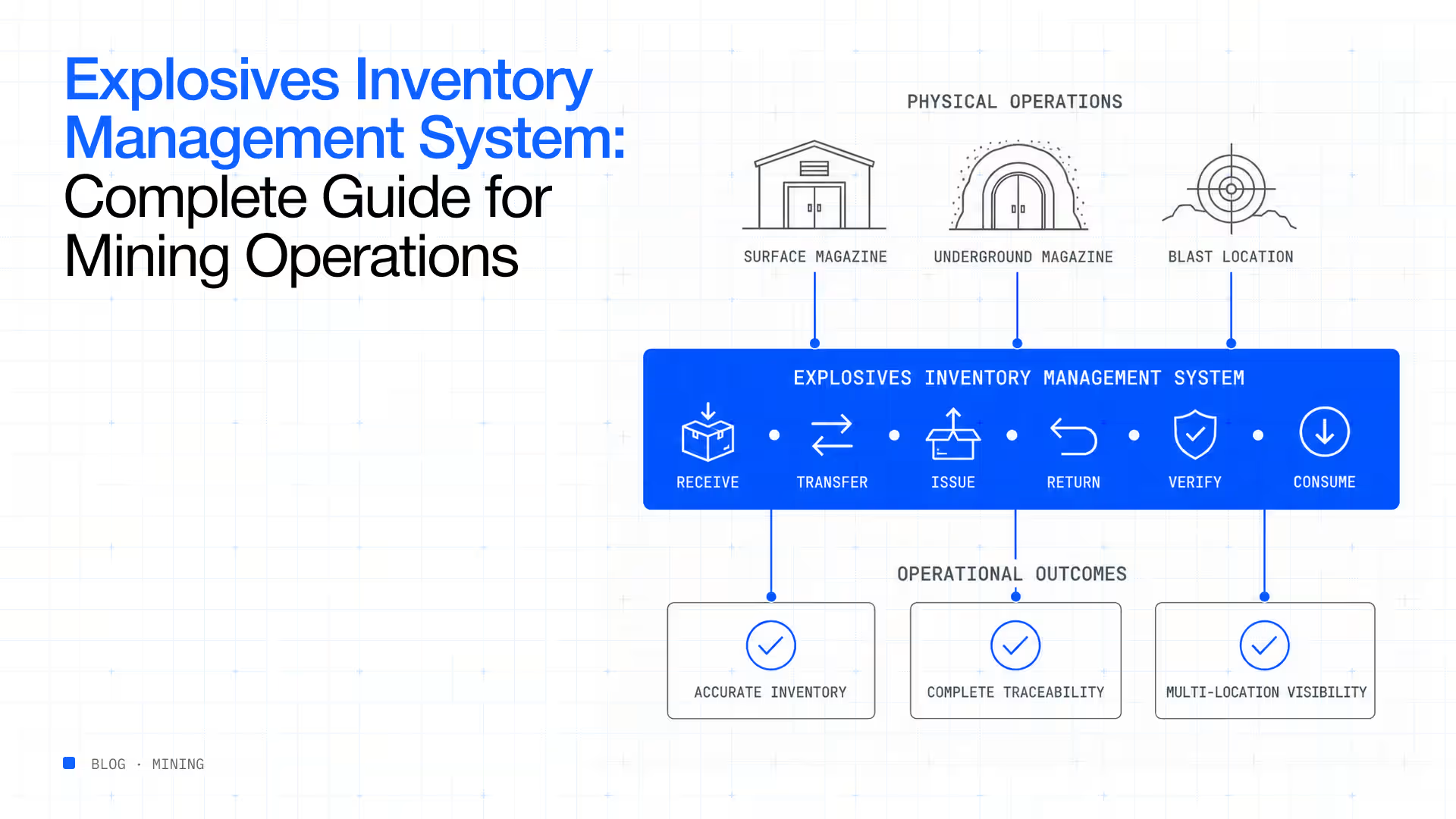
An explosives inventory management system brings these activities into a structured digital workflow. Instead of treating receiving, magazine storage, transfers, issuing and consumption as separate records, the system can connect them into one inventory lifecycle. This gives authorised users a clearer view of inventory while creating a more consistent record of the transactions that affect stock.
The need becomes even greater for operations managing explosives across multiple magazines, sites, surface locations and underground environments. A centralised and connected approach can reduce information gaps, improve inventory traceability and provide teams with more reliable data for day-to-day inventory decisions.
An explosives inventory management system is a digital platform designed to help mining operations record, track and control explosive inventory throughout its lifecycle. It can manage activities such as receiving, magazine storage, transfers, issues, returns, stock verification and consumption.
Rather than maintaining separate records for each inventory activity, the system connects transactions to the relevant inventory and location. This means the current stock balance can be supported by the history of movements that created it.
A comprehensive system can also provide visibility across multiple locations. Authorised users can view inventory at individual magazines while gaining a broader understanding of stock distributed across the operation.
Explosives inventory is often distributed across several operational locations, which makes manual tracking increasingly difficult as an operation grows. Each magazine introduces another location where inventory can be received, stored, transferred and issued.
When these activities are recorded separately, teams may spend significant time comparing registers and spreadsheets to determine the current inventory position. Even when each individual record is maintained carefully, the overall picture can still be fragmented.
Digital explosives inventory management software helps connect these records through a common workflow. This can improve visibility while reducing the administrative effort required to maintain and reconcile multiple sources of information.
A system should track the transactions and information that determine the inventory position throughout the operational lifecycle. The exact requirements will depend on the organisation, but core inventory activities typically include:
The value comes from connecting these activities rather than simply recording them individually. Each transaction should contribute to a clear and traceable inventory history.
Inventory accuracy depends on keeping the recorded stock position aligned with physical inventory. A digital system can support this by providing structured workflows for the transactions that change inventory.
When receiving, transfers, issues and returns are captured consistently, the system can maintain a more reliable record of inventory movement. This reduces the reliance on manually updating several separate records.
Digital transaction histories can also make discrepancies easier to investigate. When physical stock differs from the recorded balance, authorised users can review the movements associated with that inventory rather than simply changing the final quantity.
Magazine visibility means knowing not only how much explosives inventory exists, but also where that inventory is located. This distinction is important when stock is distributed across several magazines or operational areas.
A digital inventory management system can associate stock with specific magazine locations and maintain those relationships as inventory moves. When a transfer occurs, the relevant source and destination records can be updated through the defined workflow.
This creates a more useful view of inventory. Teams can understand the stock position of an individual magazine while also viewing inventory across multiple locations.
Transfers can create inventory discrepancies when the movement is completed physically but recorded incorrectly or later. A digital workflow can provide a structured process for recording the source, destination and relevant inventory quantity.
Connecting both sides of a transfer is particularly important. The inventory should no longer appear available at the original location once the transfer has been completed, while the destination should reflect the received inventory.
A connected transfer history also provides useful information during reconciliation. If a location has an unexpected stock difference, teams can review recent transfers to determine whether the movement contributed to the variance.
Inventory does not stop moving when it leaves a magazine. Explosives may be issued for operational use and subsequently consumed, meaning the inventory record needs to reflect what happened after the issue.
Without accurate consumption tracking, the recorded inventory position may not accurately represent what remains available. This can create differences between inventory records and actual stock.
Connecting consumption with the wider inventory lifecycle provides a more complete record. It allows teams to understand the relationship between what was received, stored, issued and ultimately consumed.
Traceability requires a record of inventory movement over time. Knowing the current quantity alone does not explain how that inventory arrived at its current location or what transactions changed the balance.
An explosives inventory management system can connect receiving, storage, transfers, issues, returns and consumption into a continuous transaction history. This allows authorised users to follow inventory activity through its lifecycle.
The resulting information can make historical reviews more efficient. Instead of searching through different registers and spreadsheets, teams can use connected digital records to investigate relevant inventory movements.
Looking for a more connected way to manage explosives inventory across magazines and locations? Explore MagControl to see how Scatterlink supports digital explosives inventory management.
Multi-location inventory management requires a system that can maintain visibility at both the local and operational level. Each magazine needs to retain its own inventory information, while management may need to understand the total inventory across multiple sites.
A connected digital system can provide both views. Users can access relevant magazine-level information while authorised teams can obtain a broader picture of inventory distributed across the operation.
This can also reduce the need for manual consolidation. Instead of collecting separate records from each location, teams can work from connected inventory information within the same platform.
Mining operations often manage inventory across environments with very different operating conditions. Surface locations may have established workstations and connectivity, while underground locations can require mobile workflows and may experience connectivity limitations.
An inventory management system needs to support the conditions in which transactions actually occur. If users cannot record inventory movements when they happen, the system may continue to show an outdated stock position.
Mobile and offline capabilities can help bridge this gap. Users can capture relevant transactions closer to the point of activity, helping maintain a more consistent inventory record across surface and underground operations.
Underground and remote mining environments may not always provide reliable connectivity. A system that requires continuous online access can therefore create practical challenges for field users.
Offline functionality can allow authorised users to record relevant inventory activity while disconnected. Once connectivity is restored, the information can be synchronised according to the system’s configuration.
This can reduce dependence on temporary paper records and delayed data entry. It also makes a digital inventory workflow more practical across locations with different connectivity conditions.
RFID can support inventory management by helping identify tagged inventory and connect physical items to their digital records. This can reduce some of the manual effort associated with identifying inventory during relevant tracking or verification activities.
When RFID is integrated with an inventory management platform, identification data can become part of the broader inventory workflow. This means physical inventory information can contribute directly to digital records rather than remaining in a separate system.
RFID should be considered as part of the wider inventory management strategy rather than a standalone solution. Accurate item data, controlled transactions, location information and reconciliation remain important for maintaining reliable inventory records.
A digital explosives inventory management system can provide several operational benefits when it is properly aligned with the inventory lifecycle.
Teams can access a clearer view of inventory quantities and locations across magazines and operational sites.
Structured transactions can reduce manual errors and help keep recorded inventory aligned with physical stock.
Connected transaction histories provide greater visibility into how inventory moves from receipt through storage, transfer, issue and consumption.
Transaction-level information can help teams investigate inventory discrepancies more efficiently.
Connected records can provide visibility across individual magazines as well as the wider operation.
Digital workflows can reduce repeated data entry and the manual consolidation of separate inventory records.
Mining organisations should assess whether the system supports the complete explosives inventory lifecycle rather than focusing on stock counts alone. Receiving, magazine management, transfers, issues, returns, consumption and reconciliation should work together within the inventory workflow.
The operating environment also needs to be considered. For organisations managing inventory across surface and underground locations, mobile access and offline capabilities can be important requirements.
Other capabilities to evaluate include transaction history, location tracking, inventory verification, RFID support and multi-site visibility. The system should ultimately make it easier for users to capture accurate inventory information without adding unnecessary complexity to field operations.
Want to understand how a connected inventory intelligence platform can support explosives and industrial inventory management? Visit the Scatterlink home page to explore the platform.
Explosives inventory tracking focuses on knowing where inventory is, how much is recorded and how it moves. Inventory management is broader and includes controlling transactions, reconciling stock, monitoring consumption and using inventory information to support operational decisions.
Tracking is therefore a fundamental part of inventory management. Without reliable tracking data, it becomes much harder to maintain accurate inventory records or understand inventory movement.
A complete explosives inventory management system brings these functions together. It turns individual inventory transactions into information that can support broader control and visibility.
Inventory information becomes more valuable when it is accurate, current and connected to the underlying transactions. Teams can use reliable data to understand stock availability, location and movement rather than relying on assumptions or manually consolidated reports.
Historical inventory data can also reveal patterns over time. Receiving, transfers, issues and consumption can provide insight into how explosives inventory moves through different operational areas.
This creates an opportunity to move beyond basic inventory record keeping. Instead of simply knowing what is recorded in stock, mining teams can use inventory data to understand how inventory behaves across the operation.
A digital system can also make it easier to measure whether inventory processes are performing effectively. Important KPIs can include:
Measures how closely recorded inventory matches verified physical stock.
Measures the difference between expected and actual inventory quantities.
Measures how quickly inventory movements are captured after the physical activity occurs.
Measures whether inventory is recorded against the correct magazine or operational location.
Measures whether required inventory verification and reconciliation activities are completed according to established procedures.
Measures how quickly authorised users can find relevant inventory information.
Improving explosives inventory accuracy starts with controlling the transactions that change stock. Receiving, transfers, issues, returns, adjustments and consumption should each follow a defined process so that every physical movement has a corresponding inventory record. When these activities are captured consistently, the recorded balance has a stronger connection to the physical inventory held across the operation.
The timing of each transaction also matters. If inventory movements are recorded hours or days after they occur, the system may provide an outdated view of stock availability and location. Capturing transactions as close as possible to the point of activity helps reduce this gap and gives inventory teams more reliable information.
Accuracy should also be measured continuously rather than only during periodic stocktakes. Monitoring inventory variance, transaction timeliness and reconciliation results can help identify recurring problems before they become larger inventory control issues.
Digital inventory management can reduce discrepancies by creating structured workflows around the activities that change inventory. Instead of relying on users to remember which records need to be updated, the system can guide the relevant transaction through a defined process.
This is particularly useful when inventory moves between multiple magazines or operational locations. A transfer should affect the source and destination inventory records, creating a clearer connection between the physical movement and the digital inventory position.
When discrepancies do occur, digital transaction history can make the investigation more efficient. Teams can review the relevant movements and identify whether the difference may have resulted from a transfer, issue, return, adjustment or another transaction.
An audit trail provides a historical record of inventory activity and helps explain how the current inventory position was created. Instead of seeing only the quantity currently recorded, authorised users can review the transactions that changed the balance over time.
For explosives inventory management, this can include receiving activity, transfers between locations, issues, returns, stock verification and other relevant transactions. The exact information retained will depend on the system and the organisation’s operational and regulatory requirements.
A digital audit trail can also make historical information easier to retrieve. Rather than searching through multiple paper registers or spreadsheets, teams can access relevant transaction information through a connected inventory record.
Traceability becomes stronger when inventory records follow the material through its lifecycle. Receiving establishes the beginning of the inventory record, while subsequent transfers, issues, returns and consumption contribute to its history.
This creates a clearer relationship between inventory and the activities that affect it. If a question arises about a particular stock movement, authorised users have a structured history to review rather than relying entirely on individual knowledge or manually maintained records.
For mining operations managing explosives across multiple locations, lifecycle traceability also helps connect local inventory activity with the wider operational picture. This can make inventory information more accessible without losing the detail associated with individual locations.
Mobile inventory management allows users to capture inventory transactions closer to where physical activity occurs. This is particularly useful when receiving, transferring, issuing or verifying inventory happens away from a fixed workstation.
The closer the digital record is created to the physical transaction, the less reliance there is on memory and delayed data entry. This can help improve transaction timeliness and maintain a more current inventory position.
Mobile workflows can also create greater consistency across different operational environments. Whether inventory is being managed at a surface magazine or in an underground location, users can follow a defined process for recording the relevant activity.
If your operation needs a more practical way to manage explosives inventory in the field, explore MagControl to see how Scatterlink supports digital inventory management across mining environments.
Underground mining can present connectivity challenges that make continuous access to an online inventory system difficult. If users cannot record transactions when they occur, they may have to rely on paper notes or remember the details until they return to a connected location.
An offline-capable inventory workflow can allow authorised users to capture relevant information while disconnected. The data can then be synchronised when connectivity is restored, according to the platform’s configuration.
This can help reduce the gap between physical inventory activity and the digital record. It also allows organisations to maintain a more consistent inventory process across surface and underground operations rather than creating separate manual workflows for areas with limited connectivity.
RFID can add another layer of identification to digital inventory management. Tagged inventory can be identified electronically and associated with the corresponding digital record, reducing some of the manual effort involved in inventory identification and verification.
The greatest value comes when RFID is integrated into the broader inventory workflow. Identification should contribute to the relevant inventory record, location and transaction rather than operating as an isolated technology.
For mining operations considering RFID as part of a wider inventory strategy, the technology can support faster inventory identification while the inventory management platform provides the structure needed to manage movements, locations and transaction history.
Multi-location inventory management requires visibility at both the individual location level and across the wider operation. A magazine may have an accurate local stock record, but management may still need to understand how that stock relates to inventory held at other locations.
A connected inventory management system can maintain individual magazine records while providing a broader inventory view. This allows authorised users to understand where inventory is located without manually consolidating separate registers.
This visibility can also help teams make better decisions about existing stock. Before additional inventory is requested or transferred, users can determine whether suitable stock is already available at another authorised location within the operation.
Managing explosives across multiple magazines, sites or operational locations? Explore MagControl to learn how a connected digital approach can improve inventory visibility and control.
Implementation should begin with the inventory process rather than the technology. Organisations should map how explosives are received, stored, transferred, issued, returned, verified and consumed across their operations.
The next step is to identify where information currently becomes fragmented. This may include paper registers, spreadsheets, delayed data entry, separate location records or manual reconciliation between systems.
Once these gaps are understood, the digital workflow can be designed around the actual operational process. This makes it easier to ensure that the system supports users rather than creating another layer of administration.
Define how receiving, transfers, issues, returns, adjustments and consumption should be recorded. Consistent transaction types make inventory data easier to interpret across different locations.
Every magazine and relevant operational location should have a consistent identity within the inventory system. Accurate location data is essential for knowing where inventory is recorded.
Move relevant inventory activity into mobile digital workflows wherever practical. This can reduce delayed entry and improve the timeliness of inventory information.
Where underground or remote operations have unreliable connectivity, ensure the inventory workflow supports the required offline processes.
Define how physical stock will be verified, how discrepancies will be investigated and how approved adjustments will be recorded. Reconciliation should identify the cause of discrepancies rather than simply correcting quantities.
Track inventory accuracy, variance, transaction timeliness and reconciliation performance after implementation. These measures can show whether the new process is actually improving inventory control.
One common mistake is simply digitising an inefficient manual process. If users currently enter the same information into several records, moving those same steps into software without redesigning the workflow may not solve the underlying problem.
Another mistake is continuing to maintain multiple competing sources of inventory information. If spreadsheets and paper registers remain the operational source of truth while the digital system is updated separately, discrepancies can continue.
Mining organisations should also avoid choosing software based only on office functionality. The system needs to work in the environments where inventory is actually handled, including surface and underground locations where mobile and offline capabilities may be necessary.
Reliable inventory data gives teams a stronger basis for making decisions about stock availability, location and movement. Instead of relying on manual updates or individual knowledge, authorised users can work from a more consistent inventory position.
Historical inventory information can also provide additional insight. Receiving, transfers, issues and consumption can reveal patterns in how explosives inventory moves through different parts of the operation.
Over time, this information can support a shift from basic inventory record keeping towards more intelligent inventory management. The system becomes a source of operational information rather than simply a place to store inventory quantities.
Want to move from fragmented inventory records to connected inventory intelligence? Visit Scatterlink to explore how the platform supports inventory visibility from receipt through consumption.
Successful implementation should be measured through operational outcomes rather than simply system adoption. A system may be technically deployed across a site, but that does not necessarily mean inventory accuracy or visibility has improved.
Inventory accuracy should be monitored before and after implementation to identify changes in record reliability. Transaction timeliness can show whether field activity is being captured closer to the point where it occurs.
Other measures can include inventory variance, reconciliation completion, location accuracy and the time required to retrieve inventory information. Together, these KPIs provide a broader picture of whether the inventory management process is becoming more controlled and efficient.
Inventory intelligence goes beyond recording transactions. It uses structured inventory data to provide a clearer understanding of what is happening across the operation and help users act on that information.
For explosives inventory, this can mean connecting inventory quantities with locations, movements, transactions and consumption. Instead of asking only how much stock is available, teams can gain greater context around where it is, how it moved and what activity is affecting inventory.
This is particularly valuable for complex mining operations where inventory information is distributed across multiple locations. The more connected the underlying data becomes, the more useful it can be for operational decision-making.
An explosives inventory management system should create a reliable connection between physical inventory and the digital records used to manage it. Receiving, storage, transfers, issues, returns, verification and consumption all contribute to the inventory lifecycle, so each transaction needs to be captured accurately and consistently.
For mining operations, the right digital approach also needs to work across the environments where inventory is actually managed. Mobile workflows, offline functionality, magazine-level visibility, RFID integration and transaction histories can help create a more connected inventory process across surface and underground operations.
The real value is not simply having explosives inventory stored in a digital system. It is having accurate, accessible and actionable information that allows authorised teams to understand what inventory exists, where it is located, how it has moved and what is happening to it throughout its lifecycle.
An explosives inventory management system is a digital platform used to record, track and control explosives throughout their inventory lifecycle. It can cover receiving, storage, transfers, issues, returns, verification and consumption.
Mining operations may manage explosives across multiple magazines, sites and operational environments. A connected inventory management system can provide greater visibility into stock quantities, locations and movements.
It should track relevant inventory activities including receiving, magazine storage, transfers, issues, returns, stock verification, adjustments and consumption.
Digital workflows can standardise inventory transactions and reduce repeated manual data entry. Transaction histories can also make discrepancies easier to investigate and reconcile.
Yes. Systems designed for mining can support both environments, particularly when they provide mobile functionality and offline capabilities for areas with limited connectivity.
RFID can help identify tagged inventory and connect physical inventory with digital records. When integrated into an inventory workflow, it can support more efficient identification and verification.
Important KPIs can include inventory accuracy, inventory variance, transaction timeliness, location accuracy, reconciliation completion and inventory retrieval time.
Not necessarily. An inventory management platform can complement an ERP by providing greater visibility into operational inventory movements, locations and transactions that may not be fully captured within the ERP.
Companies should consider lifecycle coverage, magazine-level tracking, multi-location visibility, transaction history, mobile access, offline functionality, reconciliation, RFID support and how easily the system fits existing operational workflows.
%20(1).avif)
.avif)
%20(1).avif)