
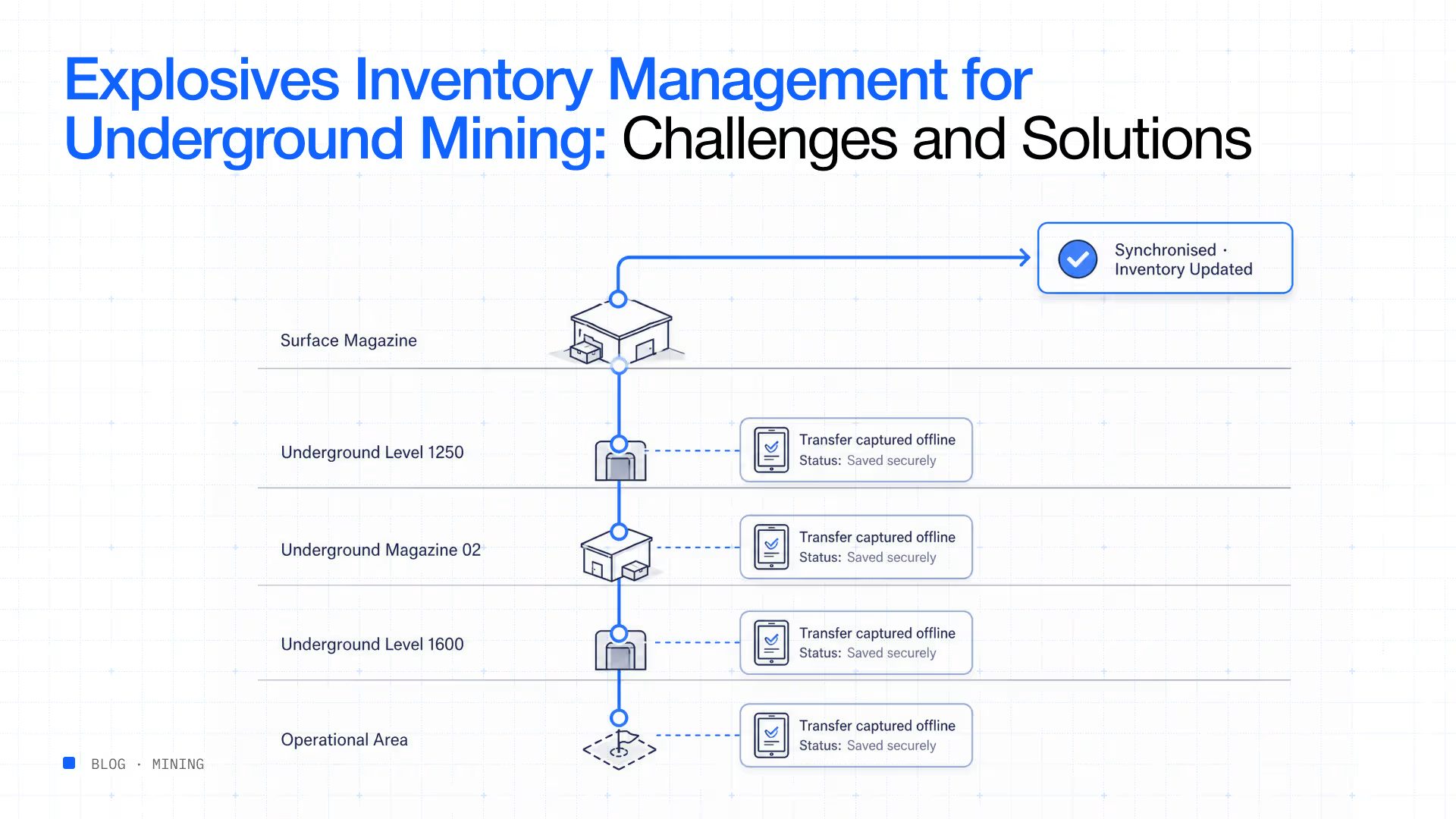
Managing explosives inventory underground is fundamentally different from managing stock in a conventional warehouse environment. Inventory may move through surface storage, underground magazines and active work areas, often across large and physically challenging operating environments. Maintaining an accurate record of what is available, where it is located and how it has moved requires more than a simple stock register.
Connectivity can add another layer of complexity. Underground teams may not always have reliable access to the systems used to record inventory transactions, creating a risk that physical movements and digital records become separated. When transactions are recorded later or through temporary manual processes, the inventory record may no longer provide a reliable picture of what is physically available.
For mining operations, the objective is not simply to digitise underground inventory records. It is to create a connected inventory process that can maintain visibility across surface and underground environments while supporting accurate transactions, reconciliation and traceability.
Explosives inventory management for underground mining is the process of controlling, tracking and maintaining records of explosives as they move through underground operations. This can include inventory held in authorised magazines, transfers between locations, issues for operational use, returns and relevant consumption records.
The process needs to connect physical inventory with accurate digital records. This allows authorised users to understand what inventory is recorded, where it is located and how it has moved through the operation.
Because underground mining involves changing operational conditions and multiple locations, inventory management needs to work as part of the wider mining workflow rather than as a standalone administrative process.
Underground mining creates several conditions that can make inventory visibility more difficult. Inventory may move between surface and underground locations, while underground teams may operate across different levels, areas or magazines.
At the same time, physical access to inventory can be more difficult than in a surface environment. If a system shows that stock exists at a particular location, users need confidence that the recorded quantity and location accurately reflect the physical position.
Connectivity can also affect how quickly transactions are recorded. When users cannot reliably access a live system, they may have to rely on temporary processes that introduce additional reconciliation work later.
Connectivity is not always consistent across underground environments. This can make it difficult for users to record inventory movements immediately through systems that depend entirely on a live connection.
Explosives may be managed across surface storage and underground magazines. Inventory can move between these locations as operational requirements change, making location accuracy particularly important.
Every movement changes the inventory position. If transfers between locations are not captured accurately, one location may appear to have more stock while another appears to have less.
Conducting stocktakes underground can require additional planning and coordination. Teams need a practical way to compare physical stock with the corresponding inventory record.
When physical activity occurs before the inventory transaction is recorded, the system may temporarily show an outdated stock position. Repeated delays can make inventory reconciliation more difficult.
In underground mining, knowing that inventory exists somewhere within the operation is not enough. Authorised users need to know where the inventory is recorded and whether that location matches the physical stock.
A quantity recorded against the wrong magazine can create an apparent discrepancy even when the total inventory across the operation is unchanged. This makes location accuracy an essential part of explosives inventory control.
A connected inventory system can associate transactions with the relevant location, helping users understand where inventory was held and how it moved between surface and underground environments.
Digital inventory management can create a centralised record of inventory transactions and locations. This gives authorised users a clearer view of inventory activity without relying entirely on separate paper registers or spreadsheets.
When receiving, transfers, issues and returns are recorded through connected workflows, the system can maintain a more complete history of inventory movement. This makes it easier to understand the current stock position and investigate discrepancies.
The value comes from connecting the transactions rather than simply converting a paper stock sheet into a digital format. The system should provide context around the inventory and its movement.
If you need greater visibility into explosives inventory across underground locations, explore MagControl to see how Scatterlink connects inventory, transactions and locations.
Offline functionality can be particularly relevant where underground connectivity is inconsistent. If users are unable to access a live system, they may otherwise have to record transactions separately and update the inventory record later.
An offline-capable mobile workflow can allow authorised users to capture relevant inventory activity while disconnected and synchronise the information when connectivity becomes available, according to the system’s configuration.
This can help reduce the gap between physical activity and digital recording. It also allows underground teams to follow a more consistent inventory process without depending entirely on continuous connectivity.
Underground inventory activity does not always happen at a fixed workstation. Users may need to record movements, issues or other inventory transactions while working across different areas of the mine.
Mobile workflows allow authorised users to interact with inventory records closer to where the physical activity occurs. This can reduce the need to write down information and transfer it into another system later.
For underground operations, this can make inventory management more practical while helping maintain a stronger connection between physical inventory movements and the digital inventory record.
Want your underground teams to capture inventory activity closer to where it happens? Explore MagControl to see how Scatterlink supports mobile inventory workflows for mining operations.
A major challenge for mining operations is maintaining one coherent view of inventory when stock moves between surface and underground environments. Separate records can make it difficult to understand the complete inventory position.
A connected inventory workflow can associate transfers with both the source and destination locations. This helps maintain continuity as inventory moves from surface storage into underground operations and between underground locations.
The result is a broader inventory view that does not require surface and underground stock to be treated as completely separate systems.
Tracking provides visibility into how inventory moves through the underground operation. Instead of relying only on the current stock balance, authorised users can review the transactions that contributed to that position.
This can be particularly valuable when investigating discrepancies. If physical stock differs from the recorded balance, the transaction history can help identify relevant transfers, issues, returns or adjustments.
Over time, tracking information can also reveal recurring patterns in inventory movement and discrepancies, helping teams identify where inventory processes may need improvement.
Inventory accuracy begins with capturing transactions correctly. Receiving, transfers, issues, returns and other relevant movements should be recorded through consistent workflows and associated with the correct location.
Physical verification is also important. Stocktaking and reconciliation can identify differences between recorded and physical inventory, while transaction history can help investigate the cause.
The combination of controlled transactions, location visibility, mobile workflows and reconciliation provides a stronger foundation for maintaining accurate explosives inventory underground.
Maintaining visibility underground requires more than knowing the total quantity held across the operation. Inventory teams need to understand what is available at each relevant location, what has moved and what has already been issued for operational use.
A connected inventory process helps bring these movements into one record. Instead of maintaining separate information for surface storage, underground magazines and operational areas, authorised users can work from a more consistent inventory view.
This becomes particularly important when inventory moves frequently. The more locations and transactions involved, the greater the need for a reliable record that shows where inventory is currently recorded.
Transfers between surface and underground locations should create a clear inventory movement from one location to another. The source location should reflect the reduction in stock while the destination location reflects the corresponding increase.
When these movements are captured through a connected workflow, users can follow the inventory history without having to reconcile separate registers manually.
This also makes discrepancies easier to investigate. If the inventory recorded underground does not match the physical stock, authorised users can review whether a recent transfer or other transaction contributed to the difference.
If surface-to-underground inventory movements are difficult to track consistently, explore MagControl to see how Scatterlink connects inventory across locations.
Each underground magazine should have an inventory record that reflects its physical stock position. This requires transactions to be recorded against the correct location whenever inventory enters, leaves or moves within the operation.
Accurate magazine records also depend on regular verification. Physical stocktaking can provide a comparison point between the recorded balance and what is actually present.
When discrepancies are identified, the transaction history provides important context. Teams can investigate the relevant inventory movements rather than simply adjusting the balance to match the physical count.
Reconciliation helps confirm whether the digital inventory record reflects the physical stock. This is particularly important underground because physical access to inventory can be more difficult and inventory may move across several locations before it is consumed.
A reconciliation process can compare recorded quantities with physical stock and identify differences requiring investigation. The relevant transaction history can then help teams understand how the discrepancy may have occurred.
Regular reconciliation also provides an opportunity to identify recurring issues. If the same type of discrepancy appears repeatedly, the underlying inventory process may need to be reviewed.
Paper registers, spreadsheets and separate records can create gaps between physical activity and the central inventory record. Information may need to be recorded manually more than once, increasing the possibility of errors or delays.
Digital workflows can reduce these additional steps by allowing authorised users to record inventory transactions directly through the inventory system. This creates a closer connection between the physical movement and its digital record.
The benefit is not simply less paperwork. It is a more consistent process for capturing the information needed to maintain accurate inventory records.
Underground connectivity can vary depending on the location and infrastructure available. A system that requires continuous connectivity may therefore be difficult to use consistently across all areas of a mine.
Offline functionality can allow authorised users to capture relevant inventory transactions without an active connection and synchronise the information once connectivity is restored, according to the system’s configuration.
This can help maintain continuity between underground and surface inventory processes. It also reduces the need for temporary paper records that have to be manually entered later.
If connectivity is creating gaps in your underground inventory records, explore MagControl to see how Scatterlink supports mobile inventory workflows in connected and offline environments.
Traceability means being able to follow relevant inventory movements through the operation. For underground explosives management, this can include understanding where inventory was received, stored, transferred, issued and consumed.
A connected transaction history can provide this context. Each relevant movement contributes to the overall inventory record, allowing authorised users to review how the current position was established.
This becomes especially useful when investigating discrepancies or reviewing historical inventory activity. Instead of depending on individual recollection, teams can work from the records maintained through the inventory workflow.
Monitoring should extend beyond the current stock quantity. Useful inventory visibility can include the location of stock, recent movements, outstanding transactions and differences identified through reconciliation.
The information available will depend on the system and the operation’s configured workflows, but the principle remains the same: inventory teams need enough context to understand what the current stock position represents.
A connected inventory platform can help bring these different elements together so authorised users can review inventory without relying on multiple disconnected sources.
Mining operations can use relevant inventory measures to evaluate how effectively their underground inventory processes are working. Useful measures may include:
Tracking these measures over time can help identify recurring problems and areas where inventory processes can be improved.
Reliable inventory information gives operational teams a stronger basis for planning and action. When users can see what is recorded at relevant locations, they can spend less time manually confirming basic inventory information.
This can also help inventory teams identify discrepancies earlier. A clearer view of movements and stock positions makes it easier to recognise when something does not align with the expected inventory position.
The broader objective is to make inventory information accurate and actionable, rather than allowing it to become a record that is only reviewed during periodic stocktakes.
If you want a clearer view of explosives inventory across your mining operation, visit Scatterlink to see how connected inventory intelligence can improve visibility and control.
The right system needs to work with the realities of underground operations rather than simply provide a digital version of a paper register.
Key capabilities to consider include:
The usability of the system also matters. If recording a transaction is complicated, users may delay it or rely on alternative processes. A practical workflow makes it easier to maintain consistent inventory records.
The foundation is a common inventory process that recognises each location without separating them into disconnected systems. Surface magazines, underground magazines and relevant operational locations can remain distinct while contributing to the same overall inventory picture.
Transfers should be recorded as connected movements rather than as separate additions and reductions. This maintains a clearer history of where inventory moved and how the overall stock position changed.
With that structure in place, authorised users can view inventory at the level they need, whether that means a particular magazine, underground location or the wider operation.
Digital inventory management can strengthen control by bringing transactions, locations, stock balances and reconciliation into a connected workflow. This gives mining operations more visibility into what is happening to inventory throughout its lifecycle.
The greatest benefit comes when the system supports the way teams actually work. Mobile access, offline functionality and simple transaction workflows can help ensure that digital inventory records remain connected to physical activity, even in challenging underground environments.
For operations managing explosives across surface and underground locations, this creates a more consistent foundation for inventory accuracy, traceability and operational visibility.
If you are looking to connect underground and surface explosives inventory through one digital workflow, explore MagControl to see how Scatterlink supports end-to-end inventory visibility.
Explosives inventory management for underground mining requires a system that can account for the realities of the environment. Multiple locations, changing inventory positions and inconsistent connectivity can all create gaps between physical inventory and digital records.
A connected approach can help close those gaps by linking magazine inventory, transfers, issues, returns, reconciliation and transaction history. Mobile and offline workflows can further support teams working away from fixed systems.
The goal is not simply to digitise underground inventory records. It is to create one reliable inventory view across the operation, so authorised users can understand what inventory exists, where it is recorded and how it has moved.
Underground operations can involve multiple magazines and locations, changing inventory positions, difficult physical access and inconsistent connectivity. These conditions can make it harder to maintain accurate and timely inventory records.
They can use connected inventory workflows to record receiving, transfers, issues, returns and relevant consumption activity against the correct locations and maintain a history of inventory movements.
Offline functionality can allow authorised users to capture inventory transactions when connectivity is unavailable and synchronise them when connectivity is restored, according to the system’s configuration.
Yes. A connected inventory system can maintain separate location records while providing authorised users with one broader view of inventory across surface and underground operations.
Reconciliation compares physical stock with the recorded inventory position and provides a structured way to identify and investigate discrepancies.
Relevant capabilities may include magazine-level inventory, movement tracking, controlled transactions, reconciliation, transaction history, mobile workflows, offline functionality and visibility across surface and underground locations.
Digital mobile workflows can allow authorised users to record inventory activity closer to where it occurs, reducing the need for temporary paper records and duplicate data entry.
Accurate location records help users understand where inventory is physically expected to be held and make it easier to investigate discrepancies caused by incorrect or incomplete location transactions.
%20(1).avif)
.avif)
%20(1).avif)