
Knowing how much explosives inventory is in a magazine is only one part of inventory control. Mining operations also need to understand what happens when that inventory leaves storage and moves into operational use. Without a clear record of what was issued, where it went and what was ultimately consumed, the connection between stored inventory and actual usage can become difficult to establish.
This becomes more important when explosives are issued across multiple blasting activities, locations and shifts. Quantities can move from a magazine to a blast area, be partially used, returned or recorded against a specific operational activity. If these movements are captured separately or after the fact, inventory teams may struggle to reconcile what was issued with what remains.
Explosives consumption tracking creates a more connected view of this process. By linking inventory issues and relevant consumption information, mining operations can better understand how explosives move from inventory to operational use and maintain a clearer record throughout the lifecycle.
Explosives consumption tracking is the process of recording and monitoring how explosives inventory is used after it is issued from storage. It connects inventory movements with the operational activity in which the explosives are intended to be consumed.
The exact information captured will depend on the operation’s processes and applicable requirements. It may include quantities issued, relevant locations, operational references, returns and consumption information associated with blasting activities.
The purpose is to create greater visibility into the movement between inventory and use. Instead of viewing an issue as the end of the inventory transaction, consumption tracking helps provide a clearer picture of what happened afterwards.
An inventory balance can tell a mining operation what is recorded in stock, but it does not necessarily explain how that stock was consumed. Consumption tracking adds another layer of visibility by connecting inventory movements with operational use.
This can help teams identify differences between what was issued and what was ultimately recorded as consumed or returned. When those differences are visible, they can be investigated as part of the broader inventory control process.
Consumption information can also support better inventory planning. Understanding historical usage patterns can help operations build a more informed picture of how inventory moves through different blasting activities and locations.
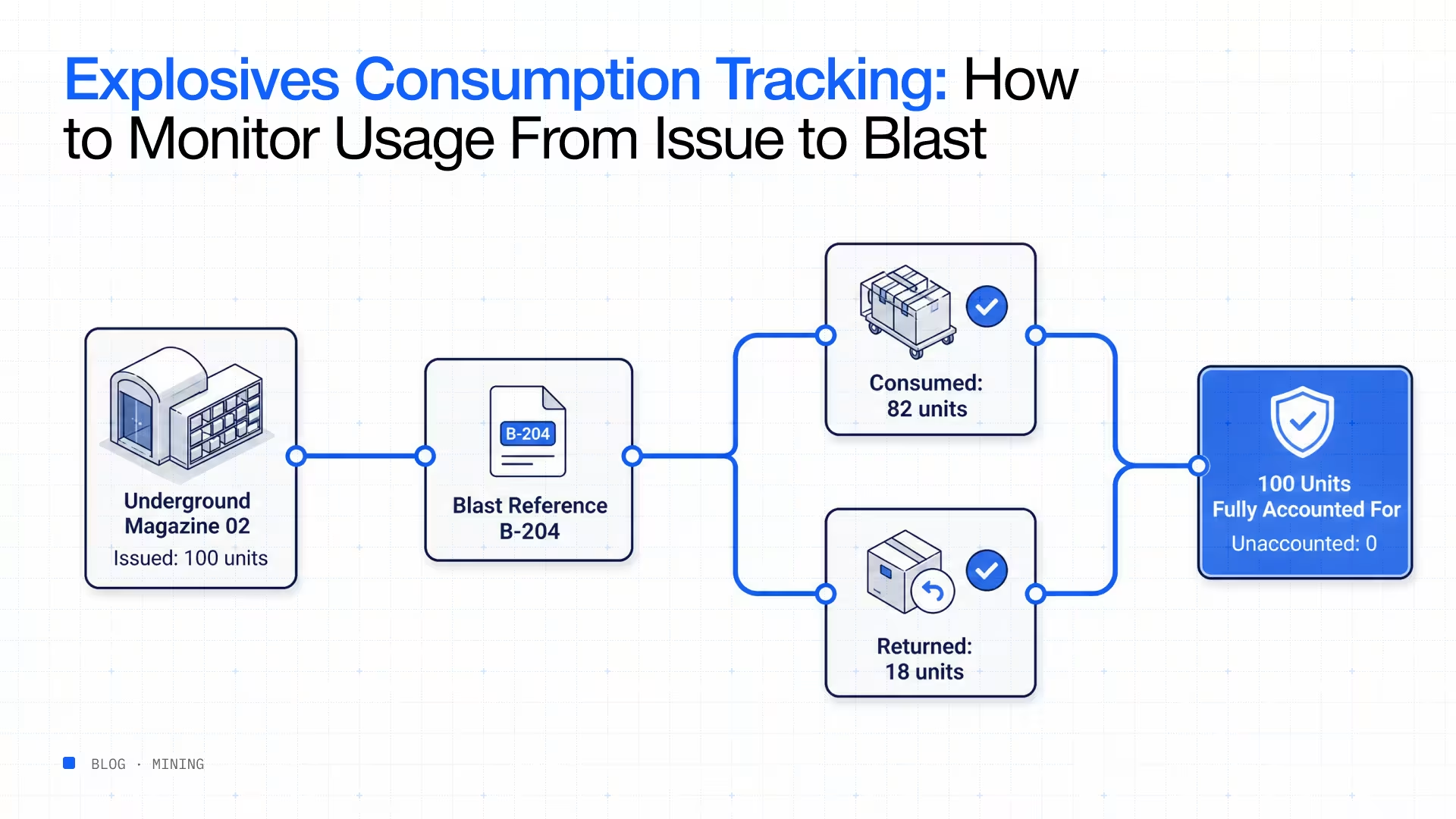
The process generally begins when explosives are issued from a magazine for a specific operational purpose. That issue reduces the recorded inventory at the relevant storage location.
The subsequent movement and use of the explosives can then be recorded against the appropriate operational activity. Where relevant, quantities that are not consumed can be returned and recorded back into inventory.
This creates a connected chain between inventory and consumption. Instead of having one record for stock issued and another unrelated record for usage, the operation can maintain a clearer history of how the inventory moved through the process.
Issuing and consumption represent different stages of the inventory lifecycle. An issue records that explosives have left a storage location and been released for operational use. Consumption refers to what is actually used during the relevant activity.
The two quantities may not always be identical. Depending on the operational process, some inventory may remain unused and require a return or other appropriate transaction.
Tracking these stages separately can therefore provide greater visibility than treating every issued quantity as automatically consumed. It helps create a more accurate picture of where inventory has gone and what happened to it.
Tracking explosives from issue to blast helps connect the inventory record with the operational activity that consumes the stock. This creates a clearer chain of information across the inventory lifecycle.
For example, an authorised user can understand that a particular quantity left a magazine for a defined operational activity and then review the relevant consumption or return information. This provides more context than simply recording that the magazine balance decreased.
The result is stronger inventory visibility. Teams can better understand not only what is held in storage, but also how inventory is moving through the operation.
Inventory accuracy depends on correctly recording what enters and leaves inventory. If explosives are issued but their subsequent use or return is not captured clearly, the inventory record may become difficult to reconcile.
Consumption tracking helps close this information gap. By connecting issue, consumption and return transactions where applicable, the operation can maintain a clearer relationship between the recorded inventory balance and physical activity.
This also gives reconciliation teams more information when investigating discrepancies. Instead of only comparing the current magazine balance with a physical count, they can review the inventory activity that occurred between those points.
If you need greater visibility into how explosives move from inventory to operational use, explore MagControl to see how Scatterlink supports connected explosives inventory workflows.
Traceability requires a clear record of relevant inventory movements throughout the lifecycle. Consumption tracking contributes to this by extending visibility beyond the point where explosives leave the magazine.
When issue and consumption information are connected, authorised users can follow the relevant inventory movement through the operational process. This can make it easier to understand where inventory went and how it was accounted for.
A connected history is particularly valuable when information needs to be reviewed later. Rather than relying on separate records or individual recollection, teams can work from the transaction history maintained within the inventory process.
The exact requirements will vary depending on the operation, workflow and applicable regulatory obligations. However, a useful consumption tracking process should capture the information necessary to understand how inventory moved from storage into operational use.
This may include:
The objective should be to capture enough information to establish a reliable inventory history without creating unnecessary administrative complexity for operational teams.
When consumption information is maintained through separate paper records or spreadsheets, teams may need to manually compare information before they can establish what happened to issued inventory.
A digital workflow can connect relevant inventory transactions within the same system. This can reduce the need to transfer information between disconnected records and make the resulting history easier to review.
Digital tracking can also improve consistency. When users follow a defined process for recording issues, consumption and returns, the inventory history becomes easier to understand across different locations and operational teams.
Moving away from disconnected paper and spreadsheet records? Explore MagControl to see how Scatterlink brings explosives inventory transactions into a connected digital workflow.
Reconciliation becomes easier when teams can compare not only the opening and closing stock but also the inventory movements that occurred during the period.
Consumption records can provide additional context for understanding changes in inventory. If issued quantities do not align with recorded consumption and returns, the difference can be investigated as part of the reconciliation process.
This creates a more complete view of inventory activity. Instead of treating reconciliation as a comparison between two numbers, teams can examine the transactions that explain how the inventory position changed.
Mining operations may conduct blasting activities across different areas while explosives are stored across multiple magazines. Without connected inventory records, understanding consumption across these locations can become difficult.
A location-aware inventory workflow can associate relevant issues and consumption records with the appropriate operational context. This allows authorised users to review activity at individual locations while maintaining a broader view of inventory movement across the operation.
This is particularly useful where surface and underground operations are both involved. A connected approach can help maintain continuity as inventory moves between different environments.
Managing explosives across surface and underground operations? Explore MagControl to see how Scatterlink supports inventory visibility across locations and operational workflows.
Consumption-related activities may take place away from fixed office workstations. Requiring users to return to a central system before recording relevant information can introduce delays and increase the reliance on temporary records.
Mobile workflows allow authorised users to capture relevant inventory information closer to where the activity occurs. This can help reduce the gap between physical activity and the corresponding inventory record.
For mining operations, mobile capabilities can be particularly valuable when teams work across large sites or underground environments. Offline functionality can also support workflows where connectivity is not consistently available.
Tracking consumption is most effective when it is built into the wider inventory process rather than treated as a separate reporting activity. The issue, movement, consumption and return of explosives should form a connected sequence so that the inventory record reflects what happened throughout the operational cycle.
This helps reduce the gap between what leaves a magazine and what is ultimately accounted for. When these activities are recorded through a consistent workflow, authorised users have a clearer basis for reviewing inventory and investigating differences.
The objective is not to create additional administrative work for blasting teams. It is to make consumption information part of the normal inventory process so that accurate records are created as the work takes place.
The first step is to establish what quantity was issued for the relevant operational activity. That provides the starting point for comparing the subsequent consumption and any applicable returns.
If the quantity consumed is different from the quantity issued, the difference should be accounted for through the appropriate inventory transaction or investigation process. This prevents the remaining quantity from becoming an unexplained gap in the inventory record.
A structured digital history can make this comparison easier because the relevant transactions can be reviewed together. Instead of manually gathering issue and consumption records from different sources, authorised users can work from a connected inventory history.
Not every quantity issued for operational use will necessarily be consumed during the same activity. Where explosives remain unused, the inventory process should provide an appropriate way to record the return or other applicable movement.
Recording the return is important because it reconnects the unused quantity with the inventory record. Without that transaction, the system may continue to show a lower stock balance even though some of the issued inventory has physically returned to storage.
This is another reason why issue and consumption should not automatically be treated as the same event. Maintaining separate, traceable transactions gives the operation a clearer picture of what happened to the inventory.
Consumption tracking can provide another layer of information when a discrepancy is identified. Instead of looking only at the magazine’s current stock balance, teams can review what was issued, what was recorded as consumed and what was returned.
This can help narrow down where the difference may have occurred. For example, a discrepancy between issued and consumed quantities may indicate that a relevant return or other inventory transaction needs to be reviewed.
Over time, repeated differences can also reveal patterns. If similar discrepancies occur around particular activities, locations or transaction types, mining operations can investigate whether the underlying workflow needs improvement.
Inventory visibility should extend beyond stock sitting inside a magazine. For a complete picture, authorised users also need to understand inventory that has moved into operational use.
Consumption data helps provide that additional context. It shows how inventory is progressing through the operation rather than treating the magazine balance as the entire inventory picture.
This can be particularly useful when inventory is distributed across several locations. A connected system can help users understand what remains in storage and what has moved into operational activity.
If you need visibility beyond what is sitting in the magazine, explore MagControl to see how Scatterlink connects inventory movements with operational workflows.
Multi-site operations can create additional complexity because inventory may be received, stored and issued across different locations. Without a connected inventory process, consumption information may remain fragmented between sites.
A centralised inventory workflow can provide authorised users with visibility into relevant inventory activity across locations. This makes it easier to understand where inventory was issued and how consumption relates to the broader stock position.
The same principle applies when inventory moves between sites. Transfers should remain visible within the inventory history so that the movement can be followed rather than appearing as unrelated changes to individual site balances.
Surface and underground environments can have different operating conditions, particularly when connectivity and access to fixed systems vary. This can make it difficult to maintain consistent inventory records if each environment relies on separate processes.
A connected mobile workflow can help maintain continuity between the two environments. Inventory issued for underground activity can remain part of the broader inventory history rather than becoming a separate record that must later be manually consolidated.
Where offline functionality is available, authorised users can capture relevant information in areas without reliable connectivity and synchronise it when a connection becomes available, according to the system’s configuration.
Need a connected view of explosives inventory across surface and underground operations? Explore MagControl to see how Scatterlink supports inventory visibility across mining environments.
Consumption data becomes more useful when it can be reviewed consistently over time. Mining operations can establish relevant measures based on their operational processes and inventory control requirements.
Useful indicators may include:
These measures can help identify where consumption processes are working effectively and where additional controls may be needed.
Historical consumption information can help mining operations understand how inventory is being used across different operational activities and locations. This provides a more useful picture than looking only at current magazine balances.
For example, recurring consumption patterns may highlight differences between locations or operational periods. This information can contribute to better planning of inventory movements and replenishment within the broader inventory management process.
Consumption data should not be viewed in isolation, however. It becomes more valuable when connected with inventory levels, movements and location information.
A connected digital record can make it easier for authorised users to retrieve the relevant history behind an inventory movement. Instead of searching through separate issue sheets, consumption records and return registers, the relevant transactions can be reviewed as part of one inventory history.
This can make historical investigation more efficient. If a particular transaction needs to be reviewed, users can trace the associated inventory movement and operational information available within the system.
A digital record does not replace any specific regulatory or organisational documentation requirements. It provides a structured way to support inventory control and make relevant information easier to access.
A suitable system should connect consumption with the wider explosives inventory lifecycle. Simply recording a consumption figure is less useful if users cannot relate it back to the inventory that was issued.
Look for capabilities that support:
The system should also be practical for the people using it. If consumption information requires complex manual processes, the risk of delayed or incomplete records remains.
Consumption tracking closes an important gap between inventory storage and operational use. It gives mining operations a way to understand what happened after explosives left a magazine rather than allowing the inventory trail to end at the point of issue.
When issue, consumption and return information are connected, teams have greater visibility into the inventory lifecycle. This can support more accurate reconciliation, clearer traceability and stronger control over inventory movements.
The broader benefit is confidence. When authorised users can see how inventory moved from storage into operational use, they have a more complete picture of the inventory position across the operation.
If you want to connect explosives inventory from storage through operational use, explore MagControl and see how Scatterlink supports end-to-end inventory visibility.
Explosives consumption tracking helps mining operations move beyond simply knowing what inventory was issued. It provides greater visibility into what happened after that inventory left storage, including relevant consumption and return activity.
A strong process connects these transactions with magazine records, inventory history and operational locations. This creates a clearer relationship between physical activity and the digital inventory record, making discrepancies easier to investigate and inventory easier to reconcile.
For mining operations managing explosives across multiple magazines, sites, surface locations and underground environments, consumption tracking can become an important part of maintaining accurate and actionable inventory information.
Explosives consumption tracking is the process of recording and monitoring how explosives inventory is used after it is issued from storage, including relevant consumption and return activity.
It helps mining operations understand what happened to inventory after it left a magazine and provides additional information for inventory reconciliation and traceability.
An issue records inventory leaving a storage location for operational use. Consumption records what is actually used during the relevant activity. The two quantities may differ where inventory is returned or otherwise accounted for.
It provides additional information about inventory after issue, helping teams reconcile what was issued with what was consumed or returned.
Yes. A connected inventory system can associate issues and relevant consumption information with the appropriate magazine and operational location.
Yes. Mobile and offline-capable workflows can help maintain inventory visibility across surface and underground environments, depending on the system’s configuration.
Relevant capabilities may include issue tracking, consumption and return records, magazine-level inventory, transaction history, reconciliation, location visibility, mobile workflows and offline functionality where required.
%20(1).avif)
.avif)
%20(1).avif)