
Explosive magazine management is a critical part of controlling explosives inventory across mining operations. Magazines are not simply storage locations. They are controlled points within the explosives lifecycle where receiving, storage, transfers, issuing, returns and stock verification need to be accurately recorded. When these activities are managed through disconnected records, maintaining a reliable view of inventory becomes increasingly difficult.
The challenge becomes greater when an operation manages multiple magazines across different sites or across surface and underground environments. Teams need to know what is currently stored in each magazine, what has moved between locations, what has been issued and what remains available. Without consistent magazine inventory management, even small gaps in transaction recording can create larger discrepancies over time.
A structured digital approach can connect magazine-level inventory with the wider explosives inventory process. This creates greater visibility into stock, movements and transaction history while helping mining teams maintain stronger control over explosives throughout their operational lifecycle.
Explosive magazine management is the process of controlling and monitoring explosives stored within designated magazine locations. It includes maintaining accurate records of stock received, stock held, inventory movements, issues, returns, adjustments and consumption.
Effective magazine management should provide a clear picture of inventory at each location. Instead of knowing only the total quantity held by the organisation, inventory teams should be able to determine what is available in a particular magazine and how that inventory changed over time.
Magazine management also forms an important part of explosives traceability. Every movement into or out of a magazine contributes to the inventory history, making accurate transaction records essential for understanding the complete lifecycle of explosive materials.
Explosive magazines can hold significant quantities of controlled inventory, making accurate stock records essential. If physical inventory and recorded inventory begin to diverge, teams may need to spend considerable time identifying when and where the discrepancy occurred.
Magazine management also becomes more complex when inventory is distributed across multiple locations. A central inventory team may need to understand stock availability across several magazines without relying on individual spreadsheets, paper registers or phone calls to confirm quantities.
A reliable magazine inventory management process gives authorised users a consistent view of stock and movements. This helps reduce uncertainty and creates a stronger foundation for inventory reconciliation, traceability and operational control.
Magazine management covers more than simply recording the quantity of explosives stored at a location. It involves managing the transactions and information that affect the inventory position throughout its lifecycle.
Core activities can include:
When these activities are connected, the magazine becomes part of a continuous inventory record rather than an isolated storage location.
A typical magazine inventory process begins when explosives are received and allocated to a controlled storage location. The inventory record establishes what has entered the magazine and provides the starting point for subsequent transactions.
As inventory moves, each transaction changes the recorded quantity. An issue reduces the magazine balance, while a transfer moves inventory from one location to another. Returned inventory or an approved adjustment can change the balance again.
The process should ultimately provide a clear relationship between the opening inventory, all movements that occurred and the current closing balance. This makes it easier to compare recorded inventory with physical stock and investigate differences.
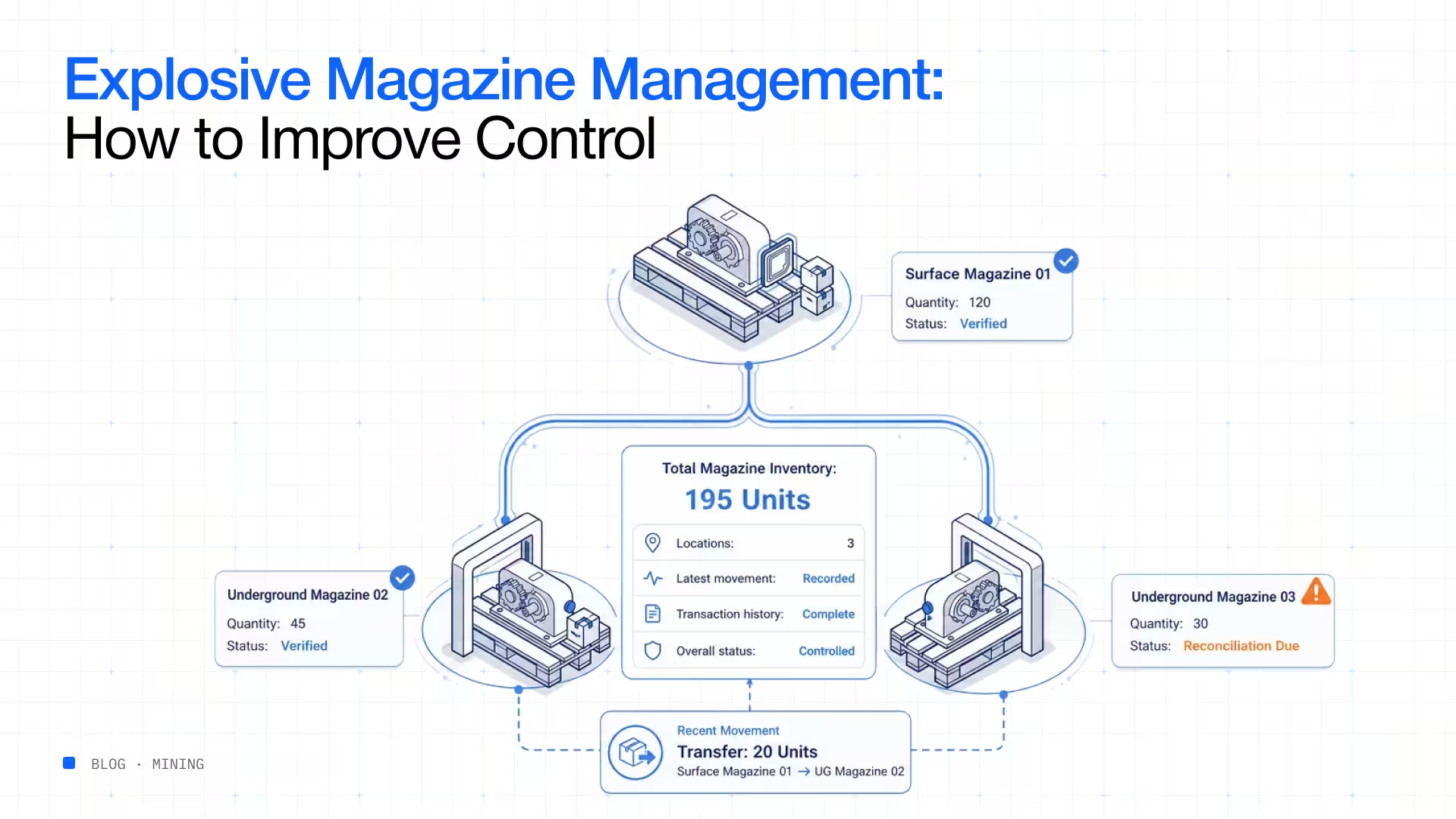
Mining operations may have several magazines supporting different areas of the operation. Each location can have its own inventory activity, while the organisation still needs an overall view of explosives stock.
Without a connected system, teams may need to consolidate information manually from different locations. This can delay decision-making and make it difficult to establish the current inventory position.
A centralised inventory view can help authorised users understand stock across multiple magazines without requiring each location to maintain a completely separate inventory picture.
Magazine inventory records need to remain aligned with physical stock. Every receiving transaction, transfer, issue and return can affect the balance, which means missing or delayed transactions can quickly create discrepancies.
Regular stock verification can identify these differences, but the investigation process becomes much easier when the system contains a complete transaction history. Teams can trace changes in inventory rather than simply discovering that the final quantity is incorrect.
Explosives may move between controlled locations as operational requirements change. If those movements are not captured consistently, the system may show inventory at the wrong location.
This creates a visibility problem as well as a reconciliation problem. The organisation may technically have the required stock, but teams may not know where it is without contacting individual locations.
Different magazines may develop different approaches to recording inventory if processes are not standardised. One location may rely on spreadsheets, another on paper records and another on a separate digital system.
This fragmentation makes it difficult to compare inventory information across the operation. Standardised magazine inventory processes create a common method for recording and interpreting inventory activity.
Digital magazine management replaces disconnected records with a more structured way of capturing inventory transactions. Instead of maintaining separate records for receiving, transfers, issues and stocktakes, these activities can contribute to a connected inventory history.
This can make it easier to identify the current stock position and understand how inventory changed over time. It also reduces the need to manually consolidate information from multiple sources.
The value of digital magazine management is therefore not simply the elimination of paperwork. It is the ability to connect inventory information so that teams can access a more complete and current view of explosives stock.
Real-time magazine inventory visibility means having access to the most current available information about inventory quantities, locations and movements. It allows teams to understand the inventory position without waiting for a periodic spreadsheet update or manual stock report.
This is particularly valuable when inventory moves frequently. A magazine balance that was accurate yesterday may no longer represent the current position if stock has been issued, transferred or returned since then.
A connected inventory process can update the relevant records as transactions occur. This gives inventory teams a more reliable basis for understanding what is available across the magazine network.
Total explosives inventory does not provide enough information for many operational decisions. Knowing that an organisation has a particular quantity of stock does not necessarily tell a team where that stock is or whether it is accessible for the required operation.
Magazine-level tracking adds location context to inventory information. Teams can identify the stock associated with individual magazines and understand movements between locations.
This becomes particularly important across surface and underground operations, where physical distance and operating conditions can make manual inventory verification more difficult.
Traceability requires a record of how inventory moves through the operation. Magazine transactions form an important part of that record because they show where explosives entered controlled storage, where they moved and when they were issued.
A complete transaction history can help teams reconstruct the movement of inventory when investigating discrepancies or reviewing historical activity. It also provides a stronger record than a single closing balance.
Effective traceability therefore depends on capturing inventory movements consistently. The more complete the transaction history, the easier it becomes to understand the lifecycle of the inventory.
Surface and underground operations can create different requirements for inventory management. Underground environments may have limited connectivity, greater physical distances and different workflows for moving inventory to operational areas.
A magazine management process needs to function within these conditions rather than assuming that users will always have access to a connected desktop system. Mobile workflows and offline functionality can help users capture transactions where inventory activity actually takes place.
This creates a more continuous inventory record across the operation. Explore Scatterlink’s RFID inventory management solution to see how connected inventory technology can support visibility across distributed industrial operations.
Inventory reconciliation compares recorded inventory with physical stock and investigates any differences. Magazine-level records provide the detail required to understand where discrepancies may have originated.
For example, if the current balance does not match the physical stock, teams can review receiving records, transfers, issues, returns and adjustments associated with that magazine. This is more useful than simply changing the final balance to match the physical count.
A connected transaction history therefore turns reconciliation into an investigative process. Teams can identify potential causes and address weaknesses in the underlying workflow.
Transaction history provides the chronological record behind the current inventory balance. Without it, a stock figure provides limited information about how the operation arrived at that position.
A useful transaction history should allow authorised users to identify what transaction occurred, which inventory was involved, where it occurred and when it happened. Depending on the system and operational requirements, it may also record the user responsible for the transaction.
This creates greater accountability around inventory movements and makes historical investigation more efficient.
Improving magazine management begins with understanding how inventory currently moves through the operation. Organisations should identify where inventory information is created, where it is transferred between systems and where manual intervention introduces delays or inconsistencies.
The next step is to standardise the core inventory transactions across magazines. Receiving, transfers, issues, returns, stock verification and adjustments should follow consistent processes so that inventory information remains comparable across locations.
Finally, organisations should connect these processes through a digital inventory platform where practical. Learn more about Scatterlink to understand how inventory intelligence can connect inventory data, movements and operational visibility.
When evaluating magazine management software, mining organisations should consider whether the system supports the complete inventory lifecycle rather than simply providing a digital stock count.
Important capabilities can include:
The most suitable capabilities will depend on the operation and its existing processes. The key consideration is whether the software can provide a consistent inventory view while supporting the realities of surface and underground operations.
Improving explosive magazine management requires more than keeping an accurate count of what is stored. Mining operations need a consistent process for receiving, storing, transferring, issuing, returning and reconciling explosives across every magazine. When each transaction is captured consistently, teams have a clearer understanding of both the current stock position and the history behind it.
The process should also reflect the realities of the operation. A magazine may be located far from administrative offices, underground or in an area with unreliable connectivity. Digital magazine management therefore needs to support users at the point of activity, rather than relying on transactions being entered later from a central workstation.
Digital explosive magazine management connects physical inventory activity with a centralised inventory record. Instead of maintaining separate paper registers, spreadsheets or disconnected records, transactions such as receiving, transfers, issues and returns can be captured through a controlled digital workflow.
This allows the inventory balance to be updated as activity occurs and provides authorised users with a more current view of magazine stock. It also creates a transaction history that can be reviewed when teams need to investigate inventory discrepancies.
The goal is not simply to digitise existing paperwork. A strong digital magazine management process should make inventory information easier to capture, find, verify and act on throughout the explosives lifecycle.
Magazine inventory accuracy depends on the consistency of every transaction that changes the stock balance. If a transfer is missed, an issue is recorded late or a return is not captured correctly, the system can quickly diverge from physical inventory.
One way to improve accuracy is to make inventory transactions part of the operational workflow rather than a separate administrative task. Users should be able to record the relevant activity when it happens, with appropriate controls around who can create or approve transactions.
Regular stock verification remains important as well. Physical checks can identify discrepancies, while transaction history can help determine where those differences originated.
Explosive magazine reconciliation is the process of comparing recorded stock against physical inventory and investigating any differences. It provides a structured way to determine whether the inventory balance in the system reflects what is actually held in the magazine.
Reconciliation becomes more effective when the inventory system contains a complete history of movements. Instead of simply identifying that a quantity is missing, teams can examine receiving transactions, transfers, issues, returns and adjustments associated with the inventory.
This distinction is important because correcting a number does not necessarily correct the underlying problem. Effective reconciliation should help identify why the discrepancy occurred and reduce the likelihood of it happening again.
Reducing inventory discrepancies starts with identifying where they occur most frequently. Organisations should examine receiving, transfers, issues, returns, stocktakes and consumption records to determine which processes are contributing to inventory differences.
Transaction capture should be as close as possible to the physical movement. When users have to remember transactions and enter them later, the risk of missing or incorrectly recording activity increases.
Standardised workflows across magazines can also reduce inconsistencies. When every location follows the same basic process, it becomes easier to compare records, identify unusual activity and investigate discrepancies.
An audit trail provides a chronological record of inventory activity. It helps authorised users understand what happened to inventory, when the transaction occurred and which location or process was involved.
For magazine management, this history is particularly valuable when investigating discrepancies or reviewing past inventory movements. A current stock balance tells teams what the system believes is available, while an audit trail helps explain how that balance was created.
A complete digital history can also reduce the effort required to retrieve information. Instead of searching through multiple paper records or spreadsheets, authorised users can access the relevant inventory transactions through a connected system.
The exact requirements depend on the organisation and applicable regulations, but an explosives inventory audit trail should capture sufficient information to reconstruct relevant inventory movements.
Important information can include:
The value of these records comes from keeping them connected. A collection of isolated transaction records is less useful than a continuous inventory history that shows how stock moved through the operation.
Managing multiple magazines creates a visibility challenge because inventory is distributed across several controlled locations. A team may know the total quantity available but still need to determine exactly where that stock is held.
Multi-magazine inventory visibility provides a broader view of stock across locations. It can help authorised users identify available quantities, understand recent movements and determine where inventory is currently recorded.
This is particularly useful when operations need to evaluate existing inventory before requesting additional stock. Greater visibility can help reduce unnecessary duplication and improve the use of inventory already held within the organisation.
Surface and underground magazines may operate under different physical and technological conditions, but they can still contribute to one inventory management process. The key is to maintain consistent inventory definitions and transaction workflows across both environments.
Mobile inventory applications can help users capture activity where it occurs, while offline functionality can support environments where continuous connectivity is not available. Transactions can then be synchronised when connectivity becomes available, depending on the system architecture and operational requirements.
This approach helps prevent surface and underground inventory from becoming separate information silos. Instead, authorised users can work towards a more complete view of inventory across the operation.
RFID can provide a way to identify tagged inventory without requiring every item to be manually entered or located through a traditional search. When integrated with an inventory management system, RFID data can contribute to faster identification and more efficient inventory tracking.
For magazine management, the technology can support inventory visibility by linking physical items to their digital records. This can reduce manual data entry and help organisations capture inventory information more efficiently.
RFID should not be viewed as a standalone solution. The strongest results come when identification technology is connected to accurate inventory records, controlled transactions and appropriate operational workflows. Explore Scatterlink’s RFID inventory management solution to understand how RFID can support inventory visibility across industrial environments.
Mining environments do not always provide reliable connectivity at every inventory location. Underground areas and remote operational sites can present particular challenges for systems that depend on a continuous internet connection.
Offline inventory management allows authorised users to continue capturing relevant inventory activity when connectivity is unavailable. The information can then be synchronised when the connection is restored, depending on the system’s capabilities and configuration.
This helps prevent operational teams from relying on paper notes or memory simply because a connection is temporarily unavailable. It also supports a more continuous inventory record across surface and underground environments.
Measuring magazine management performance helps organisations understand whether inventory control processes are working as intended. The most relevant measures will vary by operation, but several KPIs can provide useful insight.
This measures the difference between recorded inventory and verified physical stock. Tracking accuracy over time can highlight locations or processes that require additional attention.
Inventory variance measures differences between expected and actual stock. Monitoring the frequency and magnitude of variances can help identify recurring control issues.
This measures how quickly inventory movements are recorded after they occur. Delayed transaction capture can contribute to inaccurate inventory visibility.
This measures whether required inventory verification and reconciliation activities are completed according to the organisation’s defined process.
This evaluates whether transfers, issues and returns are recorded against the correct inventory and locations. Accurate movement records are essential for maintaining location-level visibility.
This compares recorded consumption with relevant issued or operational quantities. Significant differences may indicate that further investigation is required.
Start by documenting where explosives are received, stored, transferred, issued, returned and consumed. Include surface and underground locations where applicable.
Define consistent processes for receiving, transfers, issues, returns, adjustments and stock verification. Standardisation makes records easier to compare across locations.
Determine who is responsible for creating, recording, verifying and approving relevant inventory transactions. Clear ownership reduces ambiguity when discrepancies occur.
Prioritise transactions where delays or manual entry create the greatest inventory risk. Mobile workflows can help capture information closer to the point of physical activity.
Create a consistent inventory structure that allows authorised users to understand stock across multiple magazines. This should include the relevant surface and underground locations.
Compare physical stock with system records according to the organisation’s defined requirements. Investigate discrepancies using the available transaction history.
Track inventory accuracy, variance, transaction timeliness, reconciliation and consumption measures. Use the results to identify recurring problems rather than treating each discrepancy as an isolated event.
A structured magazine management process can improve visibility into inventory quantities and locations. Teams can spend less time manually searching for information and more time working from a consistent inventory record.
Better transaction control can also make discrepancies easier to identify and investigate. When receiving, transfers, issues, returns and consumption are connected, the organisation has a clearer understanding of how the current inventory position was created.
Most importantly, effective magazine management creates a stronger foundation for traceability and operational control. Inventory becomes easier to track throughout its lifecycle rather than being treated as a static quantity stored at a particular location.
Counting explosives is only one part of magazine inventory management. A count tells an organisation what is physically present at a particular point in time, but it does not explain how the inventory arrived there or where stock has moved previously.
A stronger approach combines physical verification with transaction-level visibility. This allows organisations to compare current stock with the movements that should have created that balance.
For mining operations, this creates a more complete picture of inventory. The focus shifts from simply knowing how much is stored to understanding the movement, location and status of inventory throughout its operational lifecycle.
Explosive magazine management is a critical component of effective explosives inventory control. With inventory distributed across multiple magazines, surface operations and underground environments, relying on disconnected records can make it difficult to maintain a reliable view of stock.
A stronger approach connects receiving, storage, transfers, issuing, returns, stock verification and consumption through a controlled inventory process. Digital magazine management can provide the transaction history and location visibility needed to understand inventory more accurately and investigate discrepancies efficiently.
The objective is not simply to replace paper records with software. It is to create a connected inventory process that gives mining teams greater visibility into what they have, where it is, how it moved and what happened to it. Learn more about Scatterlink to see how an inventory intelligence platform can support connected inventory visibility across industrial operations.
Explosive magazine management is the process of controlling and tracking explosives stored in designated magazine locations. It includes receiving, storage, transfers, issuing, returns, stock verification, reconciliation and relevant inventory records.
It helps mining operations maintain accurate records of explosives stored across controlled locations. Effective magazine management can improve inventory visibility, traceability, reconciliation and operational control.
A system should track relevant inventory transactions such as receiving, transfers, issues, returns, adjustments, stock verification and consumption. It should also maintain appropriate location and transaction history.
Magazine inventory management is the process of maintaining accurate records of inventory held within individual magazines and monitoring the movements that change those inventory balances.
Mining operations can use standardised inventory processes and a connected digital system to maintain visibility across multiple magazines. This allows authorised users to view inventory by location while maintaining a broader operational inventory picture.
Digital magazine management can reduce reliance on disconnected paper records and spreadsheets by connecting inventory transactions within one workflow. This can make inventory movements easier to capture and discrepancies easier to investigate.
RFID can help identify tagged inventory and connect physical items with their digital inventory records. When integrated with appropriate inventory workflows, it can support faster identification and improved inventory visibility.
Underground mining environments may have areas with limited or unreliable connectivity. Offline inventory capabilities can allow authorised users to capture inventory activity without depending on a continuous connection.
Useful KPIs can include magazine inventory accuracy, inventory variance, transaction timeliness, reconciliation completion, stock movement accuracy and consumption accuracy.
Important capabilities can include multi-magazine inventory visibility, receiving and issuing, transfers, reconciliation, stock verification, transaction history, consumption tracking, mobile functionality, offline capability, RFID integration and reporting.
%20(1).avif)
.avif)
%20(1).avif)