
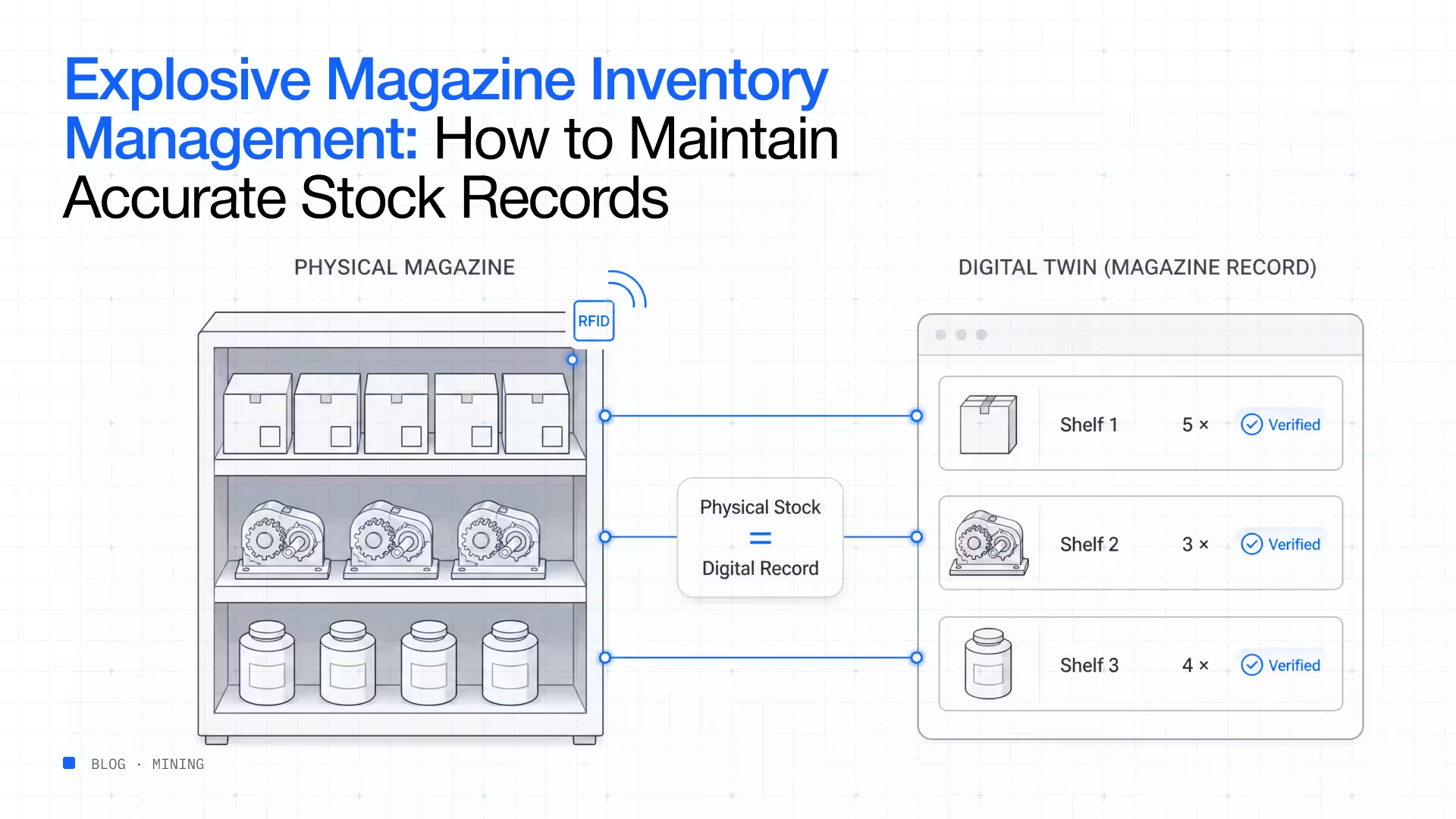
Explosive magazine inventory management is about more than knowing how much stock is stored at a particular location. Mining operations need to maintain an accurate record of what entered the magazine, what was transferred, what was issued, what was returned and what was ultimately consumed. When these transactions are incomplete or recorded late, the inventory balance can quickly become disconnected from the physical stock.
The challenge becomes more significant when explosives are managed across multiple magazines, sites and operational environments. Surface and underground operations may have different workflows, distances and connectivity conditions, yet inventory teams still need a consistent view of stock. Without reliable magazine-level inventory records, identifying available stock, investigating discrepancies and maintaining traceability can become unnecessarily difficult.
A structured explosive magazine inventory management process connects physical stock with the transactions that change its balance. With the right digital workflows, mining organisations can improve inventory accuracy, strengthen transaction control and gain a clearer view of explosives inventory across their operations.
Explosive magazine inventory management is the process of recording, monitoring and controlling explosives held within designated magazine locations. It covers the inventory transactions that affect the quantity and status of stock, including receiving, transfers, issues, returns, adjustments, stock verification and consumption.
The purpose is to ensure that the inventory recorded for each magazine accurately reflects the physical stock held there. This requires more than conducting periodic counts. Every movement that changes the inventory position needs to be captured consistently and associated with the correct location.
Effective magazine inventory management also creates a historical record of inventory activity. This gives authorised users greater visibility into how the current stock position was established and provides information that can support reconciliation and traceability.
Accurate magazine inventory records give mining teams confidence in the information they use to make inventory decisions. If the recorded quantity is different from the physical quantity, teams may not know whether stock is genuinely available or whether the discrepancy needs to be investigated.
Inaccurate records can also create unnecessary administrative work. Inventory teams may have to search through paper registers, spreadsheets, emails or individual transaction records to determine where the difference occurred.
Maintaining accurate magazine-level records reduces this uncertainty. When inventory balances and transaction histories are reliable, teams can spend less time reconstructing inventory movements and more time managing the inventory itself.
Inventory discrepancies rarely appear without a process issue behind them. They can develop when transactions are missed, delayed, entered incorrectly or recorded against the wrong location.
When an explosive is physically transferred or issued but the corresponding transaction is entered later, the system may temporarily show an incorrect balance. If several transactions occur before the records are updated, reconstructing the correct inventory position becomes even more difficult.
A transaction recorded with the wrong quantity can affect the magazine balance and subsequent inventory calculations. Even a small error can become more difficult to identify when additional movements occur afterward.
An inventory transfer that is recorded against the wrong magazine can make stock appear to be available at a location where it is not physically stored. This creates both an accuracy problem and a location visibility problem.
Repeated manual entry across paper registers, spreadsheets and other systems creates opportunities for inconsistent information. The more times the same transaction needs to be recorded, the greater the potential for discrepancies.
If issued explosives are not accurately associated with consumption, the inventory record may continue to show stock that has already been used. This makes it difficult to reconcile the magazine balance against actual operational usage.
Improving magazine inventory accuracy starts by controlling the transactions that change inventory. Receiving, transfers, issues, returns and adjustments should follow clearly defined processes so that every change to the physical stock has a corresponding inventory record.
The timing of transaction capture also matters. Recording activity as close as possible to the physical movement reduces the gap between what is happening in the field and what the inventory system shows.
Regular stock verification should then be used to confirm that the recorded balance remains aligned with physical stock. When discrepancies are identified, the transaction history should be reviewed to determine the likely source rather than simply adjusting the final quantity.
Digital magazine inventory management can connect inventory transactions to a structured digital record. Instead of relying on separate paper documents and spreadsheets, receiving, transfers, issues and returns can be captured through a common workflow.
This creates a clearer relationship between each physical movement and the resulting inventory balance. Authorised users can review the transactions associated with a magazine and understand how the recorded quantity changed over time.
Digital workflows can also reduce duplicate data entry. When information is captured once and used across the relevant inventory process, there is less dependence on manually transferring the same details between different records.
Want to improve visibility into explosive magazine inventory and its movements? Explore MagControl to see how Scatterlink approaches digital explosives inventory management.
Knowing the total quantity of explosives across an operation is not enough when inventory is distributed between multiple magazines. Teams need to know where stock is located before they can determine whether it is available for a particular requirement.
Magazine-level tracking adds this location context to the inventory record. It allows authorised users to view stock associated with individual magazines while also maintaining a broader picture of inventory across the operation.
This becomes particularly important when stock is moved between surface and underground locations. A connected inventory view can make these movements easier to track and reduce reliance on manual communication between locations.
A reliable magazine inventory management process should capture every relevant transaction that changes the stock position. The exact workflow depends on the operation, but core transactions typically include:
Each transaction should contribute to the magazine’s inventory history. This creates a more complete record than simply maintaining an opening and closing stock figure.
Inventory reconciliation compares the quantity recorded in the system with the physical quantity held in the magazine. The purpose is to identify differences and investigate their causes.
A strong reconciliation process does not stop when the numbers are made to match. If a discrepancy is corrected without understanding why it occurred, the same process weakness may produce another discrepancy later.
Transaction-level records make reconciliation more useful because they provide the information required to investigate inventory changes. Teams can review transfers, issues, returns and other relevant activity to determine where the recorded and physical quantities may have diverged.
The current magazine balance tells teams what the system believes is available. The transaction history explains how that balance was created.
A useful transaction history should allow authorised users to identify the relevant inventory, transaction type, quantity, location and timing. Depending on the system and operational requirements, it can also provide information about the user associated with the transaction.
This history becomes particularly valuable when a discrepancy needs to be investigated. Rather than manually reconstructing events from different records, teams can work from a connected history of inventory activity.
Managing multiple magazines requires consistent inventory structures and processes. Each location should be identifiable within the inventory system, while transactions should clearly indicate where stock came from and where it moved.
A centralised view can help inventory teams understand stock across the magazine network without requiring them to manually consolidate separate records. This can also make it easier to identify available stock before additional inventory is requested.
For organisations managing inventory across several operational areas, the ability to connect local magazine records with an overall inventory view can significantly improve visibility.
Surface and underground operations can have different physical and technological conditions. Underground locations may have limited connectivity, while inventory movements may involve longer distances and additional operational steps.
These conditions can make delayed transaction capture a particular challenge. If users have to wait until they return to a connected workstation before recording activity, the inventory system may not reflect the physical stock position in real time.
Mobile and offline inventory workflows can help address this challenge. Users can capture relevant transactions closer to the point of activity, helping maintain a more continuous inventory record across surface and underground environments.
RFID can support magazine inventory management by helping identify tagged inventory and connect physical items with their corresponding digital records. This can reduce some of the manual effort involved in identifying and recording inventory.
When RFID is integrated with the wider inventory workflow, identification data can contribute to faster inventory capture and improved visibility. The technology can be particularly useful when organisations need to manage inventory across multiple locations.
However, RFID should complement rather than replace inventory controls. Accurate item data, controlled transactions, location management and reconciliation processes remain essential to maintaining reliable inventory records.
Once an organisation has established a magazine inventory management process, it should measure whether that process is producing reliable results. Several KPIs can help identify where inventory control is working and where improvements may be required.
This measures how closely recorded inventory matches verified physical stock. Monitoring accuracy over time can help identify locations or processes with recurring discrepancies.
Inventory variance measures the difference between expected and actual inventory. Tracking both the frequency and magnitude of variances can reveal recurring weaknesses.
This measures how quickly inventory transactions are captured after the physical movement occurs. Delayed transactions can contribute directly to inaccurate inventory visibility.
This measures whether required inventory verification and reconciliation activities are being completed according to the organisation’s defined process.
This measures whether inventory is recorded against the correct magazine or location. Accurate location data is essential when teams need to find stock quickly.
Reliable magazine inventory data gives teams a stronger basis for making decisions about stock availability and movement. Instead of relying on estimates or manually checking several locations, authorised users can work from a more consistent inventory position.
This can also improve coordination between inventory teams and operational teams. When both groups have access to the same current information, there is less need to reconcile different versions of the inventory record.
Over time, reliable inventory data can also support better analysis. Historical receiving, movement and consumption information can help organisations understand inventory patterns and identify recurring operational requirements.
Managing explosives inventory across multiple magazines and mining locations? See how Scatterlink connects inventory data and movements to provide greater visibility across industrial operations.
Explosive magazine stocktaking is an important control for verifying whether recorded inventory matches the physical stock held at a location. A stocktake provides an opportunity to identify discrepancies that may have developed through receiving, transfers, issues, returns, adjustments or consumption. However, the value of a stocktake depends heavily on the quality of the records being compared against the physical inventory.
A structured stocktaking process should use consistent procedures across magazines and locations. The physical quantity should be compared with the corresponding digital inventory record, and any variance should be documented and investigated according to the organisation’s established controls.
Digital inventory management can make this process more efficient by giving authorised users access to the relevant magazine balance and transaction history. Instead of beginning the investigation with a collection of disconnected records, teams can work from a structured inventory history.
Stocktaking is the physical verification of inventory, while reconciliation is the process of comparing that physical result with the recorded inventory and investigating differences. The two processes work together but serve different purposes.
A stocktake answers the question, “What is physically present?” Reconciliation goes further by asking, “Does the recorded inventory match, and if not, why is there a difference?”
This distinction is important for explosives inventory management. Simply changing the system quantity to match a physical count may correct the balance temporarily, but it does not identify the process issue that caused the discrepancy.
Reconciliation should be treated as a way to identify weaknesses in inventory processes rather than simply a method for correcting stock balances. When a discrepancy occurs, teams should examine the transactions associated with the relevant magazine and determine where the physical and digital records may have diverged.
For example, the investigation may identify a delayed transfer, an incorrect issue quantity, a missing return or an incomplete consumption record. Identifying the source allows the organisation to improve the underlying process instead of repeatedly correcting the same type of discrepancy.
Over time, analysing recurring discrepancies can help identify locations, transaction types or workflows that require additional controls. This turns inventory reconciliation into an ongoing inventory improvement process.
Consumption tracking provides visibility into what happens to explosives after they are issued for operational use. Without reliable consumption information, the inventory system may show stock that has already been used or may not accurately reflect the relationship between issued and consumed quantities.
Connecting consumption with the wider inventory lifecycle creates a clearer picture of inventory movement. Teams can understand what was received, what was transferred, what was issued and what was ultimately consumed.
Accurate consumption data can also support historical analysis. When organisations have reliable records over time, they can identify usage patterns and compare consumption across different operational periods or locations.
Digital consumption tracking can help close the gap between inventory issued from a magazine and inventory actually consumed during an operational activity. The relevant transaction can become part of the same digital history as the original receipt, transfer or issue.
This creates a more complete inventory lifecycle. Instead of treating consumption as a separate operational record, it becomes part of the inventory information that explains the final stock position.
The result is stronger reconciliation. When physical stock is checked, teams have more information available to understand how the recorded quantity was calculated.
An audit trail provides a chronological record of relevant inventory activity. For magazine inventory management, it can show when stock was received, transferred, issued, returned, adjusted or otherwise changed.
The audit trail is particularly valuable when investigating discrepancies or reviewing historical inventory activity. A current inventory balance provides only a snapshot, while the transaction history provides the context behind that snapshot.
A structured digital audit trail also makes information easier to retrieve. Instead of searching through multiple registers and spreadsheets, authorised users can access relevant transactions within the inventory system.
The exact information required will depend on the organisation’s procedures and applicable regulatory requirements. However, a useful audit trail should provide enough information to understand the relevant inventory transaction.
This can include:
The important factor is that these records remain connected. A complete transaction history gives the organisation a clearer picture of how inventory moved through the magazine and wider operation.
Manual magazine inventory management can involve paper registers, spreadsheets and separate operational records. These methods may appear straightforward when transaction volumes are low, but they can become increasingly difficult to maintain as the operation expands across multiple locations.
Digital magazine inventory management can connect transactions and inventory balances within one workflow. This reduces the need to manually consolidate information and can provide faster access to current inventory data.
The difference is not simply about paper versus software. A digital process can create greater consistency around how inventory is recorded while providing a searchable history of the transactions that created the current stock position.
Improving visibility begins with establishing a consistent inventory structure across all relevant locations. Each magazine should be clearly identifiable, and inventory transactions should be associated with the correct location.
The next step is connecting these local records into a broader inventory view. This allows authorised users to understand both individual magazine balances and overall inventory across the operation.
For organisations managing surface and underground inventory, this connected view becomes particularly valuable. It can help reduce information silos and make it easier to understand where inventory is located without relying on manual communication between teams.
RFID can support stock verification by helping identify tagged inventory and connect physical items with their corresponding digital records. This can make inventory identification more efficient, particularly when multiple items need to be verified.
When RFID data is connected to the inventory system, the verification process can contribute to a more accurate digital inventory position. The system can associate identified inventory with the relevant location and record the resulting activity within the inventory workflow.
RFID is most effective when it forms part of a broader inventory management process. Identification technology needs to work alongside accurate item records, transaction controls, location information and reconciliation procedures.
Looking to improve explosives stock visibility and digital magazine control? Here’s how MagControl can support a more connected explosives inventory workflow.
Offline inventory management can be particularly important when magazines are located in areas where reliable connectivity is not always available. Users should not have to depend on paper notes simply because they temporarily cannot access an online system.
An offline-capable mobile workflow can allow authorised users to capture relevant inventory activity while working in disconnected environments. The information can then be synchronised when connectivity is restored, depending on the platform’s configuration.
This can help reduce the delay between physical inventory movements and digital records. It also supports greater consistency across surface and underground operations where connectivity conditions may vary.
Document how inventory enters each magazine, how it moves between locations, how it is issued, returned and consumed, and how stock verification is currently performed. This provides a baseline for identifying process gaps.
Establish consistent processes for receiving, transfers, issues, returns, adjustments and stock verification. Standardised transactions make it easier to compare inventory information across magazines.
Create a consistent digital structure for magazines, sites, surface locations and underground locations. Accurate location information is essential for maintaining inventory visibility.
Move relevant inventory transactions into a digital workflow that users can access where inventory activity occurs. Mobile capabilities can help reduce delayed data entry.
If the operation includes underground or remote locations with limited connectivity, ensure the inventory process can support the required offline workflows.
Where appropriate, technologies such as RFID can be introduced to improve item identification and inventory capture. The technology should be integrated with the broader inventory process rather than operating as a separate system.
Define how physical stock will be verified, how discrepancies will be recorded and how investigations will be performed. Reconciliation should identify the cause of discrepancies rather than simply correcting balances.
Track inventory accuracy, variance, transaction timeliness, reconciliation performance and other relevant KPIs. Use the results to identify recurring issues and improve the inventory process.
Periodic stocktakes are important, but they cannot replace transaction-level inventory control. If movements are not captured consistently between stocktakes, discrepancies can accumulate.
Keeping a paper register, spreadsheet and digital system updated simultaneously can create competing versions of the inventory position. Organisations should establish a controlled source of inventory information.
Delayed data entry creates a gap between physical inventory and recorded inventory. Wherever practical, transactions should be captured close to the point of activity.
Knowing the total inventory quantity is not enough when stock is distributed across multiple magazines. The system also needs to accurately reflect where inventory is held.
Changing a system balance to match physical stock without investigating the discrepancy does not solve the underlying process problem. Reconciliation should help identify and address the cause.
A system that works well in an office may not work equally well for underground or remote teams. Digital magazine management should reflect the actual conditions in which inventory is handled.
Mining operations can use several KPIs to monitor the effectiveness of their magazine inventory management process.
Measures the percentage or degree to which recorded inventory matches verified physical stock.
Measures the difference between the expected inventory balance and the physical quantity identified during verification.
Measures how quickly receiving, transfer, issue, return and consumption transactions are recorded.
Measures whether required stock verification and reconciliation activities are completed within the defined process.
Measures whether inventory is consistently recorded against the correct magazine or operational location.
Measures differences between issued quantities and recorded consumption where the relevant operational process requires this comparison.
Measures how long it takes authorised users to find relevant inventory information. Faster retrieval can indicate better inventory visibility and data organisation.
Accurate magazine inventory data can support more informed operational decisions. When teams can see what inventory is available and where it is located, they can make decisions based on current information rather than assumptions or manually consolidated reports.
Historical inventory data can also reveal patterns that are difficult to identify from individual paper records. Receiving activity, transfers, issues and consumption can be analysed over time to understand recurring requirements and inventory movements.
This turns magazine inventory from a record-keeping function into a source of operational information. The organisation gains greater visibility not only into what is stored, but also into how inventory moves through the operation.
Explosive magazine inventory management is moving towards more connected and data-driven processes. Instead of relying on isolated magazine registers and periodic stock checks, mining organisations can increasingly connect inventory transactions, physical identification, location data and consumption records.
Mobile applications, offline workflows, RFID and inventory intelligence platforms can contribute to this shift. The focus is on making inventory information available closer to the point of activity while maintaining a reliable record that can be accessed across the operation.
For mining organisations managing explosives across multiple locations, this creates an opportunity to build a more complete view of inventory. Better visibility can support stronger control, faster reconciliation and more informed decisions throughout the explosives lifecycle.
Want to see how connected inventory intelligence can support visibility across your mining operation? Visit the Scatterlink home page to explore the platform.
Accurate explosive magazine inventory management depends on maintaining a reliable connection between physical stock and digital records. Receiving, transfers, issues, returns, stock verification and consumption all contribute to the final inventory position, so gaps in any of these transactions can affect overall accuracy.
Digital magazine management can provide a more consistent way to capture these activities while creating a searchable transaction history. Combined with mobile workflows, offline capabilities and technologies such as RFID, it can help mining organisations improve inventory visibility across surface and underground environments.
The objective is not simply to maintain an accurate number in a system. It is to create an inventory record that reflects what is physically present, where it is located, how it moved and what happened to it throughout its lifecycle.
If improving explosives inventory visibility, traceability and magazine control is a priority, explore MagControl to learn more about Scatterlink’s explosives inventory management approach.
Explosive magazine inventory management is the process of recording and controlling explosives stored within magazine locations. It includes receiving, transfers, issues, returns, stock verification, reconciliation and consumption tracking.
Accurate magazine inventory helps mining teams understand what stock is physically available and where it is located. It also supports reconciliation, traceability and more reliable inventory decision-making.
Common causes include delayed transactions, incorrect quantities, incorrect locations, incomplete consumption records, manual data entry and inconsistent inventory processes.
Digital workflows can connect inventory transactions to magazine records and reduce duplicate data entry. They can also provide transaction histories that make discrepancies easier to investigate.
Explosive magazine reconciliation compares recorded inventory with physical stock and investigates any differences. It helps organisations identify where inventory records may have diverged from physical quantities.
RFID can help identify tagged inventory and connect physical stock with digital inventory records. When integrated into the wider inventory workflow, it can support faster identification and stock verification.
Underground areas may have limited connectivity, making continuous online access difficult. Offline inventory functionality can allow authorised users to capture inventory activity and synchronise it when connectivity becomes available.
Useful KPIs include inventory accuracy, inventory variance, transaction timeliness, reconciliation completion, location accuracy, consumption variance and inventory retrieval time.
Yes. A connected inventory management process can provide visibility across surface and underground locations, provided the system supports the operational and connectivity requirements of those environments.
%20(1).avif)
.avif)
%20(1).avif)