
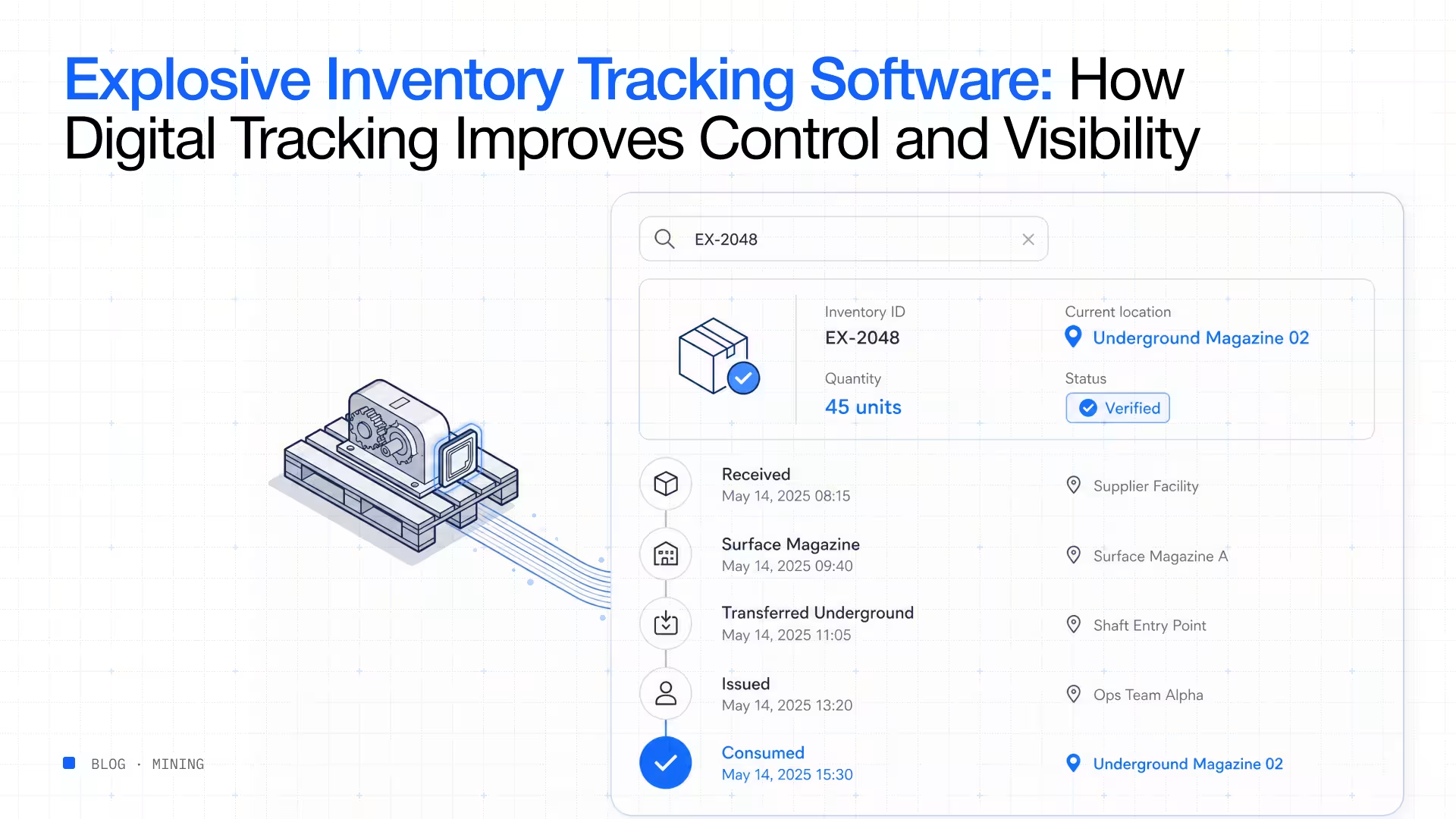
Explosives inventory can move through multiple stages before it reaches its point of use. Material is received, stored in magazines, transferred between locations, issued for operational requirements and ultimately consumed. When each movement is recorded through disconnected registers, spreadsheets or delayed manual entries, it becomes difficult to maintain a reliable picture of where inventory is and how much is actually available.
Explosive inventory tracking software provides a digital way to connect these movements. Instead of treating receiving, storage, transfers, issues and consumption as separate activities, the system can maintain a continuous inventory record that follows the material through its operational lifecycle. This creates greater visibility into both current stock and the transactions that changed it.
For mining operations managing explosives across multiple magazines, sites, surface locations and underground environments, digital inventory tracking can become an important part of inventory control. The objective is not simply to digitise existing records, but to create a more accurate, accessible and traceable view of explosives inventory.
Explosive inventory tracking software is a digital system used to record, monitor and control explosive inventory as it moves through an operation. It can track activities such as receiving, magazine storage, transfers, issues, returns, stock verification and consumption.
The software connects these transactions to inventory records so that authorised users can see how stock moves and how each transaction affects the current balance. This provides more context than a simple inventory count because the system can show the activity behind the quantity.
For mining organisations, explosive inventory tracking software can also provide visibility across multiple locations. Instead of maintaining isolated records for each magazine or operational area, inventory information can be connected into a broader view.
Inventory tracking is important because the physical movement of explosives and the recorded inventory position need to remain aligned. If an item is transferred but the transaction is recorded later, the system may temporarily show stock in the wrong location.
The same problem can occur when inventory is issued, returned or consumed without being recorded accurately. As more transactions take place, small discrepancies can become increasingly difficult to trace back to their source.
Reliable tracking creates a continuous record of inventory movement. This helps teams understand not only what stock is currently available, but also where it came from, where it moved and what transactions contributed to the current balance.
Manual tracking often involves multiple records for different parts of the inventory process. A magazine register may contain one set of information, while a spreadsheet or ERP system contains another.
When these records are not automatically connected, teams may need to reconcile them manually. This takes time and creates the possibility of conflicting information.
A physical inventory movement can happen well before someone updates the corresponding record. During that period, the recorded inventory position may not reflect what is actually happening in the field.
Delayed entries also increase the risk of forgotten or incorrectly reconstructed transactions, particularly when users are handling several movements during a busy operational period.
Knowing the total amount of explosive inventory across an operation does not tell a team where that inventory is located. When stock is distributed across several magazines, location-level information becomes essential.
Without connected location tracking, teams may need to contact individual sites or check separate records to determine where stock is available.
Paper records and spreadsheets can make it time-consuming to investigate historical movements. Finding a particular transfer, issue or return may require searching through multiple records.
A digital transaction history can make this information significantly easier to retrieve and review.
The basic principle is to create a digital record of inventory and then update that record as transactions occur. When explosives are received, the receiving transaction establishes or updates the relevant inventory record.
When the inventory moves to another magazine, the transfer should update both the source and destination locations. When stock is issued, returned or consumed, those activities should also become part of the inventory history.
This creates a connected chain of transactions. The current inventory balance is therefore not an isolated number, but the result of the activities recorded throughout the inventory lifecycle.
The specific requirements will vary between mining organisations, but a comprehensive explosive inventory tracking workflow should be capable of recording the major activities that affect inventory.
These can include:
The most important consideration is that these records should work together. Tracking individual activities without connecting them to the overall inventory position can still leave teams with fragmented information.
Inventory accuracy depends on keeping the recorded inventory position aligned with physical stock. Digital tracking can support this by creating structured workflows for the transactions that change inventory.
When an authorised user records a transfer, issue or return through the defined process, the relevant inventory record can be updated without requiring the same information to be entered repeatedly in separate systems.
Digital transaction histories also make discrepancies easier to investigate. If physical stock does not match the recorded balance, teams can review the movements associated with that inventory rather than simply adjusting the final number.
Traceability requires a record of inventory movement over time. A current balance only shows what the system believes is available, while a transaction history provides information about how that inventory arrived at its current position.
Digital tracking can connect receiving, transfers, storage, issuing, returns and consumption into one inventory history. This allows authorised users to follow relevant movements throughout the lifecycle.
For operations where inventory passes through several locations before consumption, this connected history can provide a clearer picture than isolated records. It can also make historical information easier to retrieve when an investigation or review is required.
Location is a critical part of inventory visibility. A mining operation may hold explosives across several magazines, sites or operational areas, making the total inventory quantity less useful without location context.
Explosive inventory tracking software can associate stock with specific magazine or operational locations. When inventory is transferred, the transaction can update the relevant location records and maintain the movement history.
This helps teams answer practical questions more quickly. Instead of asking only how much inventory exists, they can determine where it is recorded and how it moved between locations.
Multi-location inventory management becomes more complex as the number of magazines and operational sites increases. Each additional location creates another point where inventory can be received, stored, transferred or issued.
If every location maintains an isolated inventory record, management may have limited visibility into the overall inventory position. Consolidating those records manually can take time and may introduce further data inconsistencies.
A connected tracking system can provide a broader inventory view while retaining location-level information. This allows teams to understand both the individual magazine position and the inventory picture across the wider operation.
Managing explosives across multiple magazines or mining locations? Explore MagControl to see how Scatterlink approaches digital explosives inventory tracking and visibility.
Mining operations can manage explosives across very different environments. Surface magazines may have reliable connectivity and fixed workstations, while underground locations can involve restricted connectivity and mobile working conditions.
A tracking system needs to account for these differences if it is expected to provide consistent inventory visibility across the operation. Users should be able to capture relevant inventory transactions in the environments where those transactions actually occur.
Mobile workflows can help bring inventory tracking closer to the point of activity. Where connectivity is inconsistent, offline functionality can also help users capture transactions without waiting to return to a connected location.
An inventory tracking process that requires constant connectivity may not be practical across every mining environment. Underground operations and remote areas can experience connectivity limitations that make immediate online access difficult.
Offline inventory functionality can allow authorised users to capture relevant inventory activity while disconnected. The information can then be synchronised when connectivity becomes available, depending on the system configuration.
This helps reduce the need for temporary paper records and delayed manual entry. It can also support greater consistency between surface and underground inventory processes.
RFID can support explosive inventory tracking by helping identify tagged inventory and connect physical items with digital records. Instead of relying entirely on manual identification, RFID-enabled processes can make inventory capture more efficient.
The value of RFID increases when it is integrated into the wider inventory workflow. Identification data should contribute to the relevant inventory record and transaction rather than remain separate from the system managing stock.
For operations managing significant quantities of inventory across multiple locations, RFID can therefore become one component of a broader digital inventory tracking strategy.
The benefits of digital explosive inventory tracking extend beyond eliminating paper records. A well-designed system can improve the quality and accessibility of inventory information throughout the operational lifecycle.
Teams can gain a clearer view of inventory quantities and locations rather than relying on separate records or periodic reports.
Structured digital workflows can help ensure that important inventory movements are recorded consistently.
Connected transaction histories can make it easier to understand how inventory moved from receipt through storage, transfer, issue and consumption.
When inventory records contain transaction history, teams can investigate discrepancies more efficiently.
Connected inventory records can provide visibility across magazines, sites, surface operations and underground locations.
Digital workflows can reduce repeated data entry and the time required to consolidate information from different sources.
Reliable inventory information can improve the quality of operational decisions. When teams can see where inventory is located and understand its current recorded status, they have a stronger basis for determining what stock is available.
This can also improve coordination between inventory and operational teams. Instead of relying on different spreadsheets or verbal updates, teams can work from a more consistent inventory record.
Over time, historical tracking data can provide additional insight. Receiving, transfer, issue and consumption records can reveal recurring inventory patterns and help organisations understand how explosives move through their operations.
Want greater visibility into how inventory moves across your industrial operation? Visit the Scatterlink home page to explore the inventory intelligence platform.
Mining organisations should evaluate explosive inventory tracking software based on how well it supports the complete inventory lifecycle. A system that only records stock quantities may not provide enough visibility into the transactions that affect those quantities.
Key capabilities to consider include inventory receiving, magazine-level tracking, transfers, issuing, returns, consumption tracking, transaction history and reconciliation. Organisations operating across surface and underground environments should also consider mobile and offline functionality.
Integration with identification technologies such as RFID may also be relevant depending on the operation. Most importantly, the system should fit the way inventory is physically managed and make it easier for users to maintain accurate records.
Inventory tracking focuses primarily on knowing where inventory is, how much exists and how it moves. Inventory management covers a broader set of activities, including controlling stock levels, managing transactions, reconciling inventory, analysing consumption and making decisions about inventory requirements.
Explosive inventory tracking is therefore an important component of broader explosives inventory management. Tracking provides the underlying visibility needed to manage inventory effectively.
When tracking data is connected to inventory management processes, organisations can move from simply recording movements to using inventory information to improve operational control.
Implementing explosive inventory tracking software should begin with understanding how inventory actually moves through the operation. Before selecting or configuring a system, mining teams should map receiving, magazine storage, transfers, issuing, returns, stock verification and consumption. This helps identify where manual records are currently created, where information is duplicated and where delays occur between physical movements and inventory updates.
The objective should be to create one consistent digital workflow rather than simply converting paper records into electronic format. Each transaction should have a defined process and contribute to the relevant inventory balance and transaction history. This creates a stronger foundation for accurate inventory tracking across the entire explosives lifecycle.
A digital explosives inventory workflow should cover the activities that change inventory throughout its lifecycle. Receiving should establish the initial inventory record, while transfers should update the source and destination locations. Issues, returns and consumption should then continue that record rather than being maintained separately.
The workflow should also provide appropriate controls around inventory transactions. Users should be able to perform the activities relevant to their responsibilities, while management retains visibility into inventory movements and changes.
The more closely the digital workflow reflects the physical inventory process, the more useful the resulting data becomes. This is especially important in mining, where inventory may move between magazines, surface locations and underground operations.
Digital magazine tracking provides a structured way to monitor inventory associated with individual magazine locations. Instead of relying on separate paper registers or spreadsheets, each magazine can have a digital inventory record connected to the transactions affecting its stock.
This makes it easier to understand the current inventory position at each location. More importantly, users can review the transactions behind that position, including receipts, transfers, issues and returns.
When individual magazine records are connected across the operation, management can also gain a broader view of explosives inventory. This reduces the need to manually consolidate information from multiple locations before making inventory decisions.
Reconciliation becomes more effective when the inventory system contains a detailed transaction history. When a physical stock count differs from the recorded balance, users can review the movements associated with the relevant inventory instead of simply adjusting the final quantity.
A discrepancy may have several possible causes, including a delayed transaction, incorrect quantity, incorrect location or missing return. Reviewing the transaction history helps identify where the difference may have originated.
This approach turns reconciliation into a process improvement activity. Rather than repeatedly correcting inventory balances, teams can identify recurring causes and strengthen the workflows responsible for them.
An audit trail provides a historical record of inventory activity. For explosives inventory, this can include receiving, transfers, issues, returns, adjustments and other transactions that affect stock.
A current inventory balance provides only a snapshot. The audit trail provides the context behind that snapshot by showing how the inventory position changed over time.
This can be particularly valuable when teams need to investigate a discrepancy or retrieve historical information. A searchable digital history can reduce the time required to reconstruct inventory movements from multiple paper records or spreadsheets.
The exact requirements depend on the organisation’s processes and applicable regulations, but a useful audit trail should provide enough information to understand each relevant transaction.
This may include:
The important point is that these records should remain connected to the inventory lifecycle. A collection of isolated transaction records is less useful than a continuous history that explains the current stock position.
Mobile inventory tracking allows users to record transactions closer to where physical inventory activity occurs. This reduces the need to remember transactions and enter them later from a fixed workstation.
For mining operations, this can be particularly useful when inventory is managed across large sites or underground environments. Users can capture relevant information at the point where receiving, transferring, issuing or verification takes place.
This can also improve transaction timeliness. The shorter the gap between a physical inventory movement and its digital record, the more useful the inventory information becomes for teams relying on current stock visibility.
Underground mining environments can create connectivity challenges that make continuous online access difficult. If an inventory tracking system only works when a live connection is available, users may have to rely on temporary paper records and update the system later.
Offline functionality can allow authorised users to capture inventory transactions while disconnected. Once connectivity becomes available, the relevant information can be synchronised according to the system’s configuration.
This helps maintain continuity between physical inventory activity and digital records. It can also make the same inventory tracking process more practical across both surface and underground environments.
RFID can help identify tagged inventory and connect physical items with digital records. This can reduce some of the manual effort involved in identifying inventory during receiving, verification or other controlled inventory activities.
When RFID is integrated with inventory tracking software, identification information can become part of the broader inventory workflow. This allows physical inventory data to contribute to the relevant digital record rather than remaining separate.
RFID is not a substitute for inventory controls, however. Accurate item information, location records, transaction workflows and reconciliation processes remain essential for maintaining reliable inventory visibility.
Managing explosives across multiple sites creates a visibility challenge because inventory may be distributed across different magazines and operational areas. A location may have an accurate local record while management still lacks a consolidated view of inventory across the wider operation.
Connected inventory tracking can link these locations while retaining individual magazine information. This means authorised users can review a specific magazine while also understanding the broader inventory position.
Multi-site visibility can also help teams identify existing stock before additional inventory is requested. Having better information about where inventory is located can support more informed inventory decisions.
Managing explosives across multiple magazines and locations? Explore MagControl to see how Scatterlink can connect explosives inventory tracking with greater magazine-level visibility.
Digital tracking creates an opportunity to measure the performance of the inventory process itself. Instead of relying only on whether the system contains a quantity, organisations can monitor whether transactions are being captured accurately and on time.
Measures how closely recorded inventory matches verified physical stock. This is one of the most important indicators of whether the inventory tracking process is working effectively.
Measures differences between expected and actual inventory. Monitoring variance over time can reveal recurring issues within specific locations or transaction types.
Measures how quickly inventory movements are recorded after the physical activity occurs. Delayed transactions can reduce the reliability of inventory visibility.
Measures whether inventory is recorded against the correct magazine or operational location. This becomes particularly important when inventory is distributed across multiple sites.
Measures whether required stock verification and reconciliation activities are completed according to established procedures.
Measures how quickly authorised users can locate relevant inventory information. Faster retrieval can indicate that digital records are better structured and easier to access.
Simply moving a manual process into software does not automatically improve it. Organisations should first identify unnecessary duplication, unclear responsibilities and gaps in transaction capture.
Maintaining spreadsheets and paper registers alongside the new inventory platform can continue to create conflicting information. The digital workflow should have clearly defined ownership and control.
A system designed around office-based users may not work effectively for underground or remote teams. Mobile access and offline capabilities should be considered based on actual operating conditions.
A system that shows only current stock quantities provides limited visibility into why inventory changed. Transaction history is essential for meaningful inventory tracking.
RFID can improve identification, but it does not replace inventory management processes. The technology needs to be connected to accurate item records, locations and transactions.
Better visibility comes from connecting the different pieces of the inventory lifecycle. Receiving data needs to connect with storage, storage with transfers, transfers with issues, and issues with returns and consumption.
When these activities are recorded within one connected workflow, the inventory system can provide more than a current stock figure. It can show the movement and history behind that figure.
This creates a stronger information base for inventory teams and operational decision-makers. Instead of spending time finding and reconciling information, users can spend more time acting on it.
Want to see how connected inventory data can improve visibility across industrial operations? Visit the Scatterlink home page to explore the platform and its inventory intelligence capabilities.
Operational control depends on having reliable information at the point where decisions are made. When inventory information is delayed or fragmented, teams may have to rely on manual checks or individual knowledge to understand stock availability.
Digital tracking can provide a more consistent record of inventory movements and locations. This can help teams identify available stock, investigate discrepancies and understand inventory activity without relying entirely on separate records.
The value becomes greater when tracking information is available across the operation. A connected view can help bridge the gap between individual magazine activity and broader inventory management.
Manual inventory processes often require teams to enter the same information multiple times. A transaction may be recorded in a physical register, transferred to a spreadsheet and then entered into another system.
Digital workflows can reduce this repetition by capturing information within a structured process. The same transaction can then contribute to the relevant inventory balance and history without requiring separate manual updates.
Reducing administrative work does not mean reducing inventory control. The objective is to spend less time maintaining records while improving the quality, consistency and accessibility of those records.
The right system should support the complete explosives inventory lifecycle rather than focusing on one isolated tracking activity. Organisations should evaluate how the platform handles receiving, magazine management, transfers, issuing, returns, consumption and reconciliation.
Mining companies should also consider the physical environments in which the system will be used. Mobile workflows, offline capability, multi-location visibility and integration with identification technologies such as RFID can be important depending on operational requirements.
Most importantly, the system should be practical for the people using it. A technically capable platform will not deliver reliable inventory data if field users find the workflow difficult or time-consuming to follow.
Looking for a digital approach to explosives inventory tracking and magazine management? Explore MagControl to learn how Scatterlink supports connected explosives inventory visibility.
Explosive inventory tracking software can transform how mining operations manage inventory across magazines, sites, surface locations and underground environments. By connecting receiving, storage, transfers, issues, returns and consumption, it creates a more complete picture of how inventory moves through the operation.
The strongest inventory tracking approach is not simply about replacing paper with software. It is about creating accurate, timely and connected inventory information that users can access when they need it. Mobile workflows, offline functionality, RFID and transaction-level audit trails can all contribute to that objective when they are integrated into a well-designed inventory process.
For mining operations managing critical explosives inventory, better tracking means more than knowing what is in stock. It means knowing where inventory is, how it moved, what changed the balance and having the information needed to manage it with greater control.
Explosive inventory tracking software is a digital system used to monitor and record explosives throughout their inventory lifecycle. It can track receiving, storage, transfers, issues, returns, verification and consumption.
It helps mining operations maintain visibility into where explosives are stored, how inventory moves and what stock is recorded as available. This can support inventory accuracy, traceability and operational control.
Yes. A suitable system can maintain individual magazine records while providing a broader view of inventory across multiple locations and sites.
Yes, provided the system supports the requirements of underground operations. Mobile and offline functionality can be particularly useful where connectivity is limited.
RFID can help identify tagged inventory and connect physical items with digital records. When integrated into the inventory workflow, it can support faster identification and inventory verification.
Important KPIs can include inventory accuracy, inventory variance, transaction timeliness, location accuracy, reconciliation completion and inventory retrieval time.
No. Digital tracking and physical verification serve different purposes. Digital records provide ongoing transaction visibility, while physical verification confirms the actual stock held at a location.
Key considerations include lifecycle tracking, magazine-level visibility, transaction history, reconciliation, mobile access, offline capability, multi-location management and support for relevant identification technologies.
%20(1).avif)
.avif)
%20(1).avif)